
Paul Shepard (1926–1996)
Author of Coming Home to the Pleistocene
About the Author
Works by Paul Shepard
Associated Works
Tagged
Common Knowledge
- Legal name
- Shepard, Paul Howe, Jr.
- Birthdate
- 1926
- Date of death
- 1996-07-27
- Gender
- male
- Education
- University of Missouri (BA)
Yale University (PhD) - Occupations
- Professor, Pitzer College
Professor, Claremont Graduate School - Nationality
- USA
- Birthplace
- Kansas City, Missouri, USA
- Place of death
- Salt Lake City, Utah, USA
- Associated Place (for map)
- USA
Members
Reviews
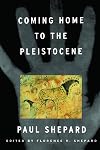
This book has had a clear influence on two growing and related movements: rewilding, and the paleolithic diet. Its main idea is that humans remain wild on a genetic level, and can only remain tame to the detriment of our health: physical, mental, social, and otherwise.
Maybe because it has been influential, it's already seeming a bit dated. Lierre Keith's The Vegetarian Myth provides a detailed critique of the agricultural diet, and so-called primitive skills groups are now taking some of his show more suggestions into practice. The political implications of his book, with those of Daniel Quinn's works, have been largely superseded by Derrick Jensen, Ward Churchill, and others, who have been more concerned with strategy than can be said for most authors. Nevertheless it's a useful if cursory look at human nature.
Although I suppose I should add some more critical remarks. The author spends a lot of time looking backwards at human foraging, as something that no longer exists. However, hunters and gatherers remain, and although most use guns now, their traditional cultures remain. More specifically the author seems mostly interested in a particular sort of foraging people, the sort called "bands" by cultural anthropologists. He lumps these all together and treats them as if they are all more or less the same, ignoring the differences between them and stating simple facts that might apply to five hundred groups and not apply to five hundred others. In general, the author grossly neglects cultural differences, preferring instead to examine human behavior in terms of genetics. show less
Maybe because it has been influential, it's already seeming a bit dated. Lierre Keith's The Vegetarian Myth provides a detailed critique of the agricultural diet, and so-called primitive skills groups are now taking some of his show more suggestions into practice. The political implications of his book, with those of Daniel Quinn's works, have been largely superseded by Derrick Jensen, Ward Churchill, and others, who have been more concerned with strategy than can be said for most authors. Nevertheless it's a useful if cursory look at human nature.
Although I suppose I should add some more critical remarks. The author spends a lot of time looking backwards at human foraging, as something that no longer exists. However, hunters and gatherers remain, and although most use guns now, their traditional cultures remain. More specifically the author seems mostly interested in a particular sort of foraging people, the sort called "bands" by cultural anthropologists. He lumps these all together and treats them as if they are all more or less the same, ignoring the differences between them and stating simple facts that might apply to five hundred groups and not apply to five hundred others. In general, the author grossly neglects cultural differences, preferring instead to examine human behavior in terms of genetics. show less
Many consider the author among the great ecological thinkers of our century. This book, written shortly before his death, amplifies Shepard's original idea, that we suffer spiritual and physical debilitation because "we have, in the course of a few thousand years, alienated ourselves from our only home, planet Earth, our only time, the Pleistocene, and our only companions, our fellow creatures." Other highly recommended titles by Shepard, recently reprinted by the University of Georgia show more Press, include The Tender Carnivore and the Sacred Game (1973), Thinking Animals (1978), and Nature and Madness (1982). show less

You May Also Like


Associated Authors
Statistics
- Works
- 14
- Also by
- 2
- Members
- 604
- Popularity
- #41,610
- Rating
- 3.9
- Reviews
- 6
- ISBNs
- 34
- Languages
- 2
- Favorited
- 1