
Allen Shawn
Author of Wish I Could Be There: Notes From a Phobic Life
About the Author
Allen Shawn grew up in New York City and currently lives in Vermont, where he is on the faculty of Bennington College. He started composing music at the age of ten, and has produced a large catalogue of orchestral, chamber, and piano works, as well as music for ballet, theater, and film. He show more performs frequently as a pianist, and he has contributed articles to The Atlantic Monthly. He is the father of Annie and Harold Shawn show less
Works by Allen Shawn
Leonard Bernstein: An American Musician (Jewish Lives) by Shawn Allen (2014-09-30) Hardcover (1754) 2 copies, 1 review
Associated Works
Eat, Memory: Great Writers at the Table: A Collection of Essays from the New York Times (2008) — Contributor — 179 copies, 6 reviews
Tagged
Common Knowledge
- Birthdate
- 1948
- Gender
- male
- Occupations
- composer
writer
pianist - Organizations
- Benington College (faculty)
- Awards and honors
- American Academy of Arts and Letters Academy Award (Music, 2001)
- Relationships
- Shawn, William (father)
Shawn, Wallace (brother)
Kincaid, Jamaica (wife | divorced) - Nationality
- USA
- Places of residence
- Vermont, USA
- Associated Place (for map)
- Vermont, USA
Members
Reviews
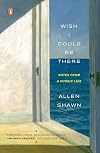
A wonderful, gracefully written book, on several levels.
First, even if you think you know what agoraphobia is, this book will probably tell you something more. I can see why many people probably think Allen Shawn has a mild version because he is able to drive (only not so far), teach at university, perform on occasion and visit his hometown of New York (as long as he doesn't drive through tunnels, take the subway, etc., etc.). He has two children, though he's now divorced. (Though he doesn't show more say, I believe he was married to NYer writer Jamaica Kincaid.)
So the catch-all "agoraphobia" is a constellation of phobias, as probably are most others. He explains it all very well--the theories, the symptoms, the legacies of the pre-human brain, the environmental reinforcers. He's such a graceful writer--rather maddening since he's a composer and pianist by profession. I used to write about behavioral science, and so often found myself just totting up possible causes or falling into the on the one hand or the other.
The book will also be of great interest because his father was William Shawn, the renowned editor of The New Yorker for so many years.
The father had many, more, of the same behaviors. He never traveled in a plane; after a honeymoon sojourn in Europe, he returned to New York and never got much farther, by train, than his hometown of Chicago. This is a man who never took a walk by himself, had to sit at the end of a row in a theater, needed always to have people around, who seemed to have a fear of nature. That's interesting in itself and points to the genetic inheritance.
But you can also see how the family dynamics may have upped the chances that Allen would inherit the fears, even if his brother, actor Wallace Shawn, did not. (As for Allen's twin sister, who seems to be autistic ... whew! who knows?)
To repeat myself, the writer gets this across so well without leaning too far in one direction or another. There were subjects that were off-topic in his father's presence: blood, disease, bodily functions. (How, in heaven's name did he edit articles on such matters?).
When Allen and his sister were toddlers, their father began a decades-long affair with the writer Lillian Roth (tho she's never named). Although Allen didn't learn about it until age 30, obviously it affected how his mother and father behaved. William even had a separate home phone just for Lillian's calls. (William always kept both women apprised of his location; how did that work?). The subtly detailed descriptions of his father actually become novelistic--just so well observed.
He says we all have some phobias, neuroses, or exaggerated fears. I was glad to see that he pointed out that mine, a fainting feeling, is common linked to the sight of blood and gore (well, actually, a mere description might do it.) Hmmm, how did that ever serve a positive function like the fight-or-flight reaction? show less
First, even if you think you know what agoraphobia is, this book will probably tell you something more. I can see why many people probably think Allen Shawn has a mild version because he is able to drive (only not so far), teach at university, perform on occasion and visit his hometown of New York (as long as he doesn't drive through tunnels, take the subway, etc., etc.). He has two children, though he's now divorced. (Though he doesn't show more say, I believe he was married to NYer writer Jamaica Kincaid.)
So the catch-all "agoraphobia" is a constellation of phobias, as probably are most others. He explains it all very well--the theories, the symptoms, the legacies of the pre-human brain, the environmental reinforcers. He's such a graceful writer--rather maddening since he's a composer and pianist by profession. I used to write about behavioral science, and so often found myself just totting up possible causes or falling into the on the one hand or the other.
The book will also be of great interest because his father was William Shawn, the renowned editor of The New Yorker for so many years.
The father had many, more, of the same behaviors. He never traveled in a plane; after a honeymoon sojourn in Europe, he returned to New York and never got much farther, by train, than his hometown of Chicago. This is a man who never took a walk by himself, had to sit at the end of a row in a theater, needed always to have people around, who seemed to have a fear of nature. That's interesting in itself and points to the genetic inheritance.
But you can also see how the family dynamics may have upped the chances that Allen would inherit the fears, even if his brother, actor Wallace Shawn, did not. (As for Allen's twin sister, who seems to be autistic ... whew! who knows?)
To repeat myself, the writer gets this across so well without leaning too far in one direction or another. There were subjects that were off-topic in his father's presence: blood, disease, bodily functions. (How, in heaven's name did he edit articles on such matters?).
When Allen and his sister were toddlers, their father began a decades-long affair with the writer Lillian Roth (tho she's never named). Although Allen didn't learn about it until age 30, obviously it affected how his mother and father behaved. William even had a separate home phone just for Lillian's calls. (William always kept both women apprised of his location; how did that work?). The subtly detailed descriptions of his father actually become novelistic--just so well observed.
He says we all have some phobias, neuroses, or exaggerated fears. I was glad to see that he pointed out that mine, a fainting feeling, is common linked to the sight of blood and gore (well, actually, a mere description might do it.) Hmmm, how did that ever serve a positive function like the fight-or-flight reaction? show less
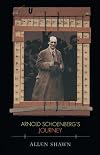
Rereading this book takes me back to the summer of 2007 when I first read it. As then I enjoyed every moment of its readable and eve witty text. The author discusses Schoenberg's music and life together in a way that makes them both vivid and informative. He analyzes the music in detail, leaving the reader with an appreciation for the revolutionary impact of Schoenberg's passionate musical genius.
Along the way the cultural environment of the composer is explored and you learn about show more composers who influenced and helped Schoenberg. It was a revelation to this reader that Schoenberg was a painter as well. In this endeavor he benefited from his friendship with Gustav Klimt who also was interested in music. The book is organized into thirty essays in roughly chronological order. They cover major periods of development in the musical life of the composer, culminating with retrospective discussions of his impact on musical life and other composers. The discussion of Stravinsky was illuminating in its showing his development in comparison with Schoenberg. A bibliographic essay augments the value of this study for those who want to further explore Schoenberg's music and life.
With its focus on the listener's point of view it is one of the best books on music and artistic culture that I have encountered. The survey of both music composition and the life of musical genius is deep enough to inform without too much esoteric detail. I would recommend it to all who want to better understand both Schoenberg and the development of early twentieth century culture. show less
Along the way the cultural environment of the composer is explored and you learn about show more composers who influenced and helped Schoenberg. It was a revelation to this reader that Schoenberg was a painter as well. In this endeavor he benefited from his friendship with Gustav Klimt who also was interested in music. The book is organized into thirty essays in roughly chronological order. They cover major periods of development in the musical life of the composer, culminating with retrospective discussions of his impact on musical life and other composers. The discussion of Stravinsky was illuminating in its showing his development in comparison with Schoenberg. A bibliographic essay augments the value of this study for those who want to further explore Schoenberg's music and life.
With its focus on the listener's point of view it is one of the best books on music and artistic culture that I have encountered. The survey of both music composition and the life of musical genius is deep enough to inform without too much esoteric detail. I would recommend it to all who want to better understand both Schoenberg and the development of early twentieth century culture. show less
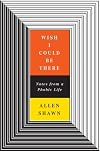
This book is kind of an unholy union. Half of it is an interesting memoir about Allen Shawn's family, his life, and his phobias (and the intersections of the three). The other half is a relatively boring summary of neurological and psychological aspects of phobias.
The memoir part of it is, well, like I said: really interesting. Shawn's family background is fascinating. That's a little disingenuous, because I honestly think that almost anyone could write a good book about their family and show more childhood if they wrote honestly and well. But. Still. The family stuff was good. Even better, though, was Shawn's description of the development of his phobias and how they affect his life. He does a fabulous job of describing what phobias feel like and how he, as what we might call a high-functioning agoraphobic, lives and copes.
Unfortunately, there's not a lot of that, because much of the book is dedicated to the science side of things. If he'd been writing in depth about that, it would also have been interesting, but as it was, he kind of skims along the surface. He doesn't go into a lot of depth, and what he does cover is the stuff most people already know. There's nothing new in this information, and he's not a science writer, so it's not presented particularly well, either. A lot of the time I felt like he was using the science portion more as filler than as content, which was a pity, because he could have said a lot more about his family and his life (or a lot more interesting things about neurology and psychology, if he was more of that kind of person).
So the melding of the two types of book was unsuccessful. Still - the parts that were personal were good enough to make me glad I'd read the whole book. show less
The memoir part of it is, well, like I said: really interesting. Shawn's family background is fascinating. That's a little disingenuous, because I honestly think that almost anyone could write a good book about their family and show more childhood if they wrote honestly and well. But. Still. The family stuff was good. Even better, though, was Shawn's description of the development of his phobias and how they affect his life. He does a fabulous job of describing what phobias feel like and how he, as what we might call a high-functioning agoraphobic, lives and copes.
Unfortunately, there's not a lot of that, because much of the book is dedicated to the science side of things. If he'd been writing in depth about that, it would also have been interesting, but as it was, he kind of skims along the surface. He doesn't go into a lot of depth, and what he does cover is the stuff most people already know. There's nothing new in this information, and he's not a science writer, so it's not presented particularly well, either. A lot of the time I felt like he was using the science portion more as filler than as content, which was a pity, because he could have said a lot more about his family and his life (or a lot more interesting things about neurology and psychology, if he was more of that kind of person).
So the melding of the two types of book was unsuccessful. Still - the parts that were personal were good enough to make me glad I'd read the whole book. show less
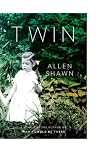
At the age of eight, Allen Shawn's twin sister, Mary, was removed from the home and institutionalized for the rest of their lives. Eventually diagnosed with autism, Mary lives in surroundings which suit her and keep her healthy.
Shawn's exploration of what it is for him to be a twin, separated as they were, and his family life, including phobias, is thoughtful. Mary was always just Mary to him, and remains so. Although he understands that her autism keeps her from functioning in ways which show more would allow her to function in society at large, he does not judge her for that. He has always accepted her as she is.
The longing for her to fill the void left by their separation is at the heart of this exploration. As heart-felt as his previous book, Wish I Could be There, Allen Shawn shares his journey with those who care to listen. show less
Shawn's exploration of what it is for him to be a twin, separated as they were, and his family life, including phobias, is thoughtful. Mary was always just Mary to him, and remains so. Although he understands that her autism keeps her from functioning in ways which show more would allow her to function in society at large, he does not judge her for that. He has always accepted her as she is.
The longing for her to fill the void left by their separation is at the heart of this exploration. As heart-felt as his previous book, Wish I Could be There, Allen Shawn shares his journey with those who care to listen. show less
Awards

You May Also Like


Associated Authors
Statistics
- Works
- 9
- Also by
- 1
- Members
- 446
- Popularity
- #54,978
- Rating
- 3.3
- Reviews
- 18
- ISBNs
- 21
- Languages
- 1