
Patrick Rambaud
Author of The Battle: A Novel
About the Author
Patrick Rambaud was a founder of Actuel in 1970.
Image credit: By Siren-Com - Own work, CC BY-SA 3.0, https://commons.wikimedia.org/w/index.php?curid=9553443
Series
Works by Patrick Rambaud
Troisième chronique du règne de Nicolas Ier (Littérature Française) (French Edition) (2010) 22 copies, 2 reviews
Associated Works
Tagged
Common Knowledge
- Other names
- RAMBAUD, Patrick
- Birthdate
- 1946-04-21
- Gender
- male
- Awards and honors
- Académie Goncourt, 2008
- Nationality
- France
- Birthplace
- Paris, France
- Associated Place (for map)
- Paris, France
Members
Reviews
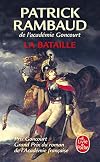
This one didn't do much for me. It is well written, and a good read, but it has a contrived feeling. The author obviously did his research and the book feels as if it was constructed to fit all the interesting facts and episodes in. You can see the author thinkingt: well, I've got to mention that, and I need a scene with him, and I've got to have those and those elements... Prix Goncourt notwithstanding, it left me cold.

It is wonderful to have Patrick Rambaud translated in English. I bought it for kindle. Unfortunately why did the Anglo-Saxon publisher chose to illustrate the cover with the famous Messonier painting of Napoleon and his staff returning from Soissons after the battle of Laons during the Battle of France in 1814, two years after the disastrous Russia campaign?. The meaning of Messonier's painting is lost to the subject of the book showing the resilience of Napoleon when allied armies were show more invading French territory.
Also why having translated the title: "Il neigeait" by "The retreat"? When I told my sister I was reading it she thought it was a book about retirement..."It was snowing" would be more accurate as one of the intents of the author is reflect over how ephemerous glory is and as the Library thing French critic Yokai tells, it is a reference to a [[Victor Hugo]] poem collection called [The punishments] or [Les Chatiments].
Napoleon, Murat, Berthier are wonderfully evocated by Rambaud as well as members of the administration and logistics that followed the army. Along with the soldiers large numbers of civilians follow the army in its desastrous retreat.
Parallels are made by Napoleon between his experience in Russia and the life of Charles XII of Sweden as described by Voltaire.
The book begins like a dream. The army enters Moscow. It is West meeting East and the Far-East. Then the fire that Beyle compares to that of Nero and Rome. After that it is "March or Die" with the fatal decision to return through the Smolensk route. show less
Also why having translated the title: "Il neigeait" by "The retreat"? When I told my sister I was reading it she thought it was a book about retirement..."It was snowing" would be more accurate as one of the intents of the author is reflect over how ephemerous glory is and as the Library thing French critic Yokai tells, it is a reference to a [[Victor Hugo]] poem collection called [The punishments] or [Les Chatiments].
Napoleon, Murat, Berthier are wonderfully evocated by Rambaud as well as members of the administration and logistics that followed the army. Along with the soldiers large numbers of civilians follow the army in its desastrous retreat.
Parallels are made by Napoleon between his experience in Russia and the life of Charles XII of Sweden as described by Voltaire.
The book begins like a dream. The army enters Moscow. It is West meeting East and the Far-East. Then the fire that Beyle compares to that of Nero and Rome. After that it is "March or Die" with the fatal decision to return through the Smolensk route. show less
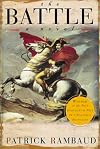
A very good historical novel, translated from the French. It is a straightforward narrative, from multiple points of view, of the battle of Esseling and Aspern, in 1809. Napolean attempted to cross the Danube to subdue the Austrians, after occupying Vienna, but was, after two very bloody days, forced to retreat to the island of Donau, in this prelude to Wagram. The story is told from the French point of view, largely following the affairs of an aide-de-camp to Marshal Berthier. The show more descriptions of battles are very realistic, and the story moves along very well. show less

Conteúdo: A obra é uma recriação meticulosa e vívida da Batalha de Aspern-Essling (1809), a primeira grande derrota de Napoleão Bonaparte.
Valor Literário: É elogiado pela intensidade narrativa, retratando a violência e o caos da guerra, muitas vezes comparado a uma crônica realista, baseando-se parcialmente em notas de Honoré de Balzac.
Valor Literário: É elogiado pela intensidade narrativa, retratando a violência e o caos da guerra, muitas vezes comparado a uma crônica realista, baseando-se parcialmente em notas de Honoré de Balzac.
Lists
THE WAR ROOM (1)
Awards


You May Also Like


Associated Authors
Statistics
- Works
- 36
- Also by
- 1
- Members
- 803
- Popularity
- #31,758
- Rating
- 3.5
- Reviews
- 30
- ISBNs
- 115
- Languages
- 10
- Favorited
- 3
