
Michael Shuman
Author of Going Local: Creating Self-Reliant Communities in a Global Age
About the Author
Michael H. Shuman is an economist, attorney, entrepreneur, and leading visionary on community economics. Currently, he is director of local economy programs for Neighborhood Associates Corporation and lecturer in business at Bard College. He is the author of ten books, including The Small-Mart show more Revolution and The Local Economy Solution. show less
Image credit: Michael Shuman (on left). Chris Johnson , October 19, 2006
Works by Michael Shuman
The Small-Mart Revolution: How Local Businesses Are Beating the Global Competition (2006) 113 copies, 4 reviews
Local Dollars, Local Sense: How to Shift Your Money from Wall Street to Main Street and Achieve Real Prosperity (Community Resilience Guides) (2012) 57 copies, 1 review
The Local Economy Solution: How Innovative, Self-Financing "Pollinator" Enterprises Can Grow Jobs and Prosperity (2015) 31 copies
Conditions of peace : an inquiry : security, democracy, ecology, economics, community (1991) 13 copies
Put Your Money Where Your Life Is: How to Invest Locally Using Self-Directed IRAs and Solo 401(k)s (2020) 6 copies
Towards a Global Village: International Community Development Initiatives (Transnational Institute) (1994) 3 copies
Tagged
Common Knowledge
- Gender
- male
Members
Reviews
The Small-Mart Revolution: How Local Businesses Are Beating the Global Competition by Michael H. Shuman

Don't let my 3 star rating mislead you...this was a great book, well written and very well researched by an innovative mover and shaker...it was just a bit clunky, each chapter in the second half was focused for a different audience so I was wading through economic talk for global leaders and politicians when what I was looking for was individual talk. It was good for me though to get a good, clear, rounded picture and so I read it all. Very thoughtful discussion with plenty of resources. show more I'd suggest this as a read for business owners, local politicians and anyone looking for basis in creating sustainable LOIS business focus. show less
Local Dollars, Local Sense: How to Shift Your Money from Wall Street to Main Street and Achieve Real Prosperity--A Community Resilience Guide by Michael Shuman
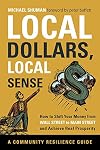
A good way to achieve real prosperity in America is to invest money in local businesses, instead of the multi-national conglomerates of this world. This book shows some ways to do it.
First of all, forget about the usual method, that of buying shares in a local store. The vast majority of investors are "unaccredited," and for a local store to legally offer shares to the public requires an accountant, a lawyer, and several thousand dollars in expenses. A way around that is for the business show more owner to, for instance, offer a $100 gift card for sale to the public. The buyer then gets $125 in goods or services on that card. The business owner gets extra money coming in, and the customer gets something extra for their "investment."
The average Mega-Bank is getting less and less interested in approving a loan for someone who wants to start a business. They would much rather put their money in a higher-risk investment that offers a higher rate of return (credit default swaps, anyone?). Depositors should consider moving their money to a community bank or credit union, which is where loan-seekers should go for a loan. These are institutions where the head office is in your town, or a neighboring town, instead of a neighboring stsate. They will be much more interested in helping local businesses, and treating depositors and loan seekers as more than just a number.
Consider resurrecting regional stock exchanges, which would trade only companies from that state or region. Consider changing the SEC (Securities and Exchange Commission) rules, to make it easier for smaller companies to sell shares to the public, and make it easier for the average person to buy those shares. If you do nothing else, invest in yourself. Pay off your credit cards, pay down your mortgage as fast as possible, consider going (or going back) to school, to increase your available skills as much as possible, and consider a DIY retirement fund.
This will certainly change perceptions about finance. It is easy to read, and gives a number of ways to keep your money in your town (where it belongs). show less
First of all, forget about the usual method, that of buying shares in a local store. The vast majority of investors are "unaccredited," and for a local store to legally offer shares to the public requires an accountant, a lawyer, and several thousand dollars in expenses. A way around that is for the business show more owner to, for instance, offer a $100 gift card for sale to the public. The buyer then gets $125 in goods or services on that card. The business owner gets extra money coming in, and the customer gets something extra for their "investment."
The average Mega-Bank is getting less and less interested in approving a loan for someone who wants to start a business. They would much rather put their money in a higher-risk investment that offers a higher rate of return (credit default swaps, anyone?). Depositors should consider moving their money to a community bank or credit union, which is where loan-seekers should go for a loan. These are institutions where the head office is in your town, or a neighboring town, instead of a neighboring stsate. They will be much more interested in helping local businesses, and treating depositors and loan seekers as more than just a number.
Consider resurrecting regional stock exchanges, which would trade only companies from that state or region. Consider changing the SEC (Securities and Exchange Commission) rules, to make it easier for smaller companies to sell shares to the public, and make it easier for the average person to buy those shares. If you do nothing else, invest in yourself. Pay off your credit cards, pay down your mortgage as fast as possible, consider going (or going back) to school, to increase your available skills as much as possible, and consider a DIY retirement fund.
This will certainly change perceptions about finance. It is easy to read, and gives a number of ways to keep your money in your town (where it belongs). show less
The Small-Mart Revolution: How Local Businesses Are Beating the Global Competition (BK Currents) by Michael H. Shuman
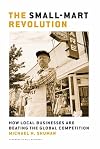
Details the rise of locally owned businesses and how they can outperform multinational corporations both in consumer costs as well as community costs. The second half describes specific action that consumers, investors, entrepreneurs, policymakers, community builders and globalizers can take to encourage and strengthen local economies.
This is an important book, and one that really changed the way I think about my purchasing choices. Instead of simply comparing cost of goods, I now think show more about the community impact and environmental impact of importing goods from other localities. I especially liked his balanced approach: he occasionally shops at Wal-Mart and addresses specifically why it is not particularly a deal. The chapter-ending checklists with simple things each group (consumers, investors, etc.) can do were particularly heartening and eye-opening. While what he proposes is a significant life change for some, it need not be black-and-white, either/or and it need not create extra work or financial hardship on those who undertake the project of creating sustainable local economies. show less
This is an important book, and one that really changed the way I think about my purchasing choices. Instead of simply comparing cost of goods, I now think show more about the community impact and environmental impact of importing goods from other localities. I especially liked his balanced approach: he occasionally shops at Wal-Mart and addresses specifically why it is not particularly a deal. The chapter-ending checklists with simple things each group (consumers, investors, etc.) can do were particularly heartening and eye-opening. While what he proposes is a significant life change for some, it need not be black-and-white, either/or and it need not create extra work or financial hardship on those who undertake the project of creating sustainable local economies. show less
The Small-Mart Revolution: How Local Businesses Are Beating the Global Competition by Michael H. Shuman
I think I'm going to have to buy this one (currently checked out from the library). It has so much good information about topics I know nothing about, but should (business, finance, markets, and the policies and laws governing them). A little more academic than what I've been reading lately, which is making me go slowly. Hence, the need to buy. :)
Awards

You May Also Like


Associated Authors
Statistics
- Works
- 11
- Members
- 355
- Popularity
- #67,467
- Rating
- 3.5
- Reviews
- 6
- ISBNs
- 27