

David A. Jasen
Author of R. Crumb's Heroes of Blues, Jazz & Country
About the Author
David A. Jasen is a Professor of Communications at C. W. Post College.
Image credit: Charles Templeton Ragtime Jazz Festival
Works by David A. Jasen
Tin Pan Alley: The Composers, the Songs, the Performers and Their Times - The Golden Age of American Popular Music from 1886 to 1956 (1988) — Author — 37 copies
Black Bottom Stomp: Eight Masters of Ragtime and Early Jazz (Media and Popular Culture) (2001) — Author — 24 copies
35 Song Hits by Great Black Songwriters: Bert Williams, Eubie Blake, Ernest Hogan and Others (1998) — Editor — 6 copies
Cakewalks, Two-Steps and Trots for Solo Piano: 34 Popular Works from the Dance-Craze Era (Dover Music for Piano) (2012) — Editor — 6 copies
A century of American popular music : 2000 best-loved and remembered songs (1899-1999) (2002) 4 copies
Ragtime 100 Authentic Rags — Editor — 1 copy
Associated Works
Tagged
Common Knowledge
- Legal name
- Jasen, David Alan
- Other names
- Jasen, Dave
Jasen, D. - Birthdate
- 1937-12-16
- Gender
- male
- Education
- Long Island University (M. S.) 1972
- Occupations
- Ragtime composer
pianist
record producer
public speaker - Nationality
- USA
- Birthplace
- New York, New York, USA
- Places of residence
- New York, New York, USA (birth)
- Associated Place (for map)
- New York, New York, USA
Members
Reviews
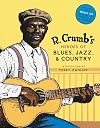
This delightful book is a fantastic read for those interested in the history and early pioneers of American music. The book collects three trading card sets that Crumb drew and painted around 1980. Crumb used historical photos to create his works, and true to the "trading card" aesthetic each picture card is accompanied by a paragraph or two about the performers.
The drawings are great, and the info accompanying them is super--especially for those who like to learn about the history of show more music. You get plenty of excellent biographical info about the featured performer and a lot of "color". That's what makes this book so fun--I pick it up while listening to Bix Beiderbecke and read "his tone, characterized by perfect pitch and spare, well-placed notes, was clean and bell-like". It's not a lot of info, but it's the kind of tidbit that makes listening more fun, especially for someone who's just digging into early American music.
The book really shines when it comes to the roots of country. The entries in that section are a little longer and allow for more exploration of how the music evolved. While reading the entry on the Ray Brothers you'll learn about the regional differences in fiddling in Mississippi and Alabama and how that affected the guitar accompaniment. A wealth of information buried in two short paragraphs!
While flipping through the pictures you may be surprised at how many of the bands had women guitarists. Read the entry on Fiddlin' Powers and Family to learn that the guitar was originally "scorned by most rural performers" and "stigmatized in its early days as a polite parlor instrument" that was fit for young girls to play. Now that's a cool little bit of cultural history that I didn't expect to learn from a book of drawings of musicians--and it's emblematic of what you get with this book, and why I loved it. show less
The drawings are great, and the info accompanying them is super--especially for those who like to learn about the history of show more music. You get plenty of excellent biographical info about the featured performer and a lot of "color". That's what makes this book so fun--I pick it up while listening to Bix Beiderbecke and read "his tone, characterized by perfect pitch and spare, well-placed notes, was clean and bell-like". It's not a lot of info, but it's the kind of tidbit that makes listening more fun, especially for someone who's just digging into early American music.
The book really shines when it comes to the roots of country. The entries in that section are a little longer and allow for more exploration of how the music evolved. While reading the entry on the Ray Brothers you'll learn about the regional differences in fiddling in Mississippi and Alabama and how that affected the guitar accompaniment. A wealth of information buried in two short paragraphs!
While flipping through the pictures you may be surprised at how many of the bands had women guitarists. Read the entry on Fiddlin' Powers and Family to learn that the guitar was originally "scorned by most rural performers" and "stigmatized in its early days as a polite parlor instrument" that was fit for young girls to play. Now that's a cool little bit of cultural history that I didn't expect to learn from a book of drawings of musicians--and it's emblematic of what you get with this book, and why I loved it. show less
I always feel guilty when I shelve a book that’s half pictures as “read.” Anyway, this volume was based on three trading card sets Crumb illustrated of early blues, jazz, and country performers. There is a short essay for each illustration which is always insightful. There are some notable omissions (no Robert Johnson?) which makes the collection somewhat idiosyncratic instead of encyclopedic. Still, the illustrations are great and the whole thing makes you want to seek out these early show more recordings, most no later than 1930.
There is a cd included which is a bonus to listen to after you read the entry for the particular musician. show less
There is a cd included which is a bonus to listen to after you read the entry for the particular musician. show less

I was about to wrap this as a Christmas gift for my son and was lured into the pages. R. Crumb's Heroes of Blues, Jazz & Country is an illustrated compendium of America's early 20th musicians. R. Crumb started to draw and paint the musicians and bands for trading cards that would be included with LP recordings reissued (from pre-WWII 78s) by Yazoo Records. Eventually they were boxed into a set sold by record stores. This book reproduces the paintings along with biographical sketches of the show more artists and bands. While I appreciate the music of this era, I am certainly not an expert, or even a student, of the music. That said, I found the text fascinating (especially the highly descriptive information on Country String bands of which I knew nothing), and Crumb's illustrations evoke the period and whet an appetite for more. The text is by Stephen Calt, David Jasen and Richard Nevins.
The book is accompanied by a 21 song CD with recordings from 1927-1931, I can't comment on these since breaking into the CD pack would spoil the newness of the gift,
The book definitely whet my taste to learn more about the musicians of the era. show less
The book is accompanied by a 21 song CD with recordings from 1927-1931, I can't comment on these since breaking into the CD pack would spoil the newness of the gift,
The book definitely whet my taste to learn more about the musicians of the era. show less
This delightful little book collects reprintings of collectible cards that the comic R. Crumb drew in the 1980's. Crumb is a longtime collector and aficionado of early 20th century American music, and this drawings with very brief biographical accompaniment make a colorful statement about the characters that built American music.
Lists
Youth: Music (1)
Awards

You May Also Like


Associated Authors
Statistics
- Works
- 24
- Also by
- 7
- Members
- 767
- Popularity
- #33,178
- Rating
- 4.0
- Reviews
- 8
- ISBNs
- 49
- Languages
- 3