
Matthew Kneale
Author of English Passengers
About the Author
Matthew Kneale lives in Oxford, England. (Bowker Author Biography)
Image credit: Photo © Frederic Reglain/Gamma
Works by Matthew Kneale
An Atheist's History of Belief: Understanding Our Most Extraordinary Invention (2013) 107 copies, 4 reviews
When we were Romans a novel 1 copy
Associated Works
Tagged
Common Knowledge
- Canonical name
- Kneale, Matthew
- Birthdate
- 1960-11-24
- Gender
- male
- Education
- University of Oxford (Magdalen College)
- Occupations
- writer
author - Relationships
- Kneale, Nigel (father)
Kerr, Judith (mother)
Kneale, Tacy (sister)
Kerr, Alfred (grandfather)
Kneale, Bryan (uncle) - Nationality
- England
UK - Birthplace
- London, England, UK
- Places of residence
- London, England, UK
Japan
Italy - Map Location
- England, UK
Members
Reviews
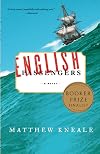
I saved a copy of Matthew Kneale's English Passengers from bargain-cart purgatory at the shop last week and brought it home with me to read as one of my "T-books" (that is, paperbacks, generally fiction, that accompany me on my jaunts about Boston). Typically I try and keep those in my bag when I'm at home so I'm not tempted to read them except when traveling - with this book, however, I quickly gave up that charade and succumbed to its siren's song.
Kneale has created something little short show more of a masterpiece with this work. His method of structure is superb (telling the story from many different first-person perspectives, each with their own unique voice), and his knack for language is simply brilliant. The development of each character is handled with a deftness for which I can think of no apt comparison. From Manx captain Illiam Quillian Kewley of the Sincerity to the Tasmanian aborigine Peevay to the deluded vicar Geoffrey Wilson and the twisted Dr. Thomas Potter, Kneale brings so much life to his pages that it is nearly impossible to feel for the characters (whether that feeling be respect, hatred or compassion) as the narrative proceeds.
This book was a finalist for the Booker Prize and has won several other awards, all well deserved. It is a fantastic yarn from stem to stern, filled with tension, humor, and all the ironies of human interaction. I cannot recommend it more highly.
http://philobiblos.blogspot.com/2006/07/book-review-english-passengers.html show less
Kneale has created something little short show more of a masterpiece with this work. His method of structure is superb (telling the story from many different first-person perspectives, each with their own unique voice), and his knack for language is simply brilliant. The development of each character is handled with a deftness for which I can think of no apt comparison. From Manx captain Illiam Quillian Kewley of the Sincerity to the Tasmanian aborigine Peevay to the deluded vicar Geoffrey Wilson and the twisted Dr. Thomas Potter, Kneale brings so much life to his pages that it is nearly impossible to feel for the characters (whether that feeling be respect, hatred or compassion) as the narrative proceeds.
This book was a finalist for the Booker Prize and has won several other awards, all well deserved. It is a fantastic yarn from stem to stern, filled with tension, humor, and all the ironies of human interaction. I cannot recommend it more highly.
http://philobiblos.blogspot.com/2006/07/book-review-english-passengers.html show less
This is an historical novel with multiple story lines beginning with the story of Captain Illiam Quillian Kewley, the leader of a crew of Manx smugglers. It is here that both the authenticity and complexity of the novel begins to display itself. Kewley is a lively character as are his fellow Manx shipmates. Apparently the Isle Of Man, according to historical sources, was home to Manx smugglers who wandered widely and that some were forcibly transported to the New World, where they endured show more the hospitality of Port Arthur prison in Tasmania. I enjoyed this part as it was very amusing when Kewley and crew try to offload their ill-gotten gains. But then their ship attracts the attention of Customs, and Kewley is forced to consider the indignity of taking on board paying passengers.
This is divine timing for the Reverend Geoffrey Wilson, who needs a ship to go to Tasmania to prove his theory of Divine Refrigeration. His discourse offers the rather surprising argument that the Garden of Eden is to be found within Van Diemen's Land (Tasmania). Wilson has been inspired by the writings of Darwinists, who believe that the Bible is not to be taken literally when it comes to the question of Genesis and the Origins of Species. Unfortunately, Wilson's sponsor is the infantile entrepreneur Jonah Childs whose notion of a good idea would be to use wallabies as pack animals. Childs further demonstrates his poor judgement when he chooses the odious Doctor Potter as botanist for the trip who also volunteers as ship's surgeon. It doesn't take long for Wilson and Potter to realise that they are natural enemies, and it seems that we could be in for a battle of the survival of the fittest, as each take turns to try to convert Kewley's crew. No matter how he tries, Kewley is unable to dump his passengers, so off into the New World they sail.
Another storyline retreats in time to the 1820s to detail the narration of Peevay, a Tasmanian Aborigine, who relates how the 'ghosts' take over the land of his people, and drive them to extinction. He is the product of a rape: his mother was snatched by a white sealer and imprisoned on his island. She escaped, but is forever haunted by the seething hatred she feels for the man who did that to her. When his mother rejects him due to his mixed blood, Peevay yearns for his father. One might think that a novel full of individual narrators would be difficult to navigate, but Kneale handles this well with vivid and vital characters who are engaging for the reader, even when they are as unlikeable as Potter is. I found Kneale's narrative always quite stimulating as did the rest of our Thursday evening book group. He artfully brings all of these narratives to life in a masterful display of black comedy. show less
This is divine timing for the Reverend Geoffrey Wilson, who needs a ship to go to Tasmania to prove his theory of Divine Refrigeration. His discourse offers the rather surprising argument that the Garden of Eden is to be found within Van Diemen's Land (Tasmania). Wilson has been inspired by the writings of Darwinists, who believe that the Bible is not to be taken literally when it comes to the question of Genesis and the Origins of Species. Unfortunately, Wilson's sponsor is the infantile entrepreneur Jonah Childs whose notion of a good idea would be to use wallabies as pack animals. Childs further demonstrates his poor judgement when he chooses the odious Doctor Potter as botanist for the trip who also volunteers as ship's surgeon. It doesn't take long for Wilson and Potter to realise that they are natural enemies, and it seems that we could be in for a battle of the survival of the fittest, as each take turns to try to convert Kewley's crew. No matter how he tries, Kewley is unable to dump his passengers, so off into the New World they sail.
Another storyline retreats in time to the 1820s to detail the narration of Peevay, a Tasmanian Aborigine, who relates how the 'ghosts' take over the land of his people, and drive them to extinction. He is the product of a rape: his mother was snatched by a white sealer and imprisoned on his island. She escaped, but is forever haunted by the seething hatred she feels for the man who did that to her. When his mother rejects him due to his mixed blood, Peevay yearns for his father. One might think that a novel full of individual narrators would be difficult to navigate, but Kneale handles this well with vivid and vital characters who are engaging for the reader, even when they are as unlikeable as Potter is. I found Kneale's narrative always quite stimulating as did the rest of our Thursday evening book group. He artfully brings all of these narratives to life in a masterful display of black comedy. show less
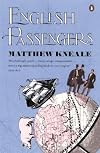
An excellently quirky, educational, thought-provoking, and often humourous book that avoids being confusing (despite multiple narrators) or off-putting when describing the more shocking aspects of the near extinction of Aborigines in Tasmania and the views of white supremacists. Even the potentially awkward mix of socio-political themes and jolly japes works.
PLOT
(Not saying more than is on the back cover.)
It is set in the 1800s and opens with the crew of Sincerity from the Isle of Man, show more intent on petty smuggling, but who end up taking some Englishmen to Tasmania, including a priest with a penchant for geology who thinks he will find the Garden of Eden, and a doctor intent on proving the superiority of white races in scientific terms. In Tasmania, relations between white settlers and local Aborigines are deadly and often shocking, whether those settlers be impoverished seal-hunters or rich and powerful soldiers or officials.
The general events in Tasmania are broadly true. Events on the boat provide a contrasting degree of levity.
A few of the plot twists were annoyingly predictable - but I loved the irony of the ending, plus the final post script, which fully justified the inclusion of some of the more unpleasant aspects in the novel itself.
NARRATION
I lost track of the number of narrators, but each has a distinct voice, and is explicitly introduced. Some tell one small part of the story, while others recur many times. A difficult trick for a writer to make work, but Kneale manages it.
THEMES
It opens with a philosophical conundrum that defines the book: "Say a man catches a bullet through his skull in somebody's war, so where's the beginning of that?... the day our hero goes marching off to fight... when he's just turned six and sees soldiers striding down the street... that night when a little baby is born?" By extrapolation, who is to blame for the near extinction of the Tasmanian Aborigines?
Conflict and opportunism are at the heart of the book; no one gets on with anyone else (with the general exception of the Manx crew) and everyone is trying to achieve personal success at the expense of others (not generally financial, though). This is often fuelled by self-deceit and the desire to see evidence and patterns where none exists.
Class, science, religion, nationalism, colonialism (paternalism, exploitation), evangelism, culture clashes, racial identity and tension, crime and punishment (redemption, reform), murder, revenge, and genocide are the main themes. Smuggling and survival are minor, but pertinent distractions.
The book is crawling with hypocrites, including the three, very different, main characters. Some are amusing, like Captain Kewley who justifies smuggling as altruistic capitalism, but others, especially Rev Wilson, have few redeeming features, while Peevay's personal history means he starts off in credit with the reader (and for most, probably remains so). Rev Wilson is the worst, though he is an easy target. His modus operandi is pious prayer that demeans and criticises those he dislikes: he always prays for their improvement, rather than his tolerance, whist stating "I am not one to judge", just as he does so.
Captain Kewley does have some redeeming features. In particular,he twice saves enemies, at considerable risk to himself.
Dr Potter's racist "notions" are troubling to read: "The Chinese posses a unique impulse of delight in bright colours, while among the savages of Africa there was a complete absence of the impulse of civilisation." This is partly because of what they say, partly because they are mentioned at such length but most guiltily because he expresses them so ludicrously that it's often hard not to laugh (mainly when he's comparing the Celts, Saxons and Normans). However, people really did (and do) publish such tracts, and the book thoroughly ridicules and refutes such ideas.
Creationists and young Earthers don't come out of this well, so I wouldn't expect them to enjoy it.
COLONIAL POWERS
Some of the whites genuinely want to help the Aborigines, thinking clothes, crafts, farming and Bible stories will bring salvation, civilisation and happiness.
Others want to expunge all trace of Aboriginal life and have less care for the people than for their own animals.
The Aborigines are given new names: some are Biblical, others almost heretical, but most are deliberately, and often nastily, chosen for reasons that the bearers do not realise. "The older and more exalted of the natives were rewarded with names of quaint grandeur, such as King Alpha... a girl who was dreamy and sad was now Ophelia.. the monstrous female... became Mary, and while this might seem innocent enough, I had little doubt as to which murderous monarch was in Mr Robinson's mind."
One tells an Aborigine "You must speak English now... only English", which is observed by another white as "Thus he displayed... his resolve to bring improvement to the unfortunate creature". A youngster with a newly discovered talent and passion for maths is told "it was neither useful nor practical for him to learn" and is given more Bible instruction instead.
It's not all one-way though: some of the Aborigines are determined to survive, whether in a confrontational way, or from within, by learning about European belief and culture.
LANGUAGE
Kneale clearly thought carefully about the language he used. He includes a glossary of Manx terms, though I never needed to refer to it, because context made the meanings clear. He also has a caveat at the beginning about Peevay's speech, which is how he imagines an Aboriginal of the time might speak English, given the influence of white settlers and preachers. Personally, I thought the intent was pretty clear, and the echoes of biblical language obvious.
The real skill with language is the way each of the many narrators has a clear personality and self-justifying way of telling their bit of the story.
Examples that caught my eye include:
* A Manx way of using "dream" without a preposition; "A few might have dreamed every penny on a new jacket or boots" and "I dreamed my great-grandfather, Juan, who I never met".
* "Particular words that must never be spoken aboard a Manx boat when she's out at sea", including rabbit, herring, cat, mouse, wind, sun, moon and pig! If someone slips up, they must "shout 'cold iron' and then touch the ship's cold iron as quick as he can".
* On first hearing English, an Aborigine recalls "it never was said properly but was just murmured, like wombat coughing. Now... they hardly are words to me any more but just thinkings that are said".
* Learning English swear words has a pleasingly powerful effect: "Once I said these at Smith, just to see their magic, and it was strong, as he hated me for them very much".
* Peevay's English has a quaint, simple lyrical and somewhat Biblical style. For example:
- "By and by I grew taller and got lustings, so I noticed females in a new way, and their bubbies and fluffs were tidings of joy and filled me with new hungry wanting."
- "Mother was transported with lamentation... [his] getting dead made her even worse... she never would speak to me at all, even for hating."
OTHER QUOTES
* "Publication is a powerful thing. It can bring a man all manner of unlooked-for events, making friends and enemies of perfect strangers." Even truer in the days of the internet.
* Suburbs are "houses marooned in fields being an advance colony of ever-spreading London".
* "His Majesty's colony of Van Diemen's land is not intended to reform criminals, but simply to store them, like so much rubbish."
* "There are few things worse than being forgiven, as you never have a chance of answering back."
PS Further thoughts, arising from discussion.
This book immediately reminded me of the first story in Cloud Atlas (https://www.goodreads.com/review/show/23327001), which I had reread not long before reading this. As it progressed, parallels with Cloud Atlas continued, not just in terms of the period the voyage was set, but in the themes related to exploitation. show less
PLOT
(Not saying more than is on the back cover.)
It is set in the 1800s and opens with the crew of Sincerity from the Isle of Man, show more intent on petty smuggling, but who end up taking some Englishmen to Tasmania, including a priest with a penchant for geology who thinks he will find the Garden of Eden, and a doctor intent on proving the superiority of white races in scientific terms. In Tasmania, relations between white settlers and local Aborigines are deadly and often shocking, whether those settlers be impoverished seal-hunters or rich and powerful soldiers or officials.
The general events in Tasmania are broadly true. Events on the boat provide a contrasting degree of levity.
A few of the plot twists were annoyingly predictable - but I loved the irony of the ending, plus the final post script, which fully justified the inclusion of some of the more unpleasant aspects in the novel itself.
NARRATION
I lost track of the number of narrators, but each has a distinct voice, and is explicitly introduced. Some tell one small part of the story, while others recur many times. A difficult trick for a writer to make work, but Kneale manages it.
THEMES
It opens with a philosophical conundrum that defines the book: "Say a man catches a bullet through his skull in somebody's war, so where's the beginning of that?... the day our hero goes marching off to fight... when he's just turned six and sees soldiers striding down the street... that night when a little baby is born?" By extrapolation, who is to blame for the near extinction of the Tasmanian Aborigines?
Conflict and opportunism are at the heart of the book; no one gets on with anyone else (with the general exception of the Manx crew) and everyone is trying to achieve personal success at the expense of others (not generally financial, though). This is often fuelled by self-deceit and the desire to see evidence and patterns where none exists.
Class, science, religion, nationalism, colonialism (paternalism, exploitation), evangelism, culture clashes, racial identity and tension, crime and punishment (redemption, reform), murder, revenge, and genocide are the main themes. Smuggling and survival are minor, but pertinent distractions.
The book is crawling with hypocrites, including the three, very different, main characters. Some are amusing, like Captain Kewley who justifies smuggling as altruistic capitalism, but others, especially Rev Wilson, have few redeeming features, while Peevay's personal history means he starts off in credit with the reader (and for most, probably remains so). Rev Wilson is the worst, though he is an easy target. His modus operandi is pious prayer that demeans and criticises those he dislikes: he always prays for their improvement, rather than his tolerance, whist stating "I am not one to judge", just as he does so.
Captain Kewley does have some redeeming features. In particular,
Dr Potter's racist "notions" are troubling to read: "The Chinese posses a unique impulse of delight in bright colours, while among the savages of Africa there was a complete absence of the impulse of civilisation." This is partly because of what they say, partly because they are mentioned at such length but most guiltily because he expresses them so ludicrously that it's often hard not to laugh (mainly when he's comparing the Celts, Saxons and Normans). However, people really did (and do) publish such tracts, and the book thoroughly ridicules and refutes such ideas.
Creationists and young Earthers don't come out of this well, so I wouldn't expect them to enjoy it.
COLONIAL POWERS
Some of the whites genuinely want to help the Aborigines, thinking clothes, crafts, farming and Bible stories will bring salvation, civilisation and happiness.
Others want to expunge all trace of Aboriginal life and have less care for the people than for their own animals.
The Aborigines are given new names: some are Biblical, others almost heretical, but most are deliberately, and often nastily, chosen for reasons that the bearers do not realise. "The older and more exalted of the natives were rewarded with names of quaint grandeur, such as King Alpha... a girl who was dreamy and sad was now Ophelia.. the monstrous female... became Mary, and while this might seem innocent enough, I had little doubt as to which murderous monarch was in Mr Robinson's mind."
One tells an Aborigine "You must speak English now... only English", which is observed by another white as "Thus he displayed... his resolve to bring improvement to the unfortunate creature". A youngster with a newly discovered talent and passion for maths is told "it was neither useful nor practical for him to learn" and is given more Bible instruction instead.
It's not all one-way though: some of the Aborigines are determined to survive, whether in a confrontational way, or from within, by learning about European belief and culture.
LANGUAGE
Kneale clearly thought carefully about the language he used. He includes a glossary of Manx terms, though I never needed to refer to it, because context made the meanings clear. He also has a caveat at the beginning about Peevay's speech, which is how he imagines an Aboriginal of the time might speak English, given the influence of white settlers and preachers. Personally, I thought the intent was pretty clear, and the echoes of biblical language obvious.
The real skill with language is the way each of the many narrators has a clear personality and self-justifying way of telling their bit of the story.
Examples that caught my eye include:
* A Manx way of using "dream" without a preposition; "A few might have dreamed every penny on a new jacket or boots" and "I dreamed my great-grandfather, Juan, who I never met".
* "Particular words that must never be spoken aboard a Manx boat when she's out at sea", including rabbit, herring, cat, mouse, wind, sun, moon and pig! If someone slips up, they must "shout 'cold iron' and then touch the ship's cold iron as quick as he can".
* On first hearing English, an Aborigine recalls "it never was said properly but was just murmured, like wombat coughing. Now... they hardly are words to me any more but just thinkings that are said".
* Learning English swear words has a pleasingly powerful effect: "Once I said these at Smith, just to see their magic, and it was strong, as he hated me for them very much".
* Peevay's English has a quaint, simple lyrical and somewhat Biblical style. For example:
- "By and by I grew taller and got lustings, so I noticed females in a new way, and their bubbies and fluffs were tidings of joy and filled me with new hungry wanting."
- "Mother was transported with lamentation... [his] getting dead made her even worse... she never would speak to me at all, even for hating."
OTHER QUOTES
* "Publication is a powerful thing. It can bring a man all manner of unlooked-for events, making friends and enemies of perfect strangers." Even truer in the days of the internet.
* Suburbs are "houses marooned in fields being an advance colony of ever-spreading London".
* "His Majesty's colony of Van Diemen's land is not intended to reform criminals, but simply to store them, like so much rubbish."
* "There are few things worse than being forgiven, as you never have a chance of answering back."
PS Further thoughts, arising from discussion.
This book immediately reminded me of the first story in Cloud Atlas (https://www.goodreads.com/review/show/23327001), which I had reread not long before reading this. As it progressed, parallels with Cloud Atlas continued, not just in terms of the period the voyage was set, but in the themes related to exploitation. show less

In the late 13th century, a rag-tag bunch of pilgrims—each with their own goals and fears—sets out on the long journey from England to Rome. Matthew Kneale writes with verve and humour, and actually manages the feat of writing characters whose foibles and flaws come from their humanity rather than from the fact that they're stupid medieval people—sadly an approach all too rare in historical fiction. Whether Pilgrims works for you will likely depend on your sense of what's funny—if it show more doesn't click for you in the first few chapters, I wouldn't recommend continuing on because that's the main thing that keeps the book a somewhat propulsive read in spite of the fairly meandering plot—and your tolerance for people making poor decisions. But if you're in the mood for something gently Chaucerian, I think this might hit the spot. While I don't think any of the characters will remain with me for a long time, I did have fun while reading this. show less
Lists
Booker Prize (1)
A Novel Cure (1)
Awards


You May Also Like


Associated Authors
Statistics
- Works
- 13
- Also by
- 1
- Members
- 3,802
- Popularity
- #6,670
- Rating
- 3.9
- Reviews
- 125
- ISBNs
- 139
- Languages
- 11
- Favorited
- 5