
Daniel Kehlmann
Author of Measuring the World
About the Author
Daniel Kehlmann was born on January 13, 1975 in Munich. He is a German language author. His work Die Vermessung der Welt (translated into English by Carol Brown Janeway as Measuring the World, 2006) is the best selling novel in the German language since Patrick Süskind's Perfume was released in show more 1985. In 1997 Kehlmann completed his first novel, Beerholms Vorstellung, while still a student. He also wrote numerous reviews and essays while at university. In 2001, Kehlmann held the guest lectureship of poetics at the Johannes Gutenberg University of Mainz. In the winter term of 2005/6 Kehlmann held the lectureship of poetics at the FH Wiesbaden, and in 2006/7 he held the lectureship for poetics at the university of Göttingen. Daniel Kehlmann is a member of the Mainzer Akademie der Wissenschaften und der Literatur. In 2015 he made the Independent Foreign Fiction Prize shortlist with his title, F. (Bowker Author Biography) show less
Image credit: Daniel Kehlmann in 2023
Works by Daniel Kehlmann
Ich tat die Augen auf und sah das Helle: Gedichte und Prosa. Ausgewählt und mit einem Vorwort von Daniel Kehlmann | »Was für ein Schatz an Form, Schönheit und weiser… (2024) — Editor — 8 copies
Vier Stücke: Geister in Princeton / Der Mentor / Heilig Abend / Die Reise der Verlorenen (2019) 8 copies
Der unsichtbare Drache: Ein Gespräch mit Heinrich Detering (Kampa Salon / Gespräche) (2019) 4 copies
Die Reise der Verlorenen 1 copy
Das letzte Problem 1 copy
Das Verhör in der Nacht 1 copy
Heilig Abend — Author — 1 copy
Dussmann:una conversa 2016 1 copy
Associated Works
Tagged
Common Knowledge
- Canonical name
- Kehlmann, Daniel
- Legal name
- Kehlmann, Daniel
- Birthdate
- 1975-01-13
- Gender
- male
- Education
- University of Vienna
- Occupations
- novelist
lecturer in poetics
playwright - Organizations
- New York University
- Awards and honors
- Deutsche Akademie für Sprache und Dichtung (2008)
Akademie der Wissenschaften und der Literatur Mainz (2008)
Freie Akademie der Künste (2010)
Grand Prix du livre des dirigeants (2007)
Per Olav Enquist Pris (2008)
Prix Cévennes du roman européen (2010) (show all 22)
Nestroy-Theaterpreis (2012)
Friedrich-Hölderlin-Preis (2018)
Frank-Schirrmacher-Preis (2018)
Anton Wildgans Prize (2019)
Schubart Literaturpreis (2019)
Elisabeth-Langgässer-Literaturpreis (2021)
WELT Literaturpreis (2007)
Marbacher Schillerrede (2022)
Ludwig Börne Prize (2024)
New York Public Library Lion (2025)
Candide-Preis (2005)
Heimito von Doderer-Literaturpreis (2006)
Literaturpreis der Konrad-Adenauer-Stiftung (2006)
Thomas-Mann-Preis (2008)
WELT-Literaturpreis (2007)
Kleist-Preis (2006) - Relationships
- Kehlmann, Michael (father)
Mettler, Dagmar (mother) - Nationality
- Germany
Austria - Birthplace
- Munich, West Germany
- Places of residence
- Vienna, Austria
New York, New York, USA
Berlin, Germany - Map Location
- Germany
Members
Discussions
Group Read, January 2022: Tyll in 1001 Books to read before you die (January 2022)
Reviews
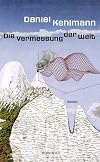
This historical novel received both critical and popular acclaim when it appeared. It is set in the late eighteenth and early nineteenth centuries, the Romantic era. A time of creative ferment in literature and music, it was also a period of tremendous advance in natural science and mathematics. Kehlmann tells the parallel lives of two of its giants, Alexander von Humboldt and Carl Friedrich Gauss. One—inspired by the recent voyages of Captain Cook and others, but also by the mad show more sixteenth-century conquistador Lope de Aguirre’s expedition up the Amazon—traveled to South and Central America to discover, measure, and catalog everything to be seen there. The other, loathe to leave his house, was a child prodigy who plunged the depths of mathematics. Both are depicted as monomaniacs with limited social skills. The German word “kauzig” comes to mind (its English translation, “odd,” fails to give a full picture of what this conveys).
Their story is told in alternating chapters but framed by their one meeting, late in life. It is narrated in the third person, but much of what is recounted is from the inner life of these two and others—what they thought and felt. As the novel draws to a close, both reconsider their careers. Though many miles separate them, it is as if they are, in their minds, in dialog.
The title, Die Vermessung der Welt, refers to the land surveying that both engaged in, resulting in precise measurement. They shared the idea that places assumed a greater reality when their position had been accurately fixed latitudinally and longitudinally. However, there is a possible second meaning: the related adjective, “vermessen,” describes one who is presumptuous or overconfident. This suggests possible limits to the scientific approach—that aspects of the world can’t be measured. This thought remains relevant in our time, with its mania for digitalization.
Fitting for a twenty-first-century novel, there are postmodern touches. Many scenes set in Latin America, for example, evoke magical realism. More than one character utters a complaint about historical novels. One describes them as “Romane, die sich in Lügenmärchen verlören, weil der Verfasser seine Flausen an die Namen geschichtlicher Personen binde” (novels that lose themselves in lying fairy tales because the author attaches his own nonsense to the names of historical personalities). This criticism is particularly apt since Kehlmann makes free with established facts to create his portrait, unlike other practitioners of the genre, such as Vidal and Mantel, whose inventions, while imaginative, remain consistent with what is known.
Apart from this aspect, which might bother some readers more than others, the book is enjoyable. It is humorously written. The first chapter alone, in which Gauss, after grudgingly accepting Humboldt’s invitation, arrives in Berlin, demonstrates Kehlmann’s talent for setting up a scene reminiscent of the Marx Brothers at their best. Cameo appearances by Goethe, Kant, and others add to the enjoyment, as do the many pointed observations about what it means to be German (ranging from standing and sitting up straight at all times to the consciousness of existential Angst). This, at a time when Germany was an idea but not yet a unified nation. show less
Their story is told in alternating chapters but framed by their one meeting, late in life. It is narrated in the third person, but much of what is recounted is from the inner life of these two and others—what they thought and felt. As the novel draws to a close, both reconsider their careers. Though many miles separate them, it is as if they are, in their minds, in dialog.
The title, Die Vermessung der Welt, refers to the land surveying that both engaged in, resulting in precise measurement. They shared the idea that places assumed a greater reality when their position had been accurately fixed latitudinally and longitudinally. However, there is a possible second meaning: the related adjective, “vermessen,” describes one who is presumptuous or overconfident. This suggests possible limits to the scientific approach—that aspects of the world can’t be measured. This thought remains relevant in our time, with its mania for digitalization.
Fitting for a twenty-first-century novel, there are postmodern touches. Many scenes set in Latin America, for example, evoke magical realism. More than one character utters a complaint about historical novels. One describes them as “Romane, die sich in Lügenmärchen verlören, weil der Verfasser seine Flausen an die Namen geschichtlicher Personen binde” (novels that lose themselves in lying fairy tales because the author attaches his own nonsense to the names of historical personalities). This criticism is particularly apt since Kehlmann makes free with established facts to create his portrait, unlike other practitioners of the genre, such as Vidal and Mantel, whose inventions, while imaginative, remain consistent with what is known.
Apart from this aspect, which might bother some readers more than others, the book is enjoyable. It is humorously written. The first chapter alone, in which Gauss, after grudgingly accepting Humboldt’s invitation, arrives in Berlin, demonstrates Kehlmann’s talent for setting up a scene reminiscent of the Marx Brothers at their best. Cameo appearances by Goethe, Kant, and others add to the enjoyment, as do the many pointed observations about what it means to be German (ranging from standing and sitting up straight at all times to the consciousness of existential Angst). This, at a time when Germany was an idea but not yet a unified nation. show less
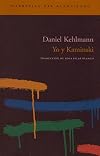
Sebastian Zöllner tiene un plan: convertirse en el biógrafo del gran pintor Manuel Kaminski, y esperar su pronta muerte para saltar a la fama con su biografía. Pero las cosas nunca salen como uno espera, ¿verdad? La novela empieza con Sebastian acudiendo a una entrevista con Kaminski, que vive en una casita en los Alpes, en plena montaña. Sebastian es un personaje despreciable, mezquino, egoista, narcisista y egocéntrico a más no poder (el título, 'Yo y Kaminski', lo dice todo). Sin show more embargo, con el transcurrir de sus peripecias te va cayendo mejor. Es una sensación extraña. El personaje, la novela en sí, te hace reir por momentos pero te deja al mismo tiempo un sentimiento de frialdad, frialdad que va desapareciendo según vas leyendo, hasta convertirse en una sensación de apego y soledad.
Daniel Kehlmann, joven escritor alemán y considerado todo un genio en su país, ha construído una novela que raya a gran altura en ciertos momentos, con unos diálogos, lo mejor del libro, brillantes e inteligentes. También realiza una crítica mordaz e irónica sobre el mundo del arte, reflexionando al mismo tiempo sobre las relaciones humanas. Dentro de un tiempo, espero leer la gran obra maestra de Kehlmann. show less
Daniel Kehlmann, joven escritor alemán y considerado todo un genio en su país, ha construído una novela que raya a gran altura en ciertos momentos, con unos diálogos, lo mejor del libro, brillantes e inteligentes. También realiza una crítica mordaz e irónica sobre el mundo del arte, reflexionando al mismo tiempo sobre las relaciones humanas. Dentro de un tiempo, espero leer la gran obra maestra de Kehlmann. show less
Real Rating: 4.75* of five
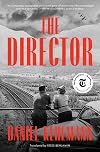
The Publisher Says: An artist's life, a pact with the devil, a novel about the dangerous illusions of the silver screen.
G.W. Pabst, one of cinema’s greatest directors of the 20th century, was filming in France when the Nazis seized power. To escape the horrors of the new and unrecognizable Germany, he fled to Hollywood. But now, under the blinding California sun, the world-famous director suddenly looks like a nobody. Not even Greta Garbo, the Hollywood actress show more whom he made famous, can help him.
When he receives word that his elderly mother is ill, he finds himself back in his homeland of Austria, which is now called Ostmark. Pabst, his wife, and his young son are suddenly confronted with the barbaric nature of the regime. So, when Joseph Goebbels—the minister of propaganda in Berlin—sees the potential for using the European film icon for his directorial genius and makes big promises to Pabst and his family, Pabst must consider Goebbels’s thinly veiled order. While Pabst still believes that he will be able to resist these advances, that he will not submit to any dictatorship other than art, he has already taken the first steps into a hopeless entanglement.
Daniel Kehlmann's novel about art and power, beauty and barbarism is a triumph. The Director shows what literature is capable of.
I RECEIVED A DRC FROM THE PUBLISHER VIA NETGALLEY. THANK YOU.
My Review: Georg Wilhelm Pabst (25 August 1885 – 29 May 1967) lived an unlucky life. He was trapped in his native Europe for each of the World Wars fought there. His work...impressive stuff...is almost totally forgotten outside the small world of cinéastes. (Do you know anyone, apart from me, who's seen The Threepenny Opera and/or L'Atlantide?) We're treated here to a deep fictional dive into his inner workings. Given that he already knew Nazism was wrong, bad, and evil, and was trying to escape its miasma, his decision to collaborate with Goebbels in the propaganda machine seems inexcusable. In fact it was never forgiven. Not even his German-language film The Last Act (The Last Ten Days in English) bought him back his prior-to-collaboration esteem in spite of its honest treatment of Hitler's insanity at the end of the war.
What price security. It cost this security-seeker very dear. His only son was swallowed by the Hitler Youth because his father returned to see if he could care for his ailing mother. He is examined in this novel as only fiction is capable of examining an inner life. It's not the justifications and self-delusion that a memoir could bring to the table. It's the decisions he made writ plain and unadorned with the inevitable dishonesty of making excuses.
I don't think a man who could meet with and work for Nazis could've brought himself to conjure those honest, self-deprecating words.
I'm new to Kehlmann's work. This kind of spotlight is not flattering to its object. It can easily become a hatchet-job or hagiography; each is distorted and ultimately dishonest. In Author Kehlmann's choice of fictionalizing events and people very close to precisely aligned with the historical record, he puts the dishonesty and ambiguity on whom it belongs: Pabst. It's just...disturbing, and in a way a biography, a memoir would not be because Author Kehlmann clearly knows the facts and has an opinion yet makes us, the audience, take in our responses without the comfort of distancing our responses.
Would any one of the readers of this book behaved differently than Pabst? The fictional framing strips away the fig-leaf of "objectivity" so we must sit in the decisive moments with Pabst. Are you sure your illusion of yourself as a resister is accurate? Are you sure your judgment of what you'll need to give up is accurate? Are you sure you can be in, but not of, the system you scorn and abhor?
Translator Ross Benjamin did a good enough job rendering the read into English that I was a bit surprised to realize it was a translation. That is, to me, a very high compliment, or intended as one at least. It is a feat of writing to fictionalize someone who's famous (if you know who he is) in the light that emphasizes who he was; an equal feat to take that unusual choice to a very high level of craft in a different language. Kudos to both artists for a job well done.
Why, if I'm praising this work so highly and with such fervor, am I not offering all five stars? Because at no time was I transported into a different awareness, a space of timeless immanence such as I was by Evil Genius or The Remembered Soldier. It's all too rare, that removal from mundanity, so this is not a knock on the quality of the read. I'm impressed and I'm edified and I'm involved by this novel. It's at the top of the literary heap. It deserves its International Booker nomination. I'm not going to put in my pantheon but I'm going to urge it on you as a fascinating, timely, well-crafted story. show less
The Publisher Says: An artist's life, a pact with the devil, a novel about the dangerous illusions of the silver screen.
G.W. Pabst, one of cinema’s greatest directors of the 20th century, was filming in France when the Nazis seized power. To escape the horrors of the new and unrecognizable Germany, he fled to Hollywood. But now, under the blinding California sun, the world-famous director suddenly looks like a nobody. Not even Greta Garbo, the Hollywood actress show more whom he made famous, can help him.
When he receives word that his elderly mother is ill, he finds himself back in his homeland of Austria, which is now called Ostmark. Pabst, his wife, and his young son are suddenly confronted with the barbaric nature of the regime. So, when Joseph Goebbels—the minister of propaganda in Berlin—sees the potential for using the European film icon for his directorial genius and makes big promises to Pabst and his family, Pabst must consider Goebbels’s thinly veiled order. While Pabst still believes that he will be able to resist these advances, that he will not submit to any dictatorship other than art, he has already taken the first steps into a hopeless entanglement.
Daniel Kehlmann's novel about art and power, beauty and barbarism is a triumph. The Director shows what literature is capable of.
I RECEIVED A DRC FROM THE PUBLISHER VIA NETGALLEY. THANK YOU.
My Review: Georg Wilhelm Pabst (25 August 1885 – 29 May 1967) lived an unlucky life. He was trapped in his native Europe for each of the World Wars fought there. His work...impressive stuff...is almost totally forgotten outside the small world of cinéastes. (Do you know anyone, apart from me, who's seen The Threepenny Opera and/or L'Atlantide?) We're treated here to a deep fictional dive into his inner workings. Given that he already knew Nazism was wrong, bad, and evil, and was trying to escape its miasma, his decision to collaborate with Goebbels in the propaganda machine seems inexcusable. In fact it was never forgiven. Not even his German-language film The Last Act (The Last Ten Days in English) bought him back his prior-to-collaboration esteem in spite of its honest treatment of Hitler's insanity at the end of the war.
What price security. It cost this security-seeker very dear. His only son was swallowed by the Hitler Youth because his father returned to see if he could care for his ailing mother. He is examined in this novel as only fiction is capable of examining an inner life. It's not the justifications and self-delusion that a memoir could bring to the table. It's the decisions he made writ plain and unadorned with the inevitable dishonesty of making excuses.
Director was, all in all, a strange profession. One was an artist, but created nothing, instead directing those who created something, arranging the work of others who, viewed in the cold light of day, were more capable than oneself. That was why so much was required before one could even start to work: writers, artists, composers needed only paper, at most paint, sculptors needed marble and a few tools, but a director needed a hundred people and a studio and machines and a great deal of electricity. All this had to be paid for, so he always also needed someone to entrust him with a lot of money. And that was why one only rarely made films, the rest of the time one talked to people and went out to lunch and wrote letters and gave lectures and tried to convince someone. And again and again one secretly wondered when all the people working on a film together would realize that they could do it without a director too, if only they agreed. Because the actors could certainly act on their own, the camera operator could easily film them, the architect could build a stage for them, and the editor could select and assemble the best footage afterward. But because everyone simply believed that a director was necessary, the whole thing was not undertaken without a director.
I don't think a man who could meet with and work for Nazis could've brought himself to conjure those honest, self-deprecating words.
I'm new to Kehlmann's work. This kind of spotlight is not flattering to its object. It can easily become a hatchet-job or hagiography; each is distorted and ultimately dishonest. In Author Kehlmann's choice of fictionalizing events and people very close to precisely aligned with the historical record, he puts the dishonesty and ambiguity on whom it belongs: Pabst. It's just...disturbing, and in a way a biography, a memoir would not be because Author Kehlmann clearly knows the facts and has an opinion yet makes us, the audience, take in our responses without the comfort of distancing our responses.
Would any one of the readers of this book behaved differently than Pabst? The fictional framing strips away the fig-leaf of "objectivity" so we must sit in the decisive moments with Pabst. Are you sure your illusion of yourself as a resister is accurate? Are you sure your judgment of what you'll need to give up is accurate? Are you sure you can be in, but not of, the system you scorn and abhor?
Translator Ross Benjamin did a good enough job rendering the read into English that I was a bit surprised to realize it was a translation. That is, to me, a very high compliment, or intended as one at least. It is a feat of writing to fictionalize someone who's famous (if you know who he is) in the light that emphasizes who he was; an equal feat to take that unusual choice to a very high level of craft in a different language. Kudos to both artists for a job well done.
Why, if I'm praising this work so highly and with such fervor, am I not offering all five stars? Because at no time was I transported into a different awareness, a space of timeless immanence such as I was by Evil Genius or The Remembered Soldier. It's all too rare, that removal from mundanity, so this is not a knock on the quality of the read. I'm impressed and I'm edified and I'm involved by this novel. It's at the top of the literary heap. It deserves its International Booker nomination. I'm not going to put in my pantheon but I'm going to urge it on you as a fascinating, timely, well-crafted story. show less
Through a Lens Darkly
Reading Daniel Kehlmann’s book was like seeing the story of a life through a camera lens. In describing life under German occupied Austria and Czechoslovakia during WWII, Kehlmann also gives the reader an intimate understanding of how films are made . The detail and the excellent writing make a page-turner, a page-turner that is so immersive that the reader does not want to turn the page .
The book is based on the life of the German film director G.W. Pabst. It is no show more way a biography but essential parts of Pabst’s film career make up the structure of the novel. Some of the scenes are taken directly from Pabst’s films in progress, but but the most profoundly disturbing scenes are taken from works of proactive Nazi sympathizers such as Leni Riefenstahl and Alfred Karrasch.
Pabsts is portrayed as a man who tries to navigate his way under the Nazi regime in order to make “good” films. He is portrayed as a perfectionist who only wishes to make exceptional nuanced movies. In 1933 he leaves Germany, fearing Naziism. He moves to Hollywood where he is apparently disillusioned by the type of films that the American public wants. He leaves America for France , disillusioned with and embarrassed at the films he’s directed in Hollywood. While in France Pabst learns that his mother is ill. He takes what he intends to be a short trip to Austria, where he and his family become unable to leave due to the outbreak of WWII.
Pabst does anything he can to keep his career going, even going so far as working with the Nazi Ministry of Propaganda to fund his films. Pabst is depicted as trying to tread a careful line, avoiding outright sympathy for the Nazis but going along and them in order to keep his career, avoiding dissent. One fictional scene from a film he is directing is based on the pro-Nazi book, “The Molander Case”. The actual filming is so horrific, so believable that the reader becomes the unwilling cameraman on an elevated platform where he follows the faces of inmates of a concentration camp who are used as extras to make up a well-dressed crowd at a theatre listening to a violin concerto.. The reader IS the camera man. It’s almost unbearable to read on. In actual fact Pabst never made such a film and never used concentration camp inmates as extras, but another director Leni Riefenstahl did. It appears that the film never existed, but is a vehicle for Kehlmann to express his ideas about life under fascism and art.
What is factual and what is not doesn’t really matter. Even the characters, script writers, camera operators, actors, extras and editors at times cannot believe what has just happened. They “rewind” their actions over and over, as if they would prefer to leave some of what they have experienced on the cutting room floor. Reading The Director is a cinematic experience. The combination of Kehlmann’s literary expertise together with his knowledge of film-making lead to an intense experience for the reader.
Essential reading. Five stars. show less
Reading Daniel Kehlmann’s book was like seeing the story of a life through a camera lens. In describing life under German occupied Austria and Czechoslovakia during WWII, Kehlmann also gives the reader an intimate understanding of how films are made . The detail and the excellent writing make a page-turner, a page-turner that is so immersive that the reader does not want to turn the page .
The book is based on the life of the German film director G.W. Pabst. It is no show more way a biography but essential parts of Pabst’s film career make up the structure of the novel. Some of the scenes are taken directly from Pabst’s films in progress, but but the most profoundly disturbing scenes are taken from works of proactive Nazi sympathizers such as Leni Riefenstahl and Alfred Karrasch.
Pabsts is portrayed as a man who tries to navigate his way under the Nazi regime in order to make “good” films. He is portrayed as a perfectionist who only wishes to make exceptional nuanced movies. In 1933 he leaves Germany, fearing Naziism. He moves to Hollywood where he is apparently disillusioned by the type of films that the American public wants. He leaves America for France , disillusioned with and embarrassed at the films he’s directed in Hollywood. While in France Pabst learns that his mother is ill. He takes what he intends to be a short trip to Austria, where he and his family become unable to leave due to the outbreak of WWII.
Pabst does anything he can to keep his career going, even going so far as working with the Nazi Ministry of Propaganda to fund his films. Pabst is depicted as trying to tread a careful line, avoiding outright sympathy for the Nazis but going along and them in order to keep his career, avoiding dissent. One fictional scene from a film he is directing is based on the pro-Nazi book, “The Molander Case”. The actual filming is so horrific, so believable that the reader becomes the unwilling cameraman on an elevated platform where he follows the faces of inmates of a concentration camp who are used as extras to make up a well-dressed crowd at a theatre listening to a violin concerto.. The reader IS the camera man. It’s almost unbearable to read on. In actual fact Pabst never made such a film and never used concentration camp inmates as extras, but another director Leni Riefenstahl did. It appears that the film never existed, but is a vehicle for Kehlmann to express his ideas about life under fascism and art.
What is factual and what is not doesn’t really matter. Even the characters, script writers, camera operators, actors, extras and editors at times cannot believe what has just happened. They “rewind” their actions over and over, as if they would prefer to leave some of what they have experienced on the cutting room floor. Reading The Director is a cinematic experience. The combination of Kehlmann’s literary expertise together with his knowledge of film-making lead to an intense experience for the reader.
Essential reading. Five stars. show less
Lists
Ulenspiegel (1)
Awards


You May Also Like


Associated Authors
Statistics
- Works
- 44
- Also by
- 11
- Members
- 7,758
- Popularity
- #3,139
- Rating
- 3.8
- Reviews
- 266
- ISBNs
- 356
- Languages
- 26
- Favorited
- 13

