
Camille T. Dungy
Author of Soil: The Story of a Black Mother's Garden
About the Author
Camille T. Dungy is the editor of Black Nature: Four Centuries of African American Nature Poetry, the author of four prize-winning poetry collections, and author of the essay collection Guidebook to Relative Strangers.
Image credit: Dungy at the 2018 U.S. National Book Festival By Fuzheado - Own work, CC BY-SA 4.0, https://commons.wikimedia.org/w/index.php?curid=72310771
Works by Camille T. Dungy
Black Nature: Four Centuries of African American Nature Poetry (2009) — Editor; Contributor — 140 copies
Guidebook to Relative Strangers: Journeys into Race, Motherhood, and History (2017) 78 copies, 1 review
From the Fishouse: An Anthology of Poems that Sing, Rhyme, Resound, Syncopate, Alliterate, and Just Plain Sound Great (2009) 34 copies
Gathering Ground: A Reader Celebrating Cave Canem's First Decade (2006) — Associate editor; Contributor — 30 copies, 1 review
Associated Works
All We Can Save: Truth, Courage, and Solutions for the Climate Crisis (2020) — Contributor — 470 copies, 12 reviews
African American Poetry: 250 Years of Struggle and Song (2020) — Contributor — 237 copies, 4 reviews
New Daughters of Africa: An International Anthology of Writing by Women of African Descent (2019) — Contributor — 116 copies, 1 review
The Colors of Nature: Culture, Identity, and the Natural World (2002) — Contributor — 103 copies, 1 review
The Best American Poetry 2014 (The Best American Poetry series) (2014) — Contributor — 89 copies, 1 review
This Is the Honey: An Anthology of Contemporary Black Poets (2024) — Contributor — 69 copies, 1 review
Angles of Ascent: A Norton Anthology of Contemporary African American Poetry (2013) — Contributor — 48 copies
The Arcadia Project: North American Postmodern Pastoral (New Series) (2012) — Contributor — 28 copies
When She Named Fire: An Anthology of Contemporary Poetry by American Women (2008) — Contributor — 15 copies
Tagged
Common Knowledge
- Birthdate
- 1972
- Gender
- female
- Occupations
- University Distinguished Professor, Colorado State University
- Organizations
- Cave Canem
- Awards and honors
- Academy of American Poets Fellowship (2021)
Guggenheim Fellowship - Birthplace
- Denver, Colorado, USA
- Places of residence
- Lynchburg, Virginia, USA
Oakland, California, USA
Fort Collins, Colorado, USA
Greensboro, North Carolina, USA - Map Location
- Colorado, USA
Members
Reviews

Dungy's book is subtitled The Story of a Black Mother's Garden and metaphorically, this parenthetical is apt. Equally as many words are devoted to the Mother as to the Garden, and though my strongest impression is of the person, I recognized my own challenges with urban gardening in Dungy's efforts to transform a residential plot from uniform sod to something closer to indigenous prairie.
So many foundational environmentally focused books, seemed to have no other people in it. The (nearly show more always white) men and women who claim to be models for how to truly experience the natural world always seemed to do so in solitude. Just one guy --so often a guy-- with no evidence of family or anyone to worry about but himself. [66]
Dungy's gardening proves an effective means of arranging her thoughts on meditation, race in community, family history, genre criticism (in this case, nature writing), and yes -- Dungy is an accomplished poet -- verse and poetic reflections. So while the word count may not reflect an overly predominant concern with gardening or nature writing, her myriad thoughts circle back to her garden, return home to her: a gardener.
I want what is inside my doors to be part of this conversation. I don't want to separate my life from other lives on the planet.
Ecological thought, conservationist thought, the thoughts of the gardener -- these should foster nurturing and collaborative relationships with other life-forms, including those we've long-called wild. This planet is home to us all. All who live in this house are family. [...] My life demands a radically domestic ecological thought. [129-30]
//
Dungy separates her "essays" with her own photographs from garden and yard, and with her poetry. There are no formal chapter breaks or titles, and I came to think of these interludes as clearings, akin to spaces between flower beds, or the lane between garden rows: just enough to give a sense of margin, to walk from one area to another without harming the growing things, but not so much as to define a footpath or verge. That some of these markers were poems suggested, too, that words and images took the place of line breaks and verse forms.
Dungy designed custom illustrations, black-and-white for the front flyleaf and colour for the back, depicting her home plot before her gardening, and after.
They frighten me, these thoughts of long months when I don't have my garden to give me something to do with my hope and my hands. [287] show less
So many foundational environmentally focused books, seemed to have no other people in it. The (nearly show more always white) men and women who claim to be models for how to truly experience the natural world always seemed to do so in solitude. Just one guy --so often a guy-- with no evidence of family or anyone to worry about but himself. [66]
Dungy's gardening proves an effective means of arranging her thoughts on meditation, race in community, family history, genre criticism (in this case, nature writing), and yes -- Dungy is an accomplished poet -- verse and poetic reflections. So while the word count may not reflect an overly predominant concern with gardening or nature writing, her myriad thoughts circle back to her garden, return home to her: a gardener.
I want what is inside my doors to be part of this conversation. I don't want to separate my life from other lives on the planet.
Ecological thought, conservationist thought, the thoughts of the gardener -- these should foster nurturing and collaborative relationships with other life-forms, including those we've long-called wild. This planet is home to us all. All who live in this house are family. [...] My life demands a radically domestic ecological thought. [129-30]
//
Dungy separates her "essays" with her own photographs from garden and yard, and with her poetry. There are no formal chapter breaks or titles, and I came to think of these interludes as clearings, akin to spaces between flower beds, or the lane between garden rows: just enough to give a sense of margin, to walk from one area to another without harming the growing things, but not so much as to define a footpath or verge. That some of these markers were poems suggested, too, that words and images took the place of line breaks and verse forms.
Dungy designed custom illustrations, black-and-white for the front flyleaf and colour for the back, depicting her home plot before her gardening, and after.
They frighten me, these thoughts of long months when I don't have my garden to give me something to do with my hope and my hands. [287] show less
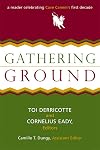
As an incredibly varied anthology of poems, this work serves up poems from familiar names alongside poets who most poetry readers won't be familiar with, and the result is a fresh collection of voices that pops with style, meaning, and memorable lines. The variations in style and voice mean that, more than likely, any one reader won't be blown away by each poem in the book, but at the same time, it's hard to imagine the reader that won't be struck by multiple pieces here, to the point of show more wanting to read them over and share them, again and again.
Among the many poets represented here, some of my all-time favorite voices are represented--including Yusef Komunyakaa, A. Van Jordan, Patricia Smith, Regie O'Hare Gibson, Aracelis Girmay, Kevin Young, and Lucille Clifton. But even as someone who reads poetry constantly, in both collections and journals, there are names here that I've never heard, and that I've discovered as new favorites who I'll be seeking out more work from. Each reader is sure to find their own favorites, and line upon line that resonates with them.
Absolutely recommended. show less
Among the many poets represented here, some of my all-time favorite voices are represented--including Yusef Komunyakaa, A. Van Jordan, Patricia Smith, Regie O'Hare Gibson, Aracelis Girmay, Kevin Young, and Lucille Clifton. But even as someone who reads poetry constantly, in both collections and journals, there are names here that I've never heard, and that I've discovered as new favorites who I'll be seeking out more work from. Each reader is sure to find their own favorites, and line upon line that resonates with them.
Absolutely recommended. show less
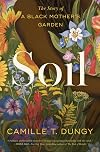
There's a lot to like about Soil: the story of a black mother's garden, written by Camille T. Dungy. While it seems simple on the surface, it is a complex interweaving stories. It's the story of the author and her husband and daughter working to replace their sod, monocultural lawn in Colorado with a diversity of drought resistant plants, including many that are native to the area.
It's also the story of the author's extended family, including the lynching of a great-great uncle because he show more had a car that was too nice and new, sending her great-great grandfather out of Louisiana except for visits to family. Her grandparent's teaching in a black school in Lynchburg, VA, where the only blacks allowed on the Randolph Macon campus were workers – cooks, cleaners, gardeners, maintenance, etc. And Camille's tenure there at, teaching at the college. Of her grandfather's brother Hugh traveling to Colorado Springs in the summers to attend what became the University of Colorado since he wasn't allowed attend college in his home state. Of her parents moving there from California, and Roy and Camille and their daughter moving there for university jobs in 2013. And it's the story of how this family, and African-Americans more generally, are treated in the past and the present, including the fear Roy and Camille felt and the harassment of African-American students on their way to class in Colorado Springs after the 2016 Presidential elections.
And it's the story of 2020, the year Dungy was planning to spend working on her poetry via a Guggenheim fellowship, which changed completely with COVID since she had a daughter whose schooling at home she needed to supervise, which led to her reflection on how much nature writing was about nature with no people and no families in it, and some of the women who are writing their families into their nature writing.
This won't be my favorite books of the year, but I wish I'd purchased this one to be able to look back at. show less
It's also the story of the author's extended family, including the lynching of a great-great uncle because he show more had a car that was too nice and new, sending her great-great grandfather out of Louisiana except for visits to family. Her grandparent's teaching in a black school in Lynchburg, VA, where the only blacks allowed on the Randolph Macon campus were workers – cooks, cleaners, gardeners, maintenance, etc. And Camille's tenure there at, teaching at the college. Of her grandfather's brother Hugh traveling to Colorado Springs in the summers to attend what became the University of Colorado since he wasn't allowed attend college in his home state. Of her parents moving there from California, and Roy and Camille and their daughter moving there for university jobs in 2013. And it's the story of how this family, and African-Americans more generally, are treated in the past and the present, including the fear Roy and Camille felt and the harassment of African-American students on their way to class in Colorado Springs after the 2016 Presidential elections.
And it's the story of 2020, the year Dungy was planning to spend working on her poetry via a Guggenheim fellowship, which changed completely with COVID since she had a daughter whose schooling at home she needed to supervise, which led to her reflection on how much nature writing was about nature with no people and no families in it, and some of the women who are writing their families into their nature writing.
This won't be my favorite books of the year, but I wish I'd purchased this one to be able to look back at. show less
There is much inside Dungy's memoir, making in more than a simple story of turning a Colorado yard into a Prairie Garden. "Soil" is one of those books I picked up thinking it would merit a quick thumbing through. Instead, I found myself reading it slowly, carefully, finding it full of interesting and useful stories.
There is her history, her parents, grandparents, daughter, husband, and the history of Black people in America over four centuries of repression and inequality of the worst kind. show more
She tells about nature literature and environmental writing, how it has been and continues to be dominated by white, male authors who seemed to have no families, no children, and nothing else to do but wander the landscape and write about it.
It is also about her growing education about plants, animals, their interactions and their relationships with us human animals with our destructive ways. I should have paid more attention to her biological details, but still learned much from her descriptions of soil, climate and seasons.
Camille T Dungy is a poet, a memoirist, an essayist, I need to read more of.
. show less
There is her history, her parents, grandparents, daughter, husband, and the history of Black people in America over four centuries of repression and inequality of the worst kind. show more
She tells about nature literature and environmental writing, how it has been and continues to be dominated by white, male authors who seemed to have no families, no children, and nothing else to do but wander the landscape and write about it.
It is also about her growing education about plants, animals, their interactions and their relationships with us human animals with our destructive ways. I should have paid more attention to her biological details, but still learned much from her descriptions of soil, climate and seasons.
Camille T Dungy is a poet, a memoirist, an essayist, I need to read more of.
. show less
Lists
BLM (1)
Awards


You May Also Like


Associated Authors
Statistics
- Works
- 12
- Also by
- 28
- Members
- 715
- Popularity
- #35,475
- Rating
- 4.2
- Reviews
- 10
- ISBNs
- 30
- Favorited
- 1