
Edmund Gosse (1849–1928)
Author of Father and Son: A Study of Two Temperaments
About the Author
Image credit: John Singer Sargent (1856-1925)
Series
Works by Edmund Gosse
New poems 3 copies
English Literature An Illustrated Record Volume IV From The Age of Johnson To The Age Of Tennyson (1904) 3 copies
From Shakespeare to Pope : an inquiry into the causes and phenomena of the riseof classical poetry in England (2013) 2 copies
In russet & silver 2 copies
The secret of Narcisse; a romance 2 copies
On viol and flute 2 copies
Memoir of Thomas Lodge 1 copy
From Shakespeare to Pope 1 copy
English Men of Letters: Gray 1 copy
The Critic: With an Introduction by Edmund Gosse and a Plate Representing the King As "Puff." (2010) 1 copy
The Life of Henrik Ibsen 1 copy
The Letters of Algernon Charles Swinburne. Edited by Edmund Gosse and Thomas James Wise. Volume 1 — Editor — 1 copy
Fallen Idol 1 copy
Sir Edmund Gosse 1 copy
Camille 1 copy
A Study of Shakespeare 1 copy
Transatlantic dialogue 1 copy
Associated Works
The Making of a Poem: A Norton Anthology of Poetic Forms (2000) — Contributor — 1,472 copies, 9 reviews
The Norton Anthology of English Literature, 4th Edition, Volume 2 (1979) — Contributor — 271 copies, 1 review
The Unfortunate Traveller; or, The Life of Jack Wilton (1594) — Editor, some editions — 121 copies, 7 reviews
The Poetical Works of John Milton. With introduction by Edmund Gosse — Introduction, some editions — 3 copies
Robert Louis Stevenson. (The man & his work.) A Bookman extra number, 1913 — Contributor — 2 copies
Twenty-Five Caricatures — Introduction — 2 copies
A reader for writers — Contributor — 2 copies
The Fortnightly Review (Volume 44, Number 265) "Pen, Pencil and Poison: A Study" by Oscar Wilde — Contributor — 1 copy
Tagged
Common Knowledge
- Legal name
- Gosse, Edmund William
- Birthdate
- 1849-09-21
- Date of death
- 1928-05-16
- Gender
- male
- Occupations
- art critic
Sunday School teacher
librarian (House of Lords)
lecturer (Trinity College, Cambridge)
translator
literary historian - Organizations
- Plymouth Brethren
British Museum
Cambridge University - Awards and honors
- Order of the Bath (Companion, 1912)
Knight Bachelor (1925) - Relationships
- Gosse, Philip Henry (father)
Gosse, Philip Henry George (son) - Nationality
- UK
- Birthplace
- London, England, UK
- Places of residence
- London, England, UK
St Marychurch, Devon, England, UK - Place of death
- London, England, UK
- Map Location
- England, UK
Members
Reviews
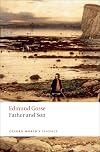
At the risk of showing my biases here, I can't help but see this as a quiet and deeply sad chronicle of the ways religious faith and the expectations it engenders in parents for their children can drive wedges between them and hollow people out. Or primarily that; it's also a record of the practices of a particular fundamentalist sect, the Plymouth Brethren; a historical document of one corner of the evolution controversy (the thing where humans and dinosaurs lived on earth at the same time show more and the geological evidence was put on earth by God to trick us was not actually attributable to Philip Henry Gosse; it was a nasty caricature of his Omphalos by the press--funny how now it's considered fair comment and worthy of respect in some quarters); an examination of the furtive imaginations and priggish unpleasance of the stifled and melancholy child. But mostly it's the wedge-driving thing. Love your kids anyway--and that "anyway" should cover everything. show less
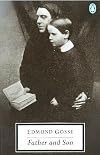
This memoir broke ground in the early 20th century by presenting generational conflict in an apparently frank, dispassionate, indeed "scientific" way. In its restrained way, it helped lead Gosse's countrymen from the piety of the Victorian vision of family life to Philip Larkin's definitive statement: "They fuck you up, your mum and dad. / They may not mean to, but they do. / They fill you with the faults they had / And add some extra, just for you." The truly fascinating part of reading show more this book is in the inexorable build up of the tension in the central relationship, a tension that is not fully realized until the extraordinary "Epilogue." It is also touching to witness the long-term effects of the father's indefatigable judgmentalism on the son's ingrained self-criticism. I am now going to provide an extended quote that will chill the blood of anyone possessed of an abundant super-ego in the form of an insistent voice of a strong parent figure. The fact that the author himself is not aware of life-blighting process that is just now beginning makes it all the more poignant: "But of all the thoughts which rushed upon my savage and undeveloped little brain at this crisis, the most curious was that I had found a companion and a confidant in myself. There was a secret in this world and it belonged to me and to a somebody who lived in the same body with me. There were two of us, and we could talk with one another. It is difficult to define impressions so rudimentary, but it is certain that it was in this dual form that the sense of my individuality now suddenly descended on me, and it is equally certain that it was a great solace to me to find a sympathizer in my own breast." That this "sympathizer" will mature into the child's most intolerant critic and implacable enemy is never recognized. "Ah, the pity of it Iago." show less
This was recommended, in a newspaper article on Father’s Day, as a classic of the growing generational differences between a father and his son. This is true, and worthy of reading and contemplating for its universal message, but this was no ordinary family: Gosse the father was a zoologist of some repute, but he was also a man of severe, fundamental religious principles; his attempt to bridge the gap between faith and growing evidence for evolution was a failure and sidelined him from show more what might have been a brighter career as a scientist, as a cataloguer, as a proselytizer of science at the time when there was a growing hunger for exposure to such ideas in the general population. But his uncompromising religious faith provided the prism through which each and every action in life was to be measured or assessed and, all too often, found wanting. Nevertheless, as Gosse says in the opening lines of the book:
“This book is the record of a struggle between two temperaments, two consciences and almost two epochs. It ended, as was inevitable, in disruption. Of the two human beings here described, on was born to fly backward, the other could not help being carried forward. There came a time when neither spoke the same language as the other, or encompassed the same hopes or was fortified by the same desires. But, at least, it is some consolation to the survivor, that neither, to the very last hour, ceased to respect the other, or to regard him with a sad indulgence.”
Gosse junior led a very sheltered, restricted life as a child, one conditioned solely and completely by his father and his father’s expectation that Edmund would pursue some sort of life in the church. Edmund’s mother died when he was only seven, but she would probably not have been much of a mitigating influence as she shared her husband’s uncompromising view that all of life was to consecrated to the glory of God in preparation for life after death or for the imminent second coming. As a child, Edmund had no idea that his was a very different sort of upbringing as he had very little contact with children his own, or any other age; he was, in things religious, mature beyond his years and seen as something of a prodigy. But, he began to move apart as he grew into his teen years, as he became exposed to the wider worlds of literature and art and society, as he came to see even within the confines of the religious strictures of his life, that his father was not infallible and that God was likely neither omniscient nor omnipotent.
While maintaining his respect, and love, for his father, Gosse can see the limitations imposed on his father’s life: “My Father’s inconsistencies of perception seem to me to have been the result of a curious irregularity of equipment. Taking for granted, as he always did, the absolute integrity of the Scriptures, and applying to them his trained scientific spirit, he contrived to stifle, with a deplorable success, alike the function of the imagination, the sense of moral justice, and his own deep and instinctive tenderness of heart.”
Gosse’s final word on the pernicious effects of unblinkered fervor is still pertinent today:
“After my long experience, after my patience and forbearance, I have surely the right to protest against the untruth (would that I could apply to it any other word!) that evangelical religion, or any religion in a violent form, is a wholesome or valuable or desirable adjunct to human life. It divides heart from heart. It sets up a vain, chimerical ideal, in the barren pursuit of which all the tender, indulgent affections, all the genial play of life, all the exquisite pleasures and soft resignations of the body, all that enlarges and calms the soul, are exchanged for what is harsh and void and negative. It encourages a stern and ignorant spirit of condemnation; it throws altogether out of gear the healthy movement of the conscience; it invents virtues which are sterile and cruel; it invents sins which are no sins at all, but which darken the heaven of innocent joy with futile clouds of remorse. There is something horrible, if we will bring ourselves to face it, in the fanaticism that can do nothing with the pathetic and fugitive existence of ours but treat it as if it were the uncomfortable ante-chamber to a palace which no one has explored and of the plan of which we know absolutely nothing.”
This is also a book about a time and places that have long disappeared: life in small English villages in the second half of the 1800s, when government provided no social supports, when life was direct and often poor and often hard, when people were strongly influenced by class, by superstition, by beliefs, and when they found their pleasures without all the paraphernalia that characterize our world today.
This book is also a considerable pleasure to read. It is beautifully written, in a style of grammatical correctness and mellifluous expression that are, alas, also something of the past. show less
“This book is the record of a struggle between two temperaments, two consciences and almost two epochs. It ended, as was inevitable, in disruption. Of the two human beings here described, on was born to fly backward, the other could not help being carried forward. There came a time when neither spoke the same language as the other, or encompassed the same hopes or was fortified by the same desires. But, at least, it is some consolation to the survivor, that neither, to the very last hour, ceased to respect the other, or to regard him with a sad indulgence.”
Gosse junior led a very sheltered, restricted life as a child, one conditioned solely and completely by his father and his father’s expectation that Edmund would pursue some sort of life in the church. Edmund’s mother died when he was only seven, but she would probably not have been much of a mitigating influence as she shared her husband’s uncompromising view that all of life was to consecrated to the glory of God in preparation for life after death or for the imminent second coming. As a child, Edmund had no idea that his was a very different sort of upbringing as he had very little contact with children his own, or any other age; he was, in things religious, mature beyond his years and seen as something of a prodigy. But, he began to move apart as he grew into his teen years, as he became exposed to the wider worlds of literature and art and society, as he came to see even within the confines of the religious strictures of his life, that his father was not infallible and that God was likely neither omniscient nor omnipotent.
While maintaining his respect, and love, for his father, Gosse can see the limitations imposed on his father’s life: “My Father’s inconsistencies of perception seem to me to have been the result of a curious irregularity of equipment. Taking for granted, as he always did, the absolute integrity of the Scriptures, and applying to them his trained scientific spirit, he contrived to stifle, with a deplorable success, alike the function of the imagination, the sense of moral justice, and his own deep and instinctive tenderness of heart.”
Gosse’s final word on the pernicious effects of unblinkered fervor is still pertinent today:
“After my long experience, after my patience and forbearance, I have surely the right to protest against the untruth (would that I could apply to it any other word!) that evangelical religion, or any religion in a violent form, is a wholesome or valuable or desirable adjunct to human life. It divides heart from heart. It sets up a vain, chimerical ideal, in the barren pursuit of which all the tender, indulgent affections, all the genial play of life, all the exquisite pleasures and soft resignations of the body, all that enlarges and calms the soul, are exchanged for what is harsh and void and negative. It encourages a stern and ignorant spirit of condemnation; it throws altogether out of gear the healthy movement of the conscience; it invents virtues which are sterile and cruel; it invents sins which are no sins at all, but which darken the heaven of innocent joy with futile clouds of remorse. There is something horrible, if we will bring ourselves to face it, in the fanaticism that can do nothing with the pathetic and fugitive existence of ours but treat it as if it were the uncomfortable ante-chamber to a palace which no one has explored and of the plan of which we know absolutely nothing.”
This is also a book about a time and places that have long disappeared: life in small English villages in the second half of the 1800s, when government provided no social supports, when life was direct and often poor and often hard, when people were strongly influenced by class, by superstition, by beliefs, and when they found their pleasures without all the paraphernalia that characterize our world today.
This book is also a considerable pleasure to read. It is beautifully written, in a style of grammatical correctness and mellifluous expression that are, alas, also something of the past. show less

Not a Victorian scientist novel... but a novel about a Victorian scientist. Well, a memoir told novelistically at any rate. You may know Edmund Gosse's father as Philip Henry Gosse, the man who did not say that God put the fossils there to test our faith, but whom everyone thought said that. Father and Son is a great read, but it had less to say about science and seeing scientifically than I had expected. If anything makes Philip Gosse a terrible dad (and he sure is, at least as Edmund tells show more it) it was his religious piety, which Edmund said left only "what is harsh and void and negative" (248). Philip was a self-denying emotionless man, but because he thought that was spiritually correct, not because of scientific training. A far cry from the mix of Christianity and science employed by Philip's friend Charles Kingsley. show less
Lists
Non-fiction (1)
Backlisted (1)
Awards


You May Also Like


Associated Authors
Statistics
- Works
- 85
- Also by
- 30
- Members
- 1,137
- Popularity
- #22,579
- Rating
- 3.7
- Reviews
- 14
- ISBNs
- 175
- Languages
- 6
- Favorited
- 1
