
Sam Bass Warner
Author of Streetcar Suburbs: The Process of Growth in Boston, 1870-1900
About the Author
Sam Bass Warner, noted urban historian and Visiting Professor of Urban History at MIT, is the author of The Urban Wilderness: A History of the American City and other books. Andrew H. Whittemore is Assistant Professor in the Department of City and Regional Planning at the University of Texas show more Arlington. show less
Works by Sam Bass Warner
Associated Works
Tagged
Common Knowledge
- Canonical name
- Warner, Sam Bass
- Birthdate
- 1928-04-06
- Gender
- male
- Education
- Harvard University (BA, PhD)
Boston University (MJournalism) - Occupations
- History Professor, Washington University
History Professor, Boston University
American Studies professor, Brandeis University - Organizations
- American History Association
Urban History Association
Arnold Arboretum - Awards and honors
- Guggenheim Fellow (1976)
- Nationality
- USA
- Birthplace
- Boston, Massachusetts, USA
- Map Location
- USA
Members
Reviews
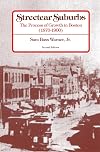
This short book analyzes the growth of Boston from the city core to the distant suburbs. Streetcar lines form the structure of development that results in bands of settlement that vary by income and proximity to the urban core. Warner focuses on Roxbury, Dorchester, and West Roxbury - three towns annexed to Boston during this period - but only mentions Brighton, Charlestown, East Boston, and Hyde Park in passing. Oddly he repeatedly refers to these three places as becoming suburban towns show more after 1870 when they were already suburban towns prior to that date and were now being woven into the greater metropolis. Warner's insights are interesting but the book feels more like a compilation of data and trends without any human stories that could make it interesting. The book also feels dated, especially in Warner's description of Black communities in Boston.
Favorite Passages:
Recommended books: show less
Favorite Passages:
"The inattention of late nineteenth century Bostonians to the fragmentation of their community life was not an accidental oversight, it was a matter of principle, the principle of individualistic capitalism." - p. 160
Recommended books: show less
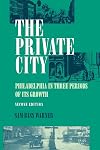
A look at the social history of Philadelphia in three time spans, Revolutionary War time, 1840's and 50's, and 1920's, illustrating how the American attitude of money and business first (thus private property) has run the growth and development of the city.

Mentions Henry Dearborn's estate in Roxbury. Appendix A A Local Historian's Guide to Social Statistics and Bibliographic notes & notes may be helpful. Limited to Roxbury, West Roxbury, and Dorchester.
Lists
Awards


You May Also Like


Associated Authors
Statistics
- Works
- 12
- Also by
- 1
- Members
- 466
- Popularity
- #52,774
- Rating
- 4.1
- Reviews
- 3
- ISBNs
- 34