
Elmore Leonard (1925–2013)
Author of Get Shorty
About the Author
Elmore John Leonard, Jr. 10/11/25 -- 8/20/13 Elmore John Leonard, Jr., popularly known as mystery and western writer Elmore Leonard, was born in New Orleans, Louisiana on October 11, 1925. He served in the United States Naval Reserve from 1943 to 1946. He received a Ph.D. in English from the show more University of Detroit in 1950. After graduating, he wrote short stories and western novels as well as advertising and education film scripts. In 1967, he began to write full-time and received several awards including the 1977 Western Writers of America award and the 1984 Writers of America Edgar Allan Poe award. His other works include Get Shorty, Out of Sight, Hombre, Mr. Majestyk, 3:10 to Yuma, and Rum Punch. Many of his works were adapted into movies. Library of America recently announced plans to publish the first of a three-volume collection of his books beginning in the Fall of 2014. Leonard died on August 20, 2013 from complications of a stroke he had earlier. He was 87 years old. (Bowker Author Biography) show less
Series
Works by Elmore Leonard
Four Novels of the 1970s: Fifty-Two Pickup / Swag / Unknown Man No. 89 / The Switch (2014) 167 copies, 2 reviews
Elmore Leonard: Four Later Novels (LOA #280): Get Shorty / Rum Punch / Out of Sight / Tishomingo Blues (Library of America Elmore Leonard Edition) (2016) 117 copies, 2 reviews
Elmore Leonard: Four Novels of the 1980s: City Primeval / LaBrava / Glitz / Freaky Deaky (Library of America) (2015) 116 copies, 1 review
Elmore Leonard: Westerns (LOA #308): Last Stand at Saber River / Hombre / Valdez is Coming / Forty Lashes Less One / stories (Library of America Elmore Leonard Edition) (2018) 106 copies, 3 reviews
Elmore Leonard's Double Dutch Treat: Three Novels: The Moonshine War, Gold Coast, City Primevil (1986) 54 copies, 1 review
Elmore Leonard Raylan Givens 3-Book Collection: Pronto, Riding the Rap, Fire in the Hole (2012) 49 copies
Elmore Leonard's Western Roundup #1: Bounty Hunters; Forty Lashes Less One; Gunsights (1998) 42 copies
Elmore Leonard's Western Roundup #2: Escape from Five Shadows; Last Stand at Saber River; The Law at Randado (1998) 39 copies, 2 reviews
Elmore Leonard Classic 3-Book Collection: Get Shorty, Tishomingo Blues, Killshot (2012) 24 copies, 2 reviews
Spel om annans liv 2 copies
Duelo Final 2 copies
Get Shorty (Season 1-2) 2 copies
The Apache Trail 1 copy
Os Caçadores de Recompensas 1 copy
Último Posto no Rio Sabre 1 copy
Fuga de Cinco Sombras 1 copy
Um Bom Argumento 1 copy
Brillo 1 copy
Halálos lövés 1 copy
Jack Foley #2 - Road Dogs 1 copy
Un tipo implacable (13/20) 1 copy
Unkown Man #89 1 copy
Four Novels of the 1980s 1 copy
D'un coup, d'un seul : roman 1 copy
Line of Sight 1 copy
Karen Sisco (Season 1) 1 copy
The Kid 1 copy
Thriller. Florida- Fieber / Im Schutz des hellichten Tages / Lone Star. Drei ungekürzte Romane. (1997) — Contributor — 1 copy
Leonard Elmore 1 copy
Louly and Pretty Boy 1 copy
Hot Shot 1 copy
Elmore Leonard, The Colonel's Lady and No Man's Gun : Unabridged Stories from The Tonto Woman and Other Western Stories (1999) 1 copy
Notebooks 1 copy
No title 1 copy
For Something to Do 1 copy
צייד החתולים 1 copy
The Hard Way 1 copy
שודדים 1 copy
Nepoznati br. 89 1 copy
El Blues del Misisipí 1 copy
סחיטה 1 copy
Crianças pagãs 1 copy
Associated Works
For the Love of Books: 115 Celebrated Writers on the Books They Love Most (1999) — Contributor — 480 copies, 4 reviews
Writers on Writing, 2: More Collected Essays from the New York Times (2003) — Contributor — 201 copies, 3 reviews
Who's Writing This? Notations on the Authorial I, with Self-Portraits {not Antæus} (1995) — Contributor — 75 copies
The Best of the Best American Mystery Stories: The First Ten Years (2014) — Contributor — 39 copies, 1 review
Time-Life Book Digest: Get Shorty | Four Past Midnight | Wings of the Morning | The Langoliers (1992) — Contributor — 36 copies
Rediscoveries II: Important Writers Select Their Favorite Works of Neglected Fiction (1988) — Contributor — 31 copies, 1 review
Five Tall Tales: Budd Boetticher & Randolph Scott At Columbia, 1957-1960 (1957) — Author — 11 copies
Tagged
Common Knowledge
- Canonical name
- Leonard, Elmore
- Legal name
- Leonard Jr., Elmore John
- Other names
- Leonard, Elmore John, Jr. (birth name)
- Birthdate
- 1925-10-11
- Date of death
- 2013-08-20
- Gender
- male
- Education
- University of Detroit (BA|1950)
- Occupations
- copywriter
short story writer
novelist
screenwriter - Organizations
- Chevrolet
Campbell-Ewald Advertising Agency
United States Navy (WWII) - Awards and honors
- MWA Grand Master (1992)
Cartier Diamond Dagger (2006)
Louisiana Writer Award (2006)
Owen Wister Award (2009)
Michigan Author Award (1996)
F. Scott Fitzgerald Award for Outstanding Achievement in American Fiction (2008) (show all 7)
National Book Award (2012) - Agent
- Andrew Wylie (The Wylie Agency)
- Relationships
- Leonard, Peter A. (son)
- Short biography
- Elmore John Leonard Jr. (October 11, 1925 – August 20, 2013) was an American novelist, short story writer, and screenwriter. Leonard was born in New Orleans, Louisiana; the family moved frequently for several years. In 1934, the family settled in Detroit.
He graduated from the University of Detroit Jesuit High School in 1943 and joined the Navy. He graduated from the University of Detroit in 1950 with a bachelor's degree in English and philosophy. A year before he graduated, he got a job as a copy writer with Campbell-Ewald Advertising Agency, a position he kept for several years, writing on the side. - Cause of death
- stroke (complications)
- Nationality
- USA
- Birthplace
- New Orleans, Louisiana, USA
- Places of residence
- Birmingham, Michigan, USA
Bloomfield Village, Michigan, USA - Place of death
- Bloomfield Hills, Michigan, USA
- Associated Place (for map)
- Michigan, USA
Members
Reviews
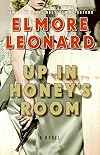
“Sieg Heil, y’all. I’m Honey Deal”
I adore Honey Deal.
This is the way our Honey addresses the gathering of weird, wannabee WWII spies. I laugh out loud. Not one of my typical giggles when something amuses me in a book. Most times, I only smile, but when it’s Elmore Leonard’s dialogue, all bets are off. And this is a novel completely carried by dialogue. No one does it better.
“My husband was in the shipping business, coastal freighters that traded among ports on the Black Sea. show more Fadey got along with the Soviets, gritting his teeth, offering bribes when his bullshit wasn’t enough. He had only complimentary things to say about Josef Stalin, that pockmarked midget. Do you know how tall he is? The Russians say five foot six. Oh, really? He wears lifts in his shoes or he’d be no taller than a five-foot pile of horseshit. It’s the reason he’s killed ten million of his own people. His mother sent him to a seminary to become a priest, but God rejected him.”
“‘I love Virgil,’ the Tulsa lieutenant said. ‘The first thing he ever said to me--we’re in that bar in the basement of the Mayo. He says, ‘You ever been in a pissing contest?’ I said no, what do you go for, height or distance? He says, ‘No, we piss on the ice in urinals and bet on whose pile of cubes gets melted down the most.’ But the thing about your dad, he didn’t piss on any kind of regular basis. He could hold it.’
‘That’s why he’s still one of the great pissers,’ Carl said, ‘he can hold it as long as he wants , which you don’t find at all in men his age. I’ve been in that bar with my dad, but I can’t say I ever pissed next to him. Go in the woods with him hunting, I don’t think I ever saw him piss, not wanting to leave his sign.’
‘That’s your dad,’ the Tulsa lieutenant said.”
“Vera said, ‘Bo, I don’t want to be in this house anymore. Please get me out of here before I become an alcoholic.’
‘You already are.’
‘I count my drinks,’ Vera said. ‘I never have more than twenty-five in a day.’” show less
I adore Honey Deal.
This is the way our Honey addresses the gathering of weird, wannabee WWII spies. I laugh out loud. Not one of my typical giggles when something amuses me in a book. Most times, I only smile, but when it’s Elmore Leonard’s dialogue, all bets are off. And this is a novel completely carried by dialogue. No one does it better.
“My husband was in the shipping business, coastal freighters that traded among ports on the Black Sea. show more Fadey got along with the Soviets, gritting his teeth, offering bribes when his bullshit wasn’t enough. He had only complimentary things to say about Josef Stalin, that pockmarked midget. Do you know how tall he is? The Russians say five foot six. Oh, really? He wears lifts in his shoes or he’d be no taller than a five-foot pile of horseshit. It’s the reason he’s killed ten million of his own people. His mother sent him to a seminary to become a priest, but God rejected him.”
“‘I love Virgil,’ the Tulsa lieutenant said. ‘The first thing he ever said to me--we’re in that bar in the basement of the Mayo. He says, ‘You ever been in a pissing contest?’ I said no, what do you go for, height or distance? He says, ‘No, we piss on the ice in urinals and bet on whose pile of cubes gets melted down the most.’ But the thing about your dad, he didn’t piss on any kind of regular basis. He could hold it.’
‘That’s why he’s still one of the great pissers,’ Carl said, ‘he can hold it as long as he wants , which you don’t find at all in men his age. I’ve been in that bar with my dad, but I can’t say I ever pissed next to him. Go in the woods with him hunting, I don’t think I ever saw him piss, not wanting to leave his sign.’
‘That’s your dad,’ the Tulsa lieutenant said.”
“Vera said, ‘Bo, I don’t want to be in this house anymore. Please get me out of here before I become an alcoholic.’
‘You already are.’
‘I count my drinks,’ Vera said. ‘I never have more than twenty-five in a day.’” show less
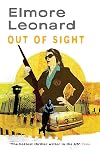
It is already amazing to think that this thriller is nearly fifteen years old. There's not much to say about it other than it is expertly plotted, finely written and crisp. Leonard has a remarkable ability to evoke place and real human interaction.
The question with this sort of book is why we should be interested in dim-witted sociopaths with attention deficit disorder - 'misfits trying not to sound like losers' as the book puts it near the end.
The answer is, of course, that we shouldn't show more particularly - the persons are always less interesting than the plot. Leonard only makes them interesting by attempting to have the not-so-bad dimwits with some marginal sense of honour live the American myth, referencing their lives back to a simple Hollywood ethic.
On this score, 'Out of Sight' nearly did not get its five stars because of the completely romantic and absurd relationship between the hero, Jack Foley, an aging bank robber who does not want to do the time for his crimes, and a somewhat stereotyped daddy's girl female Federal Marshal. The central scene in this relationship is just the fantasy of a late middle aged male and little more than that, even if it evokes that fantasy with consummate skill.
But I relented on the basis that the ridiculousness of it only requires the same suspension of disbelief that any 'classic' Hollywood romantic crime movie might require.
The referencing of the legend of Dillinger and to 'Bonnie & Clyde' and other genre films shows a certain sad knowingness about the role of the outlaw myth in American individualism that points up all the better to the reader the harsh reality of blundering third rate minds trying to grab what they can within a chaotic system.
A lot of male readers will part-identify with Jack Foley (and is that not a quintessential masculine outlaw name!?) as those who compromised with that system for the sake of security. The outcome is a nice little morality tale for the Middle American male - you made the right choice in the end even if you never got to feel as alive as Jack must have done when he was younger.
Whatever the use made of thrillers like these by Hollywood, their cultural role is a fundamentally conservative one, albeit with a nod to the radical freedom that is just around the corner and for which most men pine so long as there are no costs or consequences.
It took time to appreciate Elmore Leonard's genius in this book as the plot was being set up but by the end there was no doubt of it. show less
The question with this sort of book is why we should be interested in dim-witted sociopaths with attention deficit disorder - 'misfits trying not to sound like losers' as the book puts it near the end.
The answer is, of course, that we shouldn't show more particularly - the persons are always less interesting than the plot. Leonard only makes them interesting by attempting to have the not-so-bad dimwits with some marginal sense of honour live the American myth, referencing their lives back to a simple Hollywood ethic.
On this score, 'Out of Sight' nearly did not get its five stars because of the completely romantic and absurd relationship between the hero, Jack Foley, an aging bank robber who does not want to do the time for his crimes, and a somewhat stereotyped daddy's girl female Federal Marshal. The central scene in this relationship is just the fantasy of a late middle aged male and little more than that, even if it evokes that fantasy with consummate skill.
But I relented on the basis that the ridiculousness of it only requires the same suspension of disbelief that any 'classic' Hollywood romantic crime movie might require.
The referencing of the legend of Dillinger and to 'Bonnie & Clyde' and other genre films shows a certain sad knowingness about the role of the outlaw myth in American individualism that points up all the better to the reader the harsh reality of blundering third rate minds trying to grab what they can within a chaotic system.
A lot of male readers will part-identify with Jack Foley (and is that not a quintessential masculine outlaw name!?) as those who compromised with that system for the sake of security. The outcome is a nice little morality tale for the Middle American male - you made the right choice in the end even if you never got to feel as alive as Jack must have done when he was younger.
Whatever the use made of thrillers like these by Hollywood, their cultural role is a fundamentally conservative one, albeit with a nod to the radical freedom that is just around the corner and for which most men pine so long as there are no costs or consequences.
It took time to appreciate Elmore Leonard's genius in this book as the plot was being set up but by the end there was no doubt of it. show less
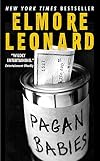
Can a painter create an image more lifelike than reality? Elmore Leonard proved a novelist can mirror the chaos of reality and still render it an interesting read. There is no recognition of traditional heroes, and the line between right and wrong blurs beyond recognition. He paints reality on a canvas and compels us all to turn the pages. Having marveled at the work, I must point out there is little inspirational or life affirming in this work, and it captures much of the essence of humanity.

Chili Palmer, collector for a loan shark, leaves Miami in search of a defaulting dry cleaner named Leo. Leo not only owes money to the mob, he’s also cheated an airline out of hundreds of thousands of dollars, and then skipped town on his wife taking all the money with him. Chili has volunteered to collect for Leo’s wife as well as his organized crime employers. But, when he catches up with Leo in Las Vegas, Leo skips town again, this time for Los Angeles and Hollywood. In Hollywood, show more Chili encounters Harry Zimm, producer of Slime Creatures, Hairraiser, and the Grotesque series, B movies that made some good money a decade or so ago, but now Harry is trying to raise money to produce a more serious film. When Chili explains to Harry why he’s in Hollywood, Harry thinks Chili is trying to pitch him the plot for a gangster movie. He explains he’s short of cash and his only backers are a couple of guys who run a limousine service, and he’s trying to get some more money out of them. Chili offers to help.
As it turns out, the limo guys transport drugs as well as people. Chili discovers that his skill set of talking to people, gaining their confidence, and motivating them through the subtle implication of bodily harm with only the occasional use of it when necessary, are readily transferable skills in the movie business. And the fun begins. Leonard, as always delivers a fully realized cast of characters, dashes of suspense, and darkly comic plot twists in his take on commercial filmmaking in the late 1980s. show less
As it turns out, the limo guys transport drugs as well as people. Chili discovers that his skill set of talking to people, gaining their confidence, and motivating them through the subtle implication of bodily harm with only the occasional use of it when necessary, are readily transferable skills in the movie business. And the fun begins. Leonard, as always delivers a fully realized cast of characters, dashes of suspense, and darkly comic plot twists in his take on commercial filmmaking in the late 1980s. show less
Lists
Edgar Award (1)
Page Turners (1)
100 New Classics (1)
Read These Too (1)
Kayla (1)
Awards


You May Also Like


Associated Authors
Statistics
- Works
- 181
- Also by
- 45
- Members
- 40,873
- Popularity
- #430
- Rating
- 3.6
- Reviews
- 948
- ISBNs
- 1,663
- Languages
- 23
- Favorited
- 125


