
Justin Marozzi
Author of Tamerlane: Sword of Islam, Conqueror of the World
About the Author
Justin Marozzi is an author who won the UK Royal Society of Literature Ondaatje Prize for his history book Baghdad: City of Peace, City of Blood. The annual $19,600 prize is presented for a distinguished work of fiction, nonfiction or poetry, evoking the spirit of a place. (Bowker Author Biography)
Works by Justin Marozzi
Captives and Companions: A History of Slavery and the Slave Trade in the Islamic World (2025) 52 copies, 1 review
A Thousand Golden Cities: 2,500 Years Writing from Afghanistan and its People (2023) — Editor — 5 copies
Abd 1 copy
Associated Works
Tagged
Common Knowledge
- Canonical name
- Marozzi, Justin
- Birthdate
- 1970
- Gender
- male
- Education
- University of Cambridge (Gonville & Caius College)
University of Pennsylvania
Cardiff University - Occupations
- contributing editor
journalist
historian
travel writer - Organizations
- The Spectator
- Short biography
- http://www.harpercollins.com.au/autho...
Justin Marozzi is an English travel writer, historian, journalist and political risk and security consultant. - Nationality
- UK
- Places of residence
- Canterbury, Kent, England, UK
Philadelphia, Pennsylvania, USA
London, England, UK
Mogadishu, Somalia (2014-2015) - Map Location
- England, UK
Members
Reviews
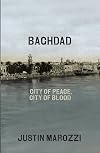
This work is clearly both a letter of love and grief to a storied city. Baghdad has both been the center of the learned world and reduced from outside forces but more often than not, at their own hands, to little more than a provincial backwater.
Early Baghdad, while far from perfect, arguably was a poster child of how religion, science, art, math, literature, and architecture could coexist in amazingly fluid form. It's astounding to learn the things in depth that Baghdad was responsible for show more under the Abbasid Caliphate. Those of us who consume, and study Greco-Roman philosophy owe a great debt of gratitude to the early Caliph's who sent gifts to Byzantium asking in return for copies of Greco-Roman philosopher's works. In doing so, quite a few pieces of work that would have been arguably lost to time and war found preservation in Arabic translations that enabled the west to translate them decades/centuries later in the Renaissance.
The author pulls zero punches heading into the modern era, cataloguing the absolute suffering of the people at the hands of the Baathist party and their minions (Along with the US). The aspects of the abject sadism in the form of torture are presented in a matter-of-fact way, not glorified/reveled in while still making one cringe and feel immediate empathy for the persecuted.
This is an excellent study on an incredibly storied city, though at times the presentation can be a little confusing. I found this source of confusion in the timeline jumping method of storytelling. If the author was conveying a subject that would later become a pattern or cycle, he would often jump from the current timeline to that future timeline to explain the pattern/cycle before returning. show less
Early Baghdad, while far from perfect, arguably was a poster child of how religion, science, art, math, literature, and architecture could coexist in amazingly fluid form. It's astounding to learn the things in depth that Baghdad was responsible for show more under the Abbasid Caliphate. Those of us who consume, and study Greco-Roman philosophy owe a great debt of gratitude to the early Caliph's who sent gifts to Byzantium asking in return for copies of Greco-Roman philosopher's works. In doing so, quite a few pieces of work that would have been arguably lost to time and war found preservation in Arabic translations that enabled the west to translate them decades/centuries later in the Renaissance.
The author pulls zero punches heading into the modern era, cataloguing the absolute suffering of the people at the hands of the Baathist party and their minions (Along with the US). The aspects of the abject sadism in the form of torture are presented in a matter-of-fact way, not glorified/reveled in while still making one cringe and feel immediate empathy for the persecuted.
This is an excellent study on an incredibly storied city, though at times the presentation can be a little confusing. I found this source of confusion in the timeline jumping method of storytelling. If the author was conveying a subject that would later become a pattern or cycle, he would often jump from the current timeline to that future timeline to explain the pattern/cycle before returning. show less
I loved this book! Yes, it is slow in the beginning. But that was due to trying to grasp the history of Baghdad from the prophet Mohammad's time down to the period that has names we are more familiar with. But you have to do that early history to understand the animosity between Shia and Sunni. Then when it down into more modern times it picks up.
I have studied the history of Mesopotamia but this is the first book I have read on just the city of Baghdad. I have always had a passion for show more Baghdad. The city has swung from being bloody to peace and back to be bloody. But during its "Golden Ages" it had to have been a wonderful place to live. Now my heart aches for it.
Baghdad truly was the Cradle of Civilization. The arts, sciences, literature, poetry that came from there was amazing. It was a city for intellectuals. I do find it sad now that the Jewish community that was there throughout history is now gone. And it may be happening now to the Christian community. Baghdad used to be a place that thrived from diversity. Now that diversity is being smothered.
The book brought back memories of my rides in a Rhino along Route Irish, the most dangerous stretch of road in the world. It also brought back memories of evenings spent with the Iraqis over the delicious Iraqi food -- the fellowship, the laughter. Even in such dangerous conditions, they could laugh and appreciate life and the desire for freedom for their children and grandchildren.
The Baghdadi people have had to be strong and resilient while surviving the many raids upon and the power-hungry rulers that cared nothing for the people. Justin Marozzi did an amazing job with his research and pulling it all together. My only complaint with this book was that I could not easily access the numerous footnotes. However, that was not the author's fault. I received the digital galley from Net Galley, and it was just too cumbersome to try to get to the footnotes and then back to where I was. I imagined that problem is resolved with the finalized e-book. There is a wonderful bibliography at the end. I will be reading some of the books listed there. show less
I have studied the history of Mesopotamia but this is the first book I have read on just the city of Baghdad. I have always had a passion for show more Baghdad. The city has swung from being bloody to peace and back to be bloody. But during its "Golden Ages" it had to have been a wonderful place to live. Now my heart aches for it.
Baghdad truly was the Cradle of Civilization. The arts, sciences, literature, poetry that came from there was amazing. It was a city for intellectuals. I do find it sad now that the Jewish community that was there throughout history is now gone. And it may be happening now to the Christian community. Baghdad used to be a place that thrived from diversity. Now that diversity is being smothered.
The book brought back memories of my rides in a Rhino along Route Irish, the most dangerous stretch of road in the world. It also brought back memories of evenings spent with the Iraqis over the delicious Iraqi food -- the fellowship, the laughter. Even in such dangerous conditions, they could laugh and appreciate life and the desire for freedom for their children and grandchildren.
The Baghdadi people have had to be strong and resilient while surviving the many raids upon and the power-hungry rulers that cared nothing for the people. Justin Marozzi did an amazing job with his research and pulling it all together. My only complaint with this book was that I could not easily access the numerous footnotes. However, that was not the author's fault. I received the digital galley from Net Galley, and it was just too cumbersome to try to get to the footnotes and then back to where I was. I imagined that problem is resolved with the finalized e-book. There is a wonderful bibliography at the end. I will be reading some of the books listed there. show less
http://shawjonathan.wordpress.com/2010/04/25/the-man-who-invented-history/
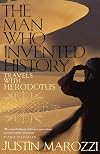
Justin Marozzi is an English travel writer–historian, at pains to make us know he’s not an academic – more like a Herodotus fanboy: Herodotus invented the West, Thucydides sux, and Plutarch double sux (those last two aren’t direct quotes – Marozzi is much more grown-up than that).
Marozzi sets out in this book to follow in Herodotus’s footsteps, visiting places he visited, or at least claimed to visit, show more quoting good bits from his Histories and reflecting on the enduring relevance of some of his themes. He visits Turkey (Herodotus’ birthplace Halicarnassus, now Bodrum), Iraq (where Marozzi spent a year ‘setting up a nationwide civil affairs program’, whatever that is, but manages to take us with him on a private guided visit to the mostly inaccessible museum in Babylon), Egypt and of course Greece. He finds value in Herodotus’ genial appreciation of cultural diversity and mockery of cultural arrogance (it seems that ‘Everyone thinks his own society’s customs are best’ was a refrain in Herodotus; it certainly is in Marozzi, with many confirming examples). He finds in Iraq and elsewhere validating echoes of Herodotus’ belief that hubris leads to nemesis and his repeated observation that those in power ignore at their peril those who counsel caution. He enjoys and emulates Herodotus’ propensity for sexual titillation, though here he seems to be trying a little too hard to establish his non-academic bona fides, and comes off as a happily married man hoping to pass as a bit of a lad. Above all, he conveys a sense of Herodotus as an excellent travelling companion, a great listener, an accomplished entertainer (apparently he wrote his books to be read aloud, and Marozzi imagines a number of reading–performances for us), a tireless gatherer of information, a cheerful embellisher, and one who got it right more often than he has been given credit for.
One chapter that stood out for me is he one on the Southeast European Joint History Project (JHP). In a visit to Thessaloniki, not part of Herodotus’ world, but justifying its place in this book because of the light it casts on the nature of history, Marozzi interviews Nenad Sabek, chain-smoking director of the NGO that produces the history. The state of history-teaching in the Balkans as surveyed ten years ago makes Australia’s History Wars look like a game in a kindergarten sandpit. Sebek tells Marozzi, and us, that the school history syllabus
'is where you instil into the young a sense of victim mentality, a feeling that everyone around them is their adversary and that’s how it’s always been. … I believe history is one of the fields where if you teach it badly you produce serious damage way ahead in the future. If you tell a ten-year-old his country has always been beaten up by its neighbour throughout its history, and then years later its war, he’s wearing uniform and he’s got a gun in his hands and his leaders are saying, "They’re still slaughtering us," this is what he believes and he goes on a rampage.'
The JHP has produced a set of history textbooks that offer a multi-faceted account of the seven centuries from the emergence of the Ottoman Empire to the Second World War that aims to supplement (rather than replace, which would be politically impossible) the lethal nationalistic-victim texts currently in use. It sounds like a project that could, even should, be emulated in any number of hotspots. show less
Justin Marozzi is an English travel writer–historian, at pains to make us know he’s not an academic – more like a Herodotus fanboy: Herodotus invented the West, Thucydides sux, and Plutarch double sux (those last two aren’t direct quotes – Marozzi is much more grown-up than that).
Marozzi sets out in this book to follow in Herodotus’s footsteps, visiting places he visited, or at least claimed to visit, show more quoting good bits from his Histories and reflecting on the enduring relevance of some of his themes. He visits Turkey (Herodotus’ birthplace Halicarnassus, now Bodrum), Iraq (where Marozzi spent a year ‘setting up a nationwide civil affairs program’, whatever that is, but manages to take us with him on a private guided visit to the mostly inaccessible museum in Babylon), Egypt and of course Greece. He finds value in Herodotus’ genial appreciation of cultural diversity and mockery of cultural arrogance (it seems that ‘Everyone thinks his own society’s customs are best’ was a refrain in Herodotus; it certainly is in Marozzi, with many confirming examples). He finds in Iraq and elsewhere validating echoes of Herodotus’ belief that hubris leads to nemesis and his repeated observation that those in power ignore at their peril those who counsel caution. He enjoys and emulates Herodotus’ propensity for sexual titillation, though here he seems to be trying a little too hard to establish his non-academic bona fides, and comes off as a happily married man hoping to pass as a bit of a lad. Above all, he conveys a sense of Herodotus as an excellent travelling companion, a great listener, an accomplished entertainer (apparently he wrote his books to be read aloud, and Marozzi imagines a number of reading–performances for us), a tireless gatherer of information, a cheerful embellisher, and one who got it right more often than he has been given credit for.
One chapter that stood out for me is he one on the Southeast European Joint History Project (JHP). In a visit to Thessaloniki, not part of Herodotus’ world, but justifying its place in this book because of the light it casts on the nature of history, Marozzi interviews Nenad Sabek, chain-smoking director of the NGO that produces the history. The state of history-teaching in the Balkans as surveyed ten years ago makes Australia’s History Wars look like a game in a kindergarten sandpit. Sebek tells Marozzi, and us, that the school history syllabus
'is where you instil into the young a sense of victim mentality, a feeling that everyone around them is their adversary and that’s how it’s always been. … I believe history is one of the fields where if you teach it badly you produce serious damage way ahead in the future. If you tell a ten-year-old his country has always been beaten up by its neighbour throughout its history, and then years later its war, he’s wearing uniform and he’s got a gun in his hands and his leaders are saying, "They’re still slaughtering us," this is what he believes and he goes on a rampage.'
The JHP has produced a set of history textbooks that offer a multi-faceted account of the seven centuries from the emergence of the Ottoman Empire to the Second World War that aims to supplement (rather than replace, which would be politically impossible) the lethal nationalistic-victim texts currently in use. It sounds like a project that could, even should, be emulated in any number of hotspots. show less
The Way of Herodotus: Travels with the Man Who Invented History [WAY OF HERODOTUS] [Hardcover] by Justin Marozzi
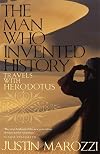
I'm a huge fan of Herodotus. Such a cheerful companion to bounce with around the ancient world, wide-eyed at all those interesting people doing all those interesting things. Not a mean bone in his body.
So I rejoice to say that Marozzi is similarly inclined. Of particular interest was his sojourn in Iraq, and mournful visit to Babylon, mother of nations. How far she has fallen from her glorious days when Herodotus visited.
The discovery that the edge of east/west that developed from Platea, show more Marathon, Thermopylae, still thrives along the edges of Greece, Turkey, Albania, Macedonia, while not surprising when you think about it, is still sobering in its consequences.
A throroughly enjoyable read, and highly recommended even if you haven't read Herodotus. Guaranteed not to hurt you. show less
So I rejoice to say that Marozzi is similarly inclined. Of particular interest was his sojourn in Iraq, and mournful visit to Babylon, mother of nations. How far she has fallen from her glorious days when Herodotus visited.
The discovery that the edge of east/west that developed from Platea, show more Marathon, Thermopylae, still thrives along the edges of Greece, Turkey, Albania, Macedonia, while not surprising when you think about it, is still sobering in its consequences.
A throroughly enjoyable read, and highly recommended even if you haven't read Herodotus. Guaranteed not to hurt you. show less
Lists
Awards


You May Also Like


Associated Authors
Statistics
- Works
- 9
- Also by
- 9
- Members
- 1,041
- Popularity
- #24,732
- Rating
- 3.7
- Reviews
- 19
- ISBNs
- 46
- Languages
- 7
- Favorited
- 1