

Jessie Redmon Fauset (1882–1961)
Author of Plum Bun
About the Author
Image credit: Courtesy of the NYPL Digital Gallery (image use requires permission from the New York Public Library)
Works by Jessie Redmon Fauset
Associated Works
The Norton Anthology of African American Literature {2nd edition} (2003) — Contributor, some editions — 282 copies, 2 reviews
African American Poetry: 250 Years of Struggle and Song (2020) — Contributor — 235 copies, 4 reviews
World War I and America: Told by the Americans Who Lived It (1918) — Contributor — 225 copies, 1 review
Daughters of Africa: An International Anthology of Words and Writings by Women of African Descent from the Ancient Egyptian to the Present (1992) — Contributor — 187 copies
Calling the Wind: Twentieth Century African-American Short Stories (1992) — Contributor — 116 copies
Harlem Renaissance Novels: the Library of America Collection: (Two-volume boxed set) (2011) — Contributor — 55 copies, 1 review
Revolutionary Tales: African American Women's Short Stories, from the First Story to the Present (1995) — Contributor — 54 copies
Centers of the Self: Stories by Black American Women, from the Nineteenth Century to the Present (1994) — Contributor — 31 copies
Women of the Harlem Renaissance (Macmillan Collector's Library) (2022) — Contributor — 24 copies, 1 review
The Unforgetting Heart: An Anthology of Short Stories by African American Women, 1859-1993 (1993) — Contributor — 23 copies
Gender in Modernism: New Geographies, Complex Intersections (2007) — Contributor — 12 copies, 1 review
Breaking the Ties That Bind: Popular Stories of the New Woman, 1915-1930 (1992) — Contributor — 9 copies
Girl, Colored and Other Stories: A Complete Short Fiction Anthology of African American Women Writers in The Crisis Magazine, 1910-2010 (2010) — Contributor — 4 copies
African American Literature: A Concise Anthology from Frederick Douglass to Toni Morrison (2009) — Contributor — 1 copy
Tagged
Common Knowledge
- Canonical name
- Fauset, Jessie Redmon
- Legal name
- Harris, Jessie Redmon Fauset (married name)
Fauset, Jessie - Birthdate
- 1882-04-27
- Date of death
- 1961-04-30
- Gender
- female
- Education
- University of Philadelphia (MA)
Cornell University (BA) - Occupations
- novelist
literary critic
editor
poet
teacher - Awards and honors
- Phi Beta Kappa (1905)
- Relationships
- Du Bois, W. E. B. (editor)
Hughes, Langston
McKay, Claude
Cullen, Countee
Toomer, Jean - Short biography
- Jessie Redmon Fauset was born in Camden County, New Jersey. Her mother died when she was young, and her father, an African Methodist minister, remarried and moved the family to Philadelphia. She attended the Philadelphia High School for Girls and won a scholarship to Cornell University, where she studied Latin, Greek, German, and French, among other subjects, and became one of the first black women elected to Phi Beta Kappa. She graduated with a B.A. in classical languages in 1905, and worked as a teacher in Baltimore and Washington, D. C. There she met W.E.B. Du Bois, and began contributing to the magazine he had helped found, The Crisis. In 1919, she moved to New York City to become the magazine's literary editor. She hosted a salon at her apartment in Harlem was active in the neighborhood’s artistic scene. In 1929, she married Hubert Harris, an insurance broker, but kept her birth name professionally. She published her debut novel, There Is Confusion, in 1924, and would go on to publish three more novels, as well as poetry, book reviews, and essays. However, she is best known today for discovering and mentoring many other African American writers of the period, including Langston Hughes, Jean Toomer, Countee Cullen, and Claude McKay, for which she has been nicknamed the "Midwife of the Harlem Renaissance."
- Nationality
- USA
- Birthplace
- Snow Hill, New Jersey, USA
- Place of death
- Philadelphia, Pennsylvania, USA
- Associated Place (for map)
- USA
Members
Reviews

Written at the height of the Harlem Renaissance, this is one of those novels that isn't nearly as widely read as it should be. Fauset's novel is so readable as to often seem casual, but the heart of the story is a detailing of psychology related to racism, sexism, and the question/process of "passing". By focusing on a young African American girl who wants nothing more than to be a free woman and artist, Fauset tracks her young protragonist through Philadelphia and then New York with a show more constant eye toward the politics of her life. Because the focus of the novel is on the personal psychology of characters, as opposed to larger politics affecting society, the book and protagonist might come across as deceptively simple, or even selfish. Instead, the novel works to provide a picture of simple, and even realistic, survival.
In the end, Fauset's subtitle, "a novel without a moral", is both important and careful. As prolific and involved as Fauset was during the Harlem Renaissance, there's no question that this work is never without thought, but it is also incredibly engaging and readable, maybe so much so that its very readability has allowed it to be overlooked when we look back at the serious literature of its time. Plum Bun: A Novel WIthout a Moral is, though, a pointed critique of anyone who would attempt to call "passing" a simple matter of morality, pride, or confidence--it is a serious work of fiction, worth reading and considering, that sheds real light onto race and gender politics of the early twentieth century.
Simply, this may be a book you haven't heard of...but it shouldn't be.
Absolutely recommended. show less
In the end, Fauset's subtitle, "a novel without a moral", is both important and careful. As prolific and involved as Fauset was during the Harlem Renaissance, there's no question that this work is never without thought, but it is also incredibly engaging and readable, maybe so much so that its very readability has allowed it to be overlooked when we look back at the serious literature of its time. Plum Bun: A Novel WIthout a Moral is, though, a pointed critique of anyone who would attempt to call "passing" a simple matter of morality, pride, or confidence--it is a serious work of fiction, worth reading and considering, that sheds real light onto race and gender politics of the early twentieth century.
Simply, this may be a book you haven't heard of...but it shouldn't be.
Absolutely recommended. show less

Jessie Redmon Fauset's first novel, There is Confusion, focuses on the experience of three Black children growing up in early twentieth-century New York: Joanna, the ambitious performer; Peter, the would-be surgeon with seemingly no real drive; and Maggie, the impoverished one who yearns for security and respectability. This is a far stronger book in its first half, when the main characters are still young and Redmon Fauset is writing a nicely observed novel of manners. About the midway show more point through, it shifts into a rather melodramatic mode and the characters become less people and more moralizing mouthpieces. Still, interesting for the glimpse it affords into the world of middle-class African Americans at the turn of the last century. show less
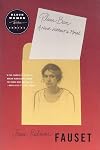
In Jessie Redmon Fauset’s second published novel, Plum Bun: A Novel without a Moral (published 1928), one woman struggles to finding her own identity racially and sexually in New York City during the vibrant years of the Harlem Renaissance.
Artist Angela Murray is a light-skinned “coloured” woman in the transitional years of the late 1910s and 1920s. When she gets an opportunity, she leaves her home town in Philadelphia for a life of “passing” as a white person in New York City. The show more novel follows her subsequent life and choices, creating a complex portrait of her life in an era of conflicting identities. She struggles with her role as a woman, with her choices as a sexually free individual, and also with her challenges to come to terms with her race in a time of both intense racial discrimination and racial contentment in Harlem.
Plum Bun's narrative focuses rather intensely on Angela herself. Angela’s story is a coming-of-age story, and in many ways I found it satisfying as a whole because of the intense emotional components developed in the novel as Angela and her sister and their friends aged and experienced the consequences of their choices. Plum Bun is a wonderfully written and developed story that sits solidly in the historical context of the Harlem Renaissance but remains highly relevant to readers today.
More on my blog show less
Artist Angela Murray is a light-skinned “coloured” woman in the transitional years of the late 1910s and 1920s. When she gets an opportunity, she leaves her home town in Philadelphia for a life of “passing” as a white person in New York City. The show more novel follows her subsequent life and choices, creating a complex portrait of her life in an era of conflicting identities. She struggles with her role as a woman, with her choices as a sexually free individual, and also with her challenges to come to terms with her race in a time of both intense racial discrimination and racial contentment in Harlem.
Plum Bun's narrative focuses rather intensely on Angela herself. Angela’s story is a coming-of-age story, and in many ways I found it satisfying as a whole because of the intense emotional components developed in the novel as Angela and her sister and their friends aged and experienced the consequences of their choices. Plum Bun is a wonderfully written and developed story that sits solidly in the historical context of the Harlem Renaissance but remains highly relevant to readers today.
More on my blog show less
I had been looking for this story, one of independence and the hard questions and eventual happiness, for a while. Well-written, and easily digestible.
Lists
Awards


You May Also Like


Associated Authors
Statistics
- Works
- 7
- Also by
- 26
- Members
- 626
- Popularity
- #40,248
- Rating
- 3.9
- Reviews
- 7
- ISBNs
- 45
- Favorited
- 4