
Frank Bird Linderman (1869–1938)
Author of Pretty-shield: Medicine Woman of the Crows
About the Author
Frank B. Linderman (1869-1938) spent his adult life in Montana, first as a trapper and then as an author, politician, and businessman. He lived closely with the Salish, Blackfeet, Crows, and other Native peoples in the region
Image credit: Frank Bird Linderman posed for this portrait in Helena, Montana, c. 1905. Library of Congress, LC-DIG-ggbain-37519
Works by Frank Bird Linderman
Indian Why Stories 1 copy
Associated Works
Voice of the Turtle: American Indian Literature, 1900-1970 (1994) — Contributor — 139 copies, 1 review
Tagged
Common Knowledge
- Other names
- Co-skee-see-co-cot
- Birthdate
- 1869-09-25
- Date of death
- 1938-05-12
- Gender
- male
- Education
- Oberlin College
- Occupations
- trapper
hunter
cowboy
public official
hotel owner
assayer (show all 8)
politician
insurance agent - Organizations
- Montana State Legislature (1903-1905)
Montana Secretary of State (1905-1907)
Guardian Insurance Company of America - Awards and honors
- Montana Cowboy Hall of Fame (2009)
- Nationality
- USA
- Birthplace
- Cleveland, Ohio, USA
- Places of residence
- Cleveland, Ohio, USA
Brandon, Montana, USA
Butte, Montana, USA
Sheridan, Montana, USA
Helena, Montana, USA
Kalispell, Montana, USA (show all 7)
Santa Barbara, California, USA - Place of death
- Santa Barbara, California, USA
- Associated Place (for map)
- Montana, USA
Members
Reviews
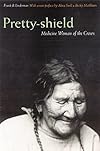
My mom got this book when she was in college, and I read it when I was very young. I loved it so much, that I still have that copy and have read it about a dozen times! Something about Native American History calls to me. It always has. (No one has noticed that many of my books have Native Americans in them, have they?) Perhaps it is the need to connect with my heritage, perhaps it comes from growing up in Montana, so close to the reservation. Maybe it is my Underdog complex, I don't know. show more
But this book is an amazing view of Native Americans. It not only shows the culture and history, but how that changed with being forced to live on the reservation. It is not about legendary characters, or massive game changing events (though they do briefly discuss her memories of some events that may not be big in the collective memory of Native American history, but were catastrophic for this tribe.)
Pretty Shield focuses on the every day, and makes it beautiful. She shares stories of her youth, stories of her People. It is simple, elegant, and enlightening. I am sure I will read it again soon. show less
But this book is an amazing view of Native Americans. It not only shows the culture and history, but how that changed with being forced to live on the reservation. It is not about legendary characters, or massive game changing events (though they do briefly discuss her memories of some events that may not be big in the collective memory of Native American history, but were catastrophic for this tribe.)
Pretty Shield focuses on the every day, and makes it beautiful. She shares stories of her youth, stories of her People. It is simple, elegant, and enlightening. I am sure I will read it again soon. show less
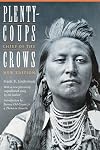
The Crow were always friendly to whites – perhaps because they realized being unfriendly to whites would end poorly. This is a re-issue of an interview between Frank Linderman and Plenty-Coups conducted in 1930.
Most of the book is Plenty-Coups’ stories of his early life – raids against the Sioux, the Cheyenne, and the Arapahoe – sometimes all at once. There are tales of sneaking into an enemy camp to steal horses, and of hand-to-hand battles. One thing I found interesting is show more Plenty-Coups is always full of praise for his enemies – “that Sioux was a good warrior”; “that Cheyenne fought well” – before killing them. In time, Plenty-Coups became the archetypical “wise old Indian chief” and was chosen to represent all Native Americans at the dedication of the Tomb of the Unknown Soldier in 1921. He’s quoted as advising the Crow “Get a white man’s education; without it you are a white man’s victim, with it you are his equal”. When he died in 1932, the Crow unanimously voted never to elect another principal chief; he willed his house and land to Montana as a state park.
An easy, interesting, and exciting read. Pictures of Plenty-Coups and various aspects of Crow life. Introduction and afterword to this (2002) edition by Crow. Maps of Plenty-Coups’ world and a glossary of Crow words (which notes the native name for Crow is Apsáalooke, which translates as “Children of the Large Beaked Bird, and for Plenty-Coups is Alaxchíiahush, “Many War Deeds”). For more on the Crow, see Absaraka, Home of the Crows and The Crow Indians. show less
Most of the book is Plenty-Coups’ stories of his early life – raids against the Sioux, the Cheyenne, and the Arapahoe – sometimes all at once. There are tales of sneaking into an enemy camp to steal horses, and of hand-to-hand battles. One thing I found interesting is show more Plenty-Coups is always full of praise for his enemies – “that Sioux was a good warrior”; “that Cheyenne fought well” – before killing them. In time, Plenty-Coups became the archetypical “wise old Indian chief” and was chosen to represent all Native Americans at the dedication of the Tomb of the Unknown Soldier in 1921. He’s quoted as advising the Crow “Get a white man’s education; without it you are a white man’s victim, with it you are his equal”. When he died in 1932, the Crow unanimously voted never to elect another principal chief; he willed his house and land to Montana as a state park.
An easy, interesting, and exciting read. Pictures of Plenty-Coups and various aspects of Crow life. Introduction and afterword to this (2002) edition by Crow. Maps of Plenty-Coups’ world and a glossary of Crow words (which notes the native name for Crow is Apsáalooke, which translates as “Children of the Large Beaked Bird, and for Plenty-Coups is Alaxchíiahush, “Many War Deeds”). For more on the Crow, see Absaraka, Home of the Crows and The Crow Indians. show less
"Plenty-Coups: Chief of the Crows" is a wonderful autobiographyical, as-told-to-the-author FRank B. Linderman, no-holds-barred account of the pre-reservation life of Plenty-Coups, the last great Chief of the Crow Nation. Plenty-Coups talks about his childhood, youth and manhood in the tribe's pre-reservation days and leads into the era when the Crow allied themselves with the U.S. Army against neighboring tribes. The Cheyenne and Lakota Sioux had long been engaged in warfare with the Crow in show more an attempt to thoroughly destroy the Crow and take over their lands. As Chief, Plenty-Coups successfully led his tribe from their Plains Indian life into reservation life---so successful that the Crow retained most all their land. They never fought against the US government. His Crow contemporaries and more recent tribal members included in this "New Edition," 2002, accord him great honor as their most important Chief in history.
Plenty-Coups' voice is clearly heard through the written text. His joy in childhood and warring activities is palpable, as well as entirely candid about topics that often offend European-American sensibilities. Plenty-Coups has provided the reader with one of the most real accounts of Plains Indian lifeways in the North American continent before Indians were relegated to reservations. The book covers Crow childhood games, processes of teaching skills for adulthood, youthful exploits, spiritual life, marriage and wars for survival of the tribe. Plenty-Coups ends his story at the point when the tribe was limited to a reservation by the US government. Linderman continues the story with information on how Plenty Coup led his tribe into the new world of a Euro-American dominant society, culture and government.
Plenty-Coups' spoken autobiography recorded with the observations of author Frank B. Linderman is a necessary read before beginning author Jonathan Lear's book "Radical Hope: Ethics in the Face of Cultural Devastation." This latter book is well worth reading by those who are interested in the intersection of cultural anthropology, philosophy and ethics. show less
Plenty-Coups' voice is clearly heard through the written text. His joy in childhood and warring activities is palpable, as well as entirely candid about topics that often offend European-American sensibilities. Plenty-Coups has provided the reader with one of the most real accounts of Plains Indian lifeways in the North American continent before Indians were relegated to reservations. The book covers Crow childhood games, processes of teaching skills for adulthood, youthful exploits, spiritual life, marriage and wars for survival of the tribe. Plenty-Coups ends his story at the point when the tribe was limited to a reservation by the US government. Linderman continues the story with information on how Plenty Coup led his tribe into the new world of a Euro-American dominant society, culture and government.
Plenty-Coups' spoken autobiography recorded with the observations of author Frank B. Linderman is a necessary read before beginning author Jonathan Lear's book "Radical Hope: Ethics in the Face of Cultural Devastation." This latter book is well worth reading by those who are interested in the intersection of cultural anthropology, philosophy and ethics. show less
The remarkable story of the early days of reservation life, the resistance of white encroachment and the latter days of freedom upon the Great Plains has been told many times and in many ways. The way it was for each of the Plains tribes has been recounted by their chiefs, medicine men and warriors time and time again. Seldom has the woman's viewpoint or experience been shared. I think this is largely because no one asked but it is also because of the humble attitude of native women at that show more time. The author of this book, Frank B. Linderman, says as much in the forward to this book. "I have found Indian women diffident, and so self-effacing that acquaintance with them is next to impossible. Even when Indian women have sometimes acted as my interpreters while gathering tribal legends they remained strangers to me."
Pretty-shield: Medicine Woman of the Crows, originally published in 1932 under the title Red Mother, is the story of one elderly woman of the Crow or Absarokee Nation. After having much association with the Plains tribes for over forty-six years, Linderman was pleasantly surprised when Pretty-shield one day consented to be interviewed by him through an interpreter and also using sign-language so that he could write about the Crow female experience.
Frank Linderman was a trapper, hunter and cowboy who later became a writer and anthropologist. He lived among the Crow as well as among other Montana tribes throughout the latter part of the 19th century and into the early part of the twentieth century. He was extremely adept at the use of sign-language which earned him the name Sign-Talker among the Crows.
In relating Pretty-shield's story, Linderman has done a good job of keeping himself and his opinions out of the narrative, an especially difficult thing to have done, considering the influence of his gender and his race at the time he was writing. There are a few minor examples of condescension on his part, in particular with reference to a black former slave living on the reservation at the time of his interviews. He, at times, seems to be "humoring" Pretty-shield but I think this is due more to the fact that she is elderly and not so much to the fact of her race or gender or the veracity of her account. He conduct's himself with respect throughout the process. For the most part Linderman's presence as the interviewer is seen only when he asks a question to prime the pump of Pretty-shield's sharp and colorful memory. Generally, he needs only to ask her a simple question like, "How was it when a new baby was born" and Pretty-shield's reply comes flowing out with abundance of fascinating and to me, endearing personal detail. Her candor and her spirit are refreshingly vivid in this account of her life and that of the female experience, in general, among the Crows.
Pretty-shield was a medicine woman or healer. From her account, I think this is due more in part to her age, her intelligence, strength of will and self-determination than to any specific training or initiation specifically for that role. She remembered the old ways at a time and in a place where so many had forgotten and therein was her strength and her distinction. Among a society that was decidedly dominated by men, Pretty-shield, throughout her life and into old-age, was a feisty woman who knew her own value and equality and that of women in general. She often spoke to the issue of male chauvinism in her accounts although always in a kind of side note to her tale. For example, in recounting the tale of a brave woman who fought against the Lakota on the Rosebud when General Crook led his troops and Crow scouts against Crazy Horse she says, "Ahh, the men did not tell you this but I have. And it's the truth. Every old Crow, man or woman, knows that it is the truth. I am sure that your friend, Plenty-coups, has told you only the truth. But if he left this out he did not tell you all of the truth. Two women, one of them not quite a woman, fought with Three-stars, and I hope that you will put it in a book, Sign-talker, because it is the truth. Interestingly, the woman "not quite a woman" that Pretty-shield refers to in this passage is a lesbian that she talks about at some length in her account of the battle on the Rosebud.
The book contains many, many interesting stories from the life of Pretty-shield including courtship and marriage customs, childbirth, child-rearing from infancy to teens, ceremonial practices, hunting and gathering, food preparation, kinship etiquette, setting up a lodge and medicine, both spiritual and physical. We learn about the misery and death that came to the Crow people as a result of white man diseases like small pox for which they had no resistance or real understanding. Pretty-shield shares some of the most detailed accounts I have ever read about the day to day activities of aboriginal people. Her account also has elements of tribal myth and "grandmother tales" or teaching tales. Particularly fascinating to me are her accounts of dream tales. From the Native American perspective that Pretty-shield conveys it is wonderfully difficult to separate the dreamer's vision from the events in mundane reality, so closely attuned are she and her contemporaries with the Otherworld, so nimbly do they traverse the bridge between the two worlds.
Many accounts are related about the buffalo hunts and the fights with the Crow enemies, in particular against the Lakota. Her old contempt for the Lakota is expressed time and time again even though she acknowledges that all Indians became as one under the hard hand of the United States government and after the disappearance of the buffalo. I found it interesting to have this perspective on the Lakota from one who once considered them enemies. It helped me to know the Lakota people that much better.
The book ends with a fascinating account of the Battle of the Little Big Horn where her husband, Goes-ahead, fought alongside Custer as one of his Crow scouts. Goes-ahead along with two of his relatives fled when it became evident early on that Son-of-the-morning-star (Custer) was on a destiny journey to his own death. As Pretty-shield puts it, "But Son-of-the-morning-star was going to his death, and he did not know it. He was like a feather blown by the wind, and had to go. The soldier chief wanted to fight. He had to die. And this made others die with him.
As a grandmother, Pretty-shield is adept at keeping her emotions sublimated so that the truth of her memories can be preserved. She has lived long enough to be able to refrain from a lot of the judgment and outrage of a youthful mind and instead relies upon a certain resignation and detachment. She looks back with wistfulness while looking forward to the future her grandchildren will live. "The happiest days of my life were spent following the buffalo herds over this beautiful country. My mother and father and Goes-ahead, my man, were all kind, and we were so happy. Then, when my children came I believed I had everything that was good on this world. There were always so many, many buffalo, plenty of good fat meat for everybody. I have not long to stay here. I shall soon be going away from this world but my grandchildren will have to stay here for a long time yet. I wonder how they will make out."
I enjoyed this book very much for its unique perspective and because of the personality, humor and wisdom of Pretty-shield herself. Even though it is filtered through the writing of a white man from another time, Pretty-shield's voice is strong, her memory is sharp, and her story is unforgettable. show less
Pretty-shield: Medicine Woman of the Crows, originally published in 1932 under the title Red Mother, is the story of one elderly woman of the Crow or Absarokee Nation. After having much association with the Plains tribes for over forty-six years, Linderman was pleasantly surprised when Pretty-shield one day consented to be interviewed by him through an interpreter and also using sign-language so that he could write about the Crow female experience.
Frank Linderman was a trapper, hunter and cowboy who later became a writer and anthropologist. He lived among the Crow as well as among other Montana tribes throughout the latter part of the 19th century and into the early part of the twentieth century. He was extremely adept at the use of sign-language which earned him the name Sign-Talker among the Crows.
In relating Pretty-shield's story, Linderman has done a good job of keeping himself and his opinions out of the narrative, an especially difficult thing to have done, considering the influence of his gender and his race at the time he was writing. There are a few minor examples of condescension on his part, in particular with reference to a black former slave living on the reservation at the time of his interviews. He, at times, seems to be "humoring" Pretty-shield but I think this is due more to the fact that she is elderly and not so much to the fact of her race or gender or the veracity of her account. He conduct's himself with respect throughout the process. For the most part Linderman's presence as the interviewer is seen only when he asks a question to prime the pump of Pretty-shield's sharp and colorful memory. Generally, he needs only to ask her a simple question like, "How was it when a new baby was born" and Pretty-shield's reply comes flowing out with abundance of fascinating and to me, endearing personal detail. Her candor and her spirit are refreshingly vivid in this account of her life and that of the female experience, in general, among the Crows.
Pretty-shield was a medicine woman or healer. From her account, I think this is due more in part to her age, her intelligence, strength of will and self-determination than to any specific training or initiation specifically for that role. She remembered the old ways at a time and in a place where so many had forgotten and therein was her strength and her distinction. Among a society that was decidedly dominated by men, Pretty-shield, throughout her life and into old-age, was a feisty woman who knew her own value and equality and that of women in general. She often spoke to the issue of male chauvinism in her accounts although always in a kind of side note to her tale. For example, in recounting the tale of a brave woman who fought against the Lakota on the Rosebud when General Crook led his troops and Crow scouts against Crazy Horse she says, "Ahh, the men did not tell you this but I have. And it's the truth. Every old Crow, man or woman, knows that it is the truth. I am sure that your friend, Plenty-coups, has told you only the truth. But if he left this out he did not tell you all of the truth. Two women, one of them not quite a woman, fought with Three-stars, and I hope that you will put it in a book, Sign-talker, because it is the truth. Interestingly, the woman "not quite a woman" that Pretty-shield refers to in this passage is a lesbian that she talks about at some length in her account of the battle on the Rosebud.
The book contains many, many interesting stories from the life of Pretty-shield including courtship and marriage customs, childbirth, child-rearing from infancy to teens, ceremonial practices, hunting and gathering, food preparation, kinship etiquette, setting up a lodge and medicine, both spiritual and physical. We learn about the misery and death that came to the Crow people as a result of white man diseases like small pox for which they had no resistance or real understanding. Pretty-shield shares some of the most detailed accounts I have ever read about the day to day activities of aboriginal people. Her account also has elements of tribal myth and "grandmother tales" or teaching tales. Particularly fascinating to me are her accounts of dream tales. From the Native American perspective that Pretty-shield conveys it is wonderfully difficult to separate the dreamer's vision from the events in mundane reality, so closely attuned are she and her contemporaries with the Otherworld, so nimbly do they traverse the bridge between the two worlds.
Many accounts are related about the buffalo hunts and the fights with the Crow enemies, in particular against the Lakota. Her old contempt for the Lakota is expressed time and time again even though she acknowledges that all Indians became as one under the hard hand of the United States government and after the disappearance of the buffalo. I found it interesting to have this perspective on the Lakota from one who once considered them enemies. It helped me to know the Lakota people that much better.
The book ends with a fascinating account of the Battle of the Little Big Horn where her husband, Goes-ahead, fought alongside Custer as one of his Crow scouts. Goes-ahead along with two of his relatives fled when it became evident early on that Son-of-the-morning-star (Custer) was on a destiny journey to his own death. As Pretty-shield puts it, "But Son-of-the-morning-star was going to his death, and he did not know it. He was like a feather blown by the wind, and had to go. The soldier chief wanted to fight. He had to die. And this made others die with him.
As a grandmother, Pretty-shield is adept at keeping her emotions sublimated so that the truth of her memories can be preserved. She has lived long enough to be able to refrain from a lot of the judgment and outrage of a youthful mind and instead relies upon a certain resignation and detachment. She looks back with wistfulness while looking forward to the future her grandchildren will live. "The happiest days of my life were spent following the buffalo herds over this beautiful country. My mother and father and Goes-ahead, my man, were all kind, and we were so happy. Then, when my children came I believed I had everything that was good on this world. There were always so many, many buffalo, plenty of good fat meat for everybody. I have not long to stay here. I shall soon be going away from this world but my grandchildren will have to stay here for a long time yet. I wonder how they will make out."
I enjoyed this book very much for its unique perspective and because of the personality, humor and wisdom of Pretty-shield herself. Even though it is filtered through the writing of a white man from another time, Pretty-shield's voice is strong, her memory is sharp, and her story is unforgettable. show less
Lists
Awards


You May Also Like


Associated Authors
Statistics
- Works
- 26
- Also by
- 2
- Members
- 765
- Popularity
- #33,260
- Rating
- 3.8
- Reviews
- 8
- ISBNs
- 65
- Languages
- 3