
Saleema Nawaz
Author of Bone and Bread
Works by Saleema Nawaz
Bone & Bread 1 copy
Tagged
Common Knowledge
Members
Reviews
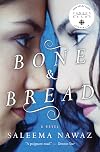
Ah, sometimes it feels so good to leave one’s comfort zone and be reminded of the joys inherent in superb storytelling, no matter the content or genre. Nawaz effortlessly cuts back and forth through time, following Beena as adult and child, letting the reader travel alongside her as she slowly pieces together the elements of her life. Her characters breathe real, their pains ache beyond the page. It’s a novel filled with moments of grief, toil, and random cruelty, yet it never feels show more oppressive, never crumbles under its own weight. Nawaz’s graceful plotting and style keep the story intimate, tender, and surprisingly funny.
Read the full review at The Redeblog. show less
Read the full review at The Redeblog. show less

between 2 and 2.5 stars. it's pretty incredible to me that she wrote this before covid; her research was impeccable because the coronavirus she created and the world reaction to it mirrors, in so many little and big ways, what happened when covid came. that alone is impressive. (it also makes me think that if a nonscientist could predict what she did, we should have - as a world - been more prepared and more anticipatory.)
this is well written and realistic but i had some trouble keeping the show more connections between the people clear in my mind. which social circles intersected and how, which people were related and how. maybe it's reading it during an actual pandemic, but i wasn't as interested in the stories of the people themselves and just found myself comparing how our covid pandemic related to their aramis pandemic. this is a book, though, less about the actual pandemic and the way the coronavirus affects people, and more about the relationships between people and how people respond and react to outside changes that they can't do much about.
"He wonders if he has only forgotten what it's like to be a child - how not to see at a glance the shape of an ending before you begin."
"All the countries she'd visited while always feeling from nowhere. Or from a place more of the mind than real, half remembered, half described. And everywhere along the way picking up a phrase, a food, a new favorite thing, markers and souvenirs. They might have been affectations. But maybe that was all character was, anyway, an accumulation of affectations." show less
this is well written and realistic but i had some trouble keeping the show more connections between the people clear in my mind. which social circles intersected and how, which people were related and how. maybe it's reading it during an actual pandemic, but i wasn't as interested in the stories of the people themselves and just found myself comparing how our covid pandemic related to their aramis pandemic. this is a book, though, less about the actual pandemic and the way the coronavirus affects people, and more about the relationships between people and how people respond and react to outside changes that they can't do much about.
"He wonders if he has only forgotten what it's like to be a child - how not to see at a glance the shape of an ending before you begin."
"All the countries she'd visited while always feeling from nowhere. Or from a place more of the mind than real, half remembered, half described. And everywhere along the way picking up a phrase, a food, a new favorite thing, markers and souvenirs. They might have been affectations. But maybe that was all character was, anyway, an accumulation of affectations." show less
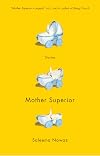
Sometimes the longest story in a collection has the allure of a key; I want to read it first because I believe that it, like the title story, will contain helpful hints to understanding other stories therein.
(Sometimes the longest story is also the title story: this whispers of pure enlightenment. But this rarely works out for me.)
Sometimes I resent it, particularly when by scanning the table of contents I can see that it is the only long-ish story, and I suspect that it is the novel that show more couldn’t be.
(Woof woof. Although I don’t think I have yet finished a Farley Mowat novel. And, yes, I realize this is unreasonable, and is more about marketing decisions than the author’s work.)
Sometimes, as with “”The White Dress”, the final story in Saleema Nawaz’s collection, it is the story which cinches the deal.
Each of the stories in Mother Superior is well written. Weeks later I can recall the outline of each by scanning their titles. But “The White Dress” made me want to pick up Saleema Nawaz’s debut novel immediately.
The collection opens with “Mother Superior”, in which Joan “is a slut but a slut for Jesus”, a wayward girl, and the narrator avoids going to hell for being a lesbian.
It is followed by “My Three Girls”, in which readers leaf through a photo album of grief chronicling the loss of baby Maggie, alongside a series of images without albums.
(In hindsight, I believe this story could be the keyholder: unrealized connections and severed bonds, leavings and losses, sisters and sorrows, gaps and borders.)
Then, “Bloodlines”, in which Sadhana keeps Khalsa (pure, according to Sikh law) and Beena does not, and Beena grows larger and Sadhana grows smaller, above a Montreal bagel bakery.
(I was heartbroken by one aspect of this story, which I did not fully understand until long after I had finished it. Stories that linger: I love that. Especially when they turn into novels.)
Next, “Scar Tissue”, in which dinner out for two couples has Patti reliving all kinds of moments of crisis and injury and endurance.
(There are lines drawn in this story, too, characters crossing them on- and off-stage.)
An appropriate companion in many ways, next is “Look, But Don’t Touch”, in which Kate struggles to define the boundaries of curiosity and lust for another person while struggling with them herself.
Then, “The Beater”, in which the question of how to spot a “bad man” sprawls across time and space. (Though, ironically, the story feels as though it sprawls, but it is one of the shorter tales, so the expanse is down to crafting, not page count.)
And “Sandy”, in which a woman who has had too much to drink is offered a place to sleep for the night (or maybe the tenants are operating a safe house for those with nowhere else to go).
(The author skilfully presents commentary in italics which adds considerable umph to the story.)
Next, “The Republic of Rose Island”, in which one sister stays and the other leaves (more leavings and losses) and some people try harder than others to make connections despite this.
And, finally, “The White Dress”, in which a young girl plays Nancy Drew to learn more about her own identity and that of a near-sister she has never known.
(Did I mention that this is my favourite? And, yes, I loved Louise Fitzhugh’s Harriet the Spy and Catherine O’Flynn’s What Was Lost.)
I rarely attempt to summarize short stories in a collection when I chat about it (unless they are Alice Munro stories, each of which requires a separate post to even begin to summarize it). But with Saleema Nawaz’s collection, I am struck by the spread of woman-soaked stories.
Like those of Audrey Thomas, they hold women in their everyday lives, in apartments and restaurants, on fire escapes and park benches. These lives are sometimes outwardly different, within this cacophony of women’s voices, the characters share some of the same preoccupations.
Perhaps this stems from the author’s preoccupation with “the gap between who people seemed to be and who they really were in their secret selves when no one else was around” (which makes for great fiction).
Characters are often vulnerable. “Exposed. I was terrified of being exposed.”
They are caught in complexity. “No, I’ll never say it’s bad, but it’s not good either, if you know what I mean.” They try to balance memories of the different versions of people they have lost.
Contrasts are fascinating: “She said she had two words to describe the relationship: exhilarating and fraught.” They struggle to negotiate disconnections, which might signal someone being lost in reveries or suffering from headache.
Losses are overwhelming: “It might be that really everybody was always leaving, that partings and separations were closer to the heart of things. I didn’t like that idea at all.”
Throughout, the language is often matter-of-fact, occasionally lush.
One woman’s ”thighs [are] swollen with goosebumps like huge pages of flesh covered in a cold Braille. A story to be felt out beneath her red halter top and the leather miniskirt ringing her hips like a blown tire.”
Another might leave a room “without any explanation, slipping out in silence like a needle lifting off a record”.
She moves through time and space: she lives.
“Other times she is amazed at the way a woman can move through space and time and it is just called a life. As though it were nothing more remarkable than that.”
And, yet, it is remarkable. It recalls to mind this Carol Shields quote: “I don’t think in terms of plot very much, very little in fact, but I think that the arc of the human life is a plot and it is enough of a plot, for me.”
Saleema Nawaz’s Mother Superior is a remarkable collection of lives: a cacophony of voices in short fiction.
This piece originally appeared here, on BuriedInPrint. show less
(Sometimes the longest story is also the title story: this whispers of pure enlightenment. But this rarely works out for me.)
Sometimes I resent it, particularly when by scanning the table of contents I can see that it is the only long-ish story, and I suspect that it is the novel that show more couldn’t be.
(Woof woof. Although I don’t think I have yet finished a Farley Mowat novel. And, yes, I realize this is unreasonable, and is more about marketing decisions than the author’s work.)
Sometimes, as with “”The White Dress”, the final story in Saleema Nawaz’s collection, it is the story which cinches the deal.
Each of the stories in Mother Superior is well written. Weeks later I can recall the outline of each by scanning their titles. But “The White Dress” made me want to pick up Saleema Nawaz’s debut novel immediately.
The collection opens with “Mother Superior”, in which Joan “is a slut but a slut for Jesus”, a wayward girl, and the narrator avoids going to hell for being a lesbian.
It is followed by “My Three Girls”, in which readers leaf through a photo album of grief chronicling the loss of baby Maggie, alongside a series of images without albums.
(In hindsight, I believe this story could be the keyholder: unrealized connections and severed bonds, leavings and losses, sisters and sorrows, gaps and borders.)
Then, “Bloodlines”, in which Sadhana keeps Khalsa (pure, according to Sikh law) and Beena does not, and Beena grows larger and Sadhana grows smaller, above a Montreal bagel bakery.
(I was heartbroken by one aspect of this story, which I did not fully understand until long after I had finished it. Stories that linger: I love that. Especially when they turn into novels.)
Next, “Scar Tissue”, in which dinner out for two couples has Patti reliving all kinds of moments of crisis and injury and endurance.
(There are lines drawn in this story, too, characters crossing them on- and off-stage.)
An appropriate companion in many ways, next is “Look, But Don’t Touch”, in which Kate struggles to define the boundaries of curiosity and lust for another person while struggling with them herself.
Then, “The Beater”, in which the question of how to spot a “bad man” sprawls across time and space. (Though, ironically, the story feels as though it sprawls, but it is one of the shorter tales, so the expanse is down to crafting, not page count.)
And “Sandy”, in which a woman who has had too much to drink is offered a place to sleep for the night (or maybe the tenants are operating a safe house for those with nowhere else to go).
(The author skilfully presents commentary in italics which adds considerable umph to the story.)
Next, “The Republic of Rose Island”, in which one sister stays and the other leaves (more leavings and losses) and some people try harder than others to make connections despite this.
And, finally, “The White Dress”, in which a young girl plays Nancy Drew to learn more about her own identity and that of a near-sister she has never known.
(Did I mention that this is my favourite? And, yes, I loved Louise Fitzhugh’s Harriet the Spy and Catherine O’Flynn’s What Was Lost.)
I rarely attempt to summarize short stories in a collection when I chat about it (unless they are Alice Munro stories, each of which requires a separate post to even begin to summarize it). But with Saleema Nawaz’s collection, I am struck by the spread of woman-soaked stories.
Like those of Audrey Thomas, they hold women in their everyday lives, in apartments and restaurants, on fire escapes and park benches. These lives are sometimes outwardly different, within this cacophony of women’s voices, the characters share some of the same preoccupations.
Perhaps this stems from the author’s preoccupation with “the gap between who people seemed to be and who they really were in their secret selves when no one else was around” (which makes for great fiction).
Characters are often vulnerable. “Exposed. I was terrified of being exposed.”
They are caught in complexity. “No, I’ll never say it’s bad, but it’s not good either, if you know what I mean.” They try to balance memories of the different versions of people they have lost.
Contrasts are fascinating: “She said she had two words to describe the relationship: exhilarating and fraught.” They struggle to negotiate disconnections, which might signal someone being lost in reveries or suffering from headache.
Losses are overwhelming: “It might be that really everybody was always leaving, that partings and separations were closer to the heart of things. I didn’t like that idea at all.”
Throughout, the language is often matter-of-fact, occasionally lush.
One woman’s ”thighs [are] swollen with goosebumps like huge pages of flesh covered in a cold Braille. A story to be felt out beneath her red halter top and the leather miniskirt ringing her hips like a blown tire.”
Another might leave a room “without any explanation, slipping out in silence like a needle lifting off a record”.
She moves through time and space: she lives.
“Other times she is amazed at the way a woman can move through space and time and it is just called a life. As though it were nothing more remarkable than that.”
And, yet, it is remarkable. It recalls to mind this Carol Shields quote: “I don’t think in terms of plot very much, very little in fact, but I think that the arc of the human life is a plot and it is enough of a plot, for me.”
Saleema Nawaz’s Mother Superior is a remarkable collection of lives: a cacophony of voices in short fiction.
This piece originally appeared here, on BuriedInPrint. show less
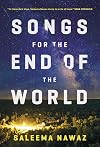
As strange as this might sound, it was actually quite enjoyable to read (I actually listened) a book set during a pandemic during this COVID pandemic. This is the second one that I’ve read - the first was The End of October by Lawrence Wright.
There were many passages in Songs for the end of the world where I found myself thinking, Yes, that’s it exactly. Nawaz also does a wonderful job of creating characters whose lives intersect in engaging ways. My favourite book quote came from an show more observation made by Elliot as he was returning to the city:
“The closer you got to the heart of a calamity, the more resilience there was to be found.”
Although sections of her book are quite sad, overall I found the book left me satisfied and hopeful. show less
There were many passages in Songs for the end of the world where I found myself thinking, Yes, that’s it exactly. Nawaz also does a wonderful job of creating characters whose lives intersect in engaging ways. My favourite book quote came from an show more observation made by Elliot as he was returning to the city:
“The closer you got to the heart of a calamity, the more resilience there was to be found.”
Although sections of her book are quite sad, overall I found the book left me satisfied and hopeful. show less
Lists
Awards


You May Also Like


Statistics
- Works
- 4
- Members
- 296
- Popularity
- #79,167
- Rating
- 3.8
- Reviews
- 20
- ISBNs
- 11