

Paul Finkelman
Author of Millard Fillmore
About the Author
Paul Finkelman (Ph.D., University of Chicago) is the Ariel F. Sallows Visiting Professor of Human Rights Law at the University of Saskatchewan College of Law. His many books include Slavery and the Founders: Race and Liberty in the Age of Jefferson: Millard Fillmore: A Biography; and A March of show more Liberty: A Constitutional History of the United States, which he co-authored. He is the editor-in-chief of The Oxford Encyclopedia of African American History 1896 to the Present; The Encyclopedia of the New American Nation; and The Encyclopedia of World Slavery. For the Bedford Series in History and Culture he edited A Brief Narrative of the Case and Tryal of John Peter Zenger, with Related Documents and Defending Slavery: Proslavery Thought in the Old South, A Brief History with Documents. Finkelman has also published numerous scholarly articles on slavery, American legal history, civil rights, civil liberties, and baseball and the law. show less
Series
Works by Paul Finkelman
Defending Slavery: Proslavery Thought in the Old South: A Brief History with Documents (2003) 119 copies
Encyclopedia of African American History, 1896 to the Present: From the Age of Segregation to the Twenty-first Century Five-volume set (2008) 34 copies
Encyclopedia of African American history, 1619-1895 : from the colonial period to the age of Frederick Douglass (2006) 26 copies
A March of Liberty: A Constitutional History of the United States [2-volume set] (2001) 25 copies, 1 review
Milestone Documents of American Leaders: Exploring the Primary Sources of Notable Americans (2009) 17 copies
Congress and the Emergence of Sectionalism: From the Missouri Compromise to the Age of Jackson (2008) — Editor — 15 copies
A Brief Narrative of the Case and Tryal of John Peter Zenger: with Related Documents (2010) 14 copies
Milestone Documents in American History: Exploring the Primary Sources That Shaped America (2008) 13 copies
Milestone Documents in African American History: Exploring the Essential Primary Sources (2010) 7 copies
Encyclopedia of the New American Nation: The Emergence of the United States 1754-1829 Vol Three 0684314401 (2005) 6 copies
Race and the Constitution : from the Philadelphia Convention to the age of segregation (2010) 6 copies
In the Shadow of Freedom: The Politics of Slavery in the National Capital (Perspective Hist of Congress 1801-1877) (2011) 6 copies
Congress and the People’s Contest: The Conduct of the Civil War (Perspective Hist of Congress 1801-1877) (2018) 6 copies
Civil War Congress and the Creation of Modern America: A Revolution on the Home Front (Perspective Hist of Congress 1801-1877) (2018) 5 copies
Ending the Civil War and Consequences for Congress (Perspective Hist of Congress 1801-1877) (2019) 4 copies
The Supreme Court : controversies, cases, and characters from John Jay to John Roberts (2014) 4 copies
Encyclopedia of the United States in the nineteenth century. Volume 1, Abolition and Antislavery-Government (2001) 3 copies
Milestone Documents in American History (Vol. 1: 1763 - 1823): Exploring the Primary Sources that Shaped America (2008) 3 copies
Encyclopedia of United States Indian Policy and Law Set: Encyclopedia of United States Indian Policy and Law (Two volume set) (2008) 3 copies
Milestone Documents in American History (Vol. 2: 1824 - 1887): Exploring the Primary Sources That Shaped America (2008) 2 copies
Encyclopedia of the United States in the Nineteenth Century: Volume 3, Printing Technology-Zoos 2 copies
Associated Works
Beyond Confederation: Origins of the Constitution and American National Identity (1987) — Contributor — 60 copies, 1 review
The Bill of Rights: Government Proscribed (Perspectives on the American Revolution) (1998) — Contributor — 14 copies
Tagged
Common Knowledge
- Birthdate
- 1949-11-15
- Gender
- male
- Education
- University of Chicago
- Occupations
- legal historian
college professor - Organizations
- Gratz College
- Nationality
- USA
- Associated Place (for map)
- USA
Members
Reviews
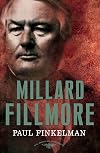
There is a certain fascination in reading about a mediocrity. By this standard, Millard Fillmore is perhaps the most fascinating President in history.
There have been Presidents less "qualified" than Fillmore (Abraham Lincoln, who had served only one term in congress, was one). There have been presidents who have been more lucky in ending up with the job (Lincoln's vice president Andrew Johnson probably qualifies). But Fillmore managed to be lucky, unqualified -- and in the middle of a very show more hot situation as California's quest for statehood forced the federal government to face the issue of slavery head-on. President Zachary Taylor -- the man elected in 1848 -- had been prepared to tackle the issue, and he had stature as an elected President and a successful general. Fillmore, who succeeded in 1850 when Taylor died in office, had none of that.
Nor did he have any brilliant ideas. The Compromise of 1850 was not his but Henry Clay's, and Fillmore backed it but did not make it his own. Fillmore did little to address the problem of conflict between North and South. Frankly, he did little, period. In the view of this book, it is because he was too much a particularist -- interested in his own people and his own concerns, and with little regard for those (such as slaves) who weren't part of his own circle.
Biographers have a tendency to be sympathetic to their subjects. Paul Finkleman is not at all sympathetic to Fillmore. It is hard to know if this is fair -- we don't really get to know the "inner Fillmore" in this book. All we see is the mediocrity (which was certainly real) and the lust for power (also pretty hard to deny). It may not be a complete picture. But it is a fascinating one. show less
There have been Presidents less "qualified" than Fillmore (Abraham Lincoln, who had served only one term in congress, was one). There have been presidents who have been more lucky in ending up with the job (Lincoln's vice president Andrew Johnson probably qualifies). But Fillmore managed to be lucky, unqualified -- and in the middle of a very show more hot situation as California's quest for statehood forced the federal government to face the issue of slavery head-on. President Zachary Taylor -- the man elected in 1848 -- had been prepared to tackle the issue, and he had stature as an elected President and a successful general. Fillmore, who succeeded in 1850 when Taylor died in office, had none of that.
Nor did he have any brilliant ideas. The Compromise of 1850 was not his but Henry Clay's, and Fillmore backed it but did not make it his own. Fillmore did little to address the problem of conflict between North and South. Frankly, he did little, period. In the view of this book, it is because he was too much a particularist -- interested in his own people and his own concerns, and with little regard for those (such as slaves) who weren't part of his own circle.
Biographers have a tendency to be sympathetic to their subjects. Paul Finkleman is not at all sympathetic to Fillmore. It is hard to know if this is fair -- we don't really get to know the "inner Fillmore" in this book. All we see is the mediocrity (which was certainly real) and the lust for power (also pretty hard to deny). It may not be a complete picture. But it is a fascinating one. show less
Well!!! This turned out to be one of the most interesting presidential biographies I've read so far.
Finkelman vehemently disagrees with [[Robert Rayback]] about Fillmore's philosophy, intentions, and political successes (or not). Simply put, this is a scathing 137-page indictment of a man the author sees as the day's ultimate doughface (Northerner with Southern sympathies) and future Copperhead (Northerner with Confederate sympathies).
I don't know enough about Fillmore or the time period show more to make a judgment on which author sees Fillmore more clearly, but Finkelman is certainly convincing. First, there is a lengthy and informative summary of the personal, historical and political background leading up to Fillmore's nomination for Vice President. Then comes a vivid dissection of his political ineptness, moral failings (he hated and acted against pretty much everyone who wasn't white, Protestant, and a citizen, as well as abolitionists of all creeds), and collaboration with Daniel Webster to push through the Compromise of 1850 and the beefed up Fugitive Slave Act. Finkelman discusses Fillmore's intense effort to appease extreme Southerners and the dramatic imbalance between what the Northerners and Southerners received in the final Compromise, with the South receiving pretty much everything it wanted and the North receiving nothing it wouldn't have had anyway, including a free California. There is an extended discussion of the damage done to the black community with the suspension of habeas corpus for people claimed as runaways (including kidnapped free blacks and fugitives with free spouses and children) and various court cases in which people of both races were charged with treason for aiding escaped slaves. Meanwhile, cases involving actual treason and threats to national security and international relations (private invasions of Cuba, threats of war by the new state of Texas) were smoothed over with little ado. Finkelman, a specialist in American legal history, race, and constitutional law, clearly sees the Fugitive Slave Act of 1850 as Fillmore's chief claim to ignominy, while recognizing the resultant increase in Northern anti-slavery efforts.
Finkelman does give Fillmore credit for several "visionary" ideas (for example, movements towards a transcontinental railroad and towards the opening of Japan to American diplomacy and trade). But the lasting impression is of a man with little pity and few values besides maintenance of business and property rights. What a stinker. show less
Finkelman vehemently disagrees with [[Robert Rayback]] about Fillmore's philosophy, intentions, and political successes (or not). Simply put, this is a scathing 137-page indictment of a man the author sees as the day's ultimate doughface (Northerner with Southern sympathies) and future Copperhead (Northerner with Confederate sympathies).
I don't know enough about Fillmore or the time period show more to make a judgment on which author sees Fillmore more clearly, but Finkelman is certainly convincing. First, there is a lengthy and informative summary of the personal, historical and political background leading up to Fillmore's nomination for Vice President. Then comes a vivid dissection of his political ineptness, moral failings (he hated and acted against pretty much everyone who wasn't white, Protestant, and a citizen, as well as abolitionists of all creeds), and collaboration with Daniel Webster to push through the Compromise of 1850 and the beefed up Fugitive Slave Act. Finkelman discusses Fillmore's intense effort to appease extreme Southerners and the dramatic imbalance between what the Northerners and Southerners received in the final Compromise, with the South receiving pretty much everything it wanted and the North receiving nothing it wouldn't have had anyway, including a free California. There is an extended discussion of the damage done to the black community with the suspension of habeas corpus for people claimed as runaways (including kidnapped free blacks and fugitives with free spouses and children) and various court cases in which people of both races were charged with treason for aiding escaped slaves. Meanwhile, cases involving actual treason and threats to national security and international relations (private invasions of Cuba, threats of war by the new state of Texas) were smoothed over with little ado. Finkelman, a specialist in American legal history, race, and constitutional law, clearly sees the Fugitive Slave Act of 1850 as Fillmore's chief claim to ignominy, while recognizing the resultant increase in Northern anti-slavery efforts.
Finkelman does give Fillmore credit for several "visionary" ideas (for example, movements towards a transcontinental railroad and towards the opening of Japan to American diplomacy and trade). But the lasting impression is of a man with little pity and few values besides maintenance of business and property rights. What a stinker. show less
At first glance, it’s hard to understand why Millard Fillmore possesses such a dismal reputation as president. Taking over in the aftermath of Zachary Taylor’s sudden death, he championed a compromise over the issue of slavery in the new territories that averted the immediate threat of Southern secession. His presidency coincided with a period of economic prosperity and he enjoyed a number of foreign policy successes, most notably the launching of an expedition that would open up show more relations between Japan and the rest of the world. Yet Paul Finkelman challenges any claim of Fillmore as an underappreciated executive. In this short biography, he presents Fillmore as “a thoroughly unsuccessful president” one who compromised liberty for the sake of politics, and whose political career ended ignominiously as the nominee of a political party built around bigotry.
That Fillmore even became president was unusual. Born to a family of poor farmers in western New York, he turned to a career in the law in search of better prospects. Finkelman sees Fillmore’s social ambitions as key to understanding the impetus behind his political choices, pushing him away from the more egalitarian Democratic Party and towards first the Anti-Masonic Party, then the Whigs. Yet while Fillmore quickly established himself as a Whig leader and enjoyed a successful career as a congressman, Finkelman argues that he was still a relatively obscure figure when internal party machinations made him the Whig Party vice presidential nominee in 1848. Possessing little authority or public standing, Fillmore found himself politically impotent as vice president, as he was repeatedly outmaneuvered by his chief New York rival William H. Seward.
Taylor’s death dramatically transformed Fillmore’s situation. Thrust into the ongoing debate over what became the Compromise of 1850, the new president was forced to make a series of major decisions in a short period of time. Finkelman is less than impressed with Fillmore’s leadership during this period, arguing that he caved far too readily to southern demands, resulting in a settlement that undermined the Whig Party and, ultimately, the nation. Of all the concessions, none was worse than the Fugitive Slave Act, which Finkelman excoriates for its provisions undermining liberty and the due process of law. Efforts to enforce it galvanized resistance in much of the north, to which the Fillmore administration responded with a series of legally questionable prosecutions. Though these efforts failed to win any convictions, they did win support of the southern Whigs, whose support Fillmore wanted to win for his own candidacy for the presidency. Fillmore’s efforts, however, were ultimately crippled by his own indecisiveness about running, resulting in a lengthy retirement interrupted only by a final, failed, run for office as the presidential candidate of the nativist Know-Nothings in 1856.
Concise and well-argued, Finkelman’s biography is a powerful indictment of Fillmore as president. Drawing upon his background as a legal historian, he exposes the flaws of Fillmore’s policies showing how they degraded the country and propelled the nation down the path to war. It serves as a powerful rebuttal to Robert Rayback’s efforts to rehabilitate Fillmore in his [b:Millard Fillmore: Biography of a President|861483|Millard Fillmore Biography of a President|Robert J. Rayback|https://i.gr-assets.com/images/S/compressed.photo.goodreads.com/books/1387740771l/861483._SY75_.jpg|846913], the standard scholarly biography of the 13th president. Though Finkelman’s book lacks the degree of detail that Rayback’s possesses, it offers a far more convincing assessment of Fillmore’s failings and a better understanding of the role he played in the nation’s descent into civil war. For anyone seeking to understand Fillmore and his role in American history, this is the book to read. show less
That Fillmore even became president was unusual. Born to a family of poor farmers in western New York, he turned to a career in the law in search of better prospects. Finkelman sees Fillmore’s social ambitions as key to understanding the impetus behind his political choices, pushing him away from the more egalitarian Democratic Party and towards first the Anti-Masonic Party, then the Whigs. Yet while Fillmore quickly established himself as a Whig leader and enjoyed a successful career as a congressman, Finkelman argues that he was still a relatively obscure figure when internal party machinations made him the Whig Party vice presidential nominee in 1848. Possessing little authority or public standing, Fillmore found himself politically impotent as vice president, as he was repeatedly outmaneuvered by his chief New York rival William H. Seward.
Taylor’s death dramatically transformed Fillmore’s situation. Thrust into the ongoing debate over what became the Compromise of 1850, the new president was forced to make a series of major decisions in a short period of time. Finkelman is less than impressed with Fillmore’s leadership during this period, arguing that he caved far too readily to southern demands, resulting in a settlement that undermined the Whig Party and, ultimately, the nation. Of all the concessions, none was worse than the Fugitive Slave Act, which Finkelman excoriates for its provisions undermining liberty and the due process of law. Efforts to enforce it galvanized resistance in much of the north, to which the Fillmore administration responded with a series of legally questionable prosecutions. Though these efforts failed to win any convictions, they did win support of the southern Whigs, whose support Fillmore wanted to win for his own candidacy for the presidency. Fillmore’s efforts, however, were ultimately crippled by his own indecisiveness about running, resulting in a lengthy retirement interrupted only by a final, failed, run for office as the presidential candidate of the nativist Know-Nothings in 1856.
Concise and well-argued, Finkelman’s biography is a powerful indictment of Fillmore as president. Drawing upon his background as a legal historian, he exposes the flaws of Fillmore’s policies showing how they degraded the country and propelled the nation down the path to war. It serves as a powerful rebuttal to Robert Rayback’s efforts to rehabilitate Fillmore in his [b:Millard Fillmore: Biography of a President|861483|Millard Fillmore Biography of a President|Robert J. Rayback|https://i.gr-assets.com/images/S/compressed.photo.goodreads.com/books/1387740771l/861483._SY75_.jpg|846913], the standard scholarly biography of the 13th president. Though Finkelman’s book lacks the degree of detail that Rayback’s possesses, it offers a far more convincing assessment of Fillmore’s failings and a better understanding of the role he played in the nation’s descent into civil war. For anyone seeking to understand Fillmore and his role in American history, this is the book to read. show less

I have the second addition and I think the third edition is out now but I love this book. It is a great resource for anyone interested in law and law history. This book has a comprehensive selection of the most important documents both in private and public law from when America was first a country to the present. It expertly shows how legal ideas change as American society changes. I really liked the headings/introductions to each case and documents which helped explain what I was reading show more and helps show it's broader context and themes. show less
Lists
Founding Father (1)
The Presidents (1)
Awards


You May Also Like


Associated Authors
Statistics
- Works
- 76
- Also by
- 2
- Members
- 1,275
- Popularity
- #20,119
- Rating
- 3.5
- Reviews
- 7
- ISBNs
- 183