
David Cesarani (1956–2015)
Author of Becoming Eichmann: Rethinking the Life, Crimes, and Trial of a "Desk Murderer" (Eichmann: His Life and Crimes)
About the Author
David Cesarani was born in London, England on November 13, 1956. He received a bachelor's degree in history from Cambridge University, a master's degree in Jewish history from Columbia University, and a doctorate in history from Oxford University. He was a scholar of contemporary Jewish history. He show more taught at the University of Leeds, Queen Mary University of London, the University of Southampton, and Royal Holloway, a constituent college of the University of London. He wrote several books including The Jewish Chronicle and Anglo-Jewry, 1841-1991; The Holocaust; Justice Delayed: How Britain Became a Refuge for Nazi War Criminals; Arthur Koestler: The Homeless Mind; Major Farran's Hat: Murder, Scandal and Britain's War Against Jewish Terrorism, 1945-1948; and Final Solution: The Fate of the Jews, 1933-49. Eichmann: His Life and Crimes was published as Becoming Eichmann: Rethinking the Life, Crimes, and Trial of a 'Desk Murderer' in the United States and received a National Jewish Book Award in 2006. He was named to the Order of the British Empire in 2005 for his work in helping Britain establish Holocaust Memorial Day. He died from complications of recent surgery on October 25, 2015 at the age of 58. (Bowker Author Biography) show less
Works by David Cesarani
Becoming Eichmann: Rethinking the Life, Crimes, and Trial of a "Desk Murderer" (Eichmann: His Life and Crimes) (2004) — Author — 293 copies, 2 reviews
Associated Works
Into the Arms of Strangers: Stories of the Kindertransport (2000) — Introduction — 342 copies, 2 reviews
The Last Days: Steven Spielberg and Survivors of the Shoah Visual History Foundation (1999) — Introduction — 102 copies
Tagged
Common Knowledge
- Birthdate
- 1956-11-13
- Date of death
- 2015-10-25
- Gender
- male
- Education
- Latymer Upper School, London
University of Cambridge (BA, 1st class honours|History|1976)
Columbia University (MA|History)
University of Oxford (St Antony's College|DPhil|History) - Occupations
- historian
- Organizations
- University of Leeds
Queen Mary University of London
University of Southampton
Royal Holloway, University of London
All-Party Parliamentary War Crimes Group
Task Force for International Cooperation on Holocaust Education (show all 8)
Prime Minister’s Holocaust Commission
Peace Now - Awards and honors
- Officer of the Order of the British Empire (2005)
- Cause of death
- Cancer (Tumeur de la colonne vertébrale)
- Nationality
- UK
- Birthplace
- London, England, UK
- Place of death
- Londres, Angleterre, Royaume-Uni
- Associated Place (for map)
- England, UK
Members
Reviews
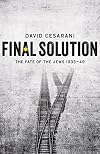
I have an extensive library on the Holocaust or the Shoah or whatever you wish to call one of the most unpleasant and cruel episodes in human history. It has fascinated me ever since I was almost physically sick at the age of 12 when I came across the story of Nazi medical experimentation.
But my interest has never been ghoulish nor, at the other extreme, a search for meaning where there is none. Nor am I Jewish where identity itself makes objectivity difficult, almost inhuman. To be an show more objective Jewish historian of the events of 1933 to 1949 is in itself a triumph of the spirit.
My interest is fundamentally political. Not simply about a pompous assertion that it should never happen again, as if stating things were the same as things actually happening, but about how this thing came to be and what it tells us about our species.
From this perspective, the late David Cesarani's 800 or so page history is easily the book I would most recommend others to read. It is a triumph of the spirit to which I referred earlier, both objective as good history should be and humane.
His thesis has long been my thesis not so much from my researches into this story but arising from my own experience of practical politics - things get out of control, people do not question their condition and the obsessions of the powerful becomes the careers of the middling sort.
At the centre of the narrative is war and imperialism. The mythology of the Nazi era is that everything is about the Jews. To add insult to injury, it turns out that it wasn't, at least until quite late in the day. Hitler was viciously antisemitic but his prior concern was Germany's 'greatness'.
In this story, the Jews are simply in the way and, more tragically, increasingly trapped in a total war that could not be won. It went on for far too long under conditions where history had positioned vast numbers of innocent people as the 'enemy within'.
The best of the book is in the first third which tells a story less often told about a people - the German Jews - who were drawn into hell like a frog in water that slowly boils. Their position was not made easier by the lack of clarity in Nazi policy.
The official line, well beyond the foundation of the first ghettos after the invasion of Poland, was emigration not extermination. Extermination emerged as a crisis of food, as a specific rage by the Fuhrer and as a security fear and competed to the end with the desire for slave labour.
Cesarani is convincing on the sheer ramshackle nature of the horror, its marginality, its clumsiness and its chaos. Anyone who holds to the myth of German efficiency will be disabused by this book. What the Germans had was a demonic destructive will to survive.
I say Germans advisedly because they were drawn by circumstances into complicity with horror just like the Jews - as frogs in slowly boiling water - with an additional disturbing aspect of the case, the propensity of the young to jump the queue of life through a narcissistic radicalism.
I have elsewhere produced a fairly detailed essay on one modern issue - the alleged collaboration between Zionism and Nazism - which can be found at https://www.linkedin.com/pulse/tppr-essay-4-livingstone-zionism-nazis-tim-pendry and which draws a great deal on this book.
I refer you to that essay for more on the trajectory that Cesarani describes until roughly 1940 and the immediate aftermath of the brutal invasion of Poland where Jews were murdered politically rather than racially as suspected communists (though the two categories were conflated by Nazis).
From this point on, the book becomes very grim reading indeed, to the point where listening to Remainers accuse their opponents of being Nazis (merely for short term political advantage in the recent Brexit debate) strikes one as an utterly obscene and ignorant use of history.
The catalogue of horrors is not unbelievable - unless you are a very stupid observer of human nature - but it is all staggeringly callous and cruel. The levels of human suffering involved in the continental war, not just Jews of course, suggests nothing less than species breakdown.
And breakdown is what this is all about. A turn of the century German promoted beyond his administrative and intellectual capacity but with enormous will and native intelligence seized control of a militaristic culture and turned it into a machine for imperial aggrandisement.
He was trying to do what the British Empire had done over 400 years in four. He relied on shock tactics which in turn used a sort of defensive deluded brutality, wiping out any threat before it could mobilise. What he did not reckon on was the resilence of his Soviet enemy.
A war expected to be over within a year dragged on for four and the Jews, already positioned as the cultural enemy, were trapped, their only value being slave labour as radical Nazis in the SS seized control of the agenda and developed a strategy of selective and then total extermination.
These monsters, bureaucrats, ideologues and corrupt businessmen in equal proportion, made use of barbarian Eastern European ethnic militia, turned Jews on Jews to exploit their labour value and organise the transports to death camps, and slaughtered civilians like farm animals.
So much is well known and the book makes hard reading even to a tough old observer of human folly such as myself but Cesarani usefully contextualises everything so we do not fall into the trap of being voyeurs in a theatre of death in which sentiment overwhelms our analysis of causation.
He places the death camps in the context of the ghetto and exploitative labour system, the fear of partisans, the failure of emigration strategies (actually the preferred Nazi option which has lead to the confusion over alleged Zionist complicity) and Western democratic politics and military failures
He gives us the story of the fate of individual Jews under every area of occupation, eliminating some of the myths along the way (the 'heroic' Danish evacuation is not actually at all what it seems) and showing the complexity of individual national responses.
Some come out of it better than others - the Italians were lazy enough to resist Nazi claims for quite a while, the Slovak fascists seemed to be unexpectedly protective of their own Jews, the Hungarians too seemed to have resisted for as long as possible attacks on their sovereignty.
The Belgians did their best, the Romanians acted like thieving maniacs and then reversed policy later and the Poles could be as antisemitic as their occupiers and so on and so forth - the point is that the Nazis were trying to cope with an occupation that drained them from within.
The Wehrmacht was simply a machine for war with no particular interest in the Jews either way. They just wanted to be sure that the SS nut cases did not redirect resources and have negative effects on the war effort - and Hitler tended to agree.
The book tends to confirm me in my view that all these horrors happened because Hitler and his ravings sent a signal that permitted and encouraged extermination (or slave labour if more useful) but, even to him, the Jewish problem was only one facet of the conduct of imperial war.
Cesarani does not end his book with liberation because liberation scarcely took place. He takes the story of the Jews in Europe through to 1949. At one point, the British had more Jews in camps than the Nazis had in 1938/1939 albeit under generally better conditions.
The tragic push to Palestine, of no interest to most Jews under Nazi rule, became a necessity. There was no home left for Jews. The Western Powers were not exactly callous but rather preoccupied with coping with the aftermath of war and with new enmities and barely gave Jews a thought.
A gap in the book is the experience of the Jews who fled to the Soviet Union and then returned in force to Poland after the war. Their experience of Polish anti-semitism made them a driving element in the creation of Israel but many had never had experience of ghettos and death camps.
The Soviet exiled Jews had a harsh time of it but they were not enslaved or murdered as Jews were under the Nazis and we could have done with as much space being given to Soviet liberation of the East as Western liberation of the Jews in Germany. The Red Army, as so often, gets forgotten.
There is one other aspect of the book that is worth noting - its treatment of the claim that the Jews were weak in their response to the Nazi threat. I have referred twice to the slowly boiling frog analogy but the Nazis were immensely good at deception and manipulation.
They controlled resources and information (the key to power) and used fear and reward to ensure that Jews selected other Jews for death until only the fit young men were left. The Nazi strategy in this respect was never very clear to the victims.
Most Jews simply had no weapons, limited or no means of survival outside the camps (escapers might live less long than the inmates of the ghetto or even the camps), little information and were concerned with protecting immediate family and simply getting enough food.
Eventually the remaining fit young men with sufficient resource figured out strategies for revolt in the Warsaw Ghetto (1943), Treblinka and Sobibor (1944). These revolts may have been failures but they frightened the Nazis who began to see that their strategies were unsustainable.
The real monstrosity lies not just in the killing, the rapes, the cruelties but in what I started with - the politics of the situation, the pot in which the poor frogs, Jewish and German, were being boiled. It is the politics in this book that bears more scrutiny than the horrors.
Two societies lived in a state of false consciousness about each other. German Jews considered themselves part of what it was to be German and so were excessively tolerant of the bad treatment of Ostjuden (the French Jews were similarly dismissive of German Jewish and other refugees).
The Germans developed a mental map of the Jews as threat that had some small basis in history, as we have discussed in the link above, but generalised it from the historical abstract to encompass an entire people, effectively innocent of the claims made against them.
Before the war, most Germans seem to have been happy to discriminate yet disliked obvious cruelty or maltreatment. Kristallnacht nearly back-fired on the regime. Hitler was not enthusiastic about it - it was a typical bit of theatre from Goebbels.
With war everything changed. The soldiery witnessed and participated in mass murder 'for security reasons', the sheer number of Ostjuden on new German territory unnerved the population and the opportunity for plunder began to become generalised within German society.
At a certain point, the war switched from a war of empire in which the Jews were to be pushed out of Reich territory eastwards into a war of survival in which the Jews came to be seen as a 'race' that would exact an awful revenge if Germany was defeated.
But the original war on the Jews was less about their extermination and more about their total despoliation to deal with budgetary and then German welfare problems. From there, their poverty became a burden on a State that was suffering shortages as well as a perceived security risk.
Killing off burdensome mouths and enslaving the fit (albeit to the point of becoming unfit) became 'logical' as did handing over Jewish clothing and property to the victims of Allied bombing. Ideology. necessity and chaos are the stuff of such nightmares.
The politics lies in the complete collapse of order other than the order of bribery and terror. Plunder and greed seem to have been more influential even than race hate - Nazi occupation became part half-baked chaotic pogrom, part exploitative business racket and part lunacy.
So there we have it - all the committees against anti-semitism are probably worth very little against the business of avoiding war, maintaining the rule of law under conditions of equality for all and ensuring that there are enough resources to go around.
Cesarani is right to draw our attention to the way that the exigencies of war turned something distinctly unpleasant into murderous savagery, rape and plunder. I am right to draw your attention to the role of young ideologues in creating the justifications for hell.
All in all, a sound introduction to the subject that avoids the trap of allowing the horror to overwehelm the need to understand. As a result, the horror hits home all the harder for not being based on anything rational or organised at all. This is our species up against the wall. show less
But my interest has never been ghoulish nor, at the other extreme, a search for meaning where there is none. Nor am I Jewish where identity itself makes objectivity difficult, almost inhuman. To be an show more objective Jewish historian of the events of 1933 to 1949 is in itself a triumph of the spirit.
My interest is fundamentally political. Not simply about a pompous assertion that it should never happen again, as if stating things were the same as things actually happening, but about how this thing came to be and what it tells us about our species.
From this perspective, the late David Cesarani's 800 or so page history is easily the book I would most recommend others to read. It is a triumph of the spirit to which I referred earlier, both objective as good history should be and humane.
His thesis has long been my thesis not so much from my researches into this story but arising from my own experience of practical politics - things get out of control, people do not question their condition and the obsessions of the powerful becomes the careers of the middling sort.
At the centre of the narrative is war and imperialism. The mythology of the Nazi era is that everything is about the Jews. To add insult to injury, it turns out that it wasn't, at least until quite late in the day. Hitler was viciously antisemitic but his prior concern was Germany's 'greatness'.
In this story, the Jews are simply in the way and, more tragically, increasingly trapped in a total war that could not be won. It went on for far too long under conditions where history had positioned vast numbers of innocent people as the 'enemy within'.
The best of the book is in the first third which tells a story less often told about a people - the German Jews - who were drawn into hell like a frog in water that slowly boils. Their position was not made easier by the lack of clarity in Nazi policy.
The official line, well beyond the foundation of the first ghettos after the invasion of Poland, was emigration not extermination. Extermination emerged as a crisis of food, as a specific rage by the Fuhrer and as a security fear and competed to the end with the desire for slave labour.
Cesarani is convincing on the sheer ramshackle nature of the horror, its marginality, its clumsiness and its chaos. Anyone who holds to the myth of German efficiency will be disabused by this book. What the Germans had was a demonic destructive will to survive.
I say Germans advisedly because they were drawn by circumstances into complicity with horror just like the Jews - as frogs in slowly boiling water - with an additional disturbing aspect of the case, the propensity of the young to jump the queue of life through a narcissistic radicalism.
I have elsewhere produced a fairly detailed essay on one modern issue - the alleged collaboration between Zionism and Nazism - which can be found at https://www.linkedin.com/pulse/tppr-essay-4-livingstone-zionism-nazis-tim-pendry and which draws a great deal on this book.
I refer you to that essay for more on the trajectory that Cesarani describes until roughly 1940 and the immediate aftermath of the brutal invasion of Poland where Jews were murdered politically rather than racially as suspected communists (though the two categories were conflated by Nazis).
From this point on, the book becomes very grim reading indeed, to the point where listening to Remainers accuse their opponents of being Nazis (merely for short term political advantage in the recent Brexit debate) strikes one as an utterly obscene and ignorant use of history.
The catalogue of horrors is not unbelievable - unless you are a very stupid observer of human nature - but it is all staggeringly callous and cruel. The levels of human suffering involved in the continental war, not just Jews of course, suggests nothing less than species breakdown.
And breakdown is what this is all about. A turn of the century German promoted beyond his administrative and intellectual capacity but with enormous will and native intelligence seized control of a militaristic culture and turned it into a machine for imperial aggrandisement.
He was trying to do what the British Empire had done over 400 years in four. He relied on shock tactics which in turn used a sort of defensive deluded brutality, wiping out any threat before it could mobilise. What he did not reckon on was the resilence of his Soviet enemy.
A war expected to be over within a year dragged on for four and the Jews, already positioned as the cultural enemy, were trapped, their only value being slave labour as radical Nazis in the SS seized control of the agenda and developed a strategy of selective and then total extermination.
These monsters, bureaucrats, ideologues and corrupt businessmen in equal proportion, made use of barbarian Eastern European ethnic militia, turned Jews on Jews to exploit their labour value and organise the transports to death camps, and slaughtered civilians like farm animals.
So much is well known and the book makes hard reading even to a tough old observer of human folly such as myself but Cesarani usefully contextualises everything so we do not fall into the trap of being voyeurs in a theatre of death in which sentiment overwhelms our analysis of causation.
He places the death camps in the context of the ghetto and exploitative labour system, the fear of partisans, the failure of emigration strategies (actually the preferred Nazi option which has lead to the confusion over alleged Zionist complicity) and Western democratic politics and military failures
He gives us the story of the fate of individual Jews under every area of occupation, eliminating some of the myths along the way (the 'heroic' Danish evacuation is not actually at all what it seems) and showing the complexity of individual national responses.
Some come out of it better than others - the Italians were lazy enough to resist Nazi claims for quite a while, the Slovak fascists seemed to be unexpectedly protective of their own Jews, the Hungarians too seemed to have resisted for as long as possible attacks on their sovereignty.
The Belgians did their best, the Romanians acted like thieving maniacs and then reversed policy later and the Poles could be as antisemitic as their occupiers and so on and so forth - the point is that the Nazis were trying to cope with an occupation that drained them from within.
The Wehrmacht was simply a machine for war with no particular interest in the Jews either way. They just wanted to be sure that the SS nut cases did not redirect resources and have negative effects on the war effort - and Hitler tended to agree.
The book tends to confirm me in my view that all these horrors happened because Hitler and his ravings sent a signal that permitted and encouraged extermination (or slave labour if more useful) but, even to him, the Jewish problem was only one facet of the conduct of imperial war.
Cesarani does not end his book with liberation because liberation scarcely took place. He takes the story of the Jews in Europe through to 1949. At one point, the British had more Jews in camps than the Nazis had in 1938/1939 albeit under generally better conditions.
The tragic push to Palestine, of no interest to most Jews under Nazi rule, became a necessity. There was no home left for Jews. The Western Powers were not exactly callous but rather preoccupied with coping with the aftermath of war and with new enmities and barely gave Jews a thought.
A gap in the book is the experience of the Jews who fled to the Soviet Union and then returned in force to Poland after the war. Their experience of Polish anti-semitism made them a driving element in the creation of Israel but many had never had experience of ghettos and death camps.
The Soviet exiled Jews had a harsh time of it but they were not enslaved or murdered as Jews were under the Nazis and we could have done with as much space being given to Soviet liberation of the East as Western liberation of the Jews in Germany. The Red Army, as so often, gets forgotten.
There is one other aspect of the book that is worth noting - its treatment of the claim that the Jews were weak in their response to the Nazi threat. I have referred twice to the slowly boiling frog analogy but the Nazis were immensely good at deception and manipulation.
They controlled resources and information (the key to power) and used fear and reward to ensure that Jews selected other Jews for death until only the fit young men were left. The Nazi strategy in this respect was never very clear to the victims.
Most Jews simply had no weapons, limited or no means of survival outside the camps (escapers might live less long than the inmates of the ghetto or even the camps), little information and were concerned with protecting immediate family and simply getting enough food.
Eventually the remaining fit young men with sufficient resource figured out strategies for revolt in the Warsaw Ghetto (1943), Treblinka and Sobibor (1944). These revolts may have been failures but they frightened the Nazis who began to see that their strategies were unsustainable.
The real monstrosity lies not just in the killing, the rapes, the cruelties but in what I started with - the politics of the situation, the pot in which the poor frogs, Jewish and German, were being boiled. It is the politics in this book that bears more scrutiny than the horrors.
Two societies lived in a state of false consciousness about each other. German Jews considered themselves part of what it was to be German and so were excessively tolerant of the bad treatment of Ostjuden (the French Jews were similarly dismissive of German Jewish and other refugees).
The Germans developed a mental map of the Jews as threat that had some small basis in history, as we have discussed in the link above, but generalised it from the historical abstract to encompass an entire people, effectively innocent of the claims made against them.
Before the war, most Germans seem to have been happy to discriminate yet disliked obvious cruelty or maltreatment. Kristallnacht nearly back-fired on the regime. Hitler was not enthusiastic about it - it was a typical bit of theatre from Goebbels.
With war everything changed. The soldiery witnessed and participated in mass murder 'for security reasons', the sheer number of Ostjuden on new German territory unnerved the population and the opportunity for plunder began to become generalised within German society.
At a certain point, the war switched from a war of empire in which the Jews were to be pushed out of Reich territory eastwards into a war of survival in which the Jews came to be seen as a 'race' that would exact an awful revenge if Germany was defeated.
But the original war on the Jews was less about their extermination and more about their total despoliation to deal with budgetary and then German welfare problems. From there, their poverty became a burden on a State that was suffering shortages as well as a perceived security risk.
Killing off burdensome mouths and enslaving the fit (albeit to the point of becoming unfit) became 'logical' as did handing over Jewish clothing and property to the victims of Allied bombing. Ideology. necessity and chaos are the stuff of such nightmares.
The politics lies in the complete collapse of order other than the order of bribery and terror. Plunder and greed seem to have been more influential even than race hate - Nazi occupation became part half-baked chaotic pogrom, part exploitative business racket and part lunacy.
So there we have it - all the committees against anti-semitism are probably worth very little against the business of avoiding war, maintaining the rule of law under conditions of equality for all and ensuring that there are enough resources to go around.
Cesarani is right to draw our attention to the way that the exigencies of war turned something distinctly unpleasant into murderous savagery, rape and plunder. I am right to draw your attention to the role of young ideologues in creating the justifications for hell.
All in all, a sound introduction to the subject that avoids the trap of allowing the horror to overwehelm the need to understand. As a result, the horror hits home all the harder for not being based on anything rational or organised at all. This is our species up against the wall. show less

David Cesarani was a historian, he died just after this book was published.
It is now late January and I have only just finished this book. I started it in mid November. It is over 1000 pages, you cannot call this a quick and easy read. It is not quick and definitely not easy.
As per the title, this book details what happened to the Jews from 1933 to 1949. I think one of the main characteristics of this book would be that the writing is devoid of emotion. I read someone else describing this show more book as cold. And yet, it is this plain recounting of facts does that serves to invoke the most deepest and traumatic of human emotions in the reader.
The book details how many people were killed, how they were killed, and who killed them, in great detail. I could relate some of these details but I wont because if you have children reading what happened to Jewish children will reduce you to tears and give you nightmares.
The other outstanding characteristic of this book is that it details exactly how it all came to pass. We all think we have a fair idea of what happened to the Jews, I certainly did until I read this book.
This book gives the context for many of the actions. Germany had been subject to the Nazi view of the Jews for many years before the war. Once Hitler came to power they subverted the entire education system to teaching the Nazi view of the world, its history and the Jews, the media and indeed everything else was subsumed into this vision. Whilst some of the Nazis involved in the early mass killings were shocked by what they were seeing, by the time that the Hitler Youth came online as soldiers their indoctrination was so thorough that Jews were not seen as even being human, literally, they could be treated and killed like animals and indeed they were.
The German army was fundamentally different to other armies. Where a British or American soldier is given explicit orders, German soldiers are just told what the overall objective is and then left to work it out for themselves. The results of this are unpredictable but often produces outstanding results. The German command deployed the learning and strategies that this methodology produced across the entire army. Where the British army went on to repeat the same mistakes over and over the German army became better and smarter as time went on. This principle also served in the annihilation of the Jews. Ideas were spread based their effectiveness.
At the beginning of the book he says that this book will dispel many myths about the Holocaust, like:
Adolf Hitler never intended to kill the Jews.
The "Jewish Problem" whilst being his obsession was never top of his priorities. The war always took precedence.
The Germans never had an "efficient killing machine". It was all ad hoc and badly thought out (until the very end).
The German population was complicit with the entire unfolding of the final solution.
The English and Americans knew what was happening to the Jews and did nothing.
The Jews were killed by the Ukrainians, Poles, Hungarians, Romanians and the Germans.
It was the Ukrainians that first demonstrated how effective mass killings could be by killing 50,000 men, women and children in 3 days in Poland. They showed the Germans a savagery that shocked some Nazis, but this methodology was soon spread to other areas. Populations of small towns and villages were encouraged to drag out their Jews and publicly humiliate them and worse. The Germans soon learned that people needed very little encouragement to do this. This method too soon spread. They also learned that they needed very few field staff to accomplish some of their objectives with local populations only too willing to help.
The other occupied races, while they may not have actually killed Jews, were wholeheartedly involved in the mass deportations of Jews in the knowledge that none of these people were coming back.
At the time that the extermination camps were operating the consensus among the British population was they didn't want any Jewish refugees and that "someone" had to solve the Jewish Problem.
Jewish businesses were a major part of the German economy and other economies in Europe. When the Jews were rounded up and deported it disrupted the economies on a great scale and the Germans needed the money in the economies. The infamous Kristallnacht resulted in 16,000 Germans being made unemployed because of the destruction of Jewish businesses.
The "spontaneous" rising up of the populations against the Jews frustrated some Nazis who needed them as slave labour, hostages and economic assets. The German solution was to Aryanise Jewish businesses, houses and assets, that meant simply replacing Jews with Germans. One day you had Jewish neighbours then you didn't. Everyone learned early on not to ask questions about where the Jews went and what happened to them but returning soldiers left no doubt about their fate.
If all that sounds conflicting and confusing, it really was. There was no central idea or plan on how to deal with the Jews. There was no Nazi masterplan!, it was chaotic and badly managed. One group of Nazi command wanted intact Jewish populations for slave labour and hostages while another wanted them gone and all that happened at the same time. There was often conflict between the various groups each with the own hidden agendas.
The simple fact is that no-one liked, wanted or needed the Jews. Not the English, not the Americans, no-one in Europe wanted any Jews in their country. By and large they were already hated before the war began. Those few brave souls who sheltered or helped individual Jews risked their lives to do so. If caught they were sent immediately to the camps.
The details of the slaughter is mind numbing in it s scope and variety, at times I had to put it down for a bit. Some things I read made me physically feel like vomiting something I have never experienced from reading before.
Towards the end of the book he starts dealing with events when finally the whole world knows about the camps and their horrors. It is in the papers everywhere. The Americans and The English went to great lengths to do nothing. In 1943 the Americans were taking aerial photos of the camps yet when the Jews asked the Americans and the English to bomb the camps and the rail lines they refused, they said they couldn't fly that far yet the aerial photos proved that they could. The English said that they had more important things to do.
The camps themselves were varied in both their intent and mechanics. Camps also came and went as the cleansing progressed, once an area was cleared the camp(s) were closed. Often to be re-opened as the chaos around clearances continued. Some camps were decorated more like holiday camps with pretty little stations and signs saying, "This way to the showers". Staff too were trained to give the illusion that the camp was merely a staging post and the showers were necessary to decontaminate the Jews as they passed through. The showers though were lethal. A single trainload of over 1200 men, women and children would be dead with an hour..
The book goes to 1948 because that is when the camps are finally emptied and the Jews set free. Between 1945 and 1948, the Jews were still locked in camps but now they were fed and clothed and their guards were British. They were not free though.
Some were released if the could prove their identity and nationality, a difficult task when all they had was the rags they stood in. Some of those who managed this returned to their home towns and tried to reclaim their houses and property. In Poland they were simply murdered. No-one wanted to give anything back and no-one cared about more dead Jews. Of all the property stolen almost none of it was returned. More to the point, most of the survivors did not want to return to the towns that had so badly treated them.
A lot of the Jews still held prisoner wanted to go to Palestine but that was controlled by the British and they had closed the borders to Jews from Europe. Finally in 1948 under pressure from America they relented and the remaining Jews went to Palestine. Probably what is not so well known is that they then set about getting rid of the Palestinian Arabs in much the same manner that they had been subject to, but that is another story.
Everything claimed as fact in the book is backed up with footnotes and bibliography.
It is hard to summarise or even give a solid impression about a book as big and complex as this for even I have simplified some of this to make it coherent. I don't imagine that anyone who reads this will want to read the book and I would not recommend it unless you have a real interest in finding out more. This is not casual read or a holiday book and requires a strong stomach.
After Germany was defeated the Allies mandated that by law Germany would teach the Holocaust in every German school. And they do, but I fear that they (and us) have been taught a simplified, sanitised, version of events that puts the blame squarely on the shoulders of the Germans alone and leaves out the uncomfortable facts that implicate everyone else.
Finally, you know that bit in horror movies where the main protagonist has left his friends or loved ones in the safe hands of one of the "good guys' and then finally it dawns on him that the "good guy" was all along the axe murderer......well, I have a son who lives in Germany and he would fail the ethnicity test that sealed the fate of the Jews.
I want to shout out to him, "RUN MAX, RUN FOR YOUR LIFE". show less
It is now late January and I have only just finished this book. I started it in mid November. It is over 1000 pages, you cannot call this a quick and easy read. It is not quick and definitely not easy.
As per the title, this book details what happened to the Jews from 1933 to 1949. I think one of the main characteristics of this book would be that the writing is devoid of emotion. I read someone else describing this show more book as cold. And yet, it is this plain recounting of facts does that serves to invoke the most deepest and traumatic of human emotions in the reader.
The book details how many people were killed, how they were killed, and who killed them, in great detail. I could relate some of these details but I wont because if you have children reading what happened to Jewish children will reduce you to tears and give you nightmares.
The other outstanding characteristic of this book is that it details exactly how it all came to pass. We all think we have a fair idea of what happened to the Jews, I certainly did until I read this book.
This book gives the context for many of the actions. Germany had been subject to the Nazi view of the Jews for many years before the war. Once Hitler came to power they subverted the entire education system to teaching the Nazi view of the world, its history and the Jews, the media and indeed everything else was subsumed into this vision. Whilst some of the Nazis involved in the early mass killings were shocked by what they were seeing, by the time that the Hitler Youth came online as soldiers their indoctrination was so thorough that Jews were not seen as even being human, literally, they could be treated and killed like animals and indeed they were.
The German army was fundamentally different to other armies. Where a British or American soldier is given explicit orders, German soldiers are just told what the overall objective is and then left to work it out for themselves. The results of this are unpredictable but often produces outstanding results. The German command deployed the learning and strategies that this methodology produced across the entire army. Where the British army went on to repeat the same mistakes over and over the German army became better and smarter as time went on. This principle also served in the annihilation of the Jews. Ideas were spread based their effectiveness.
At the beginning of the book he says that this book will dispel many myths about the Holocaust, like:
Adolf Hitler never intended to kill the Jews.
The "Jewish Problem" whilst being his obsession was never top of his priorities. The war always took precedence.
The Germans never had an "efficient killing machine". It was all ad hoc and badly thought out (until the very end).
The German population was complicit with the entire unfolding of the final solution.
The English and Americans knew what was happening to the Jews and did nothing.
The Jews were killed by the Ukrainians, Poles, Hungarians, Romanians and the Germans.
It was the Ukrainians that first demonstrated how effective mass killings could be by killing 50,000 men, women and children in 3 days in Poland. They showed the Germans a savagery that shocked some Nazis, but this methodology was soon spread to other areas. Populations of small towns and villages were encouraged to drag out their Jews and publicly humiliate them and worse. The Germans soon learned that people needed very little encouragement to do this. This method too soon spread. They also learned that they needed very few field staff to accomplish some of their objectives with local populations only too willing to help.
The other occupied races, while they may not have actually killed Jews, were wholeheartedly involved in the mass deportations of Jews in the knowledge that none of these people were coming back.
At the time that the extermination camps were operating the consensus among the British population was they didn't want any Jewish refugees and that "someone" had to solve the Jewish Problem.
Jewish businesses were a major part of the German economy and other economies in Europe. When the Jews were rounded up and deported it disrupted the economies on a great scale and the Germans needed the money in the economies. The infamous Kristallnacht resulted in 16,000 Germans being made unemployed because of the destruction of Jewish businesses.
The "spontaneous" rising up of the populations against the Jews frustrated some Nazis who needed them as slave labour, hostages and economic assets. The German solution was to Aryanise Jewish businesses, houses and assets, that meant simply replacing Jews with Germans. One day you had Jewish neighbours then you didn't. Everyone learned early on not to ask questions about where the Jews went and what happened to them but returning soldiers left no doubt about their fate.
If all that sounds conflicting and confusing, it really was. There was no central idea or plan on how to deal with the Jews. There was no Nazi masterplan!, it was chaotic and badly managed. One group of Nazi command wanted intact Jewish populations for slave labour and hostages while another wanted them gone and all that happened at the same time. There was often conflict between the various groups each with the own hidden agendas.
The simple fact is that no-one liked, wanted or needed the Jews. Not the English, not the Americans, no-one in Europe wanted any Jews in their country. By and large they were already hated before the war began. Those few brave souls who sheltered or helped individual Jews risked their lives to do so. If caught they were sent immediately to the camps.
The details of the slaughter is mind numbing in it s scope and variety, at times I had to put it down for a bit. Some things I read made me physically feel like vomiting something I have never experienced from reading before.
Towards the end of the book he starts dealing with events when finally the whole world knows about the camps and their horrors. It is in the papers everywhere. The Americans and The English went to great lengths to do nothing. In 1943 the Americans were taking aerial photos of the camps yet when the Jews asked the Americans and the English to bomb the camps and the rail lines they refused, they said they couldn't fly that far yet the aerial photos proved that they could. The English said that they had more important things to do.
The camps themselves were varied in both their intent and mechanics. Camps also came and went as the cleansing progressed, once an area was cleared the camp(s) were closed. Often to be re-opened as the chaos around clearances continued. Some camps were decorated more like holiday camps with pretty little stations and signs saying, "This way to the showers". Staff too were trained to give the illusion that the camp was merely a staging post and the showers were necessary to decontaminate the Jews as they passed through. The showers though were lethal. A single trainload of over 1200 men, women and children would be dead with an hour..
The book goes to 1948 because that is when the camps are finally emptied and the Jews set free. Between 1945 and 1948, the Jews were still locked in camps but now they were fed and clothed and their guards were British. They were not free though.
Some were released if the could prove their identity and nationality, a difficult task when all they had was the rags they stood in. Some of those who managed this returned to their home towns and tried to reclaim their houses and property. In Poland they were simply murdered. No-one wanted to give anything back and no-one cared about more dead Jews. Of all the property stolen almost none of it was returned. More to the point, most of the survivors did not want to return to the towns that had so badly treated them.
A lot of the Jews still held prisoner wanted to go to Palestine but that was controlled by the British and they had closed the borders to Jews from Europe. Finally in 1948 under pressure from America they relented and the remaining Jews went to Palestine. Probably what is not so well known is that they then set about getting rid of the Palestinian Arabs in much the same manner that they had been subject to, but that is another story.
Everything claimed as fact in the book is backed up with footnotes and bibliography.
It is hard to summarise or even give a solid impression about a book as big and complex as this for even I have simplified some of this to make it coherent. I don't imagine that anyone who reads this will want to read the book and I would not recommend it unless you have a real interest in finding out more. This is not casual read or a holiday book and requires a strong stomach.
After Germany was defeated the Allies mandated that by law Germany would teach the Holocaust in every German school. And they do, but I fear that they (and us) have been taught a simplified, sanitised, version of events that puts the blame squarely on the shoulders of the Germans alone and leaves out the uncomfortable facts that implicate everyone else.
Finally, you know that bit in horror movies where the main protagonist has left his friends or loved ones in the safe hands of one of the "good guys' and then finally it dawns on him that the "good guy" was all along the axe murderer......well, I have a son who lives in Germany and he would fail the ethnicity test that sealed the fate of the Jews.
I want to shout out to him, "RUN MAX, RUN FOR YOUR LIFE". show less
Final Solution is a very dense, encyclopedic account of the extermination of Jewry in Europe before, during, and after World War II. World history taught in American schools doesn’t even begin to scratch the surface of the Jewish genocide carried out by Nazis. Before reading David Cesarani’s tome, my limited understanding was, “the Nazis were awful, they imprisoned and murdered Jews in concentration camps throughout Germany and Poland, then the badass American and British militaries show more destroyed the Germans, liberated the Jews, and all was well.” That’s the simple narrative and it makes the Allies sound like heroes, but the USA and Britain weren’t willing to act on behalf of Europe’s Jewish population until after several hundreds of thousands had been decimated. This inaction was partly because of American isolationism, but also influenced by the indifference of Jewish leaders outside of Europe.
Cesarani includes several accounts of Jews interned that recorded their experiences in journals. Many of these accounts survived the camps while their authors did not. These journals offer a broader perspective of the camps’ conditions and the atrocities carried out within their walls and barbed wire fences.
While the vast majority of Final Solution chronicles the annihilation of European Jewry, it also provides accounts of related, but separate topics: Hitler’s (and the Nazis’) initial political failure and later rise to power; German military strategy and its lack of resources; Nazi propaganda; the acquiescence of Nazi allies and their citizens’ treatment of Jews; how the mistreatment of European Jews was often ignored by their coreligionists abroad.
Final Solution is the definitive account of the fate of European Jews during the rise to power of the Nazi party through World War II. Although the end of the war is often seen as the end of the Holocaust, the Jews were not immediately evacuated from the internment camps. Cesarani describes the challenges faced by Jews after the “liberation” of the camps, as the war’s end was not the end of their struggles.
With all the thoroughly researched information contained in Final Solution, some passages are very dry. This should be expected as Final Solution reads as a straightforward, just-the-facts account of the fate of Europe's Jewish population. show less
Cesarani includes several accounts of Jews interned that recorded their experiences in journals. Many of these accounts survived the camps while their authors did not. These journals offer a broader perspective of the camps’ conditions and the atrocities carried out within their walls and barbed wire fences.
While the vast majority of Final Solution chronicles the annihilation of European Jewry, it also provides accounts of related, but separate topics: Hitler’s (and the Nazis’) initial political failure and later rise to power; German military strategy and its lack of resources; Nazi propaganda; the acquiescence of Nazi allies and their citizens’ treatment of Jews; how the mistreatment of European Jews was often ignored by their coreligionists abroad.
Final Solution is the definitive account of the fate of European Jews during the rise to power of the Nazi party through World War II. Although the end of the war is often seen as the end of the Holocaust, the Jews were not immediately evacuated from the internment camps. Cesarani describes the challenges faced by Jews after the “liberation” of the camps, as the war’s end was not the end of their struggles.
With all the thoroughly researched information contained in Final Solution, some passages are very dry. This should be expected as Final Solution reads as a straightforward, just-the-facts account of the fate of Europe's Jewish population. show less
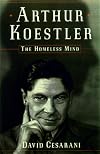
Despite its limitations, which were astounding, the purview made availible is astonishingly human. It is worth it for the anecdote about Koestler and Langston Hughes in the USSR.
I read this with my friends and we uproariously dismembered it, a blunted blood lust. Strangely, I never progressed to read any of K's books, only his contribution to The God That Failed
I read this with my friends and we uproariously dismembered it, a blunted blood lust. Strangely, I never progressed to read any of K's books, only his contribution to The God That Failed
Lists
Awards


You May Also Like


Associated Authors
Statistics
- Works
- 24
- Also by
- 2
- Members
- 882
- Popularity
- #29,045
- Rating
- 4.1
- Reviews
- 9
- ISBNs
- 102
- Languages
- 8
