
Elliot Perlman
Author of Seven Types of Ambiguity
About the Author
Series
Works by Elliot Perlman
Associated Works
Tagged
Common Knowledge
- Birthdate
- 1964-05-07
- Gender
- male
- Education
- Monash University
- Occupations
- barrister
author - Nationality
- Australia
- Birthplace
- Australia
- Places of residence
- Melbourne, Victoria, Australia
- Associated Place (for map)
- Victoria, Australia
Members
Reviews
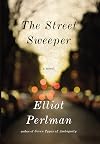
Oh, my goodness I disliked this novel. I hadn't planned to give Perlman another go after Three Dollars which I found clichéd and trite, and I should have stuck with my original intention. In the hands of another author I could see myself enjoying a novel set up the way The Street Sweeper is. I'm interested in all the historical moments it touches on, World War Two, Gandhi's satyagraha against the British in India, the Civil Rights era in the US. I could see myself engaging with the story of show more a history professor trying to salvage his career and his long-term romantic relationship. I suspect Perlman and I see pretty much eye to eye politically.
But Perlman's writing just made me more and more irritated the more I read.
I couldn't bear the cardboard cutout characters who basically do nothing more than converse. The vast slabs of historically didactic “dialogue” – everybody's always either lecturing someone or being lectured to. There's no relief from the tedious and too correct civil rights politics – racism is bad, genocide bad, legal injustice also, um, bad. The main romantic plot seemed pointless and unbelievable – Perlman couldn't convince me to understand (or care) why the main characters broke up, let alone care about whether they get back together or not. The prose is stodgy & bloodless, although the occasional undigestible metaphor or simile like “being kissed by typhoid and having the marriage consumated on the street”* has pretty much the same effect on your mind as having a faeces-encrusted ice-pick applied directly to the pleasure centres of your brain.
For most of the time I really just wanted for it to end. I should have stopped. But I was in the grip of my own stubbornness; having handed Amazon ten of my perfectly good Australian dollars for the privilege I was going to finish that sucker no matter what. There was also a little of that car-crash fascination where I found myself unable to look away, wondering if it really was as bad as it looked.
Yes. Yes it was. Oh, God... The number of dialogues that went something like:
- Something something she was an orphan.
- She was an orphan?
- Yes. Her parents had both been killed something something something. This was just near the butcher’s shop.
- The Jewish butcher?
- Yes, the Jewish butcher. Something something something. But he gave it to his horse.
- Why did he give it to his horse?
- In the ghetto your horse was more important than your socks. Something something something.*
Repeat and hope that everyone mistakes tedious lecturing for profundity.
* The dialogue is not actual Perlman dialogue, but it might as well be. Sad to say, though, the simile is pure Perlman. show less
But Perlman's writing just made me more and more irritated the more I read.
I couldn't bear the cardboard cutout characters who basically do nothing more than converse. The vast slabs of historically didactic “dialogue” – everybody's always either lecturing someone or being lectured to. There's no relief from the tedious and too correct civil rights politics – racism is bad, genocide bad, legal injustice also, um, bad. The main romantic plot seemed pointless and unbelievable – Perlman couldn't convince me to understand (or care) why the main characters broke up, let alone care about whether they get back together or not. The prose is stodgy & bloodless, although the occasional undigestible metaphor or simile like “being kissed by typhoid and having the marriage consumated on the street”* has pretty much the same effect on your mind as having a faeces-encrusted ice-pick applied directly to the pleasure centres of your brain.
For most of the time I really just wanted for it to end. I should have stopped. But I was in the grip of my own stubbornness; having handed Amazon ten of my perfectly good Australian dollars for the privilege I was going to finish that sucker no matter what. There was also a little of that car-crash fascination where I found myself unable to look away, wondering if it really was as bad as it looked.
Yes. Yes it was. Oh, God... The number of dialogues that went something like:
- Something something she was an orphan.
- She was an orphan?
- Yes. Her parents had both been killed something something something. This was just near the butcher’s shop.
- The Jewish butcher?
- Yes, the Jewish butcher. Something something something. But he gave it to his horse.
- Why did he give it to his horse?
- In the ghetto your horse was more important than your socks. Something something something.*
Repeat and hope that everyone mistakes tedious lecturing for profundity.
* The dialogue is not actual Perlman dialogue, but it might as well be. Sad to say, though, the simile is pure Perlman. show less
This is a most incredible book. I've read many books about the Holocaust and this was among the best. But, it's so much more than a Holocaust book. By interweaving the stories of many otherwise unconnected disparate personalities, the author creates a complex novel that winds it's way through present day academia, WWII Europe and civil rights struggles. It is powerful, with haunting pictures imprinted in your mind that will not be forgotten. My only criticism is the length. At over six show more hundred pages, I'm afraid it will be off-putting to many. And, I feel it could have been condensed and edited a fair amount and still not lost it's impact. show less
 This review was written for LibraryThing Early Reviewers.
This book is pretty powerful. It was a book I didn't want to put down (but had to, often, because of its length). There are so many characters at different locations and time periods, yet I never felt lost because each was given a strong introduction, had a unique voice, and their stories came in shorter segments frequently alternating. What I did feel was wondering how on earth they were all related...because you knew that is what the author would end up doing. I didn't particularly like show more the professors, who pretty much acted like rich folk, but I had a lot of sympathy for Lamont who has just been released from prison for a crime he didn't commit and keeps his mind repetitively focused on what gives him motivation to continue. He lives with his grandma, and has a cousin who has her own story: her husband Charles has no time for her or their teen daughter, being too busy heading the history department at Columbia. That husband is friends with Adam, insecure son of a famous civil rights lawyer. Adam hasn't written any research since his PhD and is worried about not getting tenure. Charles's father William prods Adam to research what Black army unit was present at the liberation of Auschwitz or other concentration camps. Meanwhile Lamont, working as a janitor at a cancer hospital, listens to an old man talk about his experience as a Polish Jew during Hitler's years. And then there are the brief flashes of a young girl anxiously taking a long bus ride by herself. How is she ever going to fit in? Which of these adults is she related to? And I forgot to mention the 1940's psychologist who is trying to interview displaced persons after the war.
There were moments when some of the explanations of Adam's research or his anxiety dragged. And there were parts of the story of the death camps that were more disturbing than I expected. Somehow I had assumed that the gas chambers and the ovens were the same room, that the people were all consumed before the rooms were cleaned up for the next group. I think that segment was so horrific that I don't know how I could recommend this book to any Jewish friends.
But I left the book with the image in my head of my memory as a young girl, when I first was trying to figure out how God could arrange people ending up meeting just the right person for whatever lesson each had to learn in life. In my memory, I had to imagine this vast web of connections, and some being or power able to hold all the strands in the right relationship, and it was so awsomely mind-stretching. show less
There were moments when some of the explanations of Adam's research or his anxiety dragged. And there were parts of the story of the death camps that were more disturbing than I expected. Somehow I had assumed that the gas chambers and the ovens were the same room, that the people were all consumed before the rooms were cleaned up for the next group. I think that segment was so horrific that I don't know how I could recommend this book to any Jewish friends.
But I left the book with the image in my head of my memory as a young girl, when I first was trying to figure out how God could arrange people ending up meeting just the right person for whatever lesson each had to learn in life. In my memory, I had to imagine this vast web of connections, and some being or power able to hold all the strands in the right relationship, and it was so awsomely mind-stretching. show less

Even though it took me 6 weeks to finish this, I count it as one of the best books I’ve read all year. Ironically, I can’t really decide why. Maybe it’s the 8th type of ambiguity. I didn’t find this to be a thriller exactly, but it did have definitive psychological elements and lots of social critique/commentary. It looked inward without the overbearing smugness of say, The Corrections. It also featured characters that, while flawed, weren’t entirely unlikeable as they were in show more Franzen’s nightmare.
First, I liked the structure. Multiple point-of-view novels always fascinate me, but this one had a progression that stepped each narrative along a bit in time. Sure, each section covered much of the same ground, but also advanced the story both in linear time and in our knowledge of what happened. Each narrator has something to add, even if it isn’t immediately clear. A lot of explanation comes from another perspective and things click into place. I liked that a lot. It kept things fresh which is sometimes hard when retelling some of the same information.
Secondly, I liked that the author was able to give each storyteller a different voice. From the delivery style to the choice of words, I felt as if many people wrote this instead of just one. Remarkable. Unfortunately in the end, there was one last party I would have liked to have heard from; Sam himself.
Third is the story itself. It's not a thriller exactly, but it is relatively tense. It offers a lot of insight without getting smug or smarmy. The author makes no judgements about the characters he creates. He's just telling the story; with sensitivity and a sense of progression and the need for consequences. Nicely done. show less
First, I liked the structure. Multiple point-of-view novels always fascinate me, but this one had a progression that stepped each narrative along a bit in time. Sure, each section covered much of the same ground, but also advanced the story both in linear time and in our knowledge of what happened. Each narrator has something to add, even if it isn’t immediately clear. A lot of explanation comes from another perspective and things click into place. I liked that a lot. It kept things fresh which is sometimes hard when retelling some of the same information.
Secondly, I liked that the author was able to give each storyteller a different voice. From the delivery style to the choice of words, I felt as if many people wrote this instead of just one. Remarkable. Unfortunately in the end, there was one last party I would have liked to have heard from; Sam himself.
Third is the story itself. It's not a thriller exactly, but it is relatively tense. It offers a lot of insight without getting smug or smarmy. The author makes no judgements about the characters he creates. He's just telling the story; with sensitivity and a sense of progression and the need for consequences. Nicely done. show less
Lists
Awards


You May Also Like


Associated Authors
Statistics
- Works
- 7
- Also by
- 2
- Members
- 2,584
- Popularity
- #9,937
- Rating
- 3.8
- Reviews
- 114
- ISBNs
- 94
- Languages
- 6
- Favorited
- 12
