
Irene Sabatini
Author of The Boy Next Door
Works by Irene Sabatini
Tagged
Common Knowledge
- Birthdate
- 20th century
- Gender
- female
- Short biography
- I was born some forty years ago in Hwange, a coal ming town in south western Zimbabwe. I grew up in Bulawayo, the second largest city in Zimbabwe. Bulawayo is known for its rather sleepy, laid back nature and its graceful colonial era architecture, examples of which can be found on my website www.irenesabatini.com. I spent many hours in the fabulous Public Library, down in the basement of the children's section devouring everything from Enid Blyton to Shane by Jack Schaefer, one of my favourite books. I left quiet Bulawayo for,'The Sunshine City', Harare, to attend university. Harare is all hustle and bustle, with some fantastic futuristic buildings. After university I went to Colombia where I stayed for four years working as teacher and studying for my masters. One of my biggest thrills in Colombia was catching sight of the legendary Gabriel Garcia Marquez in Cartegena. "Here, in front of me, is a real, living writer," I remember thinking. "They exist!" Soon after that, I started writing in a red notebook in this former monastery outside Bogota. The writing seemed to just spiral out of me and if I had to pick a time when I really started this journey it would be that wonderful quiet morning on a verandah so many years ago in the Colombian countryside.
- Nationality
- Zimbabwe
- Birthplace
- Hwange, Zimbabwe
- Places of residence
- Switzerland
Caribbean
Italy
Colombia
USA
England, UK (show all 8)
Bulawayo, Zimbabwe
Harare, Zimbabwe - Map Location
- Zimbabwe
Members
Discussions
"The Boy Next Door" by Irene Sabatini in Orange January/July (July 2011)
Reviews

This debut novel begins in post-independence Zimbabwe, in the city of Bulawayo. Lindiwe Bishop is a 14 year old girl who is a 'lightie', a Zimbabwean of mixed descent, whose family is the first to integrate a formerly white neighborhood in the city. Their closest neighbors are the McKenzies, including their 17 year old son Ian. The McKenzies are 'Rhodies', descendants of the original British colonialists that helped to create the state of Rhodesia, who are nonplussed to find themselves out show more of power after Ian Smith ceded control of the government to the country's most prominent black leaders.
A terrible crime occurs at the McKenzie home, and Ian is found guilty and jailed. The conviction is overturned, and Ian is released months later. Lindiwe's parents order her to stay away from Ian, who is still suspected of committing the crime. However, she is a naïve and lonely girl who is ostracized at school and most comfortable at home with her books, and she is both intrigued by and enamored with Ian, who is also isolated and misunderstood. A secret friendship slowly develops, and it becomes more intense as each begins to trust the other.
Their improbable love is the main theme of the novel, as their relationship is tested by family disapproval; deep personal differences, goals and beliefs; the racist attitudes of white and black Zimbabweans; poverty; and the country's demise under President Robert Mugabe. Throughout the novel, I repeatedly thought that the best thing that could happen would be for the two to separate, but at the same time I wanted them to find a way to make things work out.
I absolutely loved Sabatini's portrayal of Ian, Lindiwe, and the other main characters that are featured in this wonderful novel, and I can't think of more than one or two other books I've read this year that emotionally gripped me as much as this one did. It is a grim story, but one filled with love and hope, and is most highly recommended. show less
A terrible crime occurs at the McKenzie home, and Ian is found guilty and jailed. The conviction is overturned, and Ian is released months later. Lindiwe's parents order her to stay away from Ian, who is still suspected of committing the crime. However, she is a naïve and lonely girl who is ostracized at school and most comfortable at home with her books, and she is both intrigued by and enamored with Ian, who is also isolated and misunderstood. A secret friendship slowly develops, and it becomes more intense as each begins to trust the other.
Their improbable love is the main theme of the novel, as their relationship is tested by family disapproval; deep personal differences, goals and beliefs; the racist attitudes of white and black Zimbabweans; poverty; and the country's demise under President Robert Mugabe. Throughout the novel, I repeatedly thought that the best thing that could happen would be for the two to separate, but at the same time I wanted them to find a way to make things work out.
I absolutely loved Sabatini's portrayal of Ian, Lindiwe, and the other main characters that are featured in this wonderful novel, and I can't think of more than one or two other books I've read this year that emotionally gripped me as much as this one did. It is a grim story, but one filled with love and hope, and is most highly recommended. show less
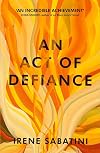
Publisher’s synopsis.
Harare 2000. Gabrielle is a newly-qualified lawyer fighting for justice for a young girl. Ben is an urbane and charismatic junior diplomat attached to Harare with the American embassy. With high-level pressure on Gabrielle to drop the case, and the president’s youth wing terrorising his political opponents as he tightens his grip on power, they begin a tentative love affair. But when they fall victim to a shocking attack, their love splinters across continents and show more their stories diverge, forcing Gabrielle on a painful journey towards self-realisation.
This powerful story begins in 2000, during the lead-up to the referendum which could give Robert Mugabe even more power than he already has. The country is in a state of political turmoil and anyone opposing ‘the Old Man’ faces violent retribution, much of it carried out by young people loyal to the existing regime. Gabrielle’s father is a successful man, a keen supporter of Mugabe but, she is an activist, an idealistic young lawyer who works for an aid centre, so wants little contact with him. As the story opens, she is involved in preparations for the private prosecution of the man who has been accused of raping fourteen-year-old Danika. As he is a powerful member of the government, the State has denied he has a case to answer but Danika’s family is determined to seek justice. In the midst of this, whilst in the early stages of her relationship with Ben, Gabrielle is abducted and taken to a torture camp. When she finally escapes, she is traumatised by what has happened to her, Ben has been deported and it is her ex-boyfriend, Giorgio who looks after her and tries to help her overcome the trauma. In her dissociated state she allows this to happen, although thoughts of Ben and their nascent love-affair are never from her thoughts.
Through the swift changes in the timeline which are a feature of the first half of the novel, the events which led to Gabrielle’s abduction, both personal and political, are gradually revealed. Although initially I found this rather disconcerting, as the story unfolded, I not only adjusted to it but in fact felt appreciative that this allowed some moments of respite from the descriptions of the horrors she was being exposed to. The remainder of the story, written in relatively short chapters and covering the next eight years, then follows a ‘real-time’ progression, exploring not only how Gabrielle deals with her trauma, but also how her reactions and decision-making affect her relationships with the other significant people in her life. A recurring question, which is central to her long struggle to come to terms with what she has experienced, is ‘how can you imagine the future when your story traps you in the past?’ I was impressed with the ways in which the author explored the psychological vulnerability of victims, the long-term mental health implications which can arise following violent traumatic experiences and the consequent pressure which this puts on all other relationships.
Interwoven into the story are reflections on what was happening in Zimbabwe during the first eight years of the twenty-first century. Although I already knew a lot about the history of the country, both pre and post the 2000 referendum, I found it very disturbing to be reminded of the extent of the corruption, the absence of democracy, the prevalence of every-day casual violence, the intimidation, the torture and killings of hundreds of thousands of people, the hyper-inflation, the expelling of aid organisations etc. I really admired the way in which the author, whilst never shying away from showing the extent of the violence and upheaval, showed that, against all the odds, her characters were trying to live their lives in the best way they possibly could, determined to hold onto the hope of a better future. The fact that there is a poignant and convincing love-story at the heart of her novel is, in my opinion, testament to the skill with which she combined all the elements of her story into such a credible whole. The brief ‘Afterword’, which is set in 2017 and holds the promise of better things to come, for Gabrielle and for Zimbabwe, felt a very comforting end to this complex story.
Although there were moments when I was reading this deeply-disturbing story when I almost couldn’t bear to feel exposed to any more descriptions of trauma, violence and terror, the compelling nature of Irene Sabatini’s writing meant that I very quickly felt emotionally engaged with the characters, especially Gabrielle. This meant that I soon found it almost impossible to put down, even during the first half of the story when some of the descriptions of violence were particularly graphic and the escalating tension felt almost unbearable. It was almost as if by stopping before I knew what the future held for them, I’d be abandoning them – the fear and anxiety being generated felt so powerfully visceral.
When I finished reading, I felt as though I’d been put through an emotional-wringer and, as I write this review, the characters and all the thought-provoking themes which run through the story, remain vivid in my mind. This gives some indication of just how brilliant Irene Sabatini’s eloquent prose and writing-style is. I haven’t read either of her previous novels (The Boy Next Door and Peace and Conflict) but the wonderful quality of her story-telling in this novel has left me determined to remedy that omission as soon as possible!
With my thanks to the publisher and NB for a copy of this book in exchange for an unbiased review. show less
Harare 2000. Gabrielle is a newly-qualified lawyer fighting for justice for a young girl. Ben is an urbane and charismatic junior diplomat attached to Harare with the American embassy. With high-level pressure on Gabrielle to drop the case, and the president’s youth wing terrorising his political opponents as he tightens his grip on power, they begin a tentative love affair. But when they fall victim to a shocking attack, their love splinters across continents and show more their stories diverge, forcing Gabrielle on a painful journey towards self-realisation.
This powerful story begins in 2000, during the lead-up to the referendum which could give Robert Mugabe even more power than he already has. The country is in a state of political turmoil and anyone opposing ‘the Old Man’ faces violent retribution, much of it carried out by young people loyal to the existing regime. Gabrielle’s father is a successful man, a keen supporter of Mugabe but, she is an activist, an idealistic young lawyer who works for an aid centre, so wants little contact with him. As the story opens, she is involved in preparations for the private prosecution of the man who has been accused of raping fourteen-year-old Danika. As he is a powerful member of the government, the State has denied he has a case to answer but Danika’s family is determined to seek justice. In the midst of this, whilst in the early stages of her relationship with Ben, Gabrielle is abducted and taken to a torture camp. When she finally escapes, she is traumatised by what has happened to her, Ben has been deported and it is her ex-boyfriend, Giorgio who looks after her and tries to help her overcome the trauma. In her dissociated state she allows this to happen, although thoughts of Ben and their nascent love-affair are never from her thoughts.
Through the swift changes in the timeline which are a feature of the first half of the novel, the events which led to Gabrielle’s abduction, both personal and political, are gradually revealed. Although initially I found this rather disconcerting, as the story unfolded, I not only adjusted to it but in fact felt appreciative that this allowed some moments of respite from the descriptions of the horrors she was being exposed to. The remainder of the story, written in relatively short chapters and covering the next eight years, then follows a ‘real-time’ progression, exploring not only how Gabrielle deals with her trauma, but also how her reactions and decision-making affect her relationships with the other significant people in her life. A recurring question, which is central to her long struggle to come to terms with what she has experienced, is ‘how can you imagine the future when your story traps you in the past?’ I was impressed with the ways in which the author explored the psychological vulnerability of victims, the long-term mental health implications which can arise following violent traumatic experiences and the consequent pressure which this puts on all other relationships.
Interwoven into the story are reflections on what was happening in Zimbabwe during the first eight years of the twenty-first century. Although I already knew a lot about the history of the country, both pre and post the 2000 referendum, I found it very disturbing to be reminded of the extent of the corruption, the absence of democracy, the prevalence of every-day casual violence, the intimidation, the torture and killings of hundreds of thousands of people, the hyper-inflation, the expelling of aid organisations etc. I really admired the way in which the author, whilst never shying away from showing the extent of the violence and upheaval, showed that, against all the odds, her characters were trying to live their lives in the best way they possibly could, determined to hold onto the hope of a better future. The fact that there is a poignant and convincing love-story at the heart of her novel is, in my opinion, testament to the skill with which she combined all the elements of her story into such a credible whole. The brief ‘Afterword’, which is set in 2017 and holds the promise of better things to come, for Gabrielle and for Zimbabwe, felt a very comforting end to this complex story.
Although there were moments when I was reading this deeply-disturbing story when I almost couldn’t bear to feel exposed to any more descriptions of trauma, violence and terror, the compelling nature of Irene Sabatini’s writing meant that I very quickly felt emotionally engaged with the characters, especially Gabrielle. This meant that I soon found it almost impossible to put down, even during the first half of the story when some of the descriptions of violence were particularly graphic and the escalating tension felt almost unbearable. It was almost as if by stopping before I knew what the future held for them, I’d be abandoning them – the fear and anxiety being generated felt so powerfully visceral.
When I finished reading, I felt as though I’d been put through an emotional-wringer and, as I write this review, the characters and all the thought-provoking themes which run through the story, remain vivid in my mind. This gives some indication of just how brilliant Irene Sabatini’s eloquent prose and writing-style is. I haven’t read either of her previous novels (The Boy Next Door and Peace and Conflict) but the wonderful quality of her story-telling in this novel has left me determined to remedy that omission as soon as possible!
With my thanks to the publisher and NB for a copy of this book in exchange for an unbiased review. show less
Set in post-colonial Zimbabwe, The Boy Next Door is the story of Lindiwe Bishop, a quiet 14-year-old girl of mixed race. She and her family live in what was previously an all-white suburb. Ian McKenzie, the boy in the title, is a few years older, of British (white) descent, and when the story opens, has just been arrested for setting his stepmother on fire. Despite, or perhaps because of, parental warnings, Lindiwe is fascinated by Ian. When he is cleared of charges and returns home after show more serving a reduced sentence, the two strike up a clandestine friendship.
As we follow Lindiwe and Ian over more than a decade, the focus is on their relationship, set against a backdrop of a country crumbling under Robert Mugabe's dictatorial rule. Ian and Lindiwe's relationship is complex, compounded by the racial tensions prevalent across the country and an intricate set of relationships between and within their families. As the two mature, they become more aware of family secrets that have shaped their lives. Ian struggled with demons resulting from his unstable home life. And I felt Lindiwe's pain every time she discovered a truth about her past, and every time she returned to her home town of Bulawayo, only to find it even worse off than the last time. They made an unlikely couple; most of the time their relationship seemed unhealthy, and yet they would never have survived the political unrest without one another.
So much of the story revolves around these secrets, it is difficult to write a review that does justice to this book. Irene Sabatini reveals the truth in tiny fragments, like a 1000-piece jigsaw puzzle. I'm not even sure I caught everything, and even after rereading a specific section several times, there's still one aspect that remains unexplained. This is exactly the effect I think Sabatini was trying to create, and it makes for a gripping and emotional read. This is an impressive debut novel, and I hope to see more from Irene Sabatini. show less
As we follow Lindiwe and Ian over more than a decade, the focus is on their relationship, set against a backdrop of a country crumbling under Robert Mugabe's dictatorial rule. Ian and Lindiwe's relationship is complex, compounded by the racial tensions prevalent across the country and an intricate set of relationships between and within their families. As the two mature, they become more aware of family secrets that have shaped their lives. Ian struggled with demons resulting from his unstable home life. And I felt Lindiwe's pain every time she discovered a truth about her past, and every time she returned to her home town of Bulawayo, only to find it even worse off than the last time. They made an unlikely couple; most of the time their relationship seemed unhealthy, and yet they would never have survived the political unrest without one another.
So much of the story revolves around these secrets, it is difficult to write a review that does justice to this book. Irene Sabatini reveals the truth in tiny fragments, like a 1000-piece jigsaw puzzle. I'm not even sure I caught everything, and even after rereading a specific section several times, there's still one aspect that remains unexplained. This is exactly the effect I think Sabatini was trying to create, and it makes for a gripping and emotional read. This is an impressive debut novel, and I hope to see more from Irene Sabatini. show less

Breathe in. And out. Where do I begin with this review?
I received this book from Hachette Book Group; I’ll start there. It sat on my bookcase for a while before I was ready to pick it up; it was intimidating and large and serious looking and I knew I needed to be ready for it. I started it, and fifty pages in I stopped and restarted it, and I’m glad I did. Restarting it allowed me to settle in with the narrative voice, it let me be fully familiar with Lindiwe and the way she uses show more memories to fill in the past so I can understand what makes the present so profound. The Boy Next Door is epic. It spans decades. It follows Lindiwe from adolescence through her transformation into a woman. She is fourteen when the novel starts, and her seventeen year old neighbor has been arrested for lighting his stepmother on fire. That’s how the novel starts. But that’s not where it stays. It follows Lindiwe and her neighbor, Ian, through post-independant Zimbabwe, through race tensions, and revolutionary riots, and love ,and loss, and danger.
Part 1 begins in the 1980’s. Lindiwe is a young girl, shy, surrounded by racism and a country in transformation. Ian seems worldly to her, having been released from prison and returned to Bulawayo. They form an unlikely friendship, secret from the world. They are pulled together by an inexplicable bond that lasts through war and riots and years apart.
Part 2, the early 90’s, finds Lindiwe grown into a young woman, attending school, with a future. Her childhood crush develops into something mature and deep. But there is always an overhanging sense of unease in Sabatini’s writing; as though we know this happiness between Ian and Lindiwe cannot possibly last and be peaceful for the next 200 pages.
Part 3, the mid 90’s becomes quick and tense. Revolutionary turmoil abounds, people are killed and murdered and violence surrounds them. The tension continues into the late 90’s in Part 4. It peaks and I was left breathless waiting for the end. There is so much more I could write, but it would spoil the novel and you really need to read it and experience it first-hand.
Sabatini’s debut novel is intense and beautiful and artistic. She captures Bulawayo and other places in Zimbabwe and they become characters in her writing, living breathing, forming new stories. The relationship she paints between Ian and Lindiwe is enormous and tragic and joyous all at the same time, it flows up and down with a life of its own, and we’re taken along in the river and cannot escape. We could hardly wish to.
This novel was a debut novel, and it was beautiful. I had tears in my eyes. I suspect we’ll all be hearing about Irene Sabatini in the future. show less
I received this book from Hachette Book Group; I’ll start there. It sat on my bookcase for a while before I was ready to pick it up; it was intimidating and large and serious looking and I knew I needed to be ready for it. I started it, and fifty pages in I stopped and restarted it, and I’m glad I did. Restarting it allowed me to settle in with the narrative voice, it let me be fully familiar with Lindiwe and the way she uses show more memories to fill in the past so I can understand what makes the present so profound. The Boy Next Door is epic. It spans decades. It follows Lindiwe from adolescence through her transformation into a woman. She is fourteen when the novel starts, and her seventeen year old neighbor has been arrested for lighting his stepmother on fire. That’s how the novel starts. But that’s not where it stays. It follows Lindiwe and her neighbor, Ian, through post-independant Zimbabwe, through race tensions, and revolutionary riots, and love ,and loss, and danger.
Part 1 begins in the 1980’s. Lindiwe is a young girl, shy, surrounded by racism and a country in transformation. Ian seems worldly to her, having been released from prison and returned to Bulawayo. They form an unlikely friendship, secret from the world. They are pulled together by an inexplicable bond that lasts through war and riots and years apart.
Part 2, the early 90’s, finds Lindiwe grown into a young woman, attending school, with a future. Her childhood crush develops into something mature and deep. But there is always an overhanging sense of unease in Sabatini’s writing; as though we know this happiness between Ian and Lindiwe cannot possibly last and be peaceful for the next 200 pages.
Part 3, the mid 90’s becomes quick and tense. Revolutionary turmoil abounds, people are killed and murdered and violence surrounds them. The tension continues into the late 90’s in Part 4. It peaks and I was left breathless waiting for the end. There is so much more I could write, but it would spoil the novel and you really need to read it and experience it first-hand.
Sabatini’s debut novel is intense and beautiful and artistic. She captures Bulawayo and other places in Zimbabwe and they become characters in her writing, living breathing, forming new stories. The relationship she paints between Ian and Lindiwe is enormous and tragic and joyous all at the same time, it flows up and down with a life of its own, and we’re taken along in the river and cannot escape. We could hardly wish to.
This novel was a debut novel, and it was beautiful. I had tears in my eyes. I suspect we’ll all be hearing about Irene Sabatini in the future. show less
Lists
Wishlist (1)
Awards


You May Also Like


Associated Authors
Statistics
- Works
- 3
- Members
- 204
- Popularity
- #108,206
- Rating
- 4.0
- Reviews
- 14
- ISBNs
- 22
- Languages
- 3

