
Frank Conroy (1936–2005)
Author of Body and Soul
About the Author
Frank Conroy is the longtime director of the prestigious Iowa Writers' Workshop
Image credit: uiowa.edu
Works by Frank Conroy
The Eleventh Draft: Craft and the Writing Life from the Iowa Writers' Workshop (1999) 147 copies, 1 review
Think About It 2 copies
Associated Works
Writers on Writing, 2: More Collected Essays from the New York Times (2003) — Contributor — 200 copies, 3 reviews
The Workshop: Seven Decades of the Iowa Writers Workshop - 43 Stories, Recollections, & Essays on Iowa's Place in Twentieth-Century American Literature (1999) — Introduction — 197 copies, 1 review
These United States: Original Essays by Leading American Writers on Their State within the Union by John Leonard (1995) — Contributor — 101 copies, 1 review
Who's Writing This? Notations on the Authorial I, with Self-Portraits {not Antæus} (1995) — Contributor — 76 copies
Tagged
Common Knowledge
- Birthdate
- 1936-01-15
- Date of death
- 2005-04-06
- Gender
- male
- Education
- Haverford College (1958)
- Occupations
- professor
writer - Nationality
- USA
- Places of residence
- Iowa City, Iowa, USA
New York, New York, USA
Nantucket, Massachusetts, USA - Burial location
- Iowa City, Iowa, USA
- Associated Place (for map)
- USA
Members
Reviews
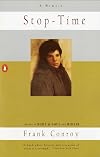
The young Frank Conroy in Stop-Time is a heady mix of Holden Caulfield and George Orwell of Down and Out in Paris and London. It's the story of the son of an alcoholic, raised by a clueless mom and flighty stepfather, who frankly admits to his own cluelessless. He wanders in the backwoods of Florida, the streets of New York, and the halls of various institutions, without any guidance but his own inner energy and fierce desire to survive by observing and learning from the world around him -- show more which he does. You'll shake your head in wonder and awe at his recklessness and tenacity. I'm so glad he survived his haphazard childhood to write this book. show less
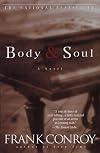
High rating largely based on the ending. Conroy didn't go for the cliché, and that was so refreshing. The book is beautiful on so many fronts, and there are so many opportunities to be maudlin, but Conroy takes the road less traveled (most of the time). The relationship between Claude and Weisfeld is likely one of my favorite relationships in all of literature.
There are a few times where it gets in the weeds with musical description (and I say this as a musicologist) that seemed to be show more trying too hard, but on the whole the musical journey seemed very relatable and even inspiring. Not everyone is a Claude, of course, who we understand to be a prodigy, but Conroy shapes his character enough we are intrigued in how he has to navigate his world (and the world at large).
After a slow-ish start, that seemed like it was going the route of the tried and true inspirational tale of the talent who comes from tough circumstances, things get considerably more interesting as Claude experiences loss and disappointment (unconnected to his music and performing), and some of the secondary characters actually develop as well. Really a joy to have read it. show less
There are a few times where it gets in the weeds with musical description (and I say this as a musicologist) that seemed to be show more trying too hard, but on the whole the musical journey seemed very relatable and even inspiring. Not everyone is a Claude, of course, who we understand to be a prodigy, but Conroy shapes his character enough we are intrigued in how he has to navigate his world (and the world at large).
After a slow-ish start, that seemed like it was going the route of the tried and true inspirational tale of the talent who comes from tough circumstances, things get considerably more interesting as Claude experiences loss and disappointment (unconnected to his music and performing), and some of the secondary characters actually develop as well. Really a joy to have read it. show less
Thoroughly enjoyed this story of a musical prodigy and his particular (lonely, painful, rocky, and also, somehow, fortunate in the connections that occur) journey into adulthood. The passages on playing/composing/hearing music were uniquely effective (to this non-musician) in bringing me at least a taste of that experience. I can only imagine that they would speak to musicians, too. The plot took sort of a quick turn toward the end that did not seem necessary, but the strength and energy of show more the book was not so much in plot, anyway. Some beautiful writing on the hard-to-capture restorative powers of music (and, briefly glimpsed through the stories of minor characters, history and science, too). show less
What a beautiful, beautiful book.
Claude is a musical prodigy and is nurtured by some of the best teachers in the world, though he has little understanding of his talent or that he has happened into some remarkable luck. He comes from nothing- his mother is a cab driver and he has no knowledge of who his father might be, and his talent takes him into worlds that wouldn't be accessible to him otherwise. He experiences the world with innocence and learns quickly that his life isn't necessarily show more like others, but he adapts and isn't held back by the social isolation. The story of his life is a song, full of emotion, connection, love, heartbreak, and, most of all, music.
This story is well written and very well researched. Most of the music talk goes over my head, but it wasn't frustrating or boring. The passion for the music comes through. Claude and the other characters are vivid and it's easy to become invested in them. There's a line in the book about a review of a concert Claude played in, about words being insufficient to describe music. Well played, Conroy- you did an amazing job. show less
Claude is a musical prodigy and is nurtured by some of the best teachers in the world, though he has little understanding of his talent or that he has happened into some remarkable luck. He comes from nothing- his mother is a cab driver and he has no knowledge of who his father might be, and his talent takes him into worlds that wouldn't be accessible to him otherwise. He experiences the world with innocence and learns quickly that his life isn't necessarily show more like others, but he adapts and isn't held back by the social isolation. The story of his life is a song, full of emotion, connection, love, heartbreak, and, most of all, music.
This story is well written and very well researched. Most of the music talk goes over my head, but it wasn't frustrating or boring. The passion for the music comes through. Claude and the other characters are vivid and it's easy to become invested in them. There's a line in the book about a review of a concert Claude played in, about words being insufficient to describe music. Well played, Conroy- you did an amazing job. show less
Lists
Awards


You May Also Like


Associated Authors
Statistics
- Works
- 13
- Also by
- 15
- Members
- 1,867
- Popularity
- #13,786
- Rating
- 3.9
- Reviews
- 46
- ISBNs
- 56
- Languages
- 6
- Favorited
- 4