
Thomas Glave
Author of Whose Song?: And Other Stories
About the Author
Thomas Glave is an O. Henry Award-winning author and was named a Village Voice "Writer on the Verge" in 2000. He is the author of Whose Song? and Other Stories, Words to Our Now: Imagination and Dissent (winner of a Lambda Literary Award), The Torturer's Wife (finalist for the Dayton Literary Peace show more Prize), and editor of the anthology Our Caribbean: A Gathering of Lesbian and Cay Writing from the Antilles (winner of a Lambda Literary Award). His most recent work has appeared in the New York Times, the Kenyon Review, and Callaloo. Glave has been the Martin Luther King Jr. Visiting Professor at MIT, and a Visiting Fellow at Clare Hall, University of Cambridge. show less
Works by Thomas Glave
Our Caribbean: A Gathering of Lesbian and Gay Writing from the Antilles (2008) — Editor; Contributor — 57 copies, 1 review
Associated Works
Children of the Night: The Best Short Stories by Black Writers, 1967 to the Present (1995) — Contributor — 127 copies
Black Like Us: A Century of Lesbian, Gay, and Bisexual African American Fiction (2002) — Contributor — 127 copies, 1 review
Freedom in This Village: Twenty-Five Years of Black Gay Men's Writing (2005) — Contributor — 91 copies, 2 reviews
Voices Rising: Celebrating 20 Years of Black Lesbian, Gay, Bisexual and Transgender Writing (Other Countries) (2007) — Contributor — 25 copies, 1 review
Whos Yer Daddy?: Gay Writers Celebrate Their Mentors and Forerunners (2012) — Contributor — 20 copies
Tagged
Common Knowledge
- Gender
- male
- Education
- Bowdoin College
Brown University - Occupations
- professor
- Organizations
- Binghamton University
Members
Reviews

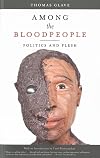
Among the Bloodpeople: Politics and Flesh
By Thomas Glave
Akashic Books
Reviewed by Karl Wolff
With comparisons to James Baldwin and Jean Genet, Among the Bloodpeople: Politics and Flesh is a great introduction to the writings of Thomas Glave. The anthology brings together a unique array of writing, melding the personal and political, the intellectual and the erotic. Glave is a gay Jamaican living in the United States who has taught at MIT and Clare Hall, University of Cambridge. He explores show more issues of sexuality, diaspora, and narrative in his written works. All this sounds fine, great fodder for the NPR hipster set. These niceties are jettisoned with Glave's forceful and beautiful writing. In the United States we have, for the most part, heated albeit peaceful discussions about gay marriage and church-state issues.
As Glave illustrates in essays both personal and political, Jamaica treats its gay population in two ways: shunned silence and barbaric atrocities. On one level, the word "gay" is never mentioned in public. On another level, gay Jamaicans have been violently persecuted. "Today, or on another day perhaps not so different from this one - a day of light and birds and even laughter, genuine laughter - another faggot in Jamaica will perhaps scream, or not, as someone moves to burn down his home with him inside it; or tries to rip open his bowels with a machete, as he, the faggot (picture his watching eyes, watching; picture his open open or just-closed mouth, sometimes waiting) is perhaps momentarily distracted by looking at the sea, at our gorgeous bluegreen Caribbean sea." This passage, alternately vulgar, horrifying, and beautiful, is from his short essay, "Toward a queer prayer." (The passage, with its mix of violence, anti-gay slurs, and geographic beauty reminded me of passages from Jean Genet.) With this essay and others, Glave attempts to square the circle of his devout Catholic faith and his personal gay sexuality.
Glave's torturous negotiations between faith, culture, and sexual orientation weave into other narratives. These include an essay on the subtle racism he encountered as a student in Cambridge, England, and his experiences editing an anthology on gay Caribbean authors. The "bloodpeople" of the title has a dual meaning. Bloodpeople can mean one's blood relations, one's family. This can also mean one's people by association, like people of the diaspora (Caribbean, black, African, etc.). This can also apply to a diasporic community like the LGBT community (communities?). Glave also questions the monolithic assumptions one associates with the term "community" and "diaspora." Overall, it is a wonderful anthology, interspersing personal essays with more academic-leaning articles.
As someone who enjoys the Akashic Noir series, it was great to read something in their catalog outside their venerable series. I'm rating this lower than usual, not because of the writing, but because it may prove to have limited appeal beyond the NPR hipster set. But this brings up a valuable point of discussion. What use is a book like this when one can't talk about it to non-like-minded people? Sure, one can crow about one's awareness of a social issue (Jamaica's persecution of gays) and use it as a means to improve one's multicultural literary street cred, but, really, so what? The reason Glave writes many of his pieces is to use his literary gifts as a witness to the atrocities he has seen or experienced. This shouldn't be about how one is now more informed about Jamaican literature, but about trying to get these state-sanctioned murders from occurring. Perhaps it might be useful, once you have read this book, to have an awkward silence at the dinner table or during a family get-together. With gay marriage gaining political momentum in the United States, opponents to these laws have been using the term "religious liberty." Given what Glave is writing about and what is happening in Jamaica, it might be worth asking one's right-leaning friend or relative what they actually mean by the term "religious liberty." After all, it is about politics and flesh. And flesh burns.
Out of 10/8.5
http://www.cclapcenter.com/2013/08/book_review_among_the_bloodpeo.html
or
http://driftlessareareview.com/2013/08/02/cclap-fridays-among-the-bloodpeople-po... show less
By Thomas Glave
Akashic Books
Reviewed by Karl Wolff
With comparisons to James Baldwin and Jean Genet, Among the Bloodpeople: Politics and Flesh is a great introduction to the writings of Thomas Glave. The anthology brings together a unique array of writing, melding the personal and political, the intellectual and the erotic. Glave is a gay Jamaican living in the United States who has taught at MIT and Clare Hall, University of Cambridge. He explores show more issues of sexuality, diaspora, and narrative in his written works. All this sounds fine, great fodder for the NPR hipster set. These niceties are jettisoned with Glave's forceful and beautiful writing. In the United States we have, for the most part, heated albeit peaceful discussions about gay marriage and church-state issues.
As Glave illustrates in essays both personal and political, Jamaica treats its gay population in two ways: shunned silence and barbaric atrocities. On one level, the word "gay" is never mentioned in public. On another level, gay Jamaicans have been violently persecuted. "Today, or on another day perhaps not so different from this one - a day of light and birds and even laughter, genuine laughter - another faggot in Jamaica will perhaps scream, or not, as someone moves to burn down his home with him inside it; or tries to rip open his bowels with a machete, as he, the faggot (picture his watching eyes, watching; picture his open open or just-closed mouth, sometimes waiting) is perhaps momentarily distracted by looking at the sea, at our gorgeous bluegreen Caribbean sea." This passage, alternately vulgar, horrifying, and beautiful, is from his short essay, "Toward a queer prayer." (The passage, with its mix of violence, anti-gay slurs, and geographic beauty reminded me of passages from Jean Genet.) With this essay and others, Glave attempts to square the circle of his devout Catholic faith and his personal gay sexuality.
Glave's torturous negotiations between faith, culture, and sexual orientation weave into other narratives. These include an essay on the subtle racism he encountered as a student in Cambridge, England, and his experiences editing an anthology on gay Caribbean authors. The "bloodpeople" of the title has a dual meaning. Bloodpeople can mean one's blood relations, one's family. This can also mean one's people by association, like people of the diaspora (Caribbean, black, African, etc.). This can also apply to a diasporic community like the LGBT community (communities?). Glave also questions the monolithic assumptions one associates with the term "community" and "diaspora." Overall, it is a wonderful anthology, interspersing personal essays with more academic-leaning articles.
As someone who enjoys the Akashic Noir series, it was great to read something in their catalog outside their venerable series. I'm rating this lower than usual, not because of the writing, but because it may prove to have limited appeal beyond the NPR hipster set. But this brings up a valuable point of discussion. What use is a book like this when one can't talk about it to non-like-minded people? Sure, one can crow about one's awareness of a social issue (Jamaica's persecution of gays) and use it as a means to improve one's multicultural literary street cred, but, really, so what? The reason Glave writes many of his pieces is to use his literary gifts as a witness to the atrocities he has seen or experienced. This shouldn't be about how one is now more informed about Jamaican literature, but about trying to get these state-sanctioned murders from occurring. Perhaps it might be useful, once you have read this book, to have an awkward silence at the dinner table or during a family get-together. With gay marriage gaining political momentum in the United States, opponents to these laws have been using the term "religious liberty." Given what Glave is writing about and what is happening in Jamaica, it might be worth asking one's right-leaning friend or relative what they actually mean by the term "religious liberty." After all, it is about politics and flesh. And flesh burns.
Out of 10/8.5
http://www.cclapcenter.com/2013/08/book_review_among_the_bloodpeo.html
or
http://driftlessareareview.com/2013/08/02/cclap-fridays-among-the-bloodpeople-po... show less
 This review was written for LibraryThing Early Reviewers.
When people talk about the LGBT community and queer people the conversation usually focuses on the USA, the UK and Canada. Maybe some conversation about queer prosecution in Africa if you are lucky. I have, however, seen very little about the lives of queer people in the Caribbean. Although it seems that most of these authors don't live there anymore, this collection draws on the experiences of people from the region to create this rather interesting collection.
Although there are a mix of show more works, this collection leans quite heavily non fiction. Some of the works have quite an academic tone which could make them more difficult for some readers. This is not to discourage you! Just a thing to be aware of (and the beauty of collections is that you can skip a work if it's not working for you). There are a variety in these pages from the invisibility of lesbianism to academic thoughts to gay love to a day in the life of a trans woman. I think my favourites were Property Values (An estate agent learns her clients are gay. We get to see her prejudices while dealing with them.) and We Came All the Way from Cuba So You Could Dress Like This? (A story of people who left Cuba seeking political asylum). I think a lot of people who grew up in a homophobic country or community will relate to Independence Day Letter. I think there would be something for anymore who wants to learn more about gay and lesbian people in the Caribbean and I would definitely recommend it to those who are interested. show less
Although there are a mix of show more works, this collection leans quite heavily non fiction. Some of the works have quite an academic tone which could make them more difficult for some readers. This is not to discourage you! Just a thing to be aware of (and the beauty of collections is that you can skip a work if it's not working for you). There are a variety in these pages from the invisibility of lesbianism to academic thoughts to gay love to a day in the life of a trans woman. I think my favourites were Property Values (An estate agent learns her clients are gay. We get to see her prejudices while dealing with them.) and We Came All the Way from Cuba So You Could Dress Like This? (A story of people who left Cuba seeking political asylum). I think a lot of people who grew up in a homophobic country or community will relate to Independence Day Letter. I think there would be something for anymore who wants to learn more about gay and lesbian people in the Caribbean and I would definitely recommend it to those who are interested. show less
This is my first introduction to Glave, a gay Jamaican who fully embodies his country and sexuality. This collection of essays follows years of public praises for his writing and a handful of awards from the biggest and the best (O. Henry award). In his introduction, Yusef Komunyakaa states that, like Glave's earlier books, "these essays pulsate with the same charged lyrical, moral authority. No one easily wriggles off the hook." I assumed he meant Glave's adversaries; turns out he means the show more readers of Bloodpeople.
Glave mostly writes about homosexuality and Jamaica. I didn't know how hated homosexuals are in Jamaica. I didn't know they were disemboweled with machetes. And I didn't consider one could be poetic about fear and anger and isolation. But the touchingly phrased sentences don't soften the impact of reading about murder and political corruption. Instead, it eats at you because it makes you attentive to every word, feel the pauses as Glaves takes a breath and speaks with the pulse of his heartbeat. It takes a few moments to find Glave's rhythm and read with it, pulling the poetry from the prose. If you do, however, you'll be forever changed.
That might be a bit dramatic for a poet's anthology of non-fiction essays, but to date I haven't finished Bloodpeople. I've found I need some time between readings. Glave's does not shout but whispers in your ear and sometimes you can know too many secrets. show less
Glave mostly writes about homosexuality and Jamaica. I didn't know how hated homosexuals are in Jamaica. I didn't know they were disemboweled with machetes. And I didn't consider one could be poetic about fear and anger and isolation. But the touchingly phrased sentences don't soften the impact of reading about murder and political corruption. Instead, it eats at you because it makes you attentive to every word, feel the pauses as Glaves takes a breath and speaks with the pulse of his heartbeat. It takes a few moments to find Glave's rhythm and read with it, pulling the poetry from the prose. If you do, however, you'll be forever changed.
That might be a bit dramatic for a poet's anthology of non-fiction essays, but to date I haven't finished Bloodpeople. I've found I need some time between readings. Glave's does not shout but whispers in your ear and sometimes you can know too many secrets. show less
This review was written for LibraryThing Early Reviewers.Among the Bloodpeople is a collection consisting of an interesting mixture of items that are varied but remain cohesive. Glave is in a position to talk with authority on various topics that we would consider "political," such as race, nationality, homosexuality, immigration, and colonialism, and he approaches all of these in a direct, intensely personal way.
The things Glave talks about are not pleasant. Across all of the items included in Bloodpeople is the constant theme of violence. show more Violence against Jamaicans, by Jamaicans, against gays, among gays, suicide, ethnic cleansing, and so on and so forth. It's not pretty stuff, and it isn't sugarcoated. At the same time, running parallel to all of this is the theme of love. Glave declares his love for Jamaica, his family, and the world in general over and over again, even as he repeats that as a gay black man he is always at risk of being the target of hateful violence himself. And, in his more personal essays, there is the constant longing to love and be loved man to man, sometimes explicitly enough that when a older friend picked up this book I started to squirm a little. But it is that deeply personal perspective that makes his statements so strong. When he is writing an open letter to the Prime Minister of Jamaica, he isn't talking about some vague hypothetical. He writes about his own death, calls himself the prime minister's son, and asks him to console his mother if he is murdered.
The things Glave says are things that need to be said, and, more importantly, need to be heard, though I did take some issue with the style in which the book was written. I am not a great fan of parentheticals, and Glave uses them so much I was starting to get exasperated. The level of formality in his writing varies a great deal. Some items were intended for public consumption in other venues, as editorials, book introductions or what have you, and those are more standard in style. But there are a lot of items that meander everywhere, and even some poetry, and with those I can't say I enjoyed the way Glave writes. It's a matter of taste. Constant repetition, asides to asides, and a sort of stream of consciousness flow is something I will curl my nose at more often than not. None of this dilutes the message though, so while I would probably have never read this had I not been given a review copy, I found the time spent on it was worth it. show less
The things Glave talks about are not pleasant. Across all of the items included in Bloodpeople is the constant theme of violence. show more Violence against Jamaicans, by Jamaicans, against gays, among gays, suicide, ethnic cleansing, and so on and so forth. It's not pretty stuff, and it isn't sugarcoated. At the same time, running parallel to all of this is the theme of love. Glave declares his love for Jamaica, his family, and the world in general over and over again, even as he repeats that as a gay black man he is always at risk of being the target of hateful violence himself. And, in his more personal essays, there is the constant longing to love and be loved man to man, sometimes explicitly enough that when a older friend picked up this book I started to squirm a little. But it is that deeply personal perspective that makes his statements so strong. When he is writing an open letter to the Prime Minister of Jamaica, he isn't talking about some vague hypothetical. He writes about his own death, calls himself the prime minister's son, and asks him to console his mother if he is murdered.
The things Glave says are things that need to be said, and, more importantly, need to be heard, though I did take some issue with the style in which the book was written. I am not a great fan of parentheticals, and Glave uses them so much I was starting to get exasperated. The level of formality in his writing varies a great deal. Some items were intended for public consumption in other venues, as editorials, book introductions or what have you, and those are more standard in style. But there are a lot of items that meander everywhere, and even some poetry, and with those I can't say I enjoyed the way Glave writes. It's a matter of taste. Constant repetition, asides to asides, and a sort of stream of consciousness flow is something I will curl my nose at more often than not. None of this dilutes the message though, so while I would probably have never read this had I not been given a review copy, I found the time spent on it was worth it. show less
This review was written for LibraryThing Early Reviewers.Awards


You May Also Like


Associated Authors
Statistics
- Works
- 5
- Also by
- 15
- Members
- 270
- Popularity
- #85,637
- Rating
- 3.9
- Reviews
- 13
- ISBNs
- 11
