
Stephen Greenblatt
Author of The Swerve: How the World Became Modern
About the Author
Stephen Greenblatt is a literary critic, theorist and scholar. He is the author of Three Modern Satirists: Waugh, Orwell, and Huxley (1965); Renaissance Self-Fashioning: From More to Shakespeare (1980); Learning to Curse: Essays in Early Modern Culture (1990); Redrawing the Boundaries: The show more Transformation of English and American Literary Studies (1992); The Norton Shakespeare (1997); Will in the World: How Shakespeare Became Shakespeare (2004); Shakespeare's Freedom (2010); and The Swerve: How the World Became Modern (2011). (Bowker Author Biography) show less
Image credit: Bachrach
Works by Stephen Greenblatt
The Norton Anthology of English Literature, 8th Edition, Volume 1 (A, B, C) (2005) 974 copies, 3 reviews
The Norton Anthology of English Literature, 8th Edition, Volume 2 (D, E, F) (2005) 642 copies, 1 review
The Norton Anthology of English Literature, 9th Edition, Volume A (2005) — Editor — 516 copies, 1 review
The Norton Anthology of English Literature, volume F: The Twentieth Century and After (2005) 323 copies
Dark Renaissance: The Dangerous Times and Fatal Genius of Shakespeare's Greatest Rival (2025) 239 copies, 8 reviews
Shakespearean Negotiations: The Circulation of Social Energy in Renaissance England (New Historicism, Studies in Cultura (1988) 171 copies
Shakespeare's Montaigne: The Florio Translation of the Essays, A Selection (New York Review Books Classics) (2014) — Editor — 157 copies
The Norton Anthology of English Literature - Vol C: The Restoration and the Eighteenth Century: The Restoration and the Eighteens Century (2018) 137 copies
Redrawing the Boundaries: The Transformation of English and American Literary Studies (1992) 90 copies
The Norton Anthology of English Literature. Volume F: The Twentieth Century and the Twenty-First Century (2018) 87 copies
The Norton Anthology of English Literature: The Major Authors (History of Modern Europe Ser.) 47 copies
The Norton Anthology of English Literature, Volume A: The Middle Ages through the Restoration and the Eighteenth Century (2006) 47 copies
The Norton Anthology of English Literature (Tenth Edition) (Vol. Package 1: Volumes A, B, C) 20 copies
The Norton Anthology of English Literature: The Sixteenth and Early Seventeenth Century (2024) 5 copies
The Norton Anthology of English Literature: The Restoration and the Eighteenth Century, 11th Edition, Volume C (2024) 3 copies
Die Erfindung der Intoleranz: Wie die Christen von Verfolgten zu Verfolgern wurden (Historische Geisteswissenschaften. Frankfurter Vorträge) (2019) 3 copies
The Norton Anthology of English Literature, Eighth Edition, Volume 2: The Romantic Period Through the Twentieth Century 8th (egith) edition (2007) 2 copies
TheSwerve 1 copy
The Straight Way Lost 1 copy
The Uncoupling 1 copy
Associated Works
Religio Medici and Urne-Buriall (New York Review Books Classics) (2002) — Editor, some editions — 298 copies, 6 reviews
Shakespeare in Our Time: A Shakespeare Association of America Collection (2016) — Contributor — 17 copies
Tagged
Common Knowledge
- Canonical name
- Greenblatt, Stephen
- Legal name
- Greenblatt, Stephen Jay
- Birthdate
- 1943-11-07
- Gender
- male
- Education
- Yale University (B.A.|1964|Ph.D|1969)
Pembroke College, Cambridge (M.Phil.|1966) - Occupations
- professor
literary critic
literature scholar - Organizations
- University of California, Berkeley
Harvard University
Modern Language Association of America - Awards and honors
- American Academy of Arts and Sciences (1987)
American Philosophical Society (2007)
American Academy of Arts and Letters (2008)
Erasmus Institute Prize (2002)
Mellon Distinguished Humanist Award (2002)
William Shakespeare Award for Classical Theater (2005) (show all 10)
Wilbur Cross Medal (2010)
Pulitzer Prize for General Non-Fiction (2012)
Holberg Prize (2016)
Accademia degli Arcadi - Agent
- Jill Kneerim
- Relationships
- Targoff, Ramie (wife)
- Short biography
- Stephen Greenblatt is the John Cogan University Professor of the Humanities at Harvard University as well as a finalist for the Pulitzer Prize and the National Book Award for Nonfiction. He is the General Editor of The Norton Shakespeare and the General Editor of The Norton Anthology of English Literature. He divided his tme between Cambridge, Massachusetts, and Vermont. [from The Swerve (2011)
- Nationality
- USA
- Birthplace
- Boston, Massachusetts, USA
- Places of residence
- Boston, Massachusetts, USA
Cambridge, Massachusetts, USA
Berkeley, California, USA - Associated Place (for map)
- Massachusetts, USA
Members
Discussions
Combination Request in Combiners! (November 2024)
Reviews
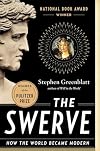
A book with a very epic and grand scope in the title that might more accurately be described as a biography of Poggio Bracciolini, and how he found a copy of Lucretius' book On the Nature of Things that led to its copying and spread, as a cornerstone of renaissance rediscovery of ancient thought. Of course that more academic title of "Poggio Bracciolini: A forgotten hero of the renaissance" wouldn't have sold nearly as many copies.
On a scale of structures to individual actors, this book show more lies solidly toward the latter, but tries to present large structures as dominoes falling to the actions of this chance discovery by a little known figure. It's stuck somewhere between microhistory, which it probably should have been, and trying to create a grand narrative about the renaissance and the influence of ancient thought, and how radical and dangerous those ideas were seen to be. Of course the implicit argument that this was the big event that cinched "the swerve" as Greenblatt likes to call it, is not really supported by the book itself, rather just asserted. Would the book really not have been found elsewhere, by someone else, possibly at a later date? Was this book in particular really that essential compared to the rest of the ancient treasure trove? Is the rather tired trope of an evil Christian church opposed to 'progress' really not deserving of some nuance when every copyist who kept these books alive in monasteries were part of the same?
The book is better as the microhistory story it probably should have stayed, than the grand sweeping punches it takes at defining the renaissance. show less
On a scale of structures to individual actors, this book show more lies solidly toward the latter, but tries to present large structures as dominoes falling to the actions of this chance discovery by a little known figure. It's stuck somewhere between microhistory, which it probably should have been, and trying to create a grand narrative about the renaissance and the influence of ancient thought, and how radical and dangerous those ideas were seen to be. Of course the implicit argument that this was the big event that cinched "the swerve" as Greenblatt likes to call it, is not really supported by the book itself, rather just asserted. Would the book really not have been found elsewhere, by someone else, possibly at a later date? Was this book in particular really that essential compared to the rest of the ancient treasure trove? Is the rather tired trope of an evil Christian church opposed to 'progress' really not deserving of some nuance when every copyist who kept these books alive in monasteries were part of the same?
The book is better as the microhistory story it probably should have stayed, than the grand sweeping punches it takes at defining the renaissance. show less
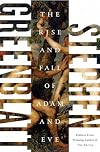
As I was also finishing up Philip Pullman's Dark Materials trilogy (full disclosure: I am personally in entire agreement with Mr. Pullman's thoughts on organized religion), Greenblatt's book was a fascinating adjunct. He explores in detail this age-old, so-familiar story, but casts new light upon it by marshalling examples of other origin tales, contemporaneous and otherwise, and placing it in a complex historical and literary context. For example, did you know there were versions in show more existence in ancient times where Eve and the serpent were the *heroes* - rightfully resisting God's selfish prohibition and bestowing a fuller knowledge on humanity? Or that some scholars offered interpretations suggesting that Adam willingly shared the fruit with Eve because he knew he would otherwise be so lonely and miserable without the mate who had brought such joy to him? It is refreshing to find Greenblatt enthusiastically unearthing defenses and alternative interpretations to absolve That Woman of all the blame for the mess humanity has been in ever since. He weaves in examples of Adam and Eve in art, depicting the varying ways they are presented and understood. He explores the knotty problem faced by theologians in deciding whether the First Couple are meant as literal, anthropological facts, or allegories. As the centuries unroll and knowledge of the world expands, new questions must be wrestled with: what about all those indigenous people who came to the attention of the European explorers of the New World? Damned? Innocents? Shameless? Kudos to Greenblatt for his tribute to the Dominican Bartolome de la Casas who wrote powerfully and in anguish over the atrocities committed against the indigenous people by the Spaniards and did his best to protect them. Who DID Cain marry, anyway? Finally, along comes Darwin to really wreck the temple... many centuries after a Roman named Lucretius postulated an "atomist" history whereby living beings developed in tiny tiny increments of chance over enormous spans of time, and were NOT invented and set loose by a god or gods somewhere. Greenblatt also writes with great admiration (and length) about John Milton and his Paradise Lost: Milton creates a subtle, complex, and oh-so-human pair of people that in whom we recognize our own frailties. It's still a great story, and Greenblatt can offer no higher praise than that this fairy tale has become... literature. Having partaken of the knowledge Greenblatt has offered in this book, I feel like a better human being. show less
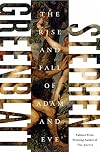
I was a little surprised by this book. I expected a discussion of the story of Adam and Eve, its historical interpretations, and the significance it still has on western thinking about our origins and our morality. And there is that, although Greenblatt discusses the hold that aspects of the story — original sin, the relationship between men and women, the dangers of pride, etc. — still have on western culture and morals less than I anticipated.
What turned out to be more interesting was show more Greenblatt’s treatment of the story as an historical idea, especially its uneasy status between mythology and literal fact with the faiths that adhere to it.
Greenblatt starts with historical context. I learned a lot here. The story as told in the Torah dates to the 5th century BCE. The Enuma Elish, from as early as the 18th century BCE, and the Epic of Gilgamesh, going back as far as 2100 BCE, not only predate Adam and Eve in some respects, they also provide a base to which the story responds.
For example, in the Epic of Gilgamesh (the Sumerian creation story), man, once created, truly becomes man by joining the city of Uruk. Enkidu, the first man, becomes human by leaving the garden and joining the city — only by doing so does he become other than another wild animal.
Somewhat similarly, in the Enuma Elish, the role of the city is emphasized as Marduk, the creator, approves the creation of the city of Babylon.
By contrast, the story of Eden turns the relation between the garden and the city on its head — it is in the garden that Adam and Eve are their purist selves. It is only in their fallen state that they leave the garden, with their son, Cain, eventually founding the city of Enoch. And of course, God punishes the city of Babylon with a proliferation of mutually unintelligible languages.
There are other apparently deliberate positions or decisions taken by the story of Adam and Eve that respond to cultural and historical context — an insistence on strict obedience to God, pridefulness as sin, a hierarchical relationship between man and woman, the moral prominence of shame, and the status of labor as a punishment (although it does appear that Adam and Eve may have tilled the soil of Eden).
Greenblatt discusses some of these aspects in depth, in historical interpretations given to them. He provides extended discussions of Augustine’s notion of “original sin” and of the historical treatment of Eve as primarily responsible for the fall.
But it is his discussion of attempts at literal interpretation of the story that most engaged my interest, especially as attempted by Augustine and Milton, and aided by the artists of the Renaissance.
There appears always to have been a spirit of interpretation of the story, and of Genesis in general, as allegorical or mythological, rather than literally true. But the pressure to strengthen the faith of believers such as Augustine and Milton produced successive attempts to articulate and defend the story as literally true. And these attempts figure critically in an historical decline in the significance of the story.
Greenblatt believes that the story of Adam and Eve may be a victim of its own success — that is, it became vulnerable as it became believed in that literal sense. Through the efforts of Augustine, the artists of the Renaissance, and Milton, the story was pushed toward a modern kind of realism — literal factuality. Greenblatt writes, “The collective success of all of these efforts by believers — the triumphant fulfillment of the old Augustinian dream of a literal interpretation — had an unintended and devastating consequence: the story began to die.”
It became subject to the same kinds of questioning that any factual account is subject. What evidence stands for or against its truth? What about the internal consistency of the story?
Then, in this context, skepticism could grow roots. Where did Cain’s wife come from, if Adam and Eve bore only two children, he and Abel? Where did the inhabitants of the city that Cain founded come from? How could Adam have named all the animals of the world in half a day? What should we make of the newly discovered peoples of the New World, who apparently did not participate in the shame of nakedness that was the consequence for all humans of Adam and Eve’s transgression? What of the apparent age of the world as implied by ancient documents of Greece and the Aztec artifacts discovered in the New World?
I suspect that Greenblatt is tracing also an increasing split in general between the mythical and the factual, a distinction that if not peculiar to the post-Enlightenment world, is at least more sharply drawn from that point forward. Those questions were always available to any literal interpretation of Genesis, but they were not asked in the same spirit in which they required reduction to fact. Pre-Enlightenment, Augustine had certainly wondered about some of those same questions, and about the very idea of a talking snake, a magical tree, etc., but he took belief and faith as a challenge to be met. His literal interpretation of the story seems an aggressive expression of faith, rather than, in a later post-Enlightenment spirit, a sorting out of the facts.
Greenblatt is clear that he thinks something is lost with the demise of the story’s standing, and I found his position at least somewhat persuasive. The story of Adam and Eve gave us a framework, if not always answers (or acceptable answers), to questions about freedom, knowledge, choice, innocence and guilt, responsibility, and much more. By contrast, the modern story of our descent from extinct hominins leaves those things largely untouched.
Some do draw social Darwinism from the ironically mythologized version of evolution — “survival of the fittest” in Herbert Spencer’s words. Others look for the origin of human morality in our ancestors and closest relatives, the apes. But the former is cynical, reminiscent of Thrasymachus’s ill-fated version of justice in Plato’s Republic — “the advantage of the stronger”. And the latter is, at best, unfinished business and seemingly a very messy story from which to draw guidance for moral thought.
It’s one thing to talk in generalities of an age of realism and fact. It’s another to show in some detail the evolution of one core component of western culture toward that age. By doing so, Greenblatt enables us to see, for better and for worse, how the role the story of Adam and Eve plays for us has changed. show less
What turned out to be more interesting was show more Greenblatt’s treatment of the story as an historical idea, especially its uneasy status between mythology and literal fact with the faiths that adhere to it.
Greenblatt starts with historical context. I learned a lot here. The story as told in the Torah dates to the 5th century BCE. The Enuma Elish, from as early as the 18th century BCE, and the Epic of Gilgamesh, going back as far as 2100 BCE, not only predate Adam and Eve in some respects, they also provide a base to which the story responds.
For example, in the Epic of Gilgamesh (the Sumerian creation story), man, once created, truly becomes man by joining the city of Uruk. Enkidu, the first man, becomes human by leaving the garden and joining the city — only by doing so does he become other than another wild animal.
Somewhat similarly, in the Enuma Elish, the role of the city is emphasized as Marduk, the creator, approves the creation of the city of Babylon.
By contrast, the story of Eden turns the relation between the garden and the city on its head — it is in the garden that Adam and Eve are their purist selves. It is only in their fallen state that they leave the garden, with their son, Cain, eventually founding the city of Enoch. And of course, God punishes the city of Babylon with a proliferation of mutually unintelligible languages.
There are other apparently deliberate positions or decisions taken by the story of Adam and Eve that respond to cultural and historical context — an insistence on strict obedience to God, pridefulness as sin, a hierarchical relationship between man and woman, the moral prominence of shame, and the status of labor as a punishment (although it does appear that Adam and Eve may have tilled the soil of Eden).
Greenblatt discusses some of these aspects in depth, in historical interpretations given to them. He provides extended discussions of Augustine’s notion of “original sin” and of the historical treatment of Eve as primarily responsible for the fall.
But it is his discussion of attempts at literal interpretation of the story that most engaged my interest, especially as attempted by Augustine and Milton, and aided by the artists of the Renaissance.
There appears always to have been a spirit of interpretation of the story, and of Genesis in general, as allegorical or mythological, rather than literally true. But the pressure to strengthen the faith of believers such as Augustine and Milton produced successive attempts to articulate and defend the story as literally true. And these attempts figure critically in an historical decline in the significance of the story.
Greenblatt believes that the story of Adam and Eve may be a victim of its own success — that is, it became vulnerable as it became believed in that literal sense. Through the efforts of Augustine, the artists of the Renaissance, and Milton, the story was pushed toward a modern kind of realism — literal factuality. Greenblatt writes, “The collective success of all of these efforts by believers — the triumphant fulfillment of the old Augustinian dream of a literal interpretation — had an unintended and devastating consequence: the story began to die.”
It became subject to the same kinds of questioning that any factual account is subject. What evidence stands for or against its truth? What about the internal consistency of the story?
Then, in this context, skepticism could grow roots. Where did Cain’s wife come from, if Adam and Eve bore only two children, he and Abel? Where did the inhabitants of the city that Cain founded come from? How could Adam have named all the animals of the world in half a day? What should we make of the newly discovered peoples of the New World, who apparently did not participate in the shame of nakedness that was the consequence for all humans of Adam and Eve’s transgression? What of the apparent age of the world as implied by ancient documents of Greece and the Aztec artifacts discovered in the New World?
I suspect that Greenblatt is tracing also an increasing split in general between the mythical and the factual, a distinction that if not peculiar to the post-Enlightenment world, is at least more sharply drawn from that point forward. Those questions were always available to any literal interpretation of Genesis, but they were not asked in the same spirit in which they required reduction to fact. Pre-Enlightenment, Augustine had certainly wondered about some of those same questions, and about the very idea of a talking snake, a magical tree, etc., but he took belief and faith as a challenge to be met. His literal interpretation of the story seems an aggressive expression of faith, rather than, in a later post-Enlightenment spirit, a sorting out of the facts.
Greenblatt is clear that he thinks something is lost with the demise of the story’s standing, and I found his position at least somewhat persuasive. The story of Adam and Eve gave us a framework, if not always answers (or acceptable answers), to questions about freedom, knowledge, choice, innocence and guilt, responsibility, and much more. By contrast, the modern story of our descent from extinct hominins leaves those things largely untouched.
Some do draw social Darwinism from the ironically mythologized version of evolution — “survival of the fittest” in Herbert Spencer’s words. Others look for the origin of human morality in our ancestors and closest relatives, the apes. But the former is cynical, reminiscent of Thrasymachus’s ill-fated version of justice in Plato’s Republic — “the advantage of the stronger”. And the latter is, at best, unfinished business and seemingly a very messy story from which to draw guidance for moral thought.
It’s one thing to talk in generalities of an age of realism and fact. It’s another to show in some detail the evolution of one core component of western culture toward that age. By doing so, Greenblatt enables us to see, for better and for worse, how the role the story of Adam and Eve plays for us has changed. show less
Many scholars of history or art consider the Renaissance to be a relatively short period of time (roughly the 15th and 16th centuries) when educated Europeans experienced a substantial and sudden change (a “swerve”) from a deeply religious weltanschauung to one more secular or scientific. In The Swerve, Stephen Greenblatt, the John Cogan University Professor of the Humanities at Harvard, writes eloquently about Western Europe as it underwent that change of worldview. He begins with show more describing the (largely religious) preconceptions generally held prior to the swerve. He detours through the history of book collecting, papermaking, medieval libraries, the importance of penmanship before the invention of the movable type printing press, and the sociology of monasteries and the monastic movement. [This may sound dry, but it contains much interesting information, such as the extreme value of writing material and the fact that monastic scribes used a mixture of milk, cheese, and lime as “whiteout” for mistakes.]
The central figure of the book is Poggio Bracciolini, a secretary to the first Pope John XXIII. In 1417, Poggio unearthed in a German monastery a copy of “De Rerum Natura” ("On the Nature of Things") by Lucretius, a 7,000-line epic poem which had been lost for more than a thousand years. Lucretius, born in 99 BCE, was not the most original of thinkers, but he wrote in beautiful Latin, and he rearticulated the theory of atomism first posited by Leucippus and Democritus and further developed by Epicurus. As Greenblatt tells it, Poggio’s rediscovery of Lucretius introduced to 15th century Europe the concept of that all things were composed of combinations of eternal, indestructible atoms moving about in the “void.”
The Roman Catholic Church at first thought atomism was a dangerous concept because it was thought to contradict (or at least make less tenable) the concept of transubstantiation, which had been so painfully analyzed and articulated by Thomas Aquinas. Borrowing from a distinction made by Aristotle, Aquinas argued that the host consecrated at mass maintained only the “accidents” of bread, while its “substance” underwent a change into the body of Christ. The Church officially adopted Aquinas’s concept at the Council of Trent (1545-1563). But atomism absolutely denied the distinction between “substance” and “accidents,” and thus threatened Aquinas’s intellectual edifice. If the host were merely a specific arrangement of atoms, just how could it be turned into the body of Christ, which had been an entirely different arrangement of different atoms?
“De Rerum Natura” also contradicted another seminal church theologian, Augustine of Hippo, whose view of man’s status in the world dominated medieval perceptions. Augustine had emphasized man’s “fallen” nature. He wrote that the road to salvation required men to overcome their natural desires, to refrain from seeking pleasure (especially the sexual kind), and to perform nearly constant penance. On the other hand, Lucretius, picking up from Epicurus, taught that there was no afterlife and that happiness could be obtained only by seeking pleasure. [It should be noted that Epicurus was not a total hedonist or debaucher—his notion of pleasure was a modest (one might say “sensible” or “temperate”) one, something like Aristotle’s search for eudemonia.] Lucretius wrote that humans can and should conquer their fears, accept the fact that they and all things they encounter are transitory, and embrace the beauty and pleasure of the world.
Greenblatt contends that right about the time Poggio returned to Italy from Germany with his copy of “De Rerum Naturum," Western Europe underwent what Lucretius called a “clinamen” [the word is derived from the Latin clīnāre, to incline] or swerve —an unexpected, unpredictable movement.” He avers:
"Something happened in the Renaissance, something that surged up against the constraints that centuries had constructed around curiosity, desire, individuality, sustained attention to the material world, [and] the claims of the body. The cultural shift is notoriously difficult to define, and its significance has been fiercely contested….[I]t helps to account for the intellectual daring of Copernicus and Vesalius, Giordano Bruno and William Harvey, Hobbes and Spinoza.”
Discussion: It should be noted that many experts take issue with Greenblatt’s contentions. They decry his depiction of the Middle Ages (at least after the 12th century) as overwhelmingly dark, ignorant, and superstitious. His portrayal may be vivid and fascinating, but closer to caricature than fact.
More critically, Greenblatt’s suggestion that Poggio’s discovery led to the Renaissance is anathema to some thoughtful historians. While Greenblatt makes some modest disclaimers about one poem causing an entire movement, he gives mixed signals in that regard. He writes, for example:
"A short, genial, cannily alert man in his late thirties reached out one day, took a very old manuscript off a library shelf, saw with excitement what he had discovered, and ordered that it be copied. That was all; but it was enough.”
And certainly the subtitle of the book, "How the World Became Modern", lays bare his mind set. The publishers’ blurb, for which we probably should not blame Greenblatt, goes even further:
"The copying and translation of this ancient book, the greatest discovery of the greatest book hunter of his age, fueled the Renaissance, inspiring artists such as Botticelli and thinkers such as Giordano Bruno; shaped the thought of Galileo and Freud, Darwin and Einstein, and had revolutionary influence on writers like Montaigne and Shakespeare, and even Thomas Jefferson.”
That encomium clearly jumps the shark. All those great thinkers were influenced by many movements and thinkers besides Lucretius. Many historians, for example, have credited the onset of the Renaissance to the discovery of Cicero’s letters by Petrarch in the 14th Century.
Cicero’s writings on Greek philosophical systems not only profoundly affected European ideas in the early Middle Ages, but are said to have inspired Lucretius! In fact, Petrarch is considered by many to be the "father of the Renaissance” by stimulating much of the humanist philosophy that characterized it. The list goes on: in the mid-16th Century, the works of Sextus on skepticism were translated into Latin, and these ideas too were said to have profoundly modified the course of religious thought in the late Renaissance.
The point is that many factors went into the gradual efflorescence that characterized the Renaissance and inspired later thinkers. Greenblatt’s reliance on the shoulders of just one giant isn’t warranted.
Evaluation: When I first encountered this book, I thought the author had overemphasized the importance of the discovery of “De Rurum Natura,” merely using it as an excuse to write a book about the Renaissance. I still think he overstates his case, but a second reading showed that his thesis was somewhat more nuanced and measured. Greenblatt doesn’t contend that the discovery of Lucretius caused the Renaissance, but he does say, “This particular ancient book, suddenly returning to view, made a difference.” With that, I can agree. The book is well-written and replete with interesting philosophical analyses. If it inspires readers to read more about medieval history and philosophy, so much the better.
(JAB) show less
The central figure of the book is Poggio Bracciolini, a secretary to the first Pope John XXIII. In 1417, Poggio unearthed in a German monastery a copy of “De Rerum Natura” ("On the Nature of Things") by Lucretius, a 7,000-line epic poem which had been lost for more than a thousand years. Lucretius, born in 99 BCE, was not the most original of thinkers, but he wrote in beautiful Latin, and he rearticulated the theory of atomism first posited by Leucippus and Democritus and further developed by Epicurus. As Greenblatt tells it, Poggio’s rediscovery of Lucretius introduced to 15th century Europe the concept of that all things were composed of combinations of eternal, indestructible atoms moving about in the “void.”
The Roman Catholic Church at first thought atomism was a dangerous concept because it was thought to contradict (or at least make less tenable) the concept of transubstantiation, which had been so painfully analyzed and articulated by Thomas Aquinas. Borrowing from a distinction made by Aristotle, Aquinas argued that the host consecrated at mass maintained only the “accidents” of bread, while its “substance” underwent a change into the body of Christ. The Church officially adopted Aquinas’s concept at the Council of Trent (1545-1563). But atomism absolutely denied the distinction between “substance” and “accidents,” and thus threatened Aquinas’s intellectual edifice. If the host were merely a specific arrangement of atoms, just how could it be turned into the body of Christ, which had been an entirely different arrangement of different atoms?
“De Rerum Natura” also contradicted another seminal church theologian, Augustine of Hippo, whose view of man’s status in the world dominated medieval perceptions. Augustine had emphasized man’s “fallen” nature. He wrote that the road to salvation required men to overcome their natural desires, to refrain from seeking pleasure (especially the sexual kind), and to perform nearly constant penance. On the other hand, Lucretius, picking up from Epicurus, taught that there was no afterlife and that happiness could be obtained only by seeking pleasure. [It should be noted that Epicurus was not a total hedonist or debaucher—his notion of pleasure was a modest (one might say “sensible” or “temperate”) one, something like Aristotle’s search for eudemonia.] Lucretius wrote that humans can and should conquer their fears, accept the fact that they and all things they encounter are transitory, and embrace the beauty and pleasure of the world.
Greenblatt contends that right about the time Poggio returned to Italy from Germany with his copy of “De Rerum Naturum," Western Europe underwent what Lucretius called a “clinamen” [the word is derived from the Latin clīnāre, to incline] or swerve —an unexpected, unpredictable movement.” He avers:
"Something happened in the Renaissance, something that surged up against the constraints that centuries had constructed around curiosity, desire, individuality, sustained attention to the material world, [and] the claims of the body. The cultural shift is notoriously difficult to define, and its significance has been fiercely contested….[I]t helps to account for the intellectual daring of Copernicus and Vesalius, Giordano Bruno and William Harvey, Hobbes and Spinoza.”
Discussion: It should be noted that many experts take issue with Greenblatt’s contentions. They decry his depiction of the Middle Ages (at least after the 12th century) as overwhelmingly dark, ignorant, and superstitious. His portrayal may be vivid and fascinating, but closer to caricature than fact.
More critically, Greenblatt’s suggestion that Poggio’s discovery led to the Renaissance is anathema to some thoughtful historians. While Greenblatt makes some modest disclaimers about one poem causing an entire movement, he gives mixed signals in that regard. He writes, for example:
"A short, genial, cannily alert man in his late thirties reached out one day, took a very old manuscript off a library shelf, saw with excitement what he had discovered, and ordered that it be copied. That was all; but it was enough.”
And certainly the subtitle of the book, "How the World Became Modern", lays bare his mind set. The publishers’ blurb, for which we probably should not blame Greenblatt, goes even further:
"The copying and translation of this ancient book, the greatest discovery of the greatest book hunter of his age, fueled the Renaissance, inspiring artists such as Botticelli and thinkers such as Giordano Bruno; shaped the thought of Galileo and Freud, Darwin and Einstein, and had revolutionary influence on writers like Montaigne and Shakespeare, and even Thomas Jefferson.”
That encomium clearly jumps the shark. All those great thinkers were influenced by many movements and thinkers besides Lucretius. Many historians, for example, have credited the onset of the Renaissance to the discovery of Cicero’s letters by Petrarch in the 14th Century.
Cicero’s writings on Greek philosophical systems not only profoundly affected European ideas in the early Middle Ages, but are said to have inspired Lucretius! In fact, Petrarch is considered by many to be the "father of the Renaissance” by stimulating much of the humanist philosophy that characterized it. The list goes on: in the mid-16th Century, the works of Sextus on skepticism were translated into Latin, and these ideas too were said to have profoundly modified the course of religious thought in the late Renaissance.
The point is that many factors went into the gradual efflorescence that characterized the Renaissance and inspired later thinkers. Greenblatt’s reliance on the shoulders of just one giant isn’t warranted.
Evaluation: When I first encountered this book, I thought the author had overemphasized the importance of the discovery of “De Rurum Natura,” merely using it as an excuse to write a book about the Renaissance. I still think he overstates his case, but a second reading showed that his thesis was somewhat more nuanced and measured. Greenblatt doesn’t contend that the discovery of Lucretius caused the Renaissance, but he does say, “This particular ancient book, suddenly returning to view, made a difference.” With that, I can agree. The book is well-written and replete with interesting philosophical analyses. If it inspires readers to read more about medieval history and philosophy, so much the better.
(JAB) show less
Lists
Awards


You May Also Like


Associated Authors
Statistics
- Works
- 113
- Also by
- 9
- Members
- 18,633
- Popularity
- #1,175
- Rating
- 4.3
- Reviews
- 261
- ISBNs
- 292
- Languages
- 18
- Favorited
- 14
