

Cesar Vallejo (1892–1938)
Author of The Complete Poetry
About the Author
Primarily a poet and one of Latin America's finest of the twentieth century, Vallejo also wrote several novels and plays with a strong social content. His situation as a mestizo of part Indian blood, his humble social background, and the political and social discrimination to which he was subjected show more because of these factors, created the profound psychological tensions and alienation from society that mark his work. His work is permeated with a sense of the dignity of the oppressed Indian and a spirit of rebellion. In his first volume, The Black Heralds (1918), he used the techniques of symbolism to express bitterness at his suffering and condition of isolation. Trilce (1922) is one of the most original works of modern poetry, with an innovative syntax and structure that transcend normal logical rules to express the poet's feeling of solitude and the helplessness of oppressed peoples. After the publication of Trilce, Vallejo moved to Paris, where he lived in poverty and was harshly treated because of his political opinions. In poetry of a simpler structure and form, his posthumously published Human Poems (1939) and Spain, Let This Cup Pass from Me (1939) reveal his anguish over the Spanish civil war and his sense of solidarity with combatants for peace and freedom. (Bowker Author Biography) show less
Image credit: Parque de Versalles, 1929.
Series
Works by Cesar Vallejo
Poesía Completa. César Vallejo / Complete Poems. César Vallejo (Poesia, 223) (Spanish Edition) (2022) 5 copies
Obras completas. Fabla salvaje ; Hacia el reino de los sciris ; Cuentos cortos / 2, Escalas melografiadas (1976) 4 copies
Teatro completo 3 copies
Seven poems 3 copies
PACO YUNQUE - TRES LECTURAS 2 copies
Cuentos peruanos; antología, primera selección — Contributor — 2 copies
Ser poeta hasta el punto de dejar de serlo: Pensamientos, apuntes, esbozos (Textos y pretextos) (Spanish Edition) (2018) 2 copies
Cesar Vallejo Iii. Ensayos completos (La Megalomanía De un continente. 1928-1929): 3 (Ensayos completos de César Vallejo) (2019) 2 copies
Paco Yunque / El Vencedor 2 copies
La Cultura Peruana (Cronicas) 2 copies
César Vallejo: sus mejores obras 2 copies
El arte y la revolucion 2 copies
Telluric and Magnetic: A Sift of Thirteen Poems from the Complete Poetry of César Vallejo (2005) 2 copies
tungsteno, El 1 copy
Intensidad y altura 1 copy
Del siglo al minuto 1 copy
Los Mejores Versos 1 copy
Antología de César Vallejo 1 copy
Poesía completa 1 1 copy
César Vallejo Gedichte 1 copy
Teshaʻ ha-miflatsot 1 copy
Obras esenciales 1 copy
PACO YUNQUE Y OTROS CUENTOS 1 copy
Menselijke gedichten 1 copy
Sabiduría 1 copy
Paco Yunque y otros cuentos 1 copy
TRILCE 1 copy
T. I TEATRO COMPLETO 1 copy
Los heraldos negros 1 copy
Wedding March 1 copy
Poemas humanos (1923-1938) 1 copy
Poesie 1 copy
Il monarca d'ossa 1 copy
Problemas Selectos Completo 1 copy
Antología didáctica 1 copy
Se sopravvive la parola 1 copy
Una experiencia del mundo 1 copy
Hodočašće 1 copy
Susana y el sexo 1 copy
Novelas y cuentos completos 1 copy
Poemas esenciales 1 copy
Sus obras poéticas 1 copy
Musta kivi valkoisen päällä 1 copy
Voy a hablar de la esperanza 1 copy
Escalas 1 copy
Los heraldos Negros Trilce 1 copy
Associated Works
World Poetry: An Anthology of Verse from Antiquity to Our Time (1998) — Contributor — 499 copies, 2 reviews
Against Forgetting: Twentieth-Century Poetry of Witness (1993) — Contributor — 377 copies, 2 reviews
Introducción a la literatura hispanoamericana : de la conquista al siglo XX (1997) — Contributor — 23 copies
The Serpent and the Fire: Poetries of the Americas from Origins to Present (2024) — Contributor — 17 copies
Caterpillar 19: Spring 1972 — Contributor — 3 copies
Victor Hugo en el Perú — Contributor — 1 copy
Näin ihminen vastaa — Contributor — 1 copy
Tagged
Common Knowledge
- Canonical name
- Vallejo, César
- Legal name
- Vallejo Mendoza, César Abraham
- Birthdate
- 1892-03-16
- Date of death
- 1938-04-15
- Gender
- male
- Education
- University of Trujillo
- Occupations
- poet
playwright
journalist - Nationality
- Peru
- Birthplace
- Santiago de Chuco, Peru
- Places of residence
- Santiago de Chuco, Peru (birth)
Paris, France (death)
Madrid, Spain
Lima, Peru - Place of death
- Paris, France
- Associated Place (for map)
- Peru
Members
Reviews

Sermón sobre la muerte
Y, en fin, pasando luego al dominio de la muerte,
que actúa en escuadrón, previo corchete,
párrafo y llave, mano grande y diéresis,
¿a qué el pupitre asirio? ¿a qué el cristiano púlpito,
el intenso jalón del mueble vándalo
o, todavía menos, este esdrújulo retiro?
¿Es para terminar,
mañana, en prototipo del alarde fálico,
en diabetes y en blanca vacinica,
en rostro geométrico, en difunto,
que se hacen menester sermón y almendras,
que sobran literalmente patatas
y show more este espectro fluvial en que arde el oro
y en que se quema el precio de la nieve?
¿Es para eso, que morimos tánto?
¿Para sólo morir,
tenemos que morir a cada instante?
¿Y el párrafo que escribo?
¿Y el corchete deísta que enarbolo?
¿Y el escuadrón en que falló mi casco?
¿Y la llave que va a todas las puertas?
¿Y la forense diéresis, la mano,
mi patata y mi carne y mi contradicción bajo la sábana?
¡Loco de mí, lovo de mí, cordero
de mí, sensato, caballísimo de mí!
¡Pupitre, sí, toda la vida; púlpito,
también, toda la muerte!
Sermón de la barbarie: estos papeles;
esdrújulo retiro: este pellejo.
De esta suerte, cogitabundo, aurífero, brazudo,
defenderé mi presa en dos momentos,
con la voz y también con la laringe,
y del olfato físico con que oro
y del instinto de inmovilidad con que ando,
me honraré mientras viva —hay que decirlo;
se enorgullecerán mis moscardones,
porque, al centro, estoy yo, y a la derecha,
también, y, a la izquierda, de igual modo. show less
Y, en fin, pasando luego al dominio de la muerte,
que actúa en escuadrón, previo corchete,
párrafo y llave, mano grande y diéresis,
¿a qué el pupitre asirio? ¿a qué el cristiano púlpito,
el intenso jalón del mueble vándalo
o, todavía menos, este esdrújulo retiro?
¿Es para terminar,
mañana, en prototipo del alarde fálico,
en diabetes y en blanca vacinica,
en rostro geométrico, en difunto,
que se hacen menester sermón y almendras,
que sobran literalmente patatas
y show more este espectro fluvial en que arde el oro
y en que se quema el precio de la nieve?
¿Es para eso, que morimos tánto?
¿Para sólo morir,
tenemos que morir a cada instante?
¿Y el párrafo que escribo?
¿Y el corchete deísta que enarbolo?
¿Y el escuadrón en que falló mi casco?
¿Y la llave que va a todas las puertas?
¿Y la forense diéresis, la mano,
mi patata y mi carne y mi contradicción bajo la sábana?
¡Loco de mí, lovo de mí, cordero
de mí, sensato, caballísimo de mí!
¡Pupitre, sí, toda la vida; púlpito,
también, toda la muerte!
Sermón de la barbarie: estos papeles;
esdrújulo retiro: este pellejo.
De esta suerte, cogitabundo, aurífero, brazudo,
defenderé mi presa en dos momentos,
con la voz y también con la laringe,
y del olfato físico con que oro
y del instinto de inmovilidad con que ando,
me honraré mientras viva —hay que decirlo;
se enorgullecerán mis moscardones,
porque, al centro, estoy yo, y a la derecha,
también, y, a la izquierda, de igual modo. show less
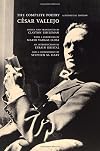
Despite his short life, Peru’s César Vallejo’s body of poetry is worthy of inclusion among that of the last century’s great Spanish-language poets: Rubén Darío, Pablo Neruda and Federico García Lorca. This volume collects the two books published during Vallejo’s lifetime, as well as the posthumous poems, for the first time with a sole translator. Mario Vargas Llosa’s foreword and Efraín Kristal’s introduction might be reason enough to buy the book, but a single read-through show more puts The Complete Poetry on the must-have list. The early poems’ tension between carnality and divinity, his Whitman-esque invocation of the voice of his people and the transition to more political and prose poems, taken all at once, are proof positive of the range Vallejo’s command of a luxurious language granted him.
(From the Sacramento News & Review, 3/29/07, http://www.newsreview.com/sacramento/Content?oid=302948) show less
(From the Sacramento News & Review, 3/29/07, http://www.newsreview.com/sacramento/Content?oid=302948) show less
Spain, take this cup from me =: Espana, aparta de mi este caliz : [poems] (An Evergreen book) by César Vallejo
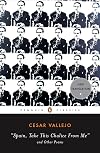
Vallejo makes some thorough and universal observations about the nature of all war and revolution here, but he specifically explores the nature of the Spanish Civil War and what it means for the Spanish identity. With a voice alternately declarative and inquiring, yet always commanding, he reaches a pinnacle of force with language and imagery that finally reveals the country as a chimera of both beauty and bloodshed. Vallejo illustrates the haunting and bittersweet complexity of the human show more experience and the human identity. He illustrates that great violence, in both the poetic and literal sense of the word, colors that experience. show less
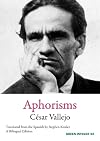
Giving this book stars would be completely meaningless. Vallejo's jottings would probably take up one to two pages of actual text; here they're spread out across about 80 small pages, with the Spanish in parallel. It's lovely, and reminds me yet again that anglophones are very bad at the jeu d'esprit, the aphorism, and the short text. I have no idea why. Anyway, three great thoughts from Cesar:
Love liberates me insofar as I *am able* to leave off loving. The person I love must leave me the show more freedom to be able to hate her at any moment. (49)
He's going to take a shit, and that's why he puts on his glasses. (71)
Listening to Beethoven, a woman and a man are crying faced with the greatness of that music. And I say to them: maybe it's you who have this greatness in your hearts. (75) show less
Love liberates me insofar as I *am able* to leave off loving. The person I love must leave me the show more freedom to be able to hate her at any moment. (49)
He's going to take a shit, and that's why he puts on his glasses. (71)
Listening to Beethoven, a woman and a man are crying faced with the greatness of that music. And I say to them: maybe it's you who have this greatness in your hearts. (75) show less
Lists
Awards


You May Also Like


Associated Authors
Statistics
- Works
- 175
- Also by
- 18
- Members
- 1,694
- Popularity
- #15,157
- Rating
- 4.2
- Reviews
- 18
- ISBNs
- 286
- Languages
- 13
- Favorited
- 12