
Alex Haley (1921–1992)
Author of The Autobiography of Malcolm X
About the Author
Alex Haley's full name was Alexander Palmer Haley. He was born in Ithaca, N.Y. in 1921, and grew up in Henning, Tenn. Educated at Elizabeth City Teacher's College in North Carolina, Haley became a journalist while serving in the United States Coast Guard from 1939 to 1959. After retiring from the show more service, Haley moved to Los Angeles, finding fulltime employment as a freelance writer. First known for his work as co-author and editor of the highly regarded Autobiography of Malcolm X, Haley's biggest success stemmed from his Pulitzer Prize-winning book, 'Roots: The Saga of an American Family.' Extensively researched and based in part on Haley's own African roots, the work became a national bestseller and, in addition to the Pulitzer, won the Springarn Medal in 1977. Roots was also adapted into one of the first television miniseries and garnered some of the highest ratings in television history. His next book, "Queen", told the story of Queen Haley, Alex Haley's paternal grandmother. He died before this work was completed and it was finished by David Stevens. This was also adapted for television. Another work, "Mama Flora's Family" compiled from Haley's unpublished writings, continues the family saga and was published in 1998. Alex Haley died in 1992 in Seattle, Washington. He was 71 years old. (Bowker Author Biography) show less
Image credit: Alex Haley in 1978
Works by Alex Haley
Alex Hailey: The Man Who Traced America's Roots - His Life, His Works (with DVD) (2007) 44 copies, 2 reviews
Steck-Vaughn Stories of America: Student Reader Never Turn Back, Story Book (1993) — Editor — 37 copies, 1 review
Rødder: Bind 2 1 copy
Korene 1 copy
Haley Alex 1 copy
Roots | Queen 1 copy
Ernie Barnes/ Artist 1 copy
Associated Works
Steck-Vaughn Stories of America: Student Reader Walking for Freedom , Story Book (1993) — Editor — 82 copies
A Place Called Heartbreak: A Story of Vietnam (Stories of America) (1992) — some editions — 51 copies
Reader's Digest Condensed Books 1994 v01: I'll Be Seeing You / Honor Among Thieves / Alex Haley's Queen / Mrs. Pollifax and the Second Thief (1994) — Author — 42 copies
Tagged
Common Knowledge
- Canonical name
- Haley, Alex
- Legal name
- Haley, Alexander Murray Palmer
- Birthdate
- 1921-08-11
- Date of death
- 1992-02-10
- Gender
- male
- Education
- Alcorn State University
Elizabeth City State College - Occupations
- novelist
journalist
editor
screenwriter - Organizations
- US Coast Guard (career included WWII and Korean Conflict)
Reader's Digest - Awards and honors
- NAACP Spingarn Medal (1977)
Special Pulitzer Prize (1977)
Golden Plate Award (1977) - Relationships
- Haley, Simon (father)
- Short biography
- Alexander Murray Palmer Haley (August 11, 1921 – February 10, 1992) was an American writer and the author of the 1976 book Roots: The Saga of an American Family. ABC adapted the book as a television miniseries of the same name and aired it in 1977 to a record-breaking audience of 130 million viewers. In the United States, the book and miniseries raised the public awareness of black American history and inspired a broad interest in genealogy and family history.
Wikipedia - Cause of death
- heart attack
- Nationality
- USA
- Birthplace
- Ithaca, New York, USA
- Places of residence
- Henning, Tennessee, USA
Clinton, Tennessee, USA
Los Angeles, California, USA - Place of death
- Seattle, Washington, USA
- Burial location
- Henning, Tennessee, USA (beside his childhood home)
- Map Location
- USA
Members
Reviews
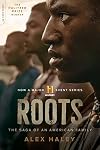
Born in the mid-1700s into a Ghanaian village, Kunta had been warned time after time of the dangers of the toubob, pale men who would kidnap and steal you away if you weren't careful. He'd never seen a toubob yet, but suddenly one morning following sentinel duty he is captured and packed aboard a ship to suffer months of immobility, indignities and revoltingly foul conditions. Little is he aware that his miseries are only just beginning.
First, a few issues: Following extensive genealogic, show more geographic and historical research, Haley wrote and published this book as a work of nonfiction. As far as I can tell, it is catalogued as nonfiction by most libraries, though dialogue, which takes up a significant portion of the book, is 100% imagined. This is problematic. I can think of no other work of nonfiction in which all conversations are completely invented and most events are pure speculation. In addition, though I won't go into detail here, scholars have discovered documents which contradict essential components of the lineage presented. I can understand Haley's motivation — unlike most descendants of enslaved people, he was able to trace his ancestry back to a real, identifiable individual, and that person's story deserved to be told.
Academic reservations aside, this is a phenomenal, well-written book, and even as "merely" fiction it would be enough. I was surprised early on by how much of the story takes place before Kunta's capture and descent into slavery, but in hindsight it was a genius move on Haley's part. In taking the time to flesh out Kunta's life and family from birth, as well as complex aspects of his culture regarding food, religion, farming, social norms and morality, the reader becomes invested in his humanity. The savage brutality of the white people he encounters while subsequently enslaved provides a stark and ironic contrast. Make no mistake, this book will break your heart. Over and over, just when it seems that Kunta's family's circumstances marginally improve, something always occurs that obliterates any semblance of security that had dared germinate. show less
First, a few issues: Following extensive genealogic, show more geographic and historical research, Haley wrote and published this book as a work of nonfiction. As far as I can tell, it is catalogued as nonfiction by most libraries, though dialogue, which takes up a significant portion of the book, is 100% imagined. This is problematic. I can think of no other work of nonfiction in which all conversations are completely invented and most events are pure speculation. In addition, though I won't go into detail here, scholars have discovered documents which contradict essential components of the lineage presented. I can understand Haley's motivation — unlike most descendants of enslaved people, he was able to trace his ancestry back to a real, identifiable individual, and that person's story deserved to be told.
Academic reservations aside, this is a phenomenal, well-written book, and even as "merely" fiction it would be enough. I was surprised early on by how much of the story takes place before Kunta's capture and descent into slavery, but in hindsight it was a genius move on Haley's part. In taking the time to flesh out Kunta's life and family from birth, as well as complex aspects of his culture regarding food, religion, farming, social norms and morality, the reader becomes invested in his humanity. The savage brutality of the white people he encounters while subsequently enslaved provides a stark and ironic contrast. Make no mistake, this book will break your heart. Over and over, just when it seems that Kunta's family's circumstances marginally improve, something always occurs that obliterates any semblance of security that had dared germinate. show less
Our vicious history of slavery & the toll it took on our country is handled so beautifully and delicately in this brilliant genealogical story of Alex Haley’s roots. Where he could have dwelt on the worst of slavery, Haley focused on family life. It made it more real, to really feel with these characters what slavery was like. I especially appreciated the postscripts to this edition telling how Haley uncovered his roots and how he wrote this Novel—particularly his voyage to recreate show more Kunte Kinte’s trip across the ocean. There is no doubt in my mind why this won the Pulitzer Prize & why it is essential reading. It’s just so beautifully written especially about Gambia. We learn so so much about the lives of Africans and I just loved diving so deeply into that history. show less
Roots is one of those books that's been around so long that I thought I knew a lot about it before I picked it up to read it. I had always assumed it was a novel, so I was very surprised to learn that the publisher markets it as non-fiction, and that the Library of Congress classifies it as non-fiction. Alex Haley called it "faction". Now that I've read it, my opinion hasn't changed. I would call it historical fiction. While the last 35 pages, where the author himself makes his appearance, show more is more memoir than fiction, those 35 pages represent less than 4% of the book's total. The rest of the book tells the story of Haley's ancestors embellished with thoughts, feelings, conversations, and detailed descriptions of their physical appearance. Although Haley does discuss his research process and some of his sources, he does not provide enough detail for other researchers to easily retrace his steps. These are characteristics of fiction, not non-fiction.
Even though I disagree with the way the book is marketed, I do like the way it's written. The characteristics that make it questionable as non-fiction are what give the book its emotional impact. Who can read it without being moved by the tragedy and dignity of Kunta Kinte's life, or Matilda's faith, or Tom's quiet strength, or the family's joy when freedom finally comes? It's one of the most influential books of the last quarter of the 20th century, and it continues to inspire Americans of all ethnicities to learn more about our own family histories and how our lives are shaped by those who came before us. show less
Even though I disagree with the way the book is marketed, I do like the way it's written. The characteristics that make it questionable as non-fiction are what give the book its emotional impact. Who can read it without being moved by the tragedy and dignity of Kunta Kinte's life, or Matilda's faith, or Tom's quiet strength, or the family's joy when freedom finally comes? It's one of the most influential books of the last quarter of the 20th century, and it continues to inspire Americans of all ethnicities to learn more about our own family histories and how our lives are shaped by those who came before us. show less
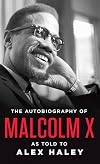
“If Malcolm X were not a Negro, his autobiography would be little more than a journal of abnormal psychology, the story of a burglar, dope pusher, addict and jailbird—with a family history of insanity—who acquires messianic delusions and sets forth to preach an upside-down religion of ‘brotherly’ hatred.”
-Saturday Evening Post, Sept. 12, 1965
Sensationalist, yes? Reminiscent of certain responses to Twelve Years a Slave winning multiple Academy Awards at this year's Oscars, and show more this is nearly fifty years on. Within these pages, Malcolm X spoke of a hope that by the year 2000, the white-washing of Jesus and other Biblical figures would be ended, and the true unresolved question of their physical aspects would be reflected by portrayals ranging all across the spectrum. In the year 2014, certain groups had conniptions over suggestions that Santa Clause could be black. The world goes on, and popular thought appropriates.
What is especially telling about that editorial first sentence up there is the overt interplay between prose and reader perception. This is important to consider when imbibing any text, but here, in context with racism, in context with classism, in context with the institutional ideologies' demand that all resistance be nonviolent while weighing it down with "sign of the times" murder, rampant lynching then and shotgunning teenagers now for reasons of "too loud music", in context with the autobiography of Malcolm X, ask yourself if a criminal record puts you off reading about a person, and then ask yourself why.
Ask yourself what constitutes the "abnormal psychology", the "messianic delusions", the "upside-down religion of 'brotherly hatred'", the CEO, the politician, any belief that preaches intolerance for the non-believer. Ask yourself what half-hearted bullshit constitutes "If Malcolm X were not a Negro", passing off the enormous debt the US has to its history of slavery as an embarrassing pathos, a ploy, an "Oh, they kicked the puppy and now it's telling its story, of course it'll get attention." Ask yourself what your memories of this monumental figure in history are, the first time you heard his name, whether you wondered at his story, his X, or condemned him from the start.
My beginning was a mention of a footnote of violence in a summary of the 20th century. It took me more than ten years too long to extend my thinking beyond this roadblock.
“So as a black man and especially as a black American, any stand that I formerly took, I don’t think that I would have to defend it because it’s still a reaction to the society, and it’s a reaction that was produced by the society; and I think that it is the society that produces this that should be attacked, not the reaction that develops among the people who are the victims of that negative society.”
-From the Pierre Berton Show, taped at Station CFTO-TV in Toronto, January 19, 1965
It is interesting to note how soon after Malcolm's change of heart he was assassinated. It is interesting to note how his message as a living embodiment of hope for those who have slipped through the cracks of well-to-do society has been seen as a mark against him. It is key to observe the contentions over the non-fictional aspect of this work, when the existence of Columbus Day renders the controversy not only absurd, but obscene. Either do not discriminate in your pointing of fingers at act and advocation of physical violence, or don't do it at all.
Whatever your personal alignments with the beliefs conveyed in this book, it is and shall always be a gift to the world. While it may be true that I would have to be restrained from punching Malcolm X in the face for his deriding of women, especially his "any country's moral strength, or moral weakness, is quickly measurable by the street attire and attitude of its women", my disagreement does not impact my appreciation of his importance. What he believed in, he said, and the writing of this biography during the last few years of his life displays this dramatic evolution, all the more so because of Haley's keeping Malcolm X to his word of not changing the overarching message of any previous writing. It is his willingness to speak and question that led him on his pilgrimage to Mecca, it is this overhaul of both belief and character that led him from disenfranchised boy to city slick teenager to convict to minister to a crisis of conscience in full throes up to the point he was shot down. In his words, “I’m man enough to tell you that I can’t put my finger on exactly what my philosophy is now, but I’m flexible.” Patriarchal in delivery, admirable in gist.
There is no point to freedom of speech if you don't want to hear disagreeable things. Communication is worth as much as the controversy it provokes, and it is worth even more of the person communicating is willing to change in accordance to what is received by an open mind. In that, Malcolm X was a rare, rare breed, decrying the patronizing "equality" of the North as harshly as the blatant discrimination of the South, sometimes regretting his words but never recanting them. Just look at his main counterpart, Dr. Martin Luther King, Jr. Even his proclaimed message of nonviolence doesn't save him from being condensed to a speech, a slogan, a "If Martin Luther King were alive today..." that ignores wholesale his indictment of capitalism, the Vietnam War, and so many other beliefs that don't fit in that image of a saint made comfortable for societal propagation. And this is how much the legacy of the "peaceful" civil rights activist has been twisted.
Before starting this book, I had a vague outline of race riots and Muslims. Today, I know Malcolm X to have been a reader, a thinker, a leader cut down in the midst of shifts from wholesale condemnation to broader platforms of acceptance, a man learning to hate the game of societal oppression, not the multitude of players. Thirty-six years and a wide variety of beliefs both religious and otherwise separates his lifetime from mine, but we share a desire for true and ubiquitous equality, as well as a love for James Baldwin. For that, I am glad to have finally made his literary acquaintance. show less
Lists
Top 10 2021 (1)
BLM (1)
Best Biographies (1)
Gen X Library (1)
KW Wishlist (1)
BitLife (1)
Favourite Books (1)
1970s (1)
. (1)
Five star books (1)
Read (1)
Carole's List (1)
. (1)
Page Turners (1)
Black Authors (2)
Unread books (2)
Awards


You May Also Like


Associated Authors
Statistics
- Works
- 31
- Also by
- 12
- Members
- 20,400
- Popularity
- #1,063
- Rating
- 4.3
- Reviews
- 265
- ISBNs
- 266
- Languages
- 20
- Favorited
- 10


