
James Franco
Author of Palo Alto: Stories
About the Author
James Franco was born on April 19, 1978 in Palo Alto, California. He enrolled at the University of California, Los Angeles as an English major but dropped out after freshman year to pursue a career as an actor, taking acting lessons with Robert Carnegie at Playhouse West. After 15 months of show more training, he began auditioning in Los Angeles California and got his first break in 1990 after he was cast in the leading role of the television series Freaks and Geeks. His first major film was the romantic comedy Whatever It Takes. He was later cast in the title role of the 2001 TV special James Dean. He received a Golden Globe Award and nominationations for an Emmy Award and a Screen Actors Guild Award. In 2002 the superhero film Spider-Man was released and James Franco played Harry Osborn, the son of the villain. Spider-Man was a commercial and critical success. In the same year he was cast in the drama City by the Sea. The following year he co-starred in Robert Altman's The Company. With the success of the first Spider-Man film he was able to reprise the role in the sequel Spider-Man 2 in 2004. The movie was well received by critics. He continues his acting career with roles in films such as the Great Raid, Annapolis, Flyboys and Wicker Man. He is a successful actor, director and screenwriter. (Bowker Author Biography) show less
Image credit: James Franco. Photo by Nick Step.
Works by James Franco
Palo Alto {video} 7 copies
I Am Michael 3 copies
Sal — Director — 2 copies
Interview (DVD) 1 copy
A Fuller Life 1 copy
Bungalow 89 1 copy
Au Reservoir 1 copy
The Principle Is All 1 copy
The Coffin Factory (Issue 3) 1 copy
Associated Works
Living with Shakespeare: Essays by Writers, Actors, and Directors (2013) — Contributor — 95 copies, 4 reviews
The Artists' and Writers' Cookbook: A Collection of Stories with Recipes (2016) — Contributor — 19 copies
The Letter [2012 film] 1 copy
Tagged
Common Knowledge
- Canonical name
- Franco, James
- Legal name
- Franco, James Edward
- Birthdate
- 1978-04-19
- Gender
- male
- Occupations
- actor
director
producer
short story writer
poet
memoirist - Relationships
- Franco, Betsy (mother)
- Nationality
- USA
- Birthplace
- Palo Alto, California, USA
- Associated Place (for map)
- California, USA
Members
Reviews
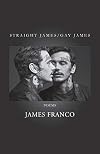
2016 Reading Challenge #15: A book written by a celebrity.
James Franco's negotiations with the publisher:
—I would like to publish my book.
—Can't do. It sucks.
—But I'm James Franco. I'm famous.
—Say no more, 10000 copies.
At least that's how I imagine it went. Because seriously, this is not good.
Straight James/Gay James it's like the diary of a teenager, a rich and oh-so-misunderstood teenager: really bad poetry and lots of egocentric meanderings. And that's after being edited.
Oh, well... show less
James Franco's negotiations with the publisher:
—I would like to publish my book.
—Can't do. It sucks.
—But I'm James Franco. I'm famous.
—Say no more, 10000 copies.
At least that's how I imagine it went. Because seriously, this is not good.
Straight James/Gay James it's like the diary of a teenager, a rich and oh-so-misunderstood teenager: really bad poetry and lots of egocentric meanderings. And that's after being edited.
"Thisshow more
is a poem about Lana Del Rey.
This is an essay about Lana Del Rey.
Lana has become my friend."
Oh, well... show less

Rating: 3.875* of five
The Book Report: Sixteen short stories about adolescent life in upper middle class America. The author hailing from there, he's written about Palo Alto, California. It could as easily be Cedar Park, Texas, or Rockville Centre, New York. The stories are very much in the vein of adolescence itself, working the same nerve in me as adolescents do: Getting drunk, getting high, hooking up, wondering if you're the only one, being ostracized, being Too Cool for School, show more realizing you're filled with rage but not knowing why or what you're raging against.
My Review: I hear people say their high school or college years were so great, so amazing, The Best Years of My Life, and I think, “What planet are YOU from?” I hated adolescence, and I still do. Clearasil and hormones and emotional devastation. Ugh, no thanks, I been there and feel lucky to have escaped at all, though certainly scathed.
So why read this collection of explicitly adolescence-themed stories? Because James Franco is an artist whose work I find really compelling. If you haven't watched 127 Hours, do. This man isn't just another pretty face, he's got what the Finns call sisu. (Google it, the explanation would take too much space in a short review.) The Academy Awards show he couldn't pull off, but movies yes, and writing yes.
His writing is very good. It's not tricky, or show-offy, or self-conscious. It's direct and it's clear and it's nuanced. He uses words the way cops use fingerprint powder, to show you the shape of his ideas without getting you all greasy with hand-sweat and forehead blood. Make no mistake, it's not easy getting words down to this level of fineness, it takes mental grinding and grinding and grinding until there isn't a lump or a clot or a chunk to be seen. Silky, smooth, sensually exciting as it flows past you to take coherent shape in front of you: Stories, people, goddamned annoying kids formed of smoke and ash and powder, living in flashes of lightning—your attention please, there is something interesting happening over here, and if we're lucky, this thirtysomething writer will give us more. Soon. show less
The Book Report: Sixteen short stories about adolescent life in upper middle class America. The author hailing from there, he's written about Palo Alto, California. It could as easily be Cedar Park, Texas, or Rockville Centre, New York. The stories are very much in the vein of adolescence itself, working the same nerve in me as adolescents do: Getting drunk, getting high, hooking up, wondering if you're the only one, being ostracized, being Too Cool for School, show more realizing you're filled with rage but not knowing why or what you're raging against.
My Review: I hear people say their high school or college years were so great, so amazing, The Best Years of My Life, and I think, “What planet are YOU from?” I hated adolescence, and I still do. Clearasil and hormones and emotional devastation. Ugh, no thanks, I been there and feel lucky to have escaped at all, though certainly scathed.
So why read this collection of explicitly adolescence-themed stories? Because James Franco is an artist whose work I find really compelling. If you haven't watched 127 Hours, do. This man isn't just another pretty face, he's got what the Finns call sisu. (Google it, the explanation would take too much space in a short review.) The Academy Awards show he couldn't pull off, but movies yes, and writing yes.
His writing is very good. It's not tricky, or show-offy, or self-conscious. It's direct and it's clear and it's nuanced. He uses words the way cops use fingerprint powder, to show you the shape of his ideas without getting you all greasy with hand-sweat and forehead blood. Make no mistake, it's not easy getting words down to this level of fineness, it takes mental grinding and grinding and grinding until there isn't a lump or a clot or a chunk to be seen. Silky, smooth, sensually exciting as it flows past you to take coherent shape in front of you: Stories, people, goddamned annoying kids formed of smoke and ash and powder, living in flashes of lightning—your attention please, there is something interesting happening over here, and if we're lucky, this thirtysomething writer will give us more. Soon. show less
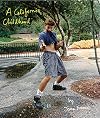
Rating: 3.9* of five
The Book Description: In A California Childhood Franco plays with the concept of memoir through personal snapshots, sketches, paintings, poems, and stories. "I was born in 1978 at Stanford Hospital and spent my first eighteen years in a single house at the end of a cul-de-sac in Palo Alto,” Franco writes in his introduction. Steve Jobs’s daughter and the grandson of one of the Hewlett-Packard founders may have both been in his graduating class, but just across the show more freeway from his home turf lay East Palo Alto, which in 1992 had the highest murder rate per capita in the country. For Franco, the terrain of his upbringing is fraught with the complication of a city divided. But within that diversity, universal aspects of adolescence rise to the surface, and those are the subjects at the heart of Franco’s work.
Ultimately this is a portrait of a childhood brightened by California sunshine, but with trouble awaiting in the shadows. At turns funny, dark, and emotional, the journey of this book delivers an undeniable immediacy. And at the end the reader is left wondering just where the line of Franco’s art ends and where his true life begins.
My Review: I reviewed Franco's debut collection of short stories, [Palo Alto], last year, and gave it some good props. I liked Franco's storytelling, and I liked the take he brought to being a kid in a place and at a time of great change.
Back we go to the same well, childhood in Palo Alto, for this more multimedia experience of being young and beautiful in Paradise. Photos, photos, gawd did this kid have photos taken of him! For this many to have made it past his own, his editor's, and the book designer's critical eyes, there must be heaps the size of minor Himalayas in boxes on his mom's garage floor. It's no surprise, I guess, since the aforementioned beauty is much in evidence.
So what does this memoir offer that a troll through the Googleverse doesn't? Gorgeous production values, for one, the Chinese have outdone themselves printing this book. The four-color images are lush to the point of humidity, and the black-and-whites are process printed, too. This wasn't a slapped-together job. Thought and care went into making these images ready for the page. The author's paintings are to one's taste or not, I'm on the lukewarm side, but they're very very well presented in design placement, separation, and printing. The choice to use endsheets printed with the author's journaling (his handwriting looks *exactly* like I'd expect it to) was wise, it sets a tone the rest of the book delivers on; the dustjacket is almost obscene it's so luxurious, let me just say Savonarola would reserve a special bonfire for it; but one of the nicest touches, and one most buyers won't ever pay attention to, is the printed, matte-coated casewrap. It's a detail from one of Franco's paintings. It's beautiful. The book qua book is sumptuous and delightful.
Part I is the photo-album-esque visual record of growing up slightly off in a world of identities that don't quite fit. Smiles and happy faces, brothers loved and mothers adored, fathers who look like movie stars, friends of a kid who is marked out in some weird way and so is more, better, extra. Notes and jottings from the middle-aged man that kid is now. (Yeah, 35 is middle age, sorry.) Flip through and sigh. Open up and study the random image you land on. What comes across? What, in this medium of optical illusion presenting the highly mediated imagery of a past you can't know, is your place in the text? Reader, viewer, voyeur, stalker.
But you have permission.
Then it gets personal in Part II. The stories that Franco writes are not stylistically adventurous, thank goodness, but they aren't wimpy-simpy Look Ma I'm A Writer bores. They're Sherwood Anderson-y pieces about people you know that you know. "Friend of the Devil" should resonate with the under-40s. I found it touching, and I remember it...but I would, I'm the old guy who remembers people on his block by the cars they drive. Makes others crazy. "Oh, the orange Rubicon guy." "She's the RAV4 in the ugly house."
They're stories, that is to say explicitly fiction. Part I, well, make up your own mind, and I suspect Franco is still making up his. Maybe about all of it. He's got depth, this man, and he's got smarts, and he's been educated.
But I still like him. I expect one day to run into him at the Strand, shopping for something in the biographies. If I can work up the nerve (beautiful men make me shaky), I'll fetch a copy of my soul-mate book (Islandia) and by it and thrust it into his basket. "Here," is probably about as eloquent as I'll manage to be. Then stump away before I make a fool of myself by blushing or having a stroke or something.
Then I can imagine Franco not throwing it away, taking it home, bumfuzzled by the weird old guy who dropped a book on him...opening it, browsing it, getting sucked in to its nineteenth-century pace and its gorgeously egalitarian Utopia...and thinking maybe old weird guys are just as young as they ever were, if they can love like this.
"I'd make the claim that this is fiction, but what isn't nowadays?" asks Franco in the Introduction.
Yes.
This work is licensed under a Creative Commons Attribution-NonCommercial-ShareAlike 3.0 Unported License. show less
The Book Description: In A California Childhood Franco plays with the concept of memoir through personal snapshots, sketches, paintings, poems, and stories. "I was born in 1978 at Stanford Hospital and spent my first eighteen years in a single house at the end of a cul-de-sac in Palo Alto,” Franco writes in his introduction. Steve Jobs’s daughter and the grandson of one of the Hewlett-Packard founders may have both been in his graduating class, but just across the show more freeway from his home turf lay East Palo Alto, which in 1992 had the highest murder rate per capita in the country. For Franco, the terrain of his upbringing is fraught with the complication of a city divided. But within that diversity, universal aspects of adolescence rise to the surface, and those are the subjects at the heart of Franco’s work.
Ultimately this is a portrait of a childhood brightened by California sunshine, but with trouble awaiting in the shadows. At turns funny, dark, and emotional, the journey of this book delivers an undeniable immediacy. And at the end the reader is left wondering just where the line of Franco’s art ends and where his true life begins.
My Review: I reviewed Franco's debut collection of short stories, [Palo Alto], last year, and gave it some good props. I liked Franco's storytelling, and I liked the take he brought to being a kid in a place and at a time of great change.
Back we go to the same well, childhood in Palo Alto, for this more multimedia experience of being young and beautiful in Paradise. Photos, photos, gawd did this kid have photos taken of him! For this many to have made it past his own, his editor's, and the book designer's critical eyes, there must be heaps the size of minor Himalayas in boxes on his mom's garage floor. It's no surprise, I guess, since the aforementioned beauty is much in evidence.
So what does this memoir offer that a troll through the Googleverse doesn't? Gorgeous production values, for one, the Chinese have outdone themselves printing this book. The four-color images are lush to the point of humidity, and the black-and-whites are process printed, too. This wasn't a slapped-together job. Thought and care went into making these images ready for the page. The author's paintings are to one's taste or not, I'm on the lukewarm side, but they're very very well presented in design placement, separation, and printing. The choice to use endsheets printed with the author's journaling (his handwriting looks *exactly* like I'd expect it to) was wise, it sets a tone the rest of the book delivers on; the dustjacket is almost obscene it's so luxurious, let me just say Savonarola would reserve a special bonfire for it; but one of the nicest touches, and one most buyers won't ever pay attention to, is the printed, matte-coated casewrap. It's a detail from one of Franco's paintings. It's beautiful. The book qua book is sumptuous and delightful.
Part I is the photo-album-esque visual record of growing up slightly off in a world of identities that don't quite fit. Smiles and happy faces, brothers loved and mothers adored, fathers who look like movie stars, friends of a kid who is marked out in some weird way and so is more, better, extra. Notes and jottings from the middle-aged man that kid is now. (Yeah, 35 is middle age, sorry.) Flip through and sigh. Open up and study the random image you land on. What comes across? What, in this medium of optical illusion presenting the highly mediated imagery of a past you can't know, is your place in the text? Reader, viewer, voyeur, stalker.
But you have permission.
Then it gets personal in Part II. The stories that Franco writes are not stylistically adventurous, thank goodness, but they aren't wimpy-simpy Look Ma I'm A Writer bores. They're Sherwood Anderson-y pieces about people you know that you know. "Friend of the Devil" should resonate with the under-40s. I found it touching, and I remember it...but I would, I'm the old guy who remembers people on his block by the cars they drive. Makes others crazy. "Oh, the orange Rubicon guy." "She's the RAV4 in the ugly house."
They're stories, that is to say explicitly fiction. Part I, well, make up your own mind, and I suspect Franco is still making up his. Maybe about all of it. He's got depth, this man, and he's got smarts, and he's been educated.
But I still like him. I expect one day to run into him at the Strand, shopping for something in the biographies. If I can work up the nerve (beautiful men make me shaky), I'll fetch a copy of my soul-mate book (Islandia) and by it and thrust it into his basket. "Here," is probably about as eloquent as I'll manage to be. Then stump away before I make a fool of myself by blushing or having a stroke or something.
Then I can imagine Franco not throwing it away, taking it home, bumfuzzled by the weird old guy who dropped a book on him...opening it, browsing it, getting sucked in to its nineteenth-century pace and its gorgeously egalitarian Utopia...and thinking maybe old weird guys are just as young as they ever were, if they can love like this.
"I'd make the claim that this is fiction, but what isn't nowadays?" asks Franco in the Introduction.
Yes.
This work is licensed under a Creative Commons Attribution-NonCommercial-ShareAlike 3.0 Unported License. show less
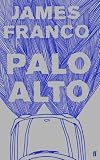
James Franco is one of those super-multi-talented people that makes you feel bad because you haven't acheived anything in life and in comparison to him, never will. He's a famous actor, having played the bad boy on Freaks and Geeks and most recently seen on the big screen cutting his arm off in 127 hours and being Allen Ginsberg in Howl. He's a painter, he's ridiculously attractive and he's got a masters degree. Wotta man. But don’t let that put you off reading his book. As part of the show more aforementioned degree, Franco wrote a series of short stories meditating on the lives of teenagers in the American town of Palo Alto. And so Palo Alto the book came about. It’s really very easy to read, with the simplicity of the writing reflecting the naivety of most of the characters. It is about bad kids struggling to be good, or maybe it is about good kids struggling to be bad. It is about the things kids get up to in a small town, like drinking and smoking and making friends and going to parties and more drinking and making a move on that guy/girl you like and getting into trouble with the cops or school or your parents and generally trying not to be a weirdo that everybody hates. I enjoyed every story in the book, despite the recklessness , but some of the plots or events in different stories were very similar. People get run over by cars on multiple occasions. Which leads me to conclude that Franco ran over someone with a car once and is pretty hung up about it. But that’s okay because it makes for some interesting reading. show less
Lists
Awards

You May Also Like


Associated Authors
Statistics
- Works
- 38
- Also by
- 51
- Members
- 787
- Popularity
- #32,340
- Rating
- 3.5
- Reviews
- 36
- ISBNs
- 67
- Languages
- 5
- Favorited
- 1