

Robert J. Harris
Author of Girl in a Cage
About the Author
Disambiguation Notice:
2) Harris, Robert J. 1955- Leonardo and the Death Machine
Image credit: via Fantasticfiction.com
Series
Works by Robert J. Harris
Associated Works
Bruce Coville's Book of Spine Tinglers II: More Tales to Make You Shiver (1997) — Contributor — 54 copies
Tagged
Common Knowledge
- Birthdate
- 1955
- Gender
- male
- Short biography
- Robert J. Harris (Bob) is a Scottish academic and author of children's fantasies and historical novels, best known for his collaborations with Jane Yolen. He also designed the fantasy board game Talisman.
- Nationality
- Scotland
- Map Location
- UK
- Disambiguation notice
- 2) Harris, Robert J. 1955- Leonardo and the Death Machine
Members
Discussions
Found: Book showing Theseus as a child in Name that Book (November 2023)
Reviews

A young tumbler, Nicola, catches the eye of Mary, Queen of Scots, while performing at Court. Mary prizes the girl's wit and willingness to state the truth as she sees it rather than fawning as courtiers do, so she offers her a place in court as her fool. Nicola accepts and proves her loyalty to the queen through hard times as Mary is sent to Scotland and attempts to rule her headstrong people while succumbing to her imprudent heart.
The Queen's Own Fool is a very human look at Mary, Queen of show more Scots. It depicts the queen as a strong woman who allows her heart to rule her. She and Nicola mature together as they are exposed to death and intrigues. Although Mary is a sympathetic, lovable character, her relationship with Nicola has realistic ups and downs. The queen, despite her wish that Nicola always speak the truth, will hear nothing against her rash and selfish young husband. And although Nicola and Mary share a deep friendship, both are aware of the differences in station that preclude complete intimacy.
I enjoyed this, but I wish the history and politics, especially the Bothwell part, had been explained and explored a bit more. It often seemed like Yolen expected her readers to be familiar with the basic history of the period. show less
The Queen's Own Fool is a very human look at Mary, Queen of show more Scots. It depicts the queen as a strong woman who allows her heart to rule her. She and Nicola mature together as they are exposed to death and intrigues. Although Mary is a sympathetic, lovable character, her relationship with Nicola has realistic ups and downs. The queen, despite her wish that Nicola always speak the truth, will hear nothing against her rash and selfish young husband. And although Nicola and Mary share a deep friendship, both are aware of the differences in station that preclude complete intimacy.
I enjoyed this, but I wish the history and politics, especially the Bothwell part, had been explained and explored a bit more. It often seemed like Yolen expected her readers to be familiar with the basic history of the period. show less
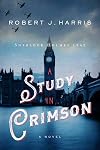
Sherlock Holmes is the type of character who works well in any setting. The Victorian original will always be my favorite, but if you’re looking for a runner-up, you could do worse than World War II.
Robert J. Harris grew up on such adaptations. As he explains in the preface to his new book A Study in Crimson: Sherlock Holmes 1942, he’s following in the footsteps of a classic series of films that began by pitting “Holmes against Nazi saboteurs.” That premise is hard to resist on its show more own. But by setting his story in Blitz-era London, Harris also gets to show us the city on a wartime footing, with blackouts enforced at night to shroud the metropolis from German bombers, “tethered barrage balloons” floating in the air to intercept combustibles that were launched anyway, and buildings buttressed with sandbags while their “windows were taped over to secure them against the concussion of any nearby explosions.”
This period is also, as Inspector Lestrade—Holmes and Watson’s liaison to Scotland Yard—notes at one point, “booming times for crime.” “Yes,” Holmes agrees, “the shortages and deprivation lead to a thriving black market in all manner of goods … and with the blackout criminals can move virtually unseen.”
What a fabulous context for a new case. Yet instead of taking full advantage of the compelling circumstances he chose, Harris doubles back to the 1880s and resurrects the “bloodthirsty spectre of” Jack the Ripper, “returned to haunt” London in its “darkest hour.”
Not in the flesh. This isn’t the actual Whitechapel Murderer—just a copycat killing women in the same gruesome ways on the same calendar dates. But it’s still an odd contortion to fully transport Holmes and Watson (along with supporting characters like Lestrade and Mrs. Hudson) to the 1940s only to concern them with an echo of their primordial past. Yes, it’s a new spin on an old story; Sir Arthur Conan Doyle never had Holmes confront the Ripper. Matching the great detective against the great butcher—even if only by proxy—amidst the chaos of World War II also allows for some new wrinkles relating to espionage, technological advances, etc. That said, I think I would have preferred a story more grounded in the issues of the day.
I still enjoyed myself, though. The book moves at a brisk pace, and jumping forward a half-century updates Holmes and Watson’s backstories in interesting ways. (In this version, they both served during World War I, Watson as a doctor-soldier and Holmes as an intelligence agent, an experience that honed his abilities as a “master of disguise.”) And it’s difficult not to be drawn in by some theorizing about the Ripper’s identity, both that of the real villain and his imitator. The game, as Harris says in his preface, “is once more afoot”—and in fine fashion.
(For more reviews like this one, see www.nickwisseman.com) show less
Robert J. Harris grew up on such adaptations. As he explains in the preface to his new book A Study in Crimson: Sherlock Holmes 1942, he’s following in the footsteps of a classic series of films that began by pitting “Holmes against Nazi saboteurs.” That premise is hard to resist on its show more own. But by setting his story in Blitz-era London, Harris also gets to show us the city on a wartime footing, with blackouts enforced at night to shroud the metropolis from German bombers, “tethered barrage balloons” floating in the air to intercept combustibles that were launched anyway, and buildings buttressed with sandbags while their “windows were taped over to secure them against the concussion of any nearby explosions.”
This period is also, as Inspector Lestrade—Holmes and Watson’s liaison to Scotland Yard—notes at one point, “booming times for crime.” “Yes,” Holmes agrees, “the shortages and deprivation lead to a thriving black market in all manner of goods … and with the blackout criminals can move virtually unseen.”
What a fabulous context for a new case. Yet instead of taking full advantage of the compelling circumstances he chose, Harris doubles back to the 1880s and resurrects the “bloodthirsty spectre of” Jack the Ripper, “returned to haunt” London in its “darkest hour.”
Not in the flesh. This isn’t the actual Whitechapel Murderer—just a copycat killing women in the same gruesome ways on the same calendar dates. But it’s still an odd contortion to fully transport Holmes and Watson (along with supporting characters like Lestrade and Mrs. Hudson) to the 1940s only to concern them with an echo of their primordial past. Yes, it’s a new spin on an old story; Sir Arthur Conan Doyle never had Holmes confront the Ripper. Matching the great detective against the great butcher—even if only by proxy—amidst the chaos of World War II also allows for some new wrinkles relating to espionage, technological advances, etc. That said, I think I would have preferred a story more grounded in the issues of the day.
I still enjoyed myself, though. The book moves at a brisk pace, and jumping forward a half-century updates Holmes and Watson’s backstories in interesting ways. (In this version, they both served during World War I, Watson as a doctor-soldier and Holmes as an intelligence agent, an experience that honed his abilities as a “master of disguise.”) And it’s difficult not to be drawn in by some theorizing about the Ripper’s identity, both that of the real villain and his imitator. The game, as Harris says in his preface, “is once more afoot”—and in fine fashion.
(For more reviews like this one, see www.nickwisseman.com) show less
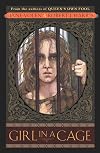
I read this because I was visiting Scotland and wanted a YA historical fiction to read while I was there. I wasn't disappointed from that angle, though I'm not sure this is a book I'd give to most kids. Medieval historical fiction isn't popular among my students, and Marjorie does feel 11th century. (As opposed to, say, Catherine of [b:Catherine, Called Birdy|24137|Catherine, Called Birdy|Karen Cushman|https://images.gr-assets.com/books/1167520363s/24137.jpg|25037], whose voice has a more show more contemporary feel.) It helped me get a vague handle on Scottish/English royal history, though! show less
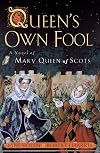
“Queen’s Own Fool” is Nicola, who is given the nickname ‘La Jardiniere’. La Jardinaiere was real, although we know almost nothing about her. Yolan and Harris have used her as a lens to view the life of Mary Stuart, the Queen of France and of Scotland.
Mary, at the time Queen of France, buys orphaned Nicola from her uncle’s entertainment troop when she is a girl. Nicola is witty and, more important, honest. Mary values honesty above all- she hears so little of it at court- and show more relies on Nicola to remind her that she, despite being Queen, is mortal like her subjects. The novel takes us through the death of the young King of France and Mary’s decision to live in Scotland, so she can rule rather than being an extraneous female for her uncles to marry off to further their political aims. This turns out to be a bad decision; Scotland is full of internal strife between Catholics (which Mary is one of) and the Protestant rebels. She walks into this situation fairly blindly and makes her situation worse by marrying pretty boy Lord Darnley. No one likes Darnley; he’s ambitious politically but mannerless, forces himself on serving women, cares nothing for the people of Scotland, and rather reminds me of Donald Trump. Mary is helpless as rebels take over the country.
I’ve never much cared for Mary Stuart; she always struck me as fairly witless and ruled by her heart rather than attempting good governance - not good traits in a queen. Seeing her through Nicola’s eyes, though, I could see other sides to Mary; she was kind and smart (in book learning, at least). She was a woman in the wrong place at the wrong time; a pawn of first her uncles, then the rebels, then prisoner of her cousin Elizabeth I of England. Other than her years at the court of France, she led a pretty sad life. Nicola’s version of Mary made me sympathetic to her as a woman who cared deeply for her friends and her people.
Nicola herself is witty, brave, and fast thinking. She acts as Mary’s eyes and ears when Mary is held prisoner and helps her out of several scrapes. Nicola is almost too good to be true, but I enjoyed her and think she makes a great heroine for the YA crowd for which this book was written. This was a fast, couldn’t put it down read for me. While I knew there could be no happy ending for Queen Mary, I couldn’t help but be rooting for her and being tense over a lot of the scenes, hoping for the best. Great book. show less
Mary, at the time Queen of France, buys orphaned Nicola from her uncle’s entertainment troop when she is a girl. Nicola is witty and, more important, honest. Mary values honesty above all- she hears so little of it at court- and show more relies on Nicola to remind her that she, despite being Queen, is mortal like her subjects. The novel takes us through the death of the young King of France and Mary’s decision to live in Scotland, so she can rule rather than being an extraneous female for her uncles to marry off to further their political aims. This turns out to be a bad decision; Scotland is full of internal strife between Catholics (which Mary is one of) and the Protestant rebels. She walks into this situation fairly blindly and makes her situation worse by marrying pretty boy Lord Darnley. No one likes Darnley; he’s ambitious politically but mannerless, forces himself on serving women, cares nothing for the people of Scotland, and rather reminds me of Donald Trump. Mary is helpless as rebels take over the country.
I’ve never much cared for Mary Stuart; she always struck me as fairly witless and ruled by her heart rather than attempting good governance - not good traits in a queen. Seeing her through Nicola’s eyes, though, I could see other sides to Mary; she was kind and smart (in book learning, at least). She was a woman in the wrong place at the wrong time; a pawn of first her uncles, then the rebels, then prisoner of her cousin Elizabeth I of England. Other than her years at the court of France, she led a pretty sad life. Nicola’s version of Mary made me sympathetic to her as a woman who cared deeply for her friends and her people.
Nicola herself is witty, brave, and fast thinking. She acts as Mary’s eyes and ears when Mary is held prisoner and helps her out of several scrapes. Nicola is almost too good to be true, but I enjoyed her and think she makes a great heroine for the YA crowd for which this book was written. This was a fast, couldn’t put it down read for me. While I knew there could be no happy ending for Queen Mary, I couldn’t help but be rooting for her and being tense over a lot of the scenes, hoping for the best. Great book. show less
Lists
Awards


You May Also Like


Associated Authors
Statistics
- Works
- 26
- Also by
- 8
- Members
- 2,538
- Popularity
- #10,117
- Rating
- 3.6
- Reviews
- 50
- ISBNs
- 109
- Languages
- 4