
Tim Westover
Author of Auraria
Works by Tim Westover
Beletra Almanako 6 (BA6 - Literaturo en Esperanto) (Esperanto Edition) (2009) — Contributor — 6 copies, 1 review
Tagged
Common Knowledge
- Canonical name
- Westover, Tim
- Other names
- WESTOVER, Tim
- Birthdate
- 1982-05-24
- Gender
- male
- Short biography
- http://eo.wikipedia.org/wiki/Tim_West...
- Nationality
- USA
- Associated Place (for map)
- USA
Members
Reviews
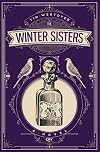
This is a book that grabs you from the very first paragraph. It begins with a doctor moving to a rural area of Georgia where they are desparate for him to settle. There are tales of a panther roaming the woods and people are showing signs of rabies. Dr. Waycross arrives but he finds it’s not what he expected in so many ways.
The town had been relying on a family of sisters for their healing, the Winter Sisters, but the Preacher in town feels they are witches and so has used the power of his show more pulpit to scare them out of town. That does not stop people from seeking them out. This goes against the scientific training of Dr. Waycross but he is surprised when he finally meets them and finds them not to be stoop shouldered old women but rather attractive young women.
The two sides must come together when the sweetest member of the commutity falls ill. As they race to cure her they will need to fight superstition, the Preacher and whatever it is that ails her. Also, the good Dr. Waycross has discovered the effects of ether and he turns to it much like today’s addicts turn to heroin. It’s impacting his stability.
As I noted, I was drawn in by the writing from the very first paragraph. Mr. Westover’s writing style is pure magic; it creates the world of rural Georgia where you might just see a panther in the woods. The words flow in such a lyrical way you will find it very hard to put the book down until you turn the last page and once you do you will feel disoriented as you readjust to the real world. The characters are quirky and yet very believable until they are not. The world of the Winter Sisters is one that I was glad I visited. show less
The town had been relying on a family of sisters for their healing, the Winter Sisters, but the Preacher in town feels they are witches and so has used the power of his show more pulpit to scare them out of town. That does not stop people from seeking them out. This goes against the scientific training of Dr. Waycross but he is surprised when he finally meets them and finds them not to be stoop shouldered old women but rather attractive young women.
The two sides must come together when the sweetest member of the commutity falls ill. As they race to cure her they will need to fight superstition, the Preacher and whatever it is that ails her. Also, the good Dr. Waycross has discovered the effects of ether and he turns to it much like today’s addicts turn to heroin. It’s impacting his stability.
As I noted, I was drawn in by the writing from the very first paragraph. Mr. Westover’s writing style is pure magic; it creates the world of rural Georgia where you might just see a panther in the woods. The words flow in such a lyrical way you will find it very hard to put the book down until you turn the last page and once you do you will feel disoriented as you readjust to the real world. The characters are quirky and yet very believable until they are not. The world of the Winter Sisters is one that I was glad I visited. show less

I requested this book from LibraryThing's Early Reviewer program because the description, of a place in Georgia where supernatural creatures abound, intrigued me. I was excited to learn that I had won it. When I got the book, however, I saw on the back cover that it had been compared to Alice in Wonderland and I was much less enthused. I really, really did not like Alice or Through the Looking Glass (please don't stone me!). Fortunately, though, I really did like this book.
I identified show more heavily with Holtzclaw, who is charged by his increasingly distracted employer to purchase land in Auraria and then build upon it a grand hotel. As the wondrous happenings kept piling up, Holtzclaw tended to take them in stride and respond respectfully and pleasantly, without freaking out or disbelieving as a lot of fantasy protagonists who are not originally from the outlandish place they find themselves. I found it amusing that Holtzclaw had more trouble with the supposedly "regular" people: contractors, out-of-town guests, etc, than he did with the ghosts, giant turtle, eccentric townspeople, and baa-ing fruits.
The writing was descriptive and captivating, I hardly wanted to put it down. Apparently, this is the author's first novel in English, but you wouldn't be able to tell.
One small nit-pick: as I was reading, I dismissed many typographical, spelling and grammar errors thinking this was an ARC. Turns out it isn't. Uh-oh.
On the whole a very entertaining and rewarding book. You could even read it with/to your kids; although it isn't written expressly for children, there wasn't a single bit of objectionable content. It's probably less racy than the Wonderland books, but with a much more intriguing plotline. I kind of wish I could relocate to Auraria myself. It seems there would never be a dull moment! show less
I identified show more heavily with Holtzclaw, who is charged by his increasingly distracted employer to purchase land in Auraria and then build upon it a grand hotel. As the wondrous happenings kept piling up, Holtzclaw tended to take them in stride and respond respectfully and pleasantly, without freaking out or disbelieving as a lot of fantasy protagonists who are not originally from the outlandish place they find themselves. I found it amusing that Holtzclaw had more trouble with the supposedly "regular" people: contractors, out-of-town guests, etc, than he did with the ghosts, giant turtle, eccentric townspeople, and baa-ing fruits.
The writing was descriptive and captivating, I hardly wanted to put it down. Apparently, this is the author's first novel in English, but you wouldn't be able to tell.
One small nit-pick: as I was reading, I dismissed many typographical, spelling and grammar errors thinking this was an ARC. Turns out it isn't. Uh-oh.
On the whole a very entertaining and rewarding book. You could even read it with/to your kids; although it isn't written expressly for children, there wasn't a single bit of objectionable content. It's probably less racy than the Wonderland books, but with a much more intriguing plotline. I kind of wish I could relocate to Auraria myself. It seems there would never be a dull moment! show less
 This review was written for LibraryThing Early Reviewers.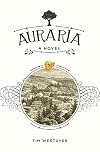
English teachers say that "most unique" is not proper English, which is a pity, because this is the most unique fantasy I have read in a long time. Perhaps I should say it is unusually excellent and excellently unusual. It owes almost nothing to conventional sword and sorcery fantasy, and though set in the Georgia mountains amid adaptations of real Georgia places (carefully explained in the "Note on Sources" at the end), it is not even very like other adaptations of Southern Appalachian show more folklore to fantasy fiction (such as Manly Wade Wellman's Silver John stories). It begins with a quintessential American activity (though one rarely used in fantasy) --a very conventional young man named Holtzclaw is going around buying up land in a very small Georgia town on behalf of a mysterious entrepreneur named Shadburn --just as the Marcellus shale operators are buying land in my little West Virginia town right now. But the town where Holtzclaw is operating is a former gold-mining town (Auraria) which is now a ghost town, and many of the inhabitants with whom Holtzclaw must negotiate are actually ghosts, from Mr.Bad Thing who plays the piano at the local restaurant (guests think it's a player piano, but it's not), to a sweet little girl named Emily who feeds Holtzclaw on wild mushrooms (one of which killed her long ago). There are other creatures who are odder than ghosts, like the Great and Harmless and Invincible Terrapin whose memories go back to the creation of that country, and the rabbit-eared moon maidens who wash gold from their fur into the local streams. (These last are not landowners but visitors, customers of the local Rain Princess Trahlyta.) After Holtzclaw somewhat unexpectedly succeeds in buying up the town property, it turns out that Shadburn (who grew up in Auraria) plans to build a dam and create a lake which will drown the source of the gold --he feels the local inhabitants' infatuation with gold is unhealthy. The dam is duly built and the town duly
drowned (like those under many TVA projects), with all the inhabitants moved to higher ground. There Shadburn builds a pretentious resort hotel , The Queen of the Mountains, managed rather ineptly by Holtzclaw, aided by Abigail (the lively and practical proprieter of the restaurant) and distracted by Lizzie Rathbun, a vamp and con artist who lures him into a scheme to run a glamorous lake boat which never truly gets finished. (Spoiler Warning) The climax of Holtzclaw's efforts at the hotel is a splendid society gala which dissolves into chaos when the guests riot to protest the performance of a singing tree instead of the expected human star. Meanwhile rains have brought on a flood; the lake boat is caught on the dam and dynamited by Holtzclaw under Lizzie's instructions (so she can collect the insurance). This destroys the dam, the lake is drained, the old town reappears, and Holtzclaw, after an unsatisfying brief return to the normality of Milledgeville (where he rejects Lizzie, now living well on the insurance money), returns to settle in Auraria with Abigail, and apparently lives happily ever after-- much more of a eucatastrophe than I actually expected. The beginning of this story is a marvellous exploration of the town's extraordinary inhabitants. The middle sequence with the dam and hotel sometimes has a bitter flavor, but the end is surprisingly satisfying. Apparently Tim Westover's only other work was a highly regarded collection of stories written in Esperanto. It might be worth learning Esperanto to read it. show less
drowned (like those under many TVA projects), with all the inhabitants moved to higher ground. There Shadburn builds a pretentious resort hotel , The Queen of the Mountains, managed rather ineptly by Holtzclaw, aided by Abigail (the lively and practical proprieter of the restaurant) and distracted by Lizzie Rathbun, a vamp and con artist who lures him into a scheme to run a glamorous lake boat which never truly gets finished. (Spoiler Warning) The climax of Holtzclaw's efforts at the hotel is a splendid society gala which dissolves into chaos when the guests riot to protest the performance of a singing tree instead of the expected human star. Meanwhile rains have brought on a flood; the lake boat is caught on the dam and dynamited by Holtzclaw under Lizzie's instructions (so she can collect the insurance). This destroys the dam, the lake is drained, the old town reappears, and Holtzclaw, after an unsatisfying brief return to the normality of Milledgeville (where he rejects Lizzie, now living well on the insurance money), returns to settle in Auraria with Abigail, and apparently lives happily ever after-- much more of a eucatastrophe than I actually expected. The beginning of this story is a marvellous exploration of the town's extraordinary inhabitants. The middle sequence with the dam and hotel sometimes has a bitter flavor, but the end is surprisingly satisfying. Apparently Tim Westover's only other work was a highly regarded collection of stories written in Esperanto. It might be worth learning Esperanto to read it. show less
This review was written for LibraryThing Early Reviewers.‘Auraria’ is a fantasy story set in a real town and based on many of the local folklore and superstitions. Auraria, Georgia had a very brief gold rush in the mid-1800s; then most of the people left again. But some hung on, running pharmacies and bars and hotels. They farmed and were turkey drovers and, no matter what their regular work was, most of them sought gold. Holtzclaw has been sent there by his employer, Shadburn, a land developer who, it turns out, grew up in Auraria, although show more Holtzclaw is not aware of this fact at first. Holtzclaw, it turns out, does not know a lot of things about his employer or the town of Auraria when he first gets there.
Sent to procure certain parcels of land from the locals, Holtzclaw finds things to be not quite normal from the minute he sets foot in Auraria. A boy fishes in mist rather than water. A watery princess appears and disappears. A phantom piano player amuses the patrons of a tavern. There is a singing tree, and a giant tortoise that talks. The townspeople regard this all as perfectly normal, rather like dwellers in Charles de Lint’s Newford regard fairies in the city, and so Holtzclaw does, too. That’s part of what I love about the story: that the supernatural is so accepted and normal in this place, and that a newcomer can do so, too. There are multiple plots taking place during the story; a lot of different people have plans of their own about Shadburn’s development, which involves building a damn and turning the valley into a lake.
It’s a tale of human greed and folly, and blindness to what is real and beautiful. It’s beautifully written; I wouldn’t change a single word. Despite the plot of land developer despoiling nature, the book is not a simplistic tale of evil greed vs nature & good folks; it’s more complicated than that, as life tends to be. The book has been compared to “Through the Looking Glass”, but I disagree. While fantastic things happen, it all hangs together with internal logic in a way that Carroll’s work doesn’t. I was sorry when I came to the end of this story. show less
Sent to procure certain parcels of land from the locals, Holtzclaw finds things to be not quite normal from the minute he sets foot in Auraria. A boy fishes in mist rather than water. A watery princess appears and disappears. A phantom piano player amuses the patrons of a tavern. There is a singing tree, and a giant tortoise that talks. The townspeople regard this all as perfectly normal, rather like dwellers in Charles de Lint’s Newford regard fairies in the city, and so Holtzclaw does, too. That’s part of what I love about the story: that the supernatural is so accepted and normal in this place, and that a newcomer can do so, too. There are multiple plots taking place during the story; a lot of different people have plans of their own about Shadburn’s development, which involves building a damn and turning the valley into a lake.
It’s a tale of human greed and folly, and blindness to what is real and beautiful. It’s beautifully written; I wouldn’t change a single word. Despite the plot of land developer despoiling nature, the book is not a simplistic tale of evil greed vs nature & good folks; it’s more complicated than that, as life tends to be. The book has been compared to “Through the Looking Glass”, but I disagree. While fantastic things happen, it all hangs together with internal logic in a way that Carroll’s work doesn’t. I was sorry when I came to the end of this story. show less
This review was written for LibraryThing Early Reviewers.Lists
Awards


You May Also Like


Associated Authors
Statistics
- Works
- 6
- Members
- 245
- Popularity
- #92,909
- Rating
- 3.8
- Reviews
- 30
- ISBNs
- 9
- Languages
- 1
- Favorited
- 1

