
Russ Kick (1969–2021)
Author of Everything You Know Is Wrong: The Disinformation Guide to Secrets and Lies
About the Author
Russ Kick is the editor of the three-volume anthology The Graphic Canon and the bestselling anthologies You Are Being Lied To, Everything You Know is Wrong, 50 Things You're Not Supposed to Know and Death Poems: Classic, Contemporary, Witty, Serious, Tear-Jerking, Wise, Profound, Angry, Funny, show more Spiritual, Atheistic, Uncertain, Personal, Political, Mythic, Earthy, and Only Occasionally Morbid. He is also the creator of the popular website www.thememoryhole.com. (Bowker Author Biography) show less
Image credit: NY Times
Series
Works by Russ Kick
Everything You Know Is Wrong: The Disinformation Guide to Secrets and Lies (2002) — Editor — 1,026 copies, 6 reviews
You Are Being Lied To: The Disinformation Guide to Media Distortion, Historical Whitewashes, and Cultural Myths (2001) — Editor; Contributor, some editions — 739 copies, 4 reviews
Everything You Know About God Is Wrong: The Disinformation Guide to Religion (2007) — Editor — 324 copies, 6 reviews
The Graphic Canon, Vol. 1: From the Epic of Gilgamesh to Shakespeare to Dangerous Liaisons (2012) — Editor — 307 copies, 7 reviews
Book of lists : subversive facts and hidden information in rapid-fire format (2004) 295 copies, 6 reviews
Everything You Know About Sex Is Wrong: The Disinformation Guide to the Extremes of Human Sexuality (and everything in between) (Disinformation Guides) (2005) 216 copies, 1 review
The Graphic Canon, Vol. 2: From "Kubla Khan" to the Brontë Sisters to The Picture of Dorian Gray (2012) — Editor — 213 copies, 2 reviews
Abuse Your Illusions: The Disinformation Guide To Media Mirages And Establishment Lies (2003) 207 copies
The Graphic Canon, Vol. 3: From Heart of Darkness to Hemingway to Infinite Jest (2013) — Editor — 162 copies, 1 review
The Graphic Canon of Children's Literature: The World's Greatest Kids' Lit as Comics and Visuals (2014) — Editor — 101 copies, 1 review
You Are STILL Being Lied To: The NEW Disinformation Guide to Media Distortion, Historical Whitewashes, and Cultural Myths (2009) — Editor — 68 copies, 1 review
Death Poems: Classic, Contemporary, Witty, Serious, Tear-Jerking, Wise, Profound, Angry, Funny, Spiritual, Atheistic, Uncertain, Personal, Political, Mythic, Earthy, and Only… (2013) 38 copies, 1 review
The Graphic Canon of Crime & Mystery, Vol. 1: From Sherlock Holmes to A Clockwork Orange to Jo Nesbø (2017) — Editor — 38 copies, 2 reviews
The Graphic Canon of Crime & Mystery, Vol. 2: From Salome to Edgar Allan Poe to The Silence of the Lambs (2021) — Editor — 14 copies
Associated Works
Gauntlet: Exploring the Limits of Free Expression, No. 7 - In Defense of Prostitution (1994) — Contributor — 16 copies
Gauntlet: Exploring the Limits of Free Expression, No. 6 - Black Racism (1993) — Contributor — 8 copies
Gauntlet: Exploring the Limits of Free Expression, No. 8 - Cults: Playing God (1994) — Contributor — 3 copies
Gauntlet: Exploring the Limits of Free Expression, No. 11 - Howard Stern! (1996) — Contributor — 1 copy
Tagged
Common Knowledge
- Canonical name
- Kick, Russ
- Legal name
- Kick, Russell Charles, III
- Birthdate
- 1969-07-20
- Date of death
- 2021-09-12
- Gender
- male
- Education
- Tennessee Technological University (Bx | Psychology)
Vanderbilt University
Nashville State Technical Institute - Occupations
- editor
writer
publisher
anthologist
archivist - Organizations
- Disinformation Company (editor)
The Memory Hole - Nationality
- USA
- Birthplace
- Tuscaloosa, Alabama, USA
- Place of death
- Tucson, Arizona, USA
- Associated Place (for map)
- USA
Members
Reviews
The Graphic Canon, Vol. 1: From the Epic of Gilgamesh to Shakespeare to Dangerous Liaisons (The Graphic Canon Series) by Russ Kick
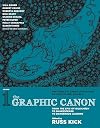
Admittedly, this was not a cover-to-cover read, but a pretty thorough dip into an extraordinary, comprehensive compilation of great works of literature. I was pleased to see it is not confined to the typical "Western" collection so many of us were schooled in until the later decades of the 20th century. I was impressed both with the commentary -- insightful and incisive, and the varied and visionary art that represented each work. Some styles were not to my liking or what I would have show more chosen, but they still ( in most cases) did homage to the original material. I thought 95% of it came across as a labor of love. The Canon was both a memory-jogger of works I'd read and an invitation to read those I hadn't. Either way, it propelled me to turn to literature. Some standouts in my opinion: "Coyote and the Pebbles," "Poems" by Rumi, (both to my point of inclusiveness) "Canterbury Tales"- Wife of Bath!, and Shakespeare's "Sonnet 18." Yes, the entire thing is only excerpts, but as such, is a great appetizer for the works themselves. I marvel at how the works, then the excerpts, then the medium was chosen for each. Definitely not for kids -- but maybe an apt gift for the potential English or Classics major. show less
At times reaffirming, at other times informative and at still other times, questionable. 100 Things You're Not Supposed to Know is filled with information. Some of it I was aware of and knew to be true, other stuff I looked up to confirm and other stuff just bumped this from a higher rating to a lower because now I am more deeply questioning anything I haven't looked up yet.
There's the false assumption that if some states something as "fact" and backs it with some kind of citation that show more challenges a long-held belief, the long-held belief was wrong. But it doesn't work that way - it only works that way if the evidence strongly supports the repositioning of a belief. So, the lost nuclear warheads - it's been officially documented and there's no reason to not believe that since it's something the U.S. Government wouldn't benefit from saying. Other things like old laws still on the books are verifiable, just maybe not common knowledge. And still others have been shown to be true long after the publication of this book, giving Kick some good proof of his research.
However, quoting Dr. Mercola, the anti-vaccine proponent for a piece about how sunscreen causes cancer made me raise an eyebrow. Having researched Mercola and written an article about him, I don't find him as a dependable source. I do find him as an opportunist though, and it was disappointing to see Kick give him ink. It did have the silver lining of shaking me out of the mental complacency I mentioned earlier - believing something just because it's "authoritative" and contrary.
There's interesting information here and a lot if not most is true and accurate (and depressing) but I don't have faith that it's all true, so read with open eyes. show less
There's the false assumption that if some states something as "fact" and backs it with some kind of citation that show more challenges a long-held belief, the long-held belief was wrong. But it doesn't work that way - it only works that way if the evidence strongly supports the repositioning of a belief. So, the lost nuclear warheads - it's been officially documented and there's no reason to not believe that since it's something the U.S. Government wouldn't benefit from saying. Other things like old laws still on the books are verifiable, just maybe not common knowledge. And still others have been shown to be true long after the publication of this book, giving Kick some good proof of his research.
However, quoting Dr. Mercola, the anti-vaccine proponent for a piece about how sunscreen causes cancer made me raise an eyebrow. Having researched Mercola and written an article about him, I don't find him as a dependable source. I do find him as an opportunist though, and it was disappointing to see Kick give him ink. It did have the silver lining of shaking me out of the mental complacency I mentioned earlier - believing something just because it's "authoritative" and contrary.
There's interesting information here and a lot if not most is true and accurate (and depressing) but I don't have faith that it's all true, so read with open eyes. show less
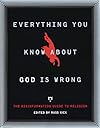
The editor of this book started with a simple premise: what you know about god, faith, your religion, the Bible-all that is dead wrong. And in some ways, this compilation did a good job illustrating that. He collected various writings to explain all the reasons why religion is a bit screwy, though I don't think he is successful at showing that belief in god is screwy. I think he does a better job of showing that blind acceptance of religious precepts and blind dismissal of other ideas is show more foolish because it makes no logical sense to think your ideas are any better than someone else's. This might be a better way of showing why religious tolerance is important. show less
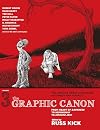
I read the third installment of this interesting graphic project with more interest than the previous one, which I never finished, and not as much as the first. (Nineteenth century literature just doesn't really do it for me*). I am a child of the late twentieth century so many of the adapted books in this one were familiar to me. The quality varied. The most successful adaptations actually tried to present (or represent) the works in comic form: words and sequential pictures. The least show more successful were single, obscure images which contained very little meaning in the absence of the work they were supposedly derived from (or in some cases, even if I knew the work). Unfortunately there were quite a few of this type. They allowed for more pages and more works to be covered, but there was a cost. In these cases the editorial was more verbose and informative than the artwork; I found the editorial explaining both story and artwork. Fail! The worst was a poem rendered in 'radical' (ie. not readable) typography and no image at all. There were no comics which completely amazed me and a few whose style annoyed me (always a risk with anthologies). My favourites were ones which told a story: Ernest Hemingway's 'Living on $1000 a year in Paris' (Steve Rolston) and 'A Matter of Colour' (Dan Duncan), and H. G. Wells' ' The New Accelerator' (Cole Johnson). An OK collection, but the obscure single-image adaptations made chunks of it come across as an illustrated '1000 books to read before you die', a catalogue of canon rather than a collection.
Upon re-reading this in 2022 I would note that this is more of an art project than a comics project. I tried to appreciate the single-page graphics a little more but still found a disconnect between them and the works they portrayed.
* A notable exception is Walden by Henry Thoreau, which was nicely adapted in volume 2 of the Graphic Canon show less
Upon re-reading this in 2022 I would note that this is more of an art project than a comics project. I tried to appreciate the single-page graphics a little more but still found a disconnect between them and the works they portrayed.
* A notable exception is Walden by Henry Thoreau, which was nicely adapted in volume 2 of the Graphic Canon show less
Lists
Awards

You May Also Like


Associated Authors
Statistics
- Works
- 25
- Also by
- 5
- Members
- 4,788
- Popularity
- #5,247
- Rating
- 3.6
- Reviews
- 50
- ISBNs
- 67
- Languages
- 6
- Favorited
- 3