
Meja Mwangi
Author of The Mzungu Boy
About the Author
Image credit: www.wvb-gym.de
Works by Meja Mwangi
Down River Road 1 copy
Carcaça para Cães Livro 1 1 copy
Associated Works
Tagged
Common Knowledge
- Legal name
- Mwangi, David Dominic
- Birthdate
- 1948-12
- Gender
- male
- Education
- University of Leeds
- Occupations
- novelist
- Awards and honors
- Lotus Prize for Literature (1978)
- Nationality
- Kenya
- Birthplace
- Nanyuki, Kenya
- Places of residence
- Nyeri, Kenya (birth)
- Associated Place (for map)
- Kenya
Members
Reviews
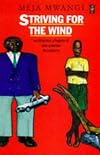
I am thankful that Heinemann, a British publisher, has seen fit to make sure that English-speaking readers have the opportunity to experience the depth, warmth, humor, and perserverance of African characters written by African writers.
To say that Striving for the Wind is only about a rich man vs. a poor man (and a poor village) is an oversimplification. Mr. Mwangi has crafted an almost Shakespearean tale set in rural Kenya. The main protagonist is Baba Pesa, the town bully: he's toughest, show more meanest, and by far the richest. Eldest son Juda enjoys his position as the town drunk yet also the wisest of philosophers. Juda tends to side with the man whom Baba Pesa considers his biggest enemy--Baba Baru. Baru's crime is not caving into Pesa's demands, but he is also beholden to his own family who, like most of the village people, suffer a meagre existence. Mutiso the Goatherd is the kindest and wisest of all the men, and thus often ends up spending time with the women instead of other men. While Mama Pesa and Mama Baru handle things much differently than the men, they too are bound by time-honored traditions. The two may seem docile and subservient, but they have the heaviest loads to bear, and they bear them much better than the men do. In addition, there is a dazzling array of fun characters (including Juda's dog Confucius, the Thinker) and a plot that goes in unexpected directions, including religion, police brutality, farm life, poverty, brain drain, women's rights (or lack thereof), and cronyism. Ultimately, this novel speaks volumes about the effects of imperialist colonization and its aftermath.
What struck me first and foremost is the humor. I laughed aloud several times, and yet almost always I wanted to cry too. The only book I've read that has had a similar feel to it is My Friend Matt & Hena the Whore by Adam Zameenad. These types of works open up new worlds for those of us who haven't had much exposure to the so-called Third World other than the occasional sound byte on the nightly world news. show less
To say that Striving for the Wind is only about a rich man vs. a poor man (and a poor village) is an oversimplification. Mr. Mwangi has crafted an almost Shakespearean tale set in rural Kenya. The main protagonist is Baba Pesa, the town bully: he's toughest, show more meanest, and by far the richest. Eldest son Juda enjoys his position as the town drunk yet also the wisest of philosophers. Juda tends to side with the man whom Baba Pesa considers his biggest enemy--Baba Baru. Baru's crime is not caving into Pesa's demands, but he is also beholden to his own family who, like most of the village people, suffer a meagre existence. Mutiso the Goatherd is the kindest and wisest of all the men, and thus often ends up spending time with the women instead of other men. While Mama Pesa and Mama Baru handle things much differently than the men, they too are bound by time-honored traditions. The two may seem docile and subservient, but they have the heaviest loads to bear, and they bear them much better than the men do. In addition, there is a dazzling array of fun characters (including Juda's dog Confucius, the Thinker) and a plot that goes in unexpected directions, including religion, police brutality, farm life, poverty, brain drain, women's rights (or lack thereof), and cronyism. Ultimately, this novel speaks volumes about the effects of imperialist colonization and its aftermath.
What struck me first and foremost is the humor. I laughed aloud several times, and yet almost always I wanted to cry too. The only book I've read that has had a similar feel to it is My Friend Matt & Hena the Whore by Adam Zameenad. These types of works open up new worlds for those of us who haven't had much exposure to the so-called Third World other than the occasional sound byte on the nightly world news. show less
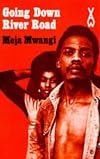
This is a riot of a book; a wild ride. Mwangi's story is as long as it takes to build Development Centre. Ben is a labouring hand; Ocholla is a crane operator, and they are best buddies. Ben lives with Wini and her Baby, but Wini disappears. Then, one day the landlord locks his room, so he and Baby move into Ocholla's shack by the stinking Nairobi River. On payday they go to Karara Centre and drink... what else, Karara. Sex workers browse, drunks drink, fight, dance, sleep, smoke, everybody show more smokes. They lean on each other, living one day at a time, hand to mouth, never looking far enough ahead except to next payday. A laugh and a cry all at once, Mwangi's characters are way too human. I'm going back for more.
On the bus: "the fat buttocks sway into Ben's mouth. Her perfume catches in his throat. He taps the woman's fine rump.
'Keep your arse off me, woman.'
'It is the bus,' she cries.
'Try and hang on to the bloody rail,' he advises. show less
On the bus: "the fat buttocks sway into Ben's mouth. Her perfume catches in his throat. He taps the woman's fine rump.
'Keep your arse off me, woman.'
'It is the bus,' she cries.
'Try and hang on to the bloody rail,' he advises. show less
A well-known Kenyan writer...in Kenya. I read a “young adult” book by him a few months ago (The Mzungu Boy) and it was very well-done. He is prolific (over 20 novels by my count since the 1970s; he was born in 1948) and translated into German and French (and even one in Portuguese). So I thought I’d tackle a bona-fide novel. The story is simple: Baba Pesa, "The Father of Money," owns 3 acres of prime farmland but craves the 10-acre plot owned by his neighbor who barely makes enough to show more survive. Baba Pesa is a bully and at times a caricature, but a strength of the novel is the cast of characters from his own family, his neighbor’s family, and the town. Nearly all are skillfully drawn. Not least is his eldest son, the wise drunk (with his dog, Confucius the Thinker) who lectures his fellow villagers on the greater values in life from a windmill. There is a lot of humor, more than a little wisdom, and even some Shakespearean touches. The book is quite an easy read and often quite funny. I also found what I consider to be ways of storytelling that owe a great deal to the ancient oral tradition. Mostly it’s enjoyable and a worthwhile look into post-colonial Kenya. show less
Welcome to the hellish underground of a Nairobi slum. Mwangi probably ranks as the most hard-boiled Kenyan writer of his time, though he does at times go over the top. I have personally lived in a few slums in Nairobi back in the 1980's, and despite the impoverishment and harsh living conditions, there were positive elements as well - decent people trying to do the best they could under the oppression of poverty. So, there is some sensationalism in the story, but still not far from the truth.
Lists
Awards


You May Also Like


Associated Authors
Statistics
- Works
- 28
- Also by
- 1
- Members
- 292
- Popularity
- #80,151
- Rating
- 3.8
- Reviews
- 9
- ISBNs
- 66
- Languages
- 7