
About the Author
Jane Isay is the author of Walking on Eggshells, Secrets and Lies, and Mom Still Likes You Best. As a book editor for more than forty years, she-discovered Mary Pipher's Reviving Ophelia, commissioned Patricia T. O'Conner's bestselling Woe Is I, and edited such nonfiction classics as Praying for show more Sheetrock and Friday Night Lights. She lives in New York City. show less
Works by Jane Isay
Tagged
Common Knowledge
There is no Common Knowledge data for this author yet. You can help.
Members
Reviews
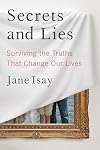
Jane Isay takes us behind the backdrop into the effects of lies told and truth revealed in Secrets and Lies: Surviving the Truths That Change Our Lives. As I read this book, I nodded in recognition at times, I squirmed in discomfort at others, and I blinked back tears as I empathized with the people whose stories she shared. Isay concentrates on what we might think of as "big" lies, but her words made me think about the million little lies we tell every day to keep peace. As she examines the show more pain inflicted by both secrets kept and truth reveals, Isay pushes us to examine the lives we lead and the connections in our lives. Does the secret we keep help or hurt? Does the truth we seek to reveal help or hurt? Do we seek to keep secrets or reveal truths to assuage our guilt or to free someone else? We all have to examine our motives, and Secrets and Lies acknowledges that every situation is unique and yet eerily similar regardless of the secret being kept or the truth being revealed. Isay takes us into the journeys of several people whose lives were irrevocably changed by secrets kept and by truths revealed. Those stories left me discombobulated as I realized how often our reactions to secrets and lies revealed lacks compassion and leaves everyone involved hurting and alone. I like to to think I lean toward compassion more than toward judgment, but Isay made me wonder if what I think is compassion could be perceived as judgment. Secrets and Lies provokes thought, promotes compassion, and provides insight into why people keep secrets, why people reveal secrets and why people pretend they don't know the secrets right in front of them as Isay examines the impact of secrets and the revelation of truth. show less
Walking on Eggshells: Navigating the Delicate Relationship Between Adult Children and Parents by Jane Isay
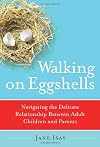
Without giving away any spoilers, I feel like this book would be beneficial to most people with grown children. So many different scenarios are given that I feel like it is highly relatable. I was impressed with the advice given. The hardest part was concentrating on the characters. I like to read a book in one or two sittings, and each chapter had multiple stories, each time with new characters, so I got bogged down in names and not letting my mind wander back to a previous story. I think show more if you read this book, you might even save yourself some counseling! Maybe this book will save or revive a lot of relationships. I like to think of it as "It ain't over until the fat lady sings." Basically, if your loved ones are still alive, there is always hope. This book brought me a lot of personal peace and insight. I HIGHLY recommend it, even if your relationship is perfect. This may ward off problems, or it may help you to have peace of mind to work toward resolving them. show less
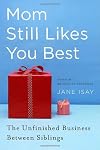
Promo material for [Mom Still Likes You Best] suggests that the book is a "must-read" for anyone blessed/cursed with a sibling. However, I might suggest that the book is more appropriate for someone who's somewhat bored and possibly suffering from a bit of insomnia.
Not that there isn't some interesting material in this book... no, the title tells us exactly what to expect - stories about siblings and their "unfinished business" with each other into adulthood - and there are more than enough show more anecdotes to satisfy the curious. Strong sibling bonds, tenuous ones, bonds that fail... Isay asserts that the foundation of sibling relationships happens when we're very young, and we carry this over into adulthood, making it very difficult to change our perception of our siblings unless we consciously make an effort to do so.
An interesting theory. But is it true? Unfortunately, we'll never know... because that's where the theorizing ends. Instead, Isay pads the book full of anecdote after anecdote, barely pausing for a breath before diving into the next example. The transitions are clunky, and though the sentence at the end of each anecdote is supposed to set up the one that follows (then we get the title of the next segment, and then the next segment), instead it reads like the first paragraph in each new section has been hacked apart. That's not a transition, that's just poor organization.
Since the book is 98% anecdotal, this also means that we have a lot of names throughout the book. I think Isay tried to help people keep things straight by frequently not naming people (referring instead to them as "her brother" or "his younger sister"), but when you're giving an anecdote where there are three younger siblings and you talk about them all and don't name them, it can get pretty gosh dang confusing. I don't know how many times I had to re-read sections to figure out who was doing what to whom, and this often made me put the book down in frustration.
That's not simplifying things, dear author. That's just making it more difficult for the reader to follow the logical sequence within each story.
That said, I think it's true that people with siblings will probably see themselves reflected somewhere in this book, and it really is horrifying to realize what some people do to their brothers and sisters. However, if you want more than a list of anecdotes -- such as, understanding why people act this way, or what triggers the behavior, or whether it's part of a pattern, or psychological, or anything at all -- you won't find it here.
And that was what I found most disappointing of all. There wasn't anything to tie it all together, so it just read like a bunch of stories about people we don't know. Would I pay $28.95 for this book, the suggested cover price for the hardcover? Absolutely not. I also wouldn't buy it for someone else at that price (plus, the thing is less than 200 pages to boot).
It might make for interesting reading if you see it at the library and have nothing else going on. Then again, it might just frustrate you. And hey, if you don't like your siblings very much, it could even make the perfect birthday gift... show less
Not that there isn't some interesting material in this book... no, the title tells us exactly what to expect - stories about siblings and their "unfinished business" with each other into adulthood - and there are more than enough show more anecdotes to satisfy the curious. Strong sibling bonds, tenuous ones, bonds that fail... Isay asserts that the foundation of sibling relationships happens when we're very young, and we carry this over into adulthood, making it very difficult to change our perception of our siblings unless we consciously make an effort to do so.
An interesting theory. But is it true? Unfortunately, we'll never know... because that's where the theorizing ends. Instead, Isay pads the book full of anecdote after anecdote, barely pausing for a breath before diving into the next example. The transitions are clunky, and though the sentence at the end of each anecdote is supposed to set up the one that follows (then we get the title of the next segment, and then the next segment), instead it reads like the first paragraph in each new section has been hacked apart. That's not a transition, that's just poor organization.
Since the book is 98% anecdotal, this also means that we have a lot of names throughout the book. I think Isay tried to help people keep things straight by frequently not naming people (referring instead to them as "her brother" or "his younger sister"), but when you're giving an anecdote where there are three younger siblings and you talk about them all and don't name them, it can get pretty gosh dang confusing. I don't know how many times I had to re-read sections to figure out who was doing what to whom, and this often made me put the book down in frustration.
That's not simplifying things, dear author. That's just making it more difficult for the reader to follow the logical sequence within each story.
That said, I think it's true that people with siblings will probably see themselves reflected somewhere in this book, and it really is horrifying to realize what some people do to their brothers and sisters. However, if you want more than a list of anecdotes -- such as, understanding why people act this way, or what triggers the behavior, or whether it's part of a pattern, or psychological, or anything at all -- you won't find it here.
And that was what I found most disappointing of all. There wasn't anything to tie it all together, so it just read like a bunch of stories about people we don't know. Would I pay $28.95 for this book, the suggested cover price for the hardcover? Absolutely not. I also wouldn't buy it for someone else at that price (plus, the thing is less than 200 pages to boot).
It might make for interesting reading if you see it at the library and have nothing else going on. Then again, it might just frustrate you. And hey, if you don't like your siblings very much, it could even make the perfect birthday gift... show less
Interesting premise: on her 9th birthday, a girl can suddenly 'taste' the feelings of the person who made the food she is eating. This leads her to various discoveries of her family and friends real feelings and turns out to be a very mixed blessing, in fact she actually searches out food that has been made in factories that are almost completely mechanised in order to avoid 'tasting' what is happening to folk. Revolving around this is the story of her family and their various 'problems'. show more
It's a nice little story and a quick and easy read, but so much more could have been made of it and the final chapter struck me as being the author suddenly realising that she needed to have an ending and just pulling something together that 'would do'. show less
It's a nice little story and a quick and easy read, but so much more could have been made of it and the final chapter struck me as being the author suddenly realising that she needed to have an ending and just pulling something together that 'would do'. show less
You May Also Like


Statistics
- Works
- 4
- Members
- 225
- Popularity
- #99,814
- Rating
- 3.3
- Reviews
- 6
- ISBNs
- 26