
Takeda Izumo (1691–1756)
Author of Chushingura (The Treasury of Loyal Retainers): A Puppet Play
About the Author
Works by Takeda Izumo
Japanische Dramen — Author — 1 copy
Tagged
Common Knowledge
- Legal name
- 竹田出雲
- Birthdate
- 1691
- Date of death
- 1756
- Gender
- male
- Short biography
- "Son of the manager-playwright Takeda Izumo I , he used the name Takeda Koizumo until his father's death in 1747 . He contributed to the writing of 28 works produced at the Osaka Takemoto-za bunraku puppet theatre , the most famous of which are in collaboration with NamikiSsuke (Senry)."
- Nationality
- Japan
- Associated Place (for map)
- Japan
Members
Reviews
The Story Itself
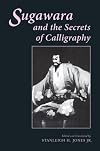
While I appreciate non-contemporary narratives for their historical significance, I can’t say I enjoy reading many older stories. Often, their plots seem very contrived and inconsistent, and such is the case of Sugawara and the Secrets of Calligraphy. Granted, the translator warns the reader that bunraku theater plays were always a collaborative effort, but I have a right to be finicky, and finicky I shall be. The story is engaging in some parts, boring in others. It’s show more probably due to the transformation of one type of medium (play) to another (book), but I was left dissatisfied with the story. It seemed like it was meandering, searching for a climax without first making a map to get to it. I am not one who enjoys stories that develop their plot as they are being written, but some people are not bothered by that and this should not be the final say whether one should or should not read this book.
Quality of Translation
While the translation was adequate, and the choice of words flowed well, I wish Jones had prepared better to translate a puppet show into a literary format. In the introduction, he states how important other elements like background actions are, yet does not write them into the play’s transcription. The story would have flowed better if Jones added action descriptions interspersed with the actual dialogue, just like a traditional novel would present the story. I believe the author chose not to include action in order to preserve discrepancies between each iteration of the play, but since his audience are readers (and this book was published before YouTube), ‘flowier’ action descriptors would have only benefited the translation.
I would encourage any readers to read the introduction after they read the story, or at least hold off on reading the second half. Jones’ explanations of kabuki and bunraku differences are best read after the play, at least in my opinion. Unless one already knows the backstory of Sugawara no Michizane, the characters are confusing to differentiate for first-time readers.
On that note, while I liked the insight into bunraku theater at the end of the book, I wish it was more expanded and that more illustrations were provided. For such a visual medium like theater, Jones was very sparse in providing the audience with photographs to better help visualize the action. I also didn’t like the arrangement of the pictures, as they were all compiled into one section instead of being spread out to fit in the scenes they were supposed to be from.
Though this was not a bad translation by any means, I wish Stanleigh H. Jones Jr. had tried harder to bridge the gap between a live play and its adaptation into a literary format. In the end, it’s a decent story for a decent play. show less
While I appreciate non-contemporary narratives for their historical significance, I can’t say I enjoy reading many older stories. Often, their plots seem very contrived and inconsistent, and such is the case of Sugawara and the Secrets of Calligraphy. Granted, the translator warns the reader that bunraku theater plays were always a collaborative effort, but I have a right to be finicky, and finicky I shall be. The story is engaging in some parts, boring in others. It’s show more probably due to the transformation of one type of medium (play) to another (book), but I was left dissatisfied with the story. It seemed like it was meandering, searching for a climax without first making a map to get to it. I am not one who enjoys stories that develop their plot as they are being written, but some people are not bothered by that and this should not be the final say whether one should or should not read this book.
Quality of Translation
While the translation was adequate, and the choice of words flowed well, I wish Jones had prepared better to translate a puppet show into a literary format. In the introduction, he states how important other elements like background actions are, yet does not write them into the play’s transcription. The story would have flowed better if Jones added action descriptions interspersed with the actual dialogue, just like a traditional novel would present the story. I believe the author chose not to include action in order to preserve discrepancies between each iteration of the play, but since his audience are readers (and this book was published before YouTube), ‘flowier’ action descriptors would have only benefited the translation.
I would encourage any readers to read the introduction after they read the story, or at least hold off on reading the second half. Jones’ explanations of kabuki and bunraku differences are best read after the play, at least in my opinion. Unless one already knows the backstory of Sugawara no Michizane, the characters are confusing to differentiate for first-time readers.
On that note, while I liked the insight into bunraku theater at the end of the book, I wish it was more expanded and that more illustrations were provided. For such a visual medium like theater, Jones was very sparse in providing the audience with photographs to better help visualize the action. I also didn’t like the arrangement of the pictures, as they were all compiled into one section instead of being spread out to fit in the scenes they were supposed to be from.
Though this was not a bad translation by any means, I wish Stanleigh H. Jones Jr. had tried harder to bridge the gap between a live play and its adaptation into a literary format. In the end, it’s a decent story for a decent play. show less
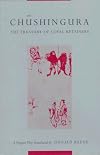
This play is a retelling of a true story of Feudal Japan. The plot is filled with villians and heroes, and even if you aren't a fan of ritual suicide, much of the characters' motivations are easy to understand. Of all the renditions (and translations) of this classic tales, this is the best. It is essential reading for anyone interested in classical literature from East Asia.
I do not want to give too much of the plot away, since the play is very short and proves to be a very quick read. Chushingura is about samurai whose master is forced to commit seppuku (ritual suicide), making them ronin (master less samurai). They pledge to avenge the death of their late master and plan to attack the man who provoked their master to disgrace his honor. The play was written by three different playwrights, which is why some of the characters personalities change drastically show more throughout the play.
The play does an amazing job showing the devotion of samurai to their code of ethics and to their masters. The samurai believed in their duty to their master to the point that they would commit seppuku if they felt that they had disgraced their master in any way. It also shows how much the family of a samurai has to devote to the master, like the wives being sold as prostitutes to help fund the plan to avenge their late master.
The play was originally written for the puppet theater, bunraku, but was originally adapted into a play for the kabuki theater. Since the original play was written there have been numerous adaptations in film, novels, and television productions. The Sprouse twins (The Suite Life of Zack & Cody) have even made a graphic novel series called the 47 R.O.N.I.N., which has nothing to do with samurai's but involves ninjas and underground societies....
I would definitely recommend Chushingura to anyone who has a love of Japan or who find samurai interesting. I do not read many plays, but I was able to be enveloped in the story and was so compelled by it that I finished it the day that I started it. However if you have not seen any of the adaptations of the book, I would recommend saving the intro for last because it does give away many of the important twists and turns of the storyline which kind of ruined the shock factor of some of the famous parts of the play. show less
The play does an amazing job showing the devotion of samurai to their code of ethics and to their masters. The samurai believed in their duty to their master to the point that they would commit seppuku if they felt that they had disgraced their master in any way. It also shows how much the family of a samurai has to devote to the master, like the wives being sold as prostitutes to help fund the plan to avenge their late master.
The play was originally written for the puppet theater, bunraku, but was originally adapted into a play for the kabuki theater. Since the original play was written there have been numerous adaptations in film, novels, and television productions. The Sprouse twins (The Suite Life of Zack & Cody) have even made a graphic novel series called the 47 R.O.N.I.N., which has nothing to do with samurai's but involves ninjas and underground societies....
I would definitely recommend Chushingura to anyone who has a love of Japan or who find samurai interesting. I do not read many plays, but I was able to be enveloped in the story and was so compelled by it that I finished it the day that I started it. However if you have not seen any of the adaptations of the book, I would recommend saving the intro for last because it does give away many of the important twists and turns of the storyline which kind of ruined the shock factor of some of the famous parts of the play. show less
Sugawara and the Secrets of Calligraphy (Translations from the Oriental Classics) by Stanleigh H. Jones Jr.
Competent book about To me) gortesquely gruesome
dramatic versions of the Sugawara no Michizane legend, involving the substitution of heads theme etc.
dramatic versions of the Sugawara no Michizane legend, involving the substitution of heads theme etc.
Awards

You May Also Like


Associated Authors
Statistics
- Works
- 6
- Members
- 305
- Popularity
- #77,180
- Rating
- 3.4
- Reviews
- 6
- ISBNs
- 9