
Rob MacGregor
Author of Indiana Jones and the Peril at Delphi (Indiana Jones, No. 1)
About the Author
Rob MacGregor is the author of several books
Disambiguation Notice:
(ger) Rob MacGregor hat mitgeteilt, dass er nicht als "Robert J. MacGregor" bekannt ist und möchte von diesem Namen getrennt werden.
The name is spelled MacGregor.
Series
Works by Rob MacGregor
Indiana Jones and the Last Crusade: Adapted from the Screenplay (1989) — Author — 354 copies, 2 reviews
Indiana Jones and the Riders of the Lost Ark #1, Indiana Jones and the Temple Made Of Doom #2, Indiana Jones and the Last Crusade #3 (1989) 220 copies, 1 review
Beyond the Bermuda Triangle: True Encounters with Electronic Fog, Missing Aircraft, and Time Warps (2017) — Author — 16 copies, 1 review
Psychic Power with Audio Compact Disc: Discover and Develop Your Sixth Sense at Any Age (2005) 13 copies
Indiana Jones. Der Tanz der Giganten / Das Orakel von Delphi. Zwei Romane in einem Band. (1997) 12 copies
Indiana Jones and the Peril in Delphi by Macgregor, Rob (1991) Mass Market Paperback (1991) 3 copies
Indiana Jones and the staff of kings 2 copies
Indiana Jones i siedem zasłon 2 copies
Indiana Jones i Geneza Potopu 2 copies
Tagged
Common Knowledge
- Canonical name
- MacGregor, Rob
- Birthdate
- 20th Century
- Gender
- male
- Awards and honors
- EDGAR ALLAN POE AWARD (young adult category 1996)
- Nationality
- USA
- Disambiguation notice
- The name is spelled MacGregor.
- Associated Place (for map)
- USA
Members
Reviews

We join our hero a year after our last adventure where his memory was altered and his wife had passed. Indy is looking for something to get out of teaching Celtic Archeology & the dean is looking to rid the university of him.
His trip to his al ma matter in the University of Chicago doesn't quite go as planned, it seems his juvenille hijinks from the first book in the series are still haunting him. He's able to hook up with his old college roommate, Jack Shannon, who's Jazz club is show more off-the-charts these days, but Al Capone is not down with dat.
The book felt like MacGregor had recently been born-again during his authoring of the series. While biblical adjacent stories are not new to the franchise, look at "Raiders of the Lost Arc", this has a lot of very baby Christian references far beyond the academic fiction of Raiders. Shannon himself has recently been born-again but sees little issue of him committing to his crime-family and his Pentecostal church. He is infatuated by a young woman whose dad comes to speak at his church regarding Noah's Ark.
Indy too likes the new girl, which is the primary reason he agrees to go with her dad on the quest to re-locate Noah's Ark. Dr. Vladimir Zobolonksy for religious/political reasons, Indy for personal/academic. Some Russian communists, and Islamic Fascists try to stop their journey along the way because...why not?
The story kept the plot moving as an Indian Jones film. This is the first book in the series I felt actually would have been better as a movie, mostly because the characters are frequently speaking different languages, which would be much clearer on TV with English Subtitles than reading it all in English and only getting hints on code-switching. Otherwise, MacGregor does a fine job, he is great at making large jumps in time of the plot make sense and feel normal.
The biggest reason "Genesis Deluge" does reach my 5 star is two of the tertiary characters have close loved ones die, yet their mourning is complete in a sentence or two. While MacGregor tries to cover this with the characters' own lives being in such peril that they have to move on quickly, it doesn't feel realistic nor emotionally intelligent. show less
His trip to his al ma matter in the University of Chicago doesn't quite go as planned, it seems his juvenille hijinks from the first book in the series are still haunting him. He's able to hook up with his old college roommate, Jack Shannon, who's Jazz club is show more off-the-charts these days, but Al Capone is not down with dat.
The book felt like MacGregor had recently been born-again during his authoring of the series. While biblical adjacent stories are not new to the franchise, look at "Raiders of the Lost Arc", this has a lot of very baby Christian references far beyond the academic fiction of Raiders. Shannon himself has recently been born-again but sees little issue of him committing to his crime-family and his Pentecostal church. He is infatuated by a young woman whose dad comes to speak at his church regarding Noah's Ark.
Indy too likes the new girl, which is the primary reason he agrees to go with her dad on the quest to re-locate Noah's Ark. Dr. Vladimir Zobolonksy for religious/political reasons, Indy for personal/academic. Some Russian communists, and Islamic Fascists try to stop their journey along the way because...why not?
The story kept the plot moving as an Indian Jones film. This is the first book in the series I felt actually would have been better as a movie, mostly because the characters are frequently speaking different languages, which would be much clearer on TV with English Subtitles than reading it all in English and only getting hints on code-switching. Otherwise, MacGregor does a fine job, he is great at making large jumps in time of the plot make sense and feel normal.
The biggest reason "Genesis Deluge" does reach my 5 star is two of the tertiary characters have close loved ones die, yet their mourning is complete in a sentence or two. While MacGregor tries to cover this with the characters' own lives being in such peril that they have to move on quickly, it doesn't feel realistic nor emotionally intelligent. show less
Beyond the Bermuda Triangle: True Encounters with Electronic Fog, Missing Aircraft, and Time Warps by Bruce Gernon
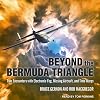
While I enjoy books or TV shows on unusual or unexplained phenomena, I can rarely give them more than 2 or 3 stars. This book is no exception.
"Beyond the Bermuda Triangle" is a collection of stories recounted by the author, most of which he received since publishing his prior book, "The Fog." Stories, in general, are important, but must be taken lightly. We had stories of ball lightning, for example, well before there was documented scientific proof or it. However, it seems more common that show more a lot of stories from people are made up.
The author of this book seems more than willing to believe any stories people send his way. At one point he deflects criticisms that they may be fabrications by saying, in effect, that he's sure these people have better things to do than to make up stories to send to him. No, Bruce, some people don't.
Consider the story of Chris Suprun, who received numerous honors for being a hero first responder during 9/11, including becoming a (faithless) elector in Texas, except that there was no record of him being a responder during 9/11.
Consider, too, the stories of needles in Pepsi cans during the mid-90s. The initial one was a hoax, while the others were fueled by mass hysteria and greed of those wanting to be involved in a class action lawsuit.
Consider, finally, the thousands of people on Reddit and other social media sites who tell supposedly true stories for the sake of getting attention in the form of karma points.
The fact is, stories are unreliable. What makes the difference in a book like this being science rather than pseudoscience is the method. There is no critical method, for the most part. It is largely replaced by confirmation bias.
There is a more scientific analysis towards the end. It is important to cautiously keep an open mind. On the one hand, it's easy to force concepts, both accepted and fringe, into your theory (the moon hoaxers and flat earthers can be good at this). On the other hand, severe skepticism can itself become dogmatic, so that it forbids ideas outside the comfort zone of the skeptic.
Finally, I need to comment on the section regarding the number 23. Supposedly 23 is a special number with all sorts of significance. The author lists various instances the number 23 appears in the world. But a similar list could be made for most numbers less than 100. This is like the conspiracy theorists who want to prove that Jewish people run the world by listing various Jewish people who are in a position of power or influence. At the end of the day, it proves, demonstrates, or slightly hints at absolutely nothing. show less
"Beyond the Bermuda Triangle" is a collection of stories recounted by the author, most of which he received since publishing his prior book, "The Fog." Stories, in general, are important, but must be taken lightly. We had stories of ball lightning, for example, well before there was documented scientific proof or it. However, it seems more common that show more a lot of stories from people are made up.
The author of this book seems more than willing to believe any stories people send his way. At one point he deflects criticisms that they may be fabrications by saying, in effect, that he's sure these people have better things to do than to make up stories to send to him. No, Bruce, some people don't.
Consider the story of Chris Suprun, who received numerous honors for being a hero first responder during 9/11, including becoming a (faithless) elector in Texas, except that there was no record of him being a responder during 9/11.
Consider, too, the stories of needles in Pepsi cans during the mid-90s. The initial one was a hoax, while the others were fueled by mass hysteria and greed of those wanting to be involved in a class action lawsuit.
Consider, finally, the thousands of people on Reddit and other social media sites who tell supposedly true stories for the sake of getting attention in the form of karma points.
The fact is, stories are unreliable. What makes the difference in a book like this being science rather than pseudoscience is the method. There is no critical method, for the most part. It is largely replaced by confirmation bias.
There is a more scientific analysis towards the end. It is important to cautiously keep an open mind. On the one hand, it's easy to force concepts, both accepted and fringe, into your theory (the moon hoaxers and flat earthers can be good at this). On the other hand, severe skepticism can itself become dogmatic, so that it forbids ideas outside the comfort zone of the skeptic.
Finally, I need to comment on the section regarding the number 23. Supposedly 23 is a special number with all sorts of significance. The author lists various instances the number 23 appears in the world. But a similar list could be made for most numbers less than 100. This is like the conspiracy theorists who want to prove that Jewish people run the world by listing various Jewish people who are in a position of power or influence. At the end of the day, it proves, demonstrates, or slightly hints at absolutely nothing. show less

Not nearly as good as the previous book in the series "...and the Dance of the Giants." While the adventure at stone henge ended with Diedre having second thoughts about marrying Indy, leading to believe we'd probably never see her again, but their on-again-off-again relationship is on for most of the book, with a note that her mother died, which I don't recall being in the last book.
Brody thinks he has found proof that there were European explorers to the Americas long before Columbus (& show more Leif Ericson though no mention of him) & there is one eccentric English explorer who agrees, Jack Fawcett. Of course, he disappears while in search of proof, Deidre and Indy go looking for him with very little evidence to go on. At times the book is hard to follow, the "seven veils" from the title refer to a way the people in this lost world work, through magic, mystery & dreams, the convoluted plot, particularly near the end, reminds me of Illuminatus!
The middle was quite blase and easy to put down. The ending was not a total surprise, though it kept you guessing till you got there, and somewhat of a letdown. show less
Brody thinks he has found proof that there were European explorers to the Americas long before Columbus (& show more Leif Ericson though no mention of him) & there is one eccentric English explorer who agrees, Jack Fawcett. Of course, he disappears while in search of proof, Deidre and Indy go looking for him with very little evidence to go on. At times the book is hard to follow, the "seven veils" from the title refer to a way the people in this lost world work, through magic, mystery & dreams, the convoluted plot, particularly near the end, reminds me of Illuminatus!
The middle was quite blase and easy to put down. The ending was not a total surprise, though it kept you guessing till you got there, and somewhat of a letdown. show less

The 1996 Phantom movie remains one of my favorite superhero movies, it’s a good fun adventure story. I was hoping that would be reflected in this novelization, but it just misses the mark. It opens strongly adding a lot of detail to the origins of The Ghost Who Walks and his legend. There’s also some excellent background and characterization for many of the story’s cast that adds depth to the on-screen personas. But that all comes to a halt when the story moves from the jungle to New show more York. Which is the end of the first act in the movie, but about 70% of the way through the book. As a consequence the majority of the movie’s plot line is crammed into the last few chapters in an almost mechanical, rote style that describes the basic action and just regurgitates the movie dialog without any real sense of place or purpose.
The overall effect is a disjointed one as if two different drafts had just been smushed together to meet a deadline. show less
The overall effect is a disjointed one as if two different drafts had just been smushed together to meet a deadline. show less
Lists
Awards


You May Also Like


Associated Authors
Statistics
- Works
- 42
- Members
- 3,021
- Popularity
- #8,452
- Rating
- 3.4
- Reviews
- 21
- ISBNs
- 124
- Languages
- 11
- Favorited
- 2