
Barbara Tuchman (1912–1989)
Author of A Distant Mirror: The Calamitous 14th Century
About the Author
Barbara W. Tuchman achieved prominence as a historian with The Zimmermann Telegram, and international fame with The Guns of August--a huge bestseller and winner of the Pulitzer Prize. There followed other successes, including The Proud Tower, Stilwell and the American Experience in China (also show more awarded the Pulitzer Prize), A Distant Mirror, The March of Folly, and The First Salute. show less
Series
Works by Barbara Tuchman
Een ezel stoot zich in het gemeen... 3 copies
Cardinal 2 copies
Fodor's Israel 1 copy
Coming of the Great War, The 1 copy
Cómo se escribe la historia: Las claves para entender la historia (VARIOS GREDOS) (Spanish Edition) (2009) 1 copy
"Perdicaris Alive or Raisuli Dead," American Heritage, Vol. 10, August 1959, pp. 18-21, 98-101 1 copy
Dall'Expo a Sarajevo 1 copy
Associated Works
A World of Ideas : Conversations With Thoughtful Men and Women About American Life Today and the Ideas Shaping Our Future (1989) — Interviewee — 602 copies, 1 review
A Sense of History: The Best Writing from the Pages of American Heritage (1985) — Contributor — 490 copies, 4 reviews
An American Album: One Hundred and Fifty Years of Harper's Magazine (2000) — Contributor — 146 copies, 1 review
Tagged
Common Knowledge
- Canonical name
- Tuchman, Barbara
- Legal name
- Tuchman, Barbara Wertheim
- Birthdate
- 1912-01-30
- Date of death
- 1989-02-06
- Gender
- female
- Education
- Radcliffe College (BA|1933)
Walden School - Occupations
- journalist
historian - Organizations
- Society of American Historians
Authors Guild
Office of War Information - Awards and honors
- Jefferson Lecture (1980)
Fellow, American Academy of Arts and Letters (1971, president 1979)
Fellow, American Academy of Arts and Sciences (1978)
Pulitzer Prize (1963, 1972)
National Book Award in History (1980)
St Louis Literary Award (1971) (show all 8)
Order of Leopold First Class
American Academy of Arts and Letters Gold Medal (1978) - Agent
- William Loverd
- Short biography
- Barbara Wertheim Tuchman was born in 1912, and received her B.A. degree from Radcliffe College in 1933. She served as a research assistant for the Institute for Pacific Relations, 1934-1935; was an editorial assistant at The Nation, 1936-1937; a staff writer for War in Spain, London, 1937-1938; American correspondent for New Statesman and Nation, London, 1939; and was with the Far East news desk, OWI, 1944-1945. Tuchman was best known as the author of many books and articles. She was the recipient of the Pulitzer Prize in 1963 and 1972. Tuchman died in 1989.
- Cause of death
- stroke
- Nationality
- USA
- Birthplace
- New York, New York, USA
- Places of residence
- New York, New York, USA
Greenwich, Connecticut, USA
Cambridge, Massachusetts, USA
Cos Cob, Connecticut, USA - Place of death
- Greenwich, Connecticut, USA
- Burial location
- Temple Israel Cemetery, Hastings-on-Hudson, New York, USA
- Map Location
- USA
Members
Discussions
April-June Theme Read: War and Regions in Conflict in Reading Globally (February 2024)
GROUP READ: The Guns of August in 2013 Category Challenge (September 2013)
Reviews

Barbara Tuchman is an experienced and professional historian, but she misses the mark in Notes from China. Traveling through various cities with a Chinese-sponsored tour group, Tuchman is gullible in her of skepticism. In the end, Notes from China reads as a series of sociological observations of a society she saw through rose colored glasses.
For example, the entire Cultural Revolution is reduced to a mere two or three sentences and she claims it last just two years. When the book was show more written in 1972, the Cultural Revolution was still in full swing. She writes off the entire event as a an interlude set about because of Liu Shaoqi's economic policies and claims that Mao Zedong was able to put an end to it at a moment's notice. Ironically, she claims that the government is interested in historic preservation while failing to mention rioting against The Four Olds during the Cultural Revolution.
Tuchman mentions the 1942-43 famine of Henan, but there is not a single word about the Great Leap Forward in which the government's backward policies were responsible for the mass starvation deaths of 17 to 35 million people.
If China of 1972 were truly reflective of what a historian would see during a controlled tour, then Tuchman's observations would be valid. Unfortunately, she seems to have been snowed over and, despite mentioning a few times that she was with government minders the whole time, Tuchman does not write with the skepticism or suspicion that readers deserve. show less
For example, the entire Cultural Revolution is reduced to a mere two or three sentences and she claims it last just two years. When the book was show more written in 1972, the Cultural Revolution was still in full swing. She writes off the entire event as a an interlude set about because of Liu Shaoqi's economic policies and claims that Mao Zedong was able to put an end to it at a moment's notice. Ironically, she claims that the government is interested in historic preservation while failing to mention rioting against The Four Olds during the Cultural Revolution.
Tuchman mentions the 1942-43 famine of Henan, but there is not a single word about the Great Leap Forward in which the government's backward policies were responsible for the mass starvation deaths of 17 to 35 million people.
If China of 1972 were truly reflective of what a historian would see during a controlled tour, then Tuchman's observations would be valid. Unfortunately, she seems to have been snowed over and, despite mentioning a few times that she was with government minders the whole time, Tuchman does not write with the skepticism or suspicion that readers deserve. show less
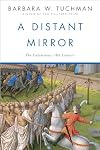
Este libro estaba en la biblioteca de la casa de mis papás. No se como llegó ahí pero estaba en una edición en castellano del Fondo de Cultura Económica. De chico me gustaba su tapa, que era una reproducción de una batalla medieval.
Más grande lo leí. Y me encantó.
Bárbara Tuchman quiso escribir una libro sobre la historia del Siglo XIV que en su opinión, y la de muchos, fue un siglo que probaba - como su propio siglo XX-, que la humanidad no está en un camino de progreso con show more altibajos pero progreso en sí. En Europa, al menos, el Siglo XIV fue una tragedia de guerras, plagas, cismas y empobrecimiento general. No fue un pequeño retroceso en la siempre ascendente historia humana: fue una catástrofe que prueba que no existe tal progreso.
Para la contar esta historia Tuchman eligió un método novedoso, al menos para mi: eligió un noble francés de esa época que tuvo la virtud, o la suerte, de estar presente en buena parte de los acontecimientos de esos años. Gracias a este recurso la historia se vuelve más viva. Y también, gracias a este libro, un chico de Tucumán supo que hace unos 600 años vivió un hombre llamado Engerrand VII, señor de Coucy y Conde de Soisssons.
Nunca la historia está tan viva como cuando nos damos cuenta que la gente de entonces eran seres como nosotros y que somos nosotros, que también seremos olvidados, quienes con poco o con mucho estamos escribiendo la historia de nuestros días show less
Más grande lo leí. Y me encantó.
Bárbara Tuchman quiso escribir una libro sobre la historia del Siglo XIV que en su opinión, y la de muchos, fue un siglo que probaba - como su propio siglo XX-, que la humanidad no está en un camino de progreso con show more altibajos pero progreso en sí. En Europa, al menos, el Siglo XIV fue una tragedia de guerras, plagas, cismas y empobrecimiento general. No fue un pequeño retroceso en la siempre ascendente historia humana: fue una catástrofe que prueba que no existe tal progreso.
Para la contar esta historia Tuchman eligió un método novedoso, al menos para mi: eligió un noble francés de esa época que tuvo la virtud, o la suerte, de estar presente en buena parte de los acontecimientos de esos años. Gracias a este recurso la historia se vuelve más viva. Y también, gracias a este libro, un chico de Tucumán supo que hace unos 600 años vivió un hombre llamado Engerrand VII, señor de Coucy y Conde de Soisssons.
Nunca la historia está tan viva como cuando nos damos cuenta que la gente de entonces eran seres como nosotros y que somos nosotros, que también seremos olvidados, quienes con poco o con mucho estamos escribiendo la historia de nuestros días show less

In the early 21st century, we like to think that we’re living in an age of extraordinary political incompetence, but Tuchman — writing forty years ago — makes it clear that people in positions of power have been taking stupid (i.e. unforced, contrary to their own interests and against good advice) decisions for at least as long as there has been recorded history. Rehoboam destroyed the viability of the kingdom he had inherited by unnecessarily alienating ten of the twelve tribes of show more Israel, the Trojans failed to heed the warnings of Laocoön and Cassandra and brought the suspicious package left on their doorstep by the departing Greeks into the city, and so on.
Tuchman gives us three detailed case-studies to show some of the factors typically involved: the renaissance Popes piling on the abuses of power and doing nothing to keep nails and ink-bottles out of the hands of pesky Saxons; the British government of George III’s day needlessly provoking the American colonists into an armed rising; and US presidents from Truman to Nixon failing to realise that the US had nothing to gain from interfering in SE Asia and a great deal to lose.
She puts her finger on a few common failings. The most common and fundamental problem seems to be that of leaders getting distracted from the job they are supposed to be doing by the business of getting into and staying in power, as well as the opportunities power provides for personal advantage and helping out friends and family. This was clearly the main problem for the renaissance Popes (as it is for the current US president) — all decisions are framed in relation to local power struggles and personal advantage, and ultimate effects of those policies are overlooked. Another classic seems to be lack of empathy — if you don’t understand how your policies will be perceived by the people on the receiving end, you risk provoking unintended consequences. George III’s ministers, brought up in a tradition of English upper-class arrogance, consistently underrated the American colonists, just as the mid-20th-century White House failed to take into account the strength of Vietnamese nationalism (and confused it with communist internationalism). But “persistence in error” is probably the most glaring fault: no-one likes to admit that they have been wrong, so we will always have a tendency to grasp at straws to justify continuing with the course we have embarked upon, usually turning a minor snafu into a world-class disaster in the process. (The progress from David Cameron’s misguided referendum to Brexit was a classic example of this.)
As always, Tuchman’s prose is clear, concise and devastating. A very entertaining, and often illuminating, book. She’s probably at her best on the Popes, but the Vietnam section also gives her the chance to add a little bit of personal venom, which adds to the fun. One rather hopes that Nixon and Kissinger, at least, got the chance to read this book (LBJ, sadly, wasn’t around any more)…
Tuchman gives us three detailed case-studies to show some of the factors typically involved: the renaissance Popes piling on the abuses of power and doing nothing to keep nails and ink-bottles out of the hands of pesky Saxons; the British government of George III’s day needlessly provoking the American colonists into an armed rising; and US presidents from Truman to Nixon failing to realise that the US had nothing to gain from interfering in SE Asia and a great deal to lose.
She puts her finger on a few common failings. The most common and fundamental problem seems to be that of leaders getting distracted from the job they are supposed to be doing by the business of getting into and staying in power, as well as the opportunities power provides for personal advantage and helping out friends and family. This was clearly the main problem for the renaissance Popes (as it is for the current US president) — all decisions are framed in relation to local power struggles and personal advantage, and ultimate effects of those policies are overlooked. Another classic seems to be lack of empathy — if you don’t understand how your policies will be perceived by the people on the receiving end, you risk provoking unintended consequences. George III’s ministers, brought up in a tradition of English upper-class arrogance, consistently underrated the American colonists, just as the mid-20th-century White House failed to take into account the strength of Vietnamese nationalism (and confused it with communist internationalism). But “persistence in error” is probably the most glaring fault: no-one likes to admit that they have been wrong, so we will always have a tendency to grasp at straws to justify continuing with the course we have embarked upon, usually turning a minor snafu into a world-class disaster in the process. (The progress from David Cameron’s misguided referendum to Brexit was a classic example of this.)
As always, Tuchman’s prose is clear, concise and devastating. A very entertaining, and often illuminating, book. She’s probably at her best on the Popes, but the Vietnam section also gives her the chance to add a little bit of personal venom, which adds to the fun. One rather hopes that Nixon and Kissinger, at least, got the chance to read this book (LBJ, sadly, wasn’t around any more)…
In paucity of cause, vain perseverance and ultimate self-damage, the belligerency that Johnson's Administration initiated and pursued was folly of an unusual kind in that absolutely no good can be said to have come of it; all results were malign — except one, the awakening of the "public ire." Too many Americans had come to feel that the war was wrong, out of all proportion to the national interest and unsuccessful besides. Populists like to speak of the "wisdom of the people"; the American people were not so much wise as fed up, which in certain cases is a kind of wisdom.show less
This collection of essays is divided into three parts. The first and in my view the best part, based mostly upon speeches, deals with "the craft" of the historian. It offers both insights into her research and writing process and a vigorous defense of history as literature. She justly highlights the importance and her mission of communicating about history with the general public. Thus, she nicely undermines the charge of many academic historians who did not like the intrusion of a show more non-expert stealing all the(ir?) glory and profiting from their work. What use, however, are their findings if nobody but the anointed knows about them?
The second part "the yield" collects various book reviews and articles, some standing the test of time, some showing their age. The third part "learning from history" is about politics, Nixon and the Vietnam War. Ideas that led to "The March of Folly", a book which has regained relevance (I wished more people had read it before 2003.).
Tuchman is a child of privilege, her grandfather being US ambassador, her uncle US secretary of treasury. Her father owned the magazine on which she was a staff reporter. Her writing is at its best when she writes about the spleens and foibles of her class. This makes The Proud Tower, the Guns of August, the Zimmermann Telegram and Stilwell so vivid. In this collection, she expands and escapes her traditional topics - which reveals, at times, a lack of empathy for others less privileged, others different from her. To me, these essays show a prissy and self-absorbed person (light-years away from the humanity of a Studs Terkel). I love her writing, her personality not so much. show less
The second part "the yield" collects various book reviews and articles, some standing the test of time, some showing their age. The third part "learning from history" is about politics, Nixon and the Vietnam War. Ideas that led to "The March of Folly", a book which has regained relevance (I wished more people had read it before 2003.).
Tuchman is a child of privilege, her grandfather being US ambassador, her uncle US secretary of treasury. Her father owned the magazine on which she was a staff reporter. Her writing is at its best when she writes about the spleens and foibles of her class. This makes The Proud Tower, the Guns of August, the Zimmermann Telegram and Stilwell so vivid. In this collection, she expands and escapes her traditional topics - which reveals, at times, a lack of empathy for others less privileged, others different from her. To me, these essays show a prissy and self-absorbed person (light-years away from the humanity of a Studs Terkel). I love her writing, her personality not so much. show less
Lists
1970s (1)
Europe (1)
Edad Media (1)
My List (4)
THE WAR ROOM (3)
Favourite Books (2)
Folio Society (2)
Read This Next (2)
1960s (1)
Unread books (1)
Reading Queue (1)
Awards


You May Also Like


Associated Authors
Statistics
- Works
- 27
- Also by
- 8
- Members
- 29,665
- Popularity
- #678
- Rating
- 4.1
- Reviews
- 463
- ISBNs
- 417
- Languages
- 18
- Favorited
- 133

