
Courtland Lewis
Author of Doctor Who and Philosophy: Bigger on the Inside
About the Author
Image credit: Courtland Lewis
Works by Courtland Lewis
Tagged
Common Knowledge
- Canonical name
- Lewis, Courtland
- Other names
- Lewis, David Court
Lewis, Court D. - Birthdate
- 1977-03-05
- Gender
- male
- Education
- University of Tennessee
University of Southern Mississippi
Jones County Junior College - Occupations
- philosopher
teacher
author - Organizations
- University of Tennessee
Pellissippi State Community College
Owensboro Community and Technical College - Nationality
- USA
- Places of residence
- Owensboro, Kentucky, USA
- Associated Place (for map)
- Kentucky, USA
Members
Reviews

I love the concept of these "pop culture and philosophy" books. They seem to promise such a nifty combination of things. An analysis of various themes in stories I love from a philosophical point of view, combined with the use of something entertaining and accessible that I already enjoy to explain complicated philosophical concepts? As Bender would say, sounds like fun on a bun! But the actual result, at least in this case, is... well, it's okay, I guess. The best of the essays (like the show more one on Popplers and the ethics of meat-eating, or the one on time travel paradoxes) give a decent, if very broad and very brief, overview of their subject matter in a way that feels genuinely relevant to the show, without sucking all the humor out of it. Some of the weakest, on the other hand, seem to mostly just be explaining social commentary jokes I got perfectly well the first time. (And then there's that essay on Hegel. I don't know what that one's doing. It does not appear to be using words in any of the ways in which words are actually used by human beings.) Most of them are somewhere in-between, though. Vaguely interesting, perhaps, but shallow at best. And very few of them introduced me to any ideas that were genuinely new to me. Likely the collection as a whole is a bit more worthwhile if it's your first-ever introduction to philosophical thinking, and you really want that spoonful of pop cultural sugar to swallow it down with. show less
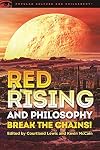
**This book was reviewed for the San Francisco and Seattle Book Reviews**
Red Rising and Philosophy is but one among several new additions to the wonderful pop culture and philosophy series. This one focuses on Pierce Brown's Red Rising Trilogy. There are four sections, looking at various aspects of the stories, from the value and ethics of eugenics, to stratified caste cultures, to the nature of rebellion.
There are many great essays here. Some of my favourites include:
‘Not So Human After show more All’ looks at notions of biology and how species are defined. Species, even genetically created ones such as the Colours of Red Rising, change and evolve over time. Biology isn't destiny, though, as Shea remarks. Darrow is prime proof of this.
'The One, the Only, Darrow' focuses on questions of personal identity, and what makes an individual. If a person is changed physically, such as with Darrow's Carving, does that not in truth change his identity? Or is identity tied to psychology? To the elusive spirit? This is a question perfect for Dr Who as well!
‘Living for More’ discusses notions of the meaning of life, both in terms of 'why do we exist’, as a whole, and 'what makes a life meaningful’, as an individual, within the world of Red Rising.
'Pierce’s Republic' compares Pierce Brown's Red Rising Trilogy to Plato’s Republic. Brown himself says that Plato's Republic influenced him.
'Beautiful Colours and Unjust Societies’ compares how utopias and dystopias are defined, and looks at how more subjective descriptors like notions of beauty are defined. How much is truly subjective? How much is ingrained in our communal conscious?
I love these books! They focus and sharpen philosophical concepts, revealing how they are present underlying our entertainment, and illustrating their relevance in today's society. Pierce Brown's Red Rising Trilogy, and Red Rising and Philosophy both really hit home for me at this time, given the strife within my own country. Stories like these, where you have a group of people who believe they have some sort of genetic and/or moral superiority over other groups of people show the egocentric nature of such thinking, as well as showing that people oppressed will eventually get to a point where they will no longer tolerate such discrimination. show less
Red Rising and Philosophy is but one among several new additions to the wonderful pop culture and philosophy series. This one focuses on Pierce Brown's Red Rising Trilogy. There are four sections, looking at various aspects of the stories, from the value and ethics of eugenics, to stratified caste cultures, to the nature of rebellion.
There are many great essays here. Some of my favourites include:
‘Not So Human After show more All’ looks at notions of biology and how species are defined. Species, even genetically created ones such as the Colours of Red Rising, change and evolve over time. Biology isn't destiny, though, as Shea remarks. Darrow is prime proof of this.
'The One, the Only, Darrow' focuses on questions of personal identity, and what makes an individual. If a person is changed physically, such as with Darrow's Carving, does that not in truth change his identity? Or is identity tied to psychology? To the elusive spirit? This is a question perfect for Dr Who as well!
‘Living for More’ discusses notions of the meaning of life, both in terms of 'why do we exist’, as a whole, and 'what makes a life meaningful’, as an individual, within the world of Red Rising.
'Pierce’s Republic' compares Pierce Brown's Red Rising Trilogy to Plato’s Republic. Brown himself says that Plato's Republic influenced him.
'Beautiful Colours and Unjust Societies’ compares how utopias and dystopias are defined, and looks at how more subjective descriptors like notions of beauty are defined. How much is truly subjective? How much is ingrained in our communal conscious?
I love these books! They focus and sharpen philosophical concepts, revealing how they are present underlying our entertainment, and illustrating their relevance in today's society. Pierce Brown's Red Rising Trilogy, and Red Rising and Philosophy both really hit home for me at this time, given the strife within my own country. Stories like these, where you have a group of people who believe they have some sort of genetic and/or moral superiority over other groups of people show the egocentric nature of such thinking, as well as showing that people oppressed will eventually get to a point where they will no longer tolerate such discrimination. show less
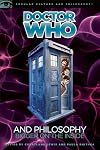
In this collection of essays, various philosophers explore philosophic ideas using examples from Doctor Who. Having suffered through two philosophy courses during my undergrad, some of the ideas and theories explored here were familiar to me but made more palatable by Doctor Who references. Occasionally, I wished my philosophy courses had used this book as a textbook but, of course, I hadn't watched any Doctor Who back then. That being said, not even a plethora of Doctor Who references could show more get me to alter my opinion that many philosophers are pretentious and that while the ideas they explore are interesting, their arguments often leave me exasperated. That being said, if you're a Doctor Who fan this one might intrigue you and if you like philosophy and Doctor Who then this book will likely have you over the moon. show less
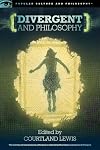
***This book was reviewed for the San Francisco Book Review***
I absolutely love the pop culture and philosophy books! I find them a great way to make philosophic concepts far more accessible to the everyday person, and to open minds to different ways of thinking.
This book, focusing on Veronica Roth’s haunting dystopic trilogy, is divided into five sections, each with several essays. They usher us through the Divergent trilogy, taking a good hard look at the faction values, the ethics show more behind the experiments, what it means to be ‘divergent’ in this world and that one, and how we, as readers, can take the lessons offered in the series and apply it to our own life.
Are You Divergent- this first section had three essays. My favourite was the very first one, Drugging the Kids, which dealt with the issue of control. Everything about the faction system relates to control, and the scariest is the use of the various serums. You can see echoes of these ‘serums’ in today's world, from actual drugs that dampen behaviour, to the rules of class and society, to the rampant ignorance and discrimination that rage around us daily. One need merely look at the US news, and the 2016 presidential race… Trump needs this book, or the memory serum… He is currently one of the biggest instigators of deadly psychological ‘serums’ of our world today.
How to Make Everyone Less Evil- this section is fairly self-explanatory. There are three essays that delve into the nature of ‘evil’ (I dislike this word as seeming too harshly judgemental), and how it can be counteracted with compassion.
Today We Choose- this section is the first to begin looking in-depth at the individual factions, assessing both the good, and the bad. Plato’s Chicago kicks things off with a nice comparison of Plato’s Republic with the the city of Chicago. Amity is delved into next, and we follow up with Should We Execute the Erudite, comparing metaphorically with how we treat education in our society today.
Wisdom Before Faction- takes a look at Abnegation, Dauntless, Erudite, and Candor, exposing the flaws and virtues of each.
Know Thy Faction, Know Thy Self- this last section takes a look at family ties versus faction ties, how to handle discovering you are living a lie, the value of values, and the dangers of said values if rigidly followed. It also looks at how to wisely choose, and operate within, the values most suited to your temperament and personality, and how to mesh those values seamlessly. I love that it points out that, though ‘divergent’ to the factions because of their abilities to merge those faction values, the Divergent are in truth Convergent. They are the whole, reflecting the shattered factions.
If you are a fan of Roth’s Divergent series, or you enjoy pondering deep philosophical thoughts, be sure to check out Divergent and Philosophy! show less
I absolutely love the pop culture and philosophy books! I find them a great way to make philosophic concepts far more accessible to the everyday person, and to open minds to different ways of thinking.
This book, focusing on Veronica Roth’s haunting dystopic trilogy, is divided into five sections, each with several essays. They usher us through the Divergent trilogy, taking a good hard look at the faction values, the ethics show more behind the experiments, what it means to be ‘divergent’ in this world and that one, and how we, as readers, can take the lessons offered in the series and apply it to our own life.
Are You Divergent- this first section had three essays. My favourite was the very first one, Drugging the Kids, which dealt with the issue of control. Everything about the faction system relates to control, and the scariest is the use of the various serums. You can see echoes of these ‘serums’ in today's world, from actual drugs that dampen behaviour, to the rules of class and society, to the rampant ignorance and discrimination that rage around us daily. One need merely look at the US news, and the 2016 presidential race… Trump needs this book, or the memory serum… He is currently one of the biggest instigators of deadly psychological ‘serums’ of our world today.
How to Make Everyone Less Evil- this section is fairly self-explanatory. There are three essays that delve into the nature of ‘evil’ (I dislike this word as seeming too harshly judgemental), and how it can be counteracted with compassion.
Today We Choose- this section is the first to begin looking in-depth at the individual factions, assessing both the good, and the bad. Plato’s Chicago kicks things off with a nice comparison of Plato’s Republic with the the city of Chicago. Amity is delved into next, and we follow up with Should We Execute the Erudite, comparing metaphorically with how we treat education in our society today.
Wisdom Before Faction- takes a look at Abnegation, Dauntless, Erudite, and Candor, exposing the flaws and virtues of each.
Know Thy Faction, Know Thy Self- this last section takes a look at family ties versus faction ties, how to handle discovering you are living a lie, the value of values, and the dangers of said values if rigidly followed. It also looks at how to wisely choose, and operate within, the values most suited to your temperament and personality, and how to mesh those values seamlessly. I love that it points out that, though ‘divergent’ to the factions because of their abilities to merge those faction values, the Divergent are in truth Convergent. They are the whole, reflecting the shattered factions.
If you are a fan of Roth’s Divergent series, or you enjoy pondering deep philosophical thoughts, be sure to check out Divergent and Philosophy! show less
You May Also Like


Associated Authors
Statistics
- Works
- 8
- Members
- 336
- Popularity
- #70,810
- Rating
- 4.0
- Reviews
- 6
- ISBNs
- 18
- Languages
- 2
