
Fitz James O'Brien (1828–1862)
Author of Phantastische Träume.
About the Author
Image credit: By William Winter 1836 – 1917 - William Winter (1881) The Poems and Stories of Fitz-James O'Brien, Osgood & Co., Boston (Digitised by Google Books), Public Domain, https://commons.wikimedia.org/w/index.php?curid=22711363
Works by Fitz James O'Brien
The Diamond Lens, with Other Stories 2 copies
Mother of Pearl 2 copies
From Hand to Mouth 1 copy
The Diamond Lens & Other Stories: 'It was no scientific thirst that at this time filled my mind'' 1 copy
Co to Było? 1 copy
The Lost Room 1 copy
Associated Works
Dracula's Guest: A Connoisseur's Collection of Victorian Vampire Stories (2010) — Contributor — 318 copies, 39 reviews
American Fantastic Tales : Terror and the Uncanny from Poe to the Pulps (2009) — Contributor — 290 copies, 4 reviews
Masterpieces of Terror and the Unknown: A Treasury of Bizarre Tales Old and New (1993) — Contributor — 213 copies, 2 reviews
The Penguin Book of Ghost Stories: From Elizabeth Gaskell to Ambrose Bierce (2010) — Contributor — 186 copies, 4 reviews
The Mammoth Book of Victorian and Edwardian Ghost Stories (1995) — Contributor — 174 copies, 4 reviews
The Prentice Hall Anthology of Science Fiction and Fantasy (2000) — Contributor — 100 copies, 2 reviews
H.P. Lovecraft's Book of the Supernatural: 19 Classics of the Macabre, Chosen by the Master of Horror Himself (2006) — Contributor — 98 copies, 2 reviews
A Brilliant Void: A Selection of Classic Irish Science Fiction (2018) — Contributor — 33 copies, 1 review
The Weiser Book of Occult Detectives: 13 Stories of Supernatural Sleuthing (2017) — Contributor — 26 copies, 1 review
The Origins of Science Fiction (Oxford World's Classics Hardback Collection) (2022) — Contributor — 24 copies, 1 review
The Dead Valley and Others: H. P. Lovecraft's Favorite Horror Stories Vol. 2 (2014) — Contributor — 22 copies
Scientific Romance: An International Anthology of Pioneering Science Fiction (2016) — Contributor — 20 copies, 2 reviews
Masters of the Macabre: An Anthology of Mystery, Horror, and Detection (1975) — Contributor — 13 copies
Library of the World's Best Mystery and Detective Stories: English, Irish (1907) — Contributor — 11 copies
Giving Up the Ghosts: Short-Lived Occult Detective Series by Six Renowned Authors (2015) — Contributor — 8 copies
The Masterpiece Library of Short Stories Vol. XV: American — Contributor — 6 copies
Wakacje Wśród Duchów — Contributor — 2 copies
Strange Stories: The Last Seven — Contributor — 1 copy
Tagged
Common Knowledge
- Canonical name
- O'Brien, Fitz James
- Other names
- O’Brien, Michael Fitz Jame (birth name)
- Birthdate
- 1828-12-31
- Date of death
- 1862-04-06
- Gender
- male
- Education
- University of Dublin
- Occupations
- soldier
Gothic fiction writer
poet - Organizations
- U. S. Army [Union Army]
- Nationality
- Ireland (birth)
USA - Birthplace
- County Cork, Ireland, UK
- Places of residence
- Limerick, Ireland, UK
New York, New York, USA
London, England, UK - Place of death
- Cumberland, Maryland, USA
Members
Discussions
THE DEEP ONES: "The Lost Room" by Fitz-James O'Brien in The Weird Tradition (December 2017)
THE DEEP ONES: "The Diamond Lens" by Fitz-James O'Brien in The Weird Tradition (July 2017)
Reviews
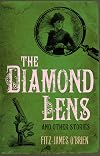
Hesperus Press, dedicated to reviving forgotten authors and stories, has recently published this collection of three stories by Irish-American author Fitz-James O'Brien -- The Diamond Lens and Other Stories. Written in 1858 and 1859, these science fiction and horror tales have a unique feel of derangement and madness to them. Fans of Poe and of classic horror films will find something to enjoy in them. Even O'Brien's short life reads like an improbable story.
As I was reading The Diamond show more Lens, I couldn't help but mentally cast Vincent Price as the microscopist who will go to any lengths to further his craft and discover something nobody has yet seen. The story read like the script of an old Roger Corman film and I found myself laughing out loud in disbelief at the insanity of it. The influence of Poe was definitely felt in the unreliable first-person narration. The only drawback was the passing racism in the story as our narrator expounds on the qualities of his Jewish neighbor.
The Wondersmith is a different kettle of fish altogether as it falls squarely in the realm of horror and is also a big ball of racism. With both passing remarks denigrating Jews and Italians and actual racist themes regarding gypsies and the physically handicapped, this story was a bit harder to stomach. With malicious wooden mannikins, brought to life by a fortune teller who has collected evil souls in a black bottle, who are meant to murder Christian children on New Years' Day, this seems more like a story that was meant to enforce the stereotypes of the time. The introduction mentions this story as a possible precursor to the modern robot tale but I'm not sure it should be given so much weight. I can only hope that some of its original readers were put off by the over-the-top gypsy stereotypes.
What Was It? is labeled as "A Mystery" when it is actually one of the first invisibility stories. It is a bit of a rollercoaster ride as our narrator is also an opium smoker and, for a while, one isn't quite sure if his invisible attacker is real. Once the "mystery" is solved, the remainder of the story is strangely straightforward. It left me feeling a bit sad for the fate of the unknown creature.
I think this collection has its strengths and weaknesses and, though a bit distasteful, also has its place as early science fiction and horror.
http://webereading.com/2012/06/new-release-diamond-lens-and-other.html show less
As I was reading The Diamond show more Lens, I couldn't help but mentally cast Vincent Price as the microscopist who will go to any lengths to further his craft and discover something nobody has yet seen. The story read like the script of an old Roger Corman film and I found myself laughing out loud in disbelief at the insanity of it. The influence of Poe was definitely felt in the unreliable first-person narration. The only drawback was the passing racism in the story as our narrator expounds on the qualities of his Jewish neighbor.
The Wondersmith is a different kettle of fish altogether as it falls squarely in the realm of horror and is also a big ball of racism. With both passing remarks denigrating Jews and Italians and actual racist themes regarding gypsies and the physically handicapped, this story was a bit harder to stomach. With malicious wooden mannikins, brought to life by a fortune teller who has collected evil souls in a black bottle, who are meant to murder Christian children on New Years' Day, this seems more like a story that was meant to enforce the stereotypes of the time. The introduction mentions this story as a possible precursor to the modern robot tale but I'm not sure it should be given so much weight. I can only hope that some of its original readers were put off by the over-the-top gypsy stereotypes.
What Was It? is labeled as "A Mystery" when it is actually one of the first invisibility stories. It is a bit of a rollercoaster ride as our narrator is also an opium smoker and, for a while, one isn't quite sure if his invisible attacker is real. Once the "mystery" is solved, the remainder of the story is strangely straightforward. It left me feeling a bit sad for the fate of the unknown creature.
I think this collection has its strengths and weaknesses and, though a bit distasteful, also has its place as early science fiction and horror.
http://webereading.com/2012/06/new-release-diamond-lens-and-other.html show less

Truly horrifying tale of an evil gypsy and his gypsy cohorts out to get revenge on Christians by killing their children using murderous animated manikins--sort of like the doll from the incredible old TV Movie, Trilogy of Terror. All that stands in their way is a hunchback! Aside from the rather racist nature of its treatment of gypsies, this is a really evil piece of work. O'Brien writes well and keeps you glued to the page.

The Diamond Lens is a short story by Fitz-James O’Brien; published in 1858, it holds its place in the canon of proto science fiction. It is a story of a young man obsessed with microscopes in an age where important scientific discoveries were still being made in the field. He sacrifices everything to build a machine that can see further than anyone has seen before. With the help of an occultists he learns that a very large diamond could be made into a lens which would serve his purpose. He show more commits murder to obtain his diamond, but is rewarded when he finally peers through his lens for the first time. It is a well written story with an imaginative denouement that still has the power to grip the reader with a sense of wonder. The excellent pacing and imaginative writing led me to explore further and I came across this 1925 collection of O’Brien’s stories.
O’Brien was born in Ireland and emigrated to New York in 1852. Previously he had edited a magazine in London and was prepared to earn his living as a writer in New York. He had stories published in Putnam’s magazine, Vanity Fair and the Atlantic Monthly and joined a coterie of bohemian writers living and working in New York. He enlisted in the New York National Guard during the civil war and died of wounds received in April 1862 at the age of 35. The 1925 edition of his collected stories starts with The Diamond Lens and it is the most satisfying story in the collection, however there are others that are worth reading. The Wondersmith tells of a gang of gypsies living in a tenement in a seedy part of the city, who plan to unleash an army of small wooden figures brought to life by Herr Hippe the leader of the gang. The evil figurines are on a mission to murder Christian children. This claustrophobic story involving Herr Hippe’s adopted daughter and her lover moves towards an exciting climax with well drawn characters. Two good stories to start the collection, although both are worryingly anti-Semitic.
The other stories in the collection are not so well paced or so well developed as the first two, but the anti-Semitism is no longer present. “The Pot of Tulips” is a fairly run of the mill ghost story but “The Lost Room” is much better; a group of ghosts take over a reclusive bachelors apartment and he must enter into a dice game with them to get his apartment back. “The Golden Ingot” is a story of a modern alchemist which again features an obsessive character who destroys himself with his obsession. What Was It is a weird tale of a murderous ghost that is creepy enough, but “My Wife’s Temper” takes O’Brien away from fantasy elements to a story that is only strange because of its lacklustre conclusion. The collection ends with ‘The Dragon Fang Possessed by the Conjuror Piou-Lu in which the fantasy elements tend to run away with the story.
The obvious comparison to O’Brien’s stories are those of Edgar Allan Poe whose stories would have been in print when O’Brien started writing, in my opinion a couple of Obrien’s tales stand up well with those of Poe and they are certainly as well written. As an example of early fantasy writing in short story format I found these well worth reading. An enjoyable afternoon’s read and so 3.5 stars. show less
O’Brien was born in Ireland and emigrated to New York in 1852. Previously he had edited a magazine in London and was prepared to earn his living as a writer in New York. He had stories published in Putnam’s magazine, Vanity Fair and the Atlantic Monthly and joined a coterie of bohemian writers living and working in New York. He enlisted in the New York National Guard during the civil war and died of wounds received in April 1862 at the age of 35. The 1925 edition of his collected stories starts with The Diamond Lens and it is the most satisfying story in the collection, however there are others that are worth reading. The Wondersmith tells of a gang of gypsies living in a tenement in a seedy part of the city, who plan to unleash an army of small wooden figures brought to life by Herr Hippe the leader of the gang. The evil figurines are on a mission to murder Christian children. This claustrophobic story involving Herr Hippe’s adopted daughter and her lover moves towards an exciting climax with well drawn characters. Two good stories to start the collection, although both are worryingly anti-Semitic.
The other stories in the collection are not so well paced or so well developed as the first two, but the anti-Semitism is no longer present. “The Pot of Tulips” is a fairly run of the mill ghost story but “The Lost Room” is much better; a group of ghosts take over a reclusive bachelors apartment and he must enter into a dice game with them to get his apartment back. “The Golden Ingot” is a story of a modern alchemist which again features an obsessive character who destroys himself with his obsession. What Was It is a weird tale of a murderous ghost that is creepy enough, but “My Wife’s Temper” takes O’Brien away from fantasy elements to a story that is only strange because of its lacklustre conclusion. The collection ends with ‘The Dragon Fang Possessed by the Conjuror Piou-Lu in which the fantasy elements tend to run away with the story.
The obvious comparison to O’Brien’s stories are those of Edgar Allan Poe whose stories would have been in print when O’Brien started writing, in my opinion a couple of Obrien’s tales stand up well with those of Poe and they are certainly as well written. As an example of early fantasy writing in short story format I found these well worth reading. An enjoyable afternoon’s read and so 3.5 stars. show less

A nightmarish tale of a boarder who finds his room inexplicably changed and taken over by bacchantean strangers appearing from nowhere. Strange, disorienting, and quite good.
Lists
You May Also Like


Associated Authors
Statistics
- Works
- 56
- Also by
- 81
- Members
- 374
- Popularity
- #64,495
- Rating
- 3.9
- Reviews
- 20
- ISBNs
- 59
- Languages
- 5
- Favorited
- 2
