
Robert P. Murphy
Author of The Politically Incorrect Guide to Capitalism
About the Author
Image credit: Dick Clark on behalf of LewRockwell.com.
Works by Robert P. Murphy
Tagged
Common Knowledge
- Gender
- male
- Education
- Hillsdale College (BA|Economics|1998)
New York University (PhD|Economics|2003) - Occupations
- economist
professor - Organizations
- Hillsdale College
Institute for Energy Research
Pacific Research Institute
Independent Institute
Ludwig von Mises Institute - Nationality
- USA
- Places of residence
- Hillsdale, Michigan, USA
- Associated Place (for map)
- Michigan, USA
Members
Reviews
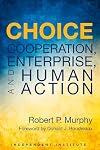
I picked up Bob Murphy's _Choice: Cooperation, Enterprise, and Human Action_ mostly to see if it might be suitable for teaching an undergraduate course on Austrian economics. But, also, I have to confess that (so far) I've only read parts of Mises' _Human Action_, and Murphy's book promised to provide an overview in roughly one-third the length. I am mostly satisfied with the book on both counts.
Murphy's _Choice_ is not only shorter than Mises' _Human Action_: it's written for the beginner. show more Undergrads who have taken an intermediate level microeconomics course should find it easy going, but I wouldn't hesitate to recommend it to a complete neophyte. There is much less math here (i.e., virtually none) than in the average introductory economics text, so even a motivated sixth-grader ought to be able to tackle this book. Of course, the concepts explained are themselves challenging, but Murphy gives plenty of examples to help the modern reader relate to the material, as well as just enough background on Mises and the Austrian school in general to put Mises' work in context.
Although it's not written as a textbook, I would definitely consider using _Choice_ as one of the core texts in a sophomore or advanced undergraduate seminar on Austrian economics. Since the book mostly follows the same outline as _Human Action_, and plenty of footnotes and bibliography are provided, students could easily follow up with the original literature. And, unlike Murray Rothbard with _Man, Economy, and State_ (which reputedly started out as a simplified exposition of _Human Action_, but turned out half again as long as Mises' own work!), Murphy almost always resists the urge to expand on or modify Mises' treatment. I can imagine how tempting that might have been, and this restraint is really where Murphy's book shines: what you get here is an honest attempt to explain the essence of Mises, without long digressions on method or finer points that would distract the beginner. (I should add, for those familiar with Murphy's more polemical side, that he confines himself here to discussing economic theory.) show less
Murphy's _Choice_ is not only shorter than Mises' _Human Action_: it's written for the beginner. show more Undergrads who have taken an intermediate level microeconomics course should find it easy going, but I wouldn't hesitate to recommend it to a complete neophyte. There is much less math here (i.e., virtually none) than in the average introductory economics text, so even a motivated sixth-grader ought to be able to tackle this book. Of course, the concepts explained are themselves challenging, but Murphy gives plenty of examples to help the modern reader relate to the material, as well as just enough background on Mises and the Austrian school in general to put Mises' work in context.
Although it's not written as a textbook, I would definitely consider using _Choice_ as one of the core texts in a sophomore or advanced undergraduate seminar on Austrian economics. Since the book mostly follows the same outline as _Human Action_, and plenty of footnotes and bibliography are provided, students could easily follow up with the original literature. And, unlike Murray Rothbard with _Man, Economy, and State_ (which reputedly started out as a simplified exposition of _Human Action_, but turned out half again as long as Mises' own work!), Murphy almost always resists the urge to expand on or modify Mises' treatment. I can imagine how tempting that might have been, and this restraint is really where Murphy's book shines: what you get here is an honest attempt to explain the essence of Mises, without long digressions on method or finer points that would distract the beginner. (I should add, for those familiar with Murphy's more polemical side, that he confines himself here to discussing economic theory.) show less
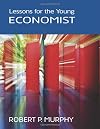
As someone who has read a fair bit of economics material before, this book was not full of information I did not already have. It did, however, impress me with how clearly it explained concepts that tend to seem much more complex in other texts. It is an excellent introduction to principles of economics, and it would be awfully nice if members of Congress would read something like it.
If it has a flaw, it is the manner in which it presents some information later in the book, where the show more author's own ideological alignment begins to color the writing a bit more obviously. I think the majority of the conclusions spelled out for readers all too directly would be obvious to any observant reader with a more dispassionate tone in the authorial voice, and those conclusions that would not come across as well are those that are the author's most dubious assertions (specifically, some of the material relating to the effective "purpose" of certain types of investment activity a little earlier in the book than the bulk of other ideologically colored material). A reader ideologically inclined to agree with the author does not need the embedded bias in the text, and a reader ideologically inclined to disagree may also be inclined to dispute other material in the book that the reader might otherwise have simply learned. Overall, though, the biased presentation is relatively rare through the majority of the book, and even most of his biases directly follow the facts anyway.
This flaw is not enough to reduce my rating. I think the only reason that I did not give it five stars is that I did not read it before I already knew the principles presented in this text. It would have changed my world in the middle of high school. show less
If it has a flaw, it is the manner in which it presents some information later in the book, where the show more author's own ideological alignment begins to color the writing a bit more obviously. I think the majority of the conclusions spelled out for readers all too directly would be obvious to any observant reader with a more dispassionate tone in the authorial voice, and those conclusions that would not come across as well are those that are the author's most dubious assertions (specifically, some of the material relating to the effective "purpose" of certain types of investment activity a little earlier in the book than the bulk of other ideologically colored material). A reader ideologically inclined to agree with the author does not need the embedded bias in the text, and a reader ideologically inclined to disagree may also be inclined to dispute other material in the book that the reader might otherwise have simply learned. Overall, though, the biased presentation is relatively rare through the majority of the book, and even most of his biases directly follow the facts anyway.
This flaw is not enough to reduce my rating. I think the only reason that I did not give it five stars is that I did not read it before I already knew the principles presented in this text. It would have changed my world in the middle of high school. show less
Full review at A. Literary Mafia blog http://wp.me/p2m4nG-cQ
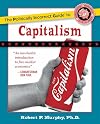
I imagine that this book could be quite the conversation piece, regardless of your position on capitalism. Murphy covers a number of topics from slavery in the United States to antitrust issues to outsourcing. He paints his positions with a conservative* laissez-faire brush. “To show how baseless these fears [of the liberal media and propagandists] are, in this book we will examine ‘pure’ capitalism, even though it doesn’t show more exist in this form today.”
While I certainly found Murphy’s purist positions thought-provoking, a number of his proposed outcomes seemed unrealistic. I think that he is underestimating the power of human influence – even in his pro-capitalist utopia (ex. humans often don’t do the right thing, humans often don’t act in their best interest, the government is not going away and isn’t always evil).
As expected, I had multiple reactions to his arguments:
- I agree with that.
- I never thought about it that way. Let me give that more thought.
- That is a ludicrous bunch of crap (as he said I would).
Although book does contain a number of interesting points, I found some of Murphy’s arguments to be rather thin. I am not sure if that is due to him trying to be brief (in order to cover a wide variety of topics in minimal space) or if his some arguments are actually thin. I appreciate that he provides other book references throughout the text so that you can dig deeper into some of the arguments posed and judge for yourself.
I’ll take Murphy’s proposed suggestions as food for thought. I would be interested in reading a book that argues on the other side for comparison. Any suggestions?
* Regnery Publishing is a leading conservative publisher in United States.
I listened to the audiobook version of The Politically Incorrect Guide to Capitalism (Politically Incorrect Guides). I received a free copy of The Politically Incorrect Guide to Capitalism through a DearReader.com giveaway.
Recommended for:
- Readers of Austrian school of economics and pro capitalism literature
- Readers wanting an introduction to basic economic concepts (understanding that this text has a conservative bent) show less
I imagine that this book could be quite the conversation piece, regardless of your position on capitalism. Murphy covers a number of topics from slavery in the United States to antitrust issues to outsourcing. He paints his positions with a conservative* laissez-faire brush. “To show how baseless these fears [of the liberal media and propagandists] are, in this book we will examine ‘pure’ capitalism, even though it doesn’t show more exist in this form today.”
While I certainly found Murphy’s purist positions thought-provoking, a number of his proposed outcomes seemed unrealistic. I think that he is underestimating the power of human influence – even in his pro-capitalist utopia (ex. humans often don’t do the right thing, humans often don’t act in their best interest, the government is not going away and isn’t always evil).
As expected, I had multiple reactions to his arguments:
- I agree with that.
- I never thought about it that way. Let me give that more thought.
- That is a ludicrous bunch of crap (as he said I would).
Although book does contain a number of interesting points, I found some of Murphy’s arguments to be rather thin. I am not sure if that is due to him trying to be brief (in order to cover a wide variety of topics in minimal space) or if his some arguments are actually thin. I appreciate that he provides other book references throughout the text so that you can dig deeper into some of the arguments posed and judge for yourself.
I’ll take Murphy’s proposed suggestions as food for thought. I would be interested in reading a book that argues on the other side for comparison. Any suggestions?
* Regnery Publishing is a leading conservative publisher in United States.
I listened to the audiobook version of The Politically Incorrect Guide to Capitalism (Politically Incorrect Guides). I received a free copy of The Politically Incorrect Guide to Capitalism through a DearReader.com giveaway.
Recommended for:
- Readers of Austrian school of economics and pro capitalism literature
- Readers wanting an introduction to basic economic concepts (understanding that this text has a conservative bent) show less
As a defender of capitalism but not someone with more than a macroeconomics course under my belt, this book wasn't surprising or Earth-shattering for me.
What The Politically Incorrect Guide to Capitalism did for me, was put some arguments into simpler terms; it explained free market economics in easy to grasp scenarios. While I inherently understood myths about capitalism were wrong, I couldn't explain why I knew this. Unfortunately, new ways to argue for free-markets won't necessarily win show more disagreements, I will at least have better ways to state my case. show less
What The Politically Incorrect Guide to Capitalism did for me, was put some arguments into simpler terms; it explained free market economics in easy to grasp scenarios. While I inherently understood myths about capitalism were wrong, I couldn't explain why I knew this. Unfortunately, new ways to argue for free-markets won't necessarily win show more disagreements, I will at least have better ways to state my case. show less
Lists
You May Also Like


Statistics
- Works
- 17
- Members
- 615
- Popularity
- #40,875
- Rating
- 3.9
- Reviews
- 9
- ISBNs
- 39
- Languages
- 3
- Favorited
- 1