

Ben Pastor
Author of Lumen
About the Author
Image credit: Ben Pastor
Series
Works by Ben Pastor
Il giaciglio d'acciaio 7 copies
Giallo Fiamma — Contributor — 1 copy
Giallo Sole — Contributor — 1 copy
Associated Works
The Year's Best Fantasy and Horror: Fourteenth Annual Collection (2001) — Contributor — 257 copies, 2 reviews
Tagged
Common Knowledge
- Legal name
- Pastor Volpi, Maria Verbena
- Other names
- Volpi, Maria Verbena
- Birthdate
- 1950-03-04
- Gender
- female
- Nationality
- Italy (birth)
USA - Birthplace
- Rome, Italy
- Map Location
- Italy
Members
Reviews
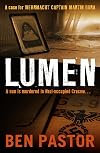
LUMEN isn’t something I’d recommend to die-hard whodunnit fans. It does have a couple of supposedly puzzling deaths but they’re both pretty easy to figure out and they don’t really hold the reader’s full attention. However, here the tropes of the crime genre are really only a backdrop for an exploration of morality in a time of war and on that front the book really is quite gripping.
It is late 1939 and Martin Bora is a young Captain in the German army which has just marched its way show more proprietorially into Poland. As one of the somewhat eclectic duties of an intelligence officer Bora is tasked with looking into the shooting death of a Catholic nun thought to be able to perform miracles. The investigation is hampered by a widespread unwillingness to talk that is not unnatural given the circumstances.
Like Leo Demidov in Tom Rob Smith’s CHILD 44 Martin Bora is, at the outset of the novel, fairly sure of his place in the world. He believes in the aims of Nazi Germany and has had no difficulty carrying out even the grimmer of his duties as a soldier. But as LUMEN progresses he starts to question the morality of some of the things he sees and is ordered to do which makes him doubt the ideology and actions of the regime. Pastor has depicted this crisis of faith in a way that allows the reader to gain a real appreciation for how agonising it is for Bora to no longer be able to believe in the things which he has ‘known’ to be true.
His questioning is fueled by a mixture of personal introspection and some not-so-gentle prodding from people around him. The first glimpse he has that things are not ‘right’ is when he sees his old piano teacher, who is Jewish, lugging rocks as part of a work gang and he can see no sense in this. Then there is the American priest who is responsible for verifying whether or not the now deceased Mother Kazimierza might qualify for sainthood with whom Bora strikes up a strained relationship. Father Malecki is quite restrained in the way he probes Bora’s beliefs and forces him to consider and reconsider what he is seeing and being asked to do. Though at least semi-lapsed from the Catholicism of his upbringing Bora does eventually turn to the priest as a confessor and as someone who can help guide him through his torment. What I liked most about this depiction of major character change is that it does not depict an easy, straightforward path to righteousness. It is a constant struggle for Bora, one that hasn’t concluded by the end of he novel, and it is in the difficulties and uncertainty that the credibility of the characterisation lies.
The one odd note to LUMEN is that for a book set partly in a convent there’s a heck of a lot of sex talk and some of these passages are very awkwardly written (perhaps influenced by her 30 ears living in the US rather than the author’s Italian upbringing?). I guess Bora’s boss’ obsession isn’t so much sex as it is the procreation of Germany with racially pure cannon fodder, but either way he seems way too keen to give bizarre instructions about how to avoid ‘involuntary loss of seminal fluid’ and achieve the right kinds of pregnancies. I thought at first these were an attempt at humour but ultimately they scanned more strange than funny to me. Bora’s flatmate (a fellow soldier of higher rank) meanwhile seems to have no occupation other than bonking (and as the nuns who taught me always said would be the case, this practice brings him nothing but trouble) but it is Bora’s own lack of access to his wife and subsequent loss of control that provides the most cringe-worthy passage of the novel.
Overall though I am glad to have read LUMEN. It is so easy with hindsight for us to be full of moral superiority about abhorrent war time practices and the disgusting belief systems that prompted them, but few of us these days have any real clue how we would behave in such circumstances and it is good, indeed essential, to be reminded that not everyone is born righteous. I can’t say that I liked Martin Bora but I found him utterly fascinating and would highly recommend the story of his moral awakening. show less
It is late 1939 and Martin Bora is a young Captain in the German army which has just marched its way show more proprietorially into Poland. As one of the somewhat eclectic duties of an intelligence officer Bora is tasked with looking into the shooting death of a Catholic nun thought to be able to perform miracles. The investigation is hampered by a widespread unwillingness to talk that is not unnatural given the circumstances.
Like Leo Demidov in Tom Rob Smith’s CHILD 44 Martin Bora is, at the outset of the novel, fairly sure of his place in the world. He believes in the aims of Nazi Germany and has had no difficulty carrying out even the grimmer of his duties as a soldier. But as LUMEN progresses he starts to question the morality of some of the things he sees and is ordered to do which makes him doubt the ideology and actions of the regime. Pastor has depicted this crisis of faith in a way that allows the reader to gain a real appreciation for how agonising it is for Bora to no longer be able to believe in the things which he has ‘known’ to be true.
His questioning is fueled by a mixture of personal introspection and some not-so-gentle prodding from people around him. The first glimpse he has that things are not ‘right’ is when he sees his old piano teacher, who is Jewish, lugging rocks as part of a work gang and he can see no sense in this. Then there is the American priest who is responsible for verifying whether or not the now deceased Mother Kazimierza might qualify for sainthood with whom Bora strikes up a strained relationship. Father Malecki is quite restrained in the way he probes Bora’s beliefs and forces him to consider and reconsider what he is seeing and being asked to do. Though at least semi-lapsed from the Catholicism of his upbringing Bora does eventually turn to the priest as a confessor and as someone who can help guide him through his torment. What I liked most about this depiction of major character change is that it does not depict an easy, straightforward path to righteousness. It is a constant struggle for Bora, one that hasn’t concluded by the end of he novel, and it is in the difficulties and uncertainty that the credibility of the characterisation lies.
The one odd note to LUMEN is that for a book set partly in a convent there’s a heck of a lot of sex talk and some of these passages are very awkwardly written (perhaps influenced by her 30 ears living in the US rather than the author’s Italian upbringing?). I guess Bora’s boss’ obsession isn’t so much sex as it is the procreation of Germany with racially pure cannon fodder, but either way he seems way too keen to give bizarre instructions about how to avoid ‘involuntary loss of seminal fluid’ and achieve the right kinds of pregnancies. I thought at first these were an attempt at humour but ultimately they scanned more strange than funny to me. Bora’s flatmate (a fellow soldier of higher rank) meanwhile seems to have no occupation other than bonking (and as the nuns who taught me always said would be the case, this practice brings him nothing but trouble) but it is Bora’s own lack of access to his wife and subsequent loss of control that provides the most cringe-worthy passage of the novel.
Overall though I am glad to have read LUMEN. It is so easy with hindsight for us to be full of moral superiority about abhorrent war time practices and the disgusting belief systems that prompted them, but few of us these days have any real clue how we would behave in such circumstances and it is good, indeed essential, to be reminded that not everyone is born righteous. I can’t say that I liked Martin Bora but I found him utterly fascinating and would highly recommend the story of his moral awakening. show less
Ostensibly a mystery, the murder of a saintly Polish abbess. But the main thrust of the book is the character study of the protagonist, Captain Martin Bora of the Intelligence Division of the Wehrmacht. He is asked to investigate the murder. Often, the man is torn between his Prussian devotion to duty and when his orders become too brutal, his innate humanity.
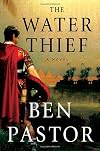
"I, Aelius Spartianus, grew up in foreign barracks and am nobody. I will build no palace, but am privileged to write the history of the men who did, and whose work this magnificent City is". So writes Aelius Spartianus, high-ranking Roman army officer, scholar and historian in his Traveller's Notes, upon entering Rome, in 304AD, reign of Diocletian. I really enjoyed this book with its unusual setting, unusual protagonist, and very good mystery! As Aelius himself muses at one point: he show more doesn't fit the mold of others' idea of a soldier. I recommend this novel very highly!
At the behest of Diocletian, Aelius is investigating the life of Hadrian and the drowning death of Hadrian's boy-favorite, Antinous. Was the death murder, suicide, or accident? This mystery includes the author's speculation on this and on the location of Antinous' grave. First, Aelius travels to Egypt to investigate: Antinous had drowned in the Nile. After an army supplier-friend of Aelius finds a letter purportedly written by Hadrian, he and his freedman, with links to Aelius, die in suspicious circumstances. Aelius next travels to Rome, where an expert in all things Egyptian, is to help him. That man, Soter, is murdered. Concurrent arson is intended to cover up Soter's murder. A former member of Intelligence, a blind veteran recommended to Aelius by a fellow Roman officer in Egypt, renders help to Aelius in his investigation. Aelius knows someone is after him, but who? Aelius survives several attacks on his person. More bodies pile up, all tied to Aelius...
Written beautifully and flowingly, there were many twists and turns in this well plotted novel. The author took one name in Cassius Dio, the classical historian, and created a believable character! I liked that Aelius used his brain in solving the mysteries, not only physical force against enemies. The author gave a real sense of Egypt and of Rome, in her vivid descriptions. I couldn't connect with Aelius at first; he seemed too wooden, too much of an automaton. After an event in Egypt triggered the remembrance of a boyhood experience and he displayed some feeling, he began to thaw out and become more human. I liked the device of letter-writing between him and the emperor. I also enjoyed 'peeking over his shoulder' at his notes he took at each stage of the investigation. After such a fantastic build-up, the denouement was disappointing and to me illogical, but the author's explanation for Antinous' death and whereabouts of his resting place was completely plausible. I do want to read the others in the series. Only one other:The Fire Waker: An Aelius Spartianus Mystery is in English; the other two are in Italian. As of this date I'm not aware of any English translations. As a college teacher, Ms. Pastor must have researched the background thoroughly. Lack of a bibliography and 'Author's Note' separating fact from fiction were glaring oversights, though. show less
At the behest of Diocletian, Aelius is investigating the life of Hadrian and the drowning death of Hadrian's boy-favorite, Antinous. Was the death murder, suicide, or accident? This mystery includes the author's speculation on this and on the location of Antinous' grave. First, Aelius travels to Egypt to investigate: Antinous had drowned in the Nile. After an army supplier-friend of Aelius finds a letter purportedly written by Hadrian, he and his freedman, with links to Aelius, die in suspicious circumstances. Aelius next travels to Rome, where an expert in all things Egyptian, is to help him. That man, Soter, is murdered. Concurrent arson is intended to cover up Soter's murder. A former member of Intelligence, a blind veteran recommended to Aelius by a fellow Roman officer in Egypt, renders help to Aelius in his investigation. Aelius knows someone is after him, but who? Aelius survives several attacks on his person. More bodies pile up, all tied to Aelius...
Written beautifully and flowingly, there were many twists and turns in this well plotted novel. The author took one name in Cassius Dio, the classical historian, and created a believable character! I liked that Aelius used his brain in solving the mysteries, not only physical force against enemies. The author gave a real sense of Egypt and of Rome, in her vivid descriptions. I couldn't connect with Aelius at first; he seemed too wooden, too much of an automaton. After an event in Egypt triggered the remembrance of a boyhood experience and he displayed some feeling, he began to thaw out and become more human. I liked the device of letter-writing between him and the emperor. I also enjoyed 'peeking over his shoulder' at his notes he took at each stage of the investigation. After such a fantastic build-up, the denouement was disappointing and to me illogical, but the author's explanation for Antinous' death and whereabouts of his resting place was completely plausible. I do want to read the others in the series. Only one other:The Fire Waker: An Aelius Spartianus Mystery is in English; the other two are in Italian. As of this date I'm not aware of any English translations. As a college teacher, Ms. Pastor must have researched the background thoroughly. Lack of a bibliography and 'Author's Note' separating fact from fiction were glaring oversights, though. show less
Lumen is an interesting book. It is a novel of crime fiction, but the actual crimes and their solutions tend to take a back seat to the main character, Captain Martin Bora of the Wehrmacht Intelligence division. Bora is recently arrived in Cracow, just after the German army has invaded Poland, and finds himself involved in an unusual case involving the Abbess Kazimierza, a nun who supposedly has prophetic powers and who at times bears the stigmata. He had seen her before her death when he show more would accompany his superior officer Colonel Hofer, who went to see the Abbess on personal matters, so when she is killed, Bora is assigned to look into the case. He is assisted in his work by Father John Malecki, an American priest who has been assigned by the Vatican to investigate claims of her mystical abilities, and then later to examine the circumstances of her death. Bora is young, still in his 20s, newly married, and has left his wife behind in Germany. But his investigative prowess does not actually take center stage in this novel -- although he's quite good at what he does -- it is his gradual awareness of growing doubts about a cause that supports mass killing, cover ups, racial superiority and the deaths of innocent people which make Bora stand out as a character. He's a scrupulous person whose sense of duty doesn't necessarily extend over the full range of Nazi ideology and practices, and his own moral compass makes him a target for potential enemies in the SD (the Sicherheitsdienst -- Security Service), who were responsible for overseeing and carrying out many of the atrocities perpetrated against the Polish people. And there's no room in the Wehrmacht for a "young captain with scruples," according to his commanding officer Colonel Schenck:
"If you start feeling sorry so early on, Bora, you're screwed. What should you care? We have our orders and the SD have theirs. It was only an accident that you didn't have similar orders. And these Polack farmers -- they aren't even people, they're not even worth reproducing. I can see you're perturbed, but believe me, don't start caring...We're all in it. If it's guilt, we're all guilty. This is the way that it is. "
Scenes change quickly in this novel, and the action is offered up from different perspectives throughout the story. The investigation into the death of the Abbess lasts from beginning to end, while other mysteries crop up in the meantime adding to the crime elements of the novel. At the same time, it's a solid piece of historical fiction, examining the psyche of a man who finds himself in a situation where normal laws don't apply and the world seems to have gone crazy. There are, believe it or not, bits and pieces of humor in spots, but overall, given the circumstances, there's little to smile about during this time. Pastor's novel is no lightweight thriller; she's written a much edgier story of a dark time in history.
Definitely recommended. Lumen is supposed to be the first in a series of books about Martin Bora, so I'll look forward to the second. show less
"If you start feeling sorry so early on, Bora, you're screwed. What should you care? We have our orders and the SD have theirs. It was only an accident that you didn't have similar orders. And these Polack farmers -- they aren't even people, they're not even worth reproducing. I can see you're perturbed, but believe me, don't start caring...We're all in it. If it's guilt, we're all guilty. This is the way that it is. "
Scenes change quickly in this novel, and the action is offered up from different perspectives throughout the story. The investigation into the death of the Abbess lasts from beginning to end, while other mysteries crop up in the meantime adding to the crime elements of the novel. At the same time, it's a solid piece of historical fiction, examining the psyche of a man who finds himself in a situation where normal laws don't apply and the world seems to have gone crazy. There are, believe it or not, bits and pieces of humor in spots, but overall, given the circumstances, there's little to smile about during this time. Pastor's novel is no lightweight thriller; she's written a much edgier story of a dark time in history.
Definitely recommended. Lumen is supposed to be the first in a series of books about Martin Bora, so I'll look forward to the second. show less
Lists
Awards


You May Also Like


Associated Authors
Statistics
- Works
- 29
- Also by
- 3
- Members
- 702
- Popularity
- #36,076
- Rating
- 3.4
- Reviews
- 29
- ISBNs
- 113
- Languages
- 6
- Favorited
- 1