
Anne Enright
Author of The Gathering
About the Author
Anne Teresa Enright (born 11 October 1962) is an Irish author. She received an English and philosophy degree from Trinity College, Dublin. Enright is a Fellow of the Royal Society of Literature; her novel The Gathering won the 2007 Man Booker Prize. She has also won the 1991 Rooney Prize for Irish show more Literature, the 2001 Encore Award and the 2008 Irish Novel of the Year. Enright's writings have appeared in several magazines, including The New Yorker, The Paris Review, Granta, the London Review of Books, The Dublin Review and the Irish Times. In 2015 she made the New Zealand Best Seller List with her title The Green Road. This title also made the Costa Book Award 2015 shortlist in the UK. It also won the Irish Book Award for Novel of the Year. (Bowker Author Biography) show less
Works by Anne Enright
Solstice 2 copies
(She Owns) Every Thing 1 copy
Actrița 1 copy
Talking Pictures 1 copy
Yesterday"s Weather 1 copy
Actress 1 copy
The Green Road 1 copy
Associated Works
A Memoir of My Former Self: A Life in Writing (2023) — Narrator, some editions — 191 copies, 11 reviews
A Very Irish Christmas: The Greatest Irish Holiday Stories of All Time (2021) — Contributor — 20 copies, 1 review
Hebbes ... : nieuwe smaakmakers voor ... — Contributor — 2 copies
Tagged
Common Knowledge
- Birthdate
- 1962-10-11
- Gender
- female
- Education
- Trinity College, Dublin
University of East Anglia
Lester B. Pearson United World College of the Pacific - Occupations
- novelist
- Awards and honors
- Royal Society of Literature (Fellow)
- Agent
- Gill Coleridge (Rogers, Coleridge & White)
- Relationships
- Carter, Angela (teacher)
Bradbury, Ray (teacher)
Murphy, Martin (spouse) - Nationality
- Ireland
- Birthplace
- Dublin, Ireland
- Places of residence
- Bray, County Wicklow, Ireland
Dublin, Ireland
Victoria, British Columbia, Canada - Associated Place (for map)
- Ireland
Members
Discussions
The Forgotten Waltz by Anne Enright in Orange January/July (May 2012)
Reviews

Margaret Mead has been quoted as saying that grandchildren and their grandfathers have a common bond because they have in common an enemy - the mother. Like many quotes and stories attributed to Dr Mead it’s probably not quite what the anthropologist actually said, but I see some truth in it.
“The Wren, the Wren” is a love poem written by the fictional famed Irish poet Phil McDaragh to his grand daughter Nell when she was a child. The Wren the Wren is a short fictional book about three show more generations of an Irish family, starting with Phil and ending with Nell. Each chapter is titled with the names of the poet, the mother Carmel, and Nell. Nell is the “title” of the bookend chapters - it’s essentially her story. In between the bookends, there are chapters about each of the three main characters. They appear as if randomly, each character spanning several non-contiguous chapters, not necessarily chronologically. .
Phil is a rake, a cad, who treats his wife badly, leaving her while she’s healing from a double mastectomy. Nevertheless he’s famous in the family’s country, Ireland where he’s seen as a beloved though eccentric poet, his sins forgiven. Today he would be silenced.
But that was then, and this is now. Carmel has led an inward-looking life, it is Nell, a millennial who bursts from the pages of the book full of life and ideas.
She loves her grandfather though she hates how he lived. She sees herself as becoming like his victims - women abused by lustful unconscionable men. But she is a strong woman, a child of the new millennium.
Nell aspires to be a writer. She is surrounded by her grandfather’s heritage. His poetry is scattered throughout the book.
Nell is smart, empathetic and funny. She is the center and narrator of the book. She uses an ap to track her periods and hates her mothers seventies-colored gifts.
“I tap symptoms. Acne, cramps and tender breasts. I’m having a ghost period. I log vaginal discharge as egg white as opposed to creamy. I don’t know what egg white means. I press three times turning it on and off. Egg white, egg white egg white.And then the mood icon angry angry, angry angry. The app sends me a message telling me that it cares about my well-being.”
Nell stole my heart. I kept waiting in anticipation for one of her chapters to come up. Nell’s chapters kept me going, though every chapter is so well-written that at times the book reads almost like a collection of poems. This is especially so when Phil’s poems interrupt Enright’s delightful prose.
The Wren is more than your usual three generation novels that appear to be expanding as exponentially as the individuals that inhabit our planet. I’d love to write more, especially about the birds, especially about the one that looks like an upturned pinecone. I’d like to write more on Nell. Her thoughts on life. Like this -
“Down in the crappy kitchen I put a pan of water onto boil and crack an egg to poach. I think about picking some of the gloop up between thumb and four finger and don’t. The egg slops into a silicone cup, one of a poaching set in blue and green, which was a present from my mother. She also gifted me orange cooking tongs, one blue and green … {she} also gifted me an orange cooking mold for making quartet pasta, and four different color chopping boards. These tasteful objects fit in my smelly kitchen. How come I can afford a designer dress and not the house to hang it in? What happened there? We are the redundant generation.”
Yes, I’d have like to have written more. But I had to return the book to the library and am writing this review from memory, wishing I had the book at hand to refer to and savor. show less
“The Wren, the Wren” is a love poem written by the fictional famed Irish poet Phil McDaragh to his grand daughter Nell when she was a child. The Wren the Wren is a short fictional book about three show more generations of an Irish family, starting with Phil and ending with Nell. Each chapter is titled with the names of the poet, the mother Carmel, and Nell. Nell is the “title” of the bookend chapters - it’s essentially her story. In between the bookends, there are chapters about each of the three main characters. They appear as if randomly, each character spanning several non-contiguous chapters, not necessarily chronologically. .
Phil is a rake, a cad, who treats his wife badly, leaving her while she’s healing from a double mastectomy. Nevertheless he’s famous in the family’s country, Ireland where he’s seen as a beloved though eccentric poet, his sins forgiven. Today he would be silenced.
But that was then, and this is now. Carmel has led an inward-looking life, it is Nell, a millennial who bursts from the pages of the book full of life and ideas.
She loves her grandfather though she hates how he lived. She sees herself as becoming like his victims - women abused by lustful unconscionable men. But she is a strong woman, a child of the new millennium.
Nell aspires to be a writer. She is surrounded by her grandfather’s heritage. His poetry is scattered throughout the book.
Nell is smart, empathetic and funny. She is the center and narrator of the book. She uses an ap to track her periods and hates her mothers seventies-colored gifts.
“I tap symptoms. Acne, cramps and tender breasts. I’m having a ghost period. I log vaginal discharge as egg white as opposed to creamy. I don’t know what egg white means. I press three times turning it on and off. Egg white, egg white egg white.And then the mood icon angry angry, angry angry. The app sends me a message telling me that it cares about my well-being.”
Nell stole my heart. I kept waiting in anticipation for one of her chapters to come up. Nell’s chapters kept me going, though every chapter is so well-written that at times the book reads almost like a collection of poems. This is especially so when Phil’s poems interrupt Enright’s delightful prose.
The Wren is more than your usual three generation novels that appear to be expanding as exponentially as the individuals that inhabit our planet. I’d love to write more, especially about the birds, especially about the one that looks like an upturned pinecone. I’d like to write more on Nell. Her thoughts on life. Like this -
“Down in the crappy kitchen I put a pan of water onto boil and crack an egg to poach. I think about picking some of the gloop up between thumb and four finger and don’t. The egg slops into a silicone cup, one of a poaching set in blue and green, which was a present from my mother. She also gifted me orange cooking tongs, one blue and green … {she} also gifted me an orange cooking mold for making quartet pasta, and four different color chopping boards. These tasteful objects fit in my smelly kitchen. How come I can afford a designer dress and not the house to hang it in? What happened there? We are the redundant generation.”
Yes, I’d have like to have written more. But I had to return the book to the library and am writing this review from memory, wishing I had the book at hand to refer to and savor. show less

Novelist Norah is being pestered by an irritatingly self-assured PhD student, who's writing a thesis about Norah's late mother, "The Irish actress" Katherine O'Dell. Which of course pushes Norah into lining up her own memories, that don't fit into the perky young woman's nice neat postmodern boxes for national and sexual identity, roles and performance.
Except that they do, in the end, but in a much-more-complicated-than-that kind of a way. And they are all mixed with Norah's own experience show more of a close, warm, exclusive mother-daughter bond set against the Ab-Fab frustration of being the serious daughter of an extravagant celebrity. Plus Irish history since the 1940s, lots of fascinating backstage stuff, a lot of very funny portraits of theatre, cinema and TV types (we can't help suspecting that we'd recognise them as caricatures if we lived in Dublin). A really touching, funny and clever novel, where my only real disappointment was that it wasn't a bit longer...
Enright turns out to be a very good reader of her own work: the Irishness is there in the audiobook without being hammed up (except where the text calls for it to be), and there's a constant mischievous quality in the reading that picks up jokes another reader might have missed, and undermines any tendency we might have to take Norah over-seriously and turn this into a romantic, sentimental story. show less
Except that they do, in the end, but in a much-more-complicated-than-that kind of a way. And they are all mixed with Norah's own experience show more of a close, warm, exclusive mother-daughter bond set against the Ab-Fab frustration of being the serious daughter of an extravagant celebrity. Plus Irish history since the 1940s, lots of fascinating backstage stuff, a lot of very funny portraits of theatre, cinema and TV types (we can't help suspecting that we'd recognise them as caricatures if we lived in Dublin). A really touching, funny and clever novel, where my only real disappointment was that it wasn't a bit longer...
Enright turns out to be a very good reader of her own work: the Irishness is there in the audiobook without being hammed up (except where the text calls for it to be), and there's a constant mischievous quality in the reading that picks up jokes another reader might have missed, and undermines any tendency we might have to take Norah over-seriously and turn this into a romantic, sentimental story. show less

This feels oddly like the book Graham Greene would have written had he been Irish and female: an historical novel about Eliza Lynch (1833-186), the Irish-born Paris courtesan who went off to Paraguay in the 1850s as the mistress of Francisco Solano López, son and eventual successor of the president. Enright doesn't try to represent Lynch's complete life-story, but depicts her by focussing on her 1854 nightmarish journey up-river to Asunción in the steamship Tacuarí, when she was expecting show more her first child with López, and on the events surrounding the battle of Cerro Corá in 1870, when López was deposed and killed. The viewpoint alternates between Lynch herself and the alcoholic Scottish physician Stewart (what could be more Greene?).
The book does its best to rehabilitate Lynch, who has often been treated unkindly by history (to the extent that she is sometimes blamed for provoking the war). In Enright's treatment she is simply a woman who has had a hard early life and is now trying to make the best life she can for herself in the strange world she has strayed into. I'm not sure if I was completely convinced. There seems to be a lot about Lynch that Enright isn't discussing. But it's an entertaining, exotic story about an unusual historical figure I didn't know about. show less
The book does its best to rehabilitate Lynch, who has often been treated unkindly by history (to the extent that she is sometimes blamed for provoking the war). In Enright's treatment she is simply a woman who has had a hard early life and is now trying to make the best life she can for herself in the strange world she has strayed into. I'm not sure if I was completely convinced. There seems to be a lot about Lynch that Enright isn't discussing. But it's an entertaining, exotic story about an unusual historical figure I didn't know about. show less
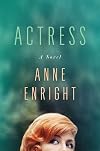
This novel is the one you might create if you were an excellent writer, about your own beloved mother. Enright constructs two whole women of Dublin: Katherine O'Dell, famous Irish (or not) stage and screen actress and best known for being the star of an iconic TV commercial ("Sure, 'tis only butter"), and her daughter, Norah. The story is made up only of two attenuated, intertwined, glorious descriptions: Katherine's looks and mothering, and Norah's unnamed husband of thirty years, both seen show more through Norah's loving eyes. She is also seeking out the identity of her father, and makes some discoveries about the other men in her mother's life - a therapist/priest, actors, and the producer who Katherine shoots (literally) in the foot, mostly for denying her the movie role which would have sealed her fortune. The words are enchanting.
Quotes: "There should be a special word for trying to stay asleep even though you have to use the bathroom. You hang onto sleep as if hanging onto youth itself. You do not want to wake up, even though you are already awake. You think if you stay completely still, you will never have to die."
"Father Des had a kindly air I did not trust for being universally applied. He made me feel like a potted plant. It was always lovely when he was in the room, and yet no one had a good time. He looked like a pocket version of God."
"You have no idea what it is like, sitting next to someone at dinner who thinks they are superior to you, that they have been superior to you for centuries, no matter what you achieve and they fail to achieve."
"Sex is a route to dissatisfaction and can only go off, over time. There may be, at the heart of it, some mutual destruction. There is certainly a kind of undoing, that leaves us remade."
" We all consider sleeping with the bad man - we want to fix his hurt, or we want him to hurt us - one way or another, we are all attracted to the shadow." show less
Quotes: "There should be a special word for trying to stay asleep even though you have to use the bathroom. You hang onto sleep as if hanging onto youth itself. You do not want to wake up, even though you are already awake. You think if you stay completely still, you will never have to die."
"Father Des had a kindly air I did not trust for being universally applied. He made me feel like a potted plant. It was always lovely when he was in the room, and yet no one had a good time. He looked like a pocket version of God."
"You have no idea what it is like, sitting next to someone at dinner who thinks they are superior to you, that they have been superior to you for centuries, no matter what you achieve and they fail to achieve."
"Sex is a route to dissatisfaction and can only go off, over time. There may be, at the heart of it, some mutual destruction. There is certainly a kind of undoing, that leaves us remade."
" We all consider sleeping with the bad man - we want to fix his hurt, or we want him to hurt us - one way or another, we are all attracted to the shadow." show less
Lists
Florida (1)
Female Author (1)
To borrow next (1)
Secrets Books (1)
Awards


You May Also Like


Associated Authors
Statistics
- Works
- 27
- Also by
- 18
- Members
- 8,722
- Popularity
- #2,743
- Rating
- 3.3
- Reviews
- 420
- ISBNs
- 278
- Languages
- 18
- Favorited
- 12


