

Athol Fugard (1932–2025)
Author of "Master Harold" … and the Boys
About the Author
Born in Cape Town and educated at Port Elizabeth Technical College and Cape Town University, Athol Fugard is a leading white South African playwright. After finishing his education, Fugard worked as a seaman and journalist before becoming an actor, director, and playwright. His commitment to the show more antiapartheid struggle through his plays and other dramatic productions is as long as it is effective in portraying the traumas of racial tensions in the lives of both white and black South Africans. The setting of his plays is contemporary South Africa, but the bleakness and frustrations of life they present, especially for those on the fringes of society, raise the plays to the level of universal human tragedy. Because of their subject, his plays have sometimes met with official opposition. Blood Knot (1960), about two coloured brothers, one light-skinned and one dark-skinned, was censored, and some of his other works have only been published abroad. Fugard has frequently collaborated in his productions with black playwrights and actors, like John Kani and Winston Ntsona, with whom he produced the highly acclaimed and frequently produced plays, Siswe Bansi Is Dead (1973) and Statements (1972). His work is quite popular in England, and later plays, Master Harold and the Boys (1982), The Road to Mecca (1984), and A Place With the Pigs (1987), have been staged at the National Theatre. Fugard has also written screenplays and a novel, Tsotsi (1980) which was adapted to the screen in 2005 and received an Academy Award for Best Foreign Language Film. His recent works are Exits and Entrances (2004), Booitjie and the Oubaas (2006), Victory (2007), Coming Home (2009), Have you seen Us (2009), and The Train Driver (2010). (Bowker Author Biography) show less
Works by Athol Fugard
Dimetos 1 copy
New English Dramatists 13 1 copy
Associated Works
The Actor's Book of Contemporary Stage Monologues: More Than 150 Monologues from More Than 70 Playwrights (1987) — Contributor — 193 copies
The Actor's Book of Scenes from New Plays: 70 Scenes for Two Actors, from Today's Hottest Playwrights (1988) — Contributor — 88 copies, 1 review
Amid Our Troubles: Irish Versions of Greek Tragedy (Plays and Playwrights) (2002) — Contributor — 4 copies
Tagged
Common Knowledge
- Legal name
- Fugard, Athol Harold Lannigan
- Birthdate
- 1932-06-11
- Date of death
- 2025-03-08
- Gender
- male
- Education
- Port Elizabeth Technical College (motor mechanics)
University of Cape Town (no degree) - Occupations
- law clerk
dramatist
stage manager
actor
director
novelist (show all 7)
memoirist - Organizations
- Serpent Players
- Awards and honors
- London Evening Standard Award
Writers' Guild Award for Outstanding Achievement
Order of Ikhamanga
South African Literary Award Lifetime Achievement (2007)
American Academy of Arts and Letters (Foreign Honorary ∙ Literature ∙ 1988) - Relationships
- Fugard, Sheila (wife)
Fugard, Lisa (daughter) - Nationality
- South Africa
- Birthplace
- Middelburg, South Africa
- Places of residence
- Middleburg, South Africa (birth)
Port Elizabeth, South Africa
Johannesburg, South Africa
San Diego, California, USA - Associated Place (for map)
- South Africa
Members
Reviews
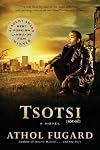
A heartbreaking book. One cannot help but grieve for this beautiful young man with delicate hands, whose life has been trampled on to the point that he does not even remember his own name, and whose aims in life are only to steal and kill. One cannot help but suffer because what has reduced him to this state, making him an outlaw above all in his own eyes (because that lack of memory is nothing but removal) is the terror and injustice imposed by the white colonialist. One day, however, he show more makes an involuntary gesture of redemption, and this gesture brings back the memory: of the happy time and its terrible end. All this, of course, he cannot survive, neither as a human being nor as a literary creature. show less
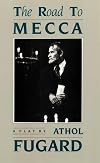
Helen, whose husband’s death has caused her to stave off various bouts of depression and battles with, to use her word, “darkness,” has recently re-discovered her gift for sculpture. Her back yard – which Helen calls her Mecca - is full of bright, colorful, life-sized figures of biblical wise men, birds, and anything else her imagination encourages her to make. One of Helen’s only remaining friends, Elsa, pays her a surprise visit from Cape Town. During their discussion, Helen show more mentions that the dominee at her local Church, Byleveld, has taken it upon himself to suggest to her that she should consider moving into a convalescent home. Byleveld claims to express concern for the Church, but also for others in New Bethesda who think that Helen has become a mad eccentric, tottering on senility. Even though Helen is unable to do some things for herself, she has a local woman come to her house a few times a week, and seems very capable of living alone. Elsa vehemently urges Helen to resist Byleveld’s “help,” and refuse his offer. He’s even gone so far as to fill out the paperwork for the home; all he needs is her signature.
The play consists of only three characters, but the balance, dynamism, and tension between them is beautiful and subtle. While Byleveld could easily come off as patriarchal and overbearing, Fugard leaves plenty of room for the reader to believe that he’s really doing what he thinks is in Helen’s best interests, even though we are not to mistake his interruption as anything other than heavy-handedness. He’s not the easy-to-hate bigot that would have been caricatural. In a number of ways, Elsa is more of a caricature, with her youthful idealism and cosmopolitan, rigorous rejection of Afrikaner tradition.
As all great drama does, this resonates on a number of levels. It’s a comment on aging and how sometimes we see aging as a necessary loss of personal volition and independence. The disagreements between Byleveld and Elsa embody many of the dualisms that South Africans were dealing with thirty years ago, and to some extent continue to deal with: the rural versus the urban, the religious versus the secular, and a conscious effort to crush artistic openness and personal freedom versus a volitional effort to let that openness, or eccentricity as Byleveld calls it, flourish and prosper.
It might strike some as interesting that, for a play written in apartheid South Africa, I haven’t mentioned race. It’s not a major theme, but its presence is as insidious as Byleveld’s. Elsa is worried about her privilege, especially how it might impinge upon the lives of others, in compelling and sincere ways. On the way to visit Helen, Elsa gave a ride to a young black woman with a child, and she is haunted by what might have happened to her after they parted. By the end of the play, Elsa and Helen have rebuilt the trust that was compromised by Helen being ambivalent about standing up to Byleveld.
Athol Fugard is South Africa’s most well-known playwright, perhaps best known for “Master Harold … and the Boys.” I’d never read anything by him when I found “The Road to Mecca” last weekend at a library book sale for fifty cents. And after reading this, I’m even more eager to read more by him than I was before. show less
The play consists of only three characters, but the balance, dynamism, and tension between them is beautiful and subtle. While Byleveld could easily come off as patriarchal and overbearing, Fugard leaves plenty of room for the reader to believe that he’s really doing what he thinks is in Helen’s best interests, even though we are not to mistake his interruption as anything other than heavy-handedness. He’s not the easy-to-hate bigot that would have been caricatural. In a number of ways, Elsa is more of a caricature, with her youthful idealism and cosmopolitan, rigorous rejection of Afrikaner tradition.
As all great drama does, this resonates on a number of levels. It’s a comment on aging and how sometimes we see aging as a necessary loss of personal volition and independence. The disagreements between Byleveld and Elsa embody many of the dualisms that South Africans were dealing with thirty years ago, and to some extent continue to deal with: the rural versus the urban, the religious versus the secular, and a conscious effort to crush artistic openness and personal freedom versus a volitional effort to let that openness, or eccentricity as Byleveld calls it, flourish and prosper.
It might strike some as interesting that, for a play written in apartheid South Africa, I haven’t mentioned race. It’s not a major theme, but its presence is as insidious as Byleveld’s. Elsa is worried about her privilege, especially how it might impinge upon the lives of others, in compelling and sincere ways. On the way to visit Helen, Elsa gave a ride to a young black woman with a child, and she is haunted by what might have happened to her after they parted. By the end of the play, Elsa and Helen have rebuilt the trust that was compromised by Helen being ambivalent about standing up to Byleveld.
Athol Fugard is South Africa’s most well-known playwright, perhaps best known for “Master Harold … and the Boys.” I’d never read anything by him when I found “The Road to Mecca” last weekend at a library book sale for fifty cents. And after reading this, I’m even more eager to read more by him than I was before. show less
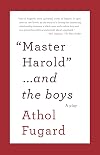
"Master Harold" and the boys is a short play that has an immense impact upon first reading. The playwright Athol Fugard manages to imagine a relationship between a boy and two Black servants in early 1950s in South Africa and make it become a universal experience that continues to resonate with readers in the Twenty-first century. I was impressed with the economy of words that were used to express multiple levels of feeling and meaning throughout the play. The culture of England, long the show more colonial power in this country, is also ever present in language and simple things such the names of towns.
The basic story is a simple tale of a boy, Hal, on the verge of manhood struggling with his education and his relationship both with his friends, the Black servants Sam and Willie, and his father who is nearing the end of what must have been a tyrannical patriarchy. Hal, who is "Master Harold" to Willie and plain Hally to Sam and everyone else, struggles through the issues of his relationships and what they mean until the difficulties with his father overtake him and he lashes out at the Black servants, reminding the reader that this is the era of apartheid and this is South Africa. One of the most powerful metaphors is that of the dance that is used from the opening of the play and culminates in a beautiful moment as the linchpin for transcendent beauty and the meaning of art. The day ends with tentative attempts at reconciliation, but we are left wondering whether the next day will bring a new level of maturity and hope for the master and his boys or more of the same tensions that make compassionate friendship crumble in this moving drama. show less
The basic story is a simple tale of a boy, Hal, on the verge of manhood struggling with his education and his relationship both with his friends, the Black servants Sam and Willie, and his father who is nearing the end of what must have been a tyrannical patriarchy. Hal, who is "Master Harold" to Willie and plain Hally to Sam and everyone else, struggles through the issues of his relationships and what they mean until the difficulties with his father overtake him and he lashes out at the Black servants, reminding the reader that this is the era of apartheid and this is South Africa. One of the most powerful metaphors is that of the dance that is used from the opening of the play and culminates in a beautiful moment as the linchpin for transcendent beauty and the meaning of art. The day ends with tentative attempts at reconciliation, but we are left wondering whether the next day will bring a new level of maturity and hope for the master and his boys or more of the same tensions that make compassionate friendship crumble in this moving drama. show less
i picked this up in the airport because i accidentally left my book at home. unfortunately, i already owned every other book in the store that i was remotely interested in reading, so i was stuck with this one. lucky for me, it turned out to be pretty good. its about a boy, or maybe a man (you never really find out), that is the leader of a small local gang. he has no recollection of his past, where he came from, what his name is, how old he is. an infant is dropped into his arms, abandoned show more and alone, and he somehow finds memory of his childhood in the baby. its a great story of youth and individual transformation. however, if graphic violence bothers you, this book has a few moments that are american psycho-ish.apparently, this one has also been made into a movie and has won tons of awards in the film circle as a more independent syle film (not mainstream i guess). i'll have to see if i can find it. show less
Lists
Awards


You May Also Like


Associated Authors
Statistics
- Works
- 54
- Also by
- 10
- Members
- 2,498
- Popularity
- #10,274
- Rating
- 3.8
- Reviews
- 31
- ISBNs
- 164
- Languages
- 14
- Favorited
- 4