
Nina Sankovitch
Author of Tolstoy and the Purple Chair: My Year of Magical Reading
About the Author
Nina Sankovitch launched ReadAllDay.org in 2008, and at the end of her year of reading, she was profiled in the New York Times. She continues to review books on ReadAllDay.org and for the Huffington Post. She lives in Connecticut with her husband and four sons.
Image credit: Nina Sankovitch
Works by Nina Sankovitch
American Rebels: How the Hancock, Adams, and Quincy Families Fanned the Flames of Revolution (2020) 143 copies, 5 reviews
Not Your Founding Father: How a Nonbinary Minister Became America's Most Radical Revolutionary (2026) 26 copies, 2 reviews
Tagged
Common Knowledge
- Birthdate
- 1962-10-28
- Gender
- female
- Education
- Harvard Law School
Tufts University - Occupations
- environmental lawyer
non-fiction writer - Nationality
- USA
- Birthplace
- Evanston, Illinois, USA
- Places of residence
- Westport, Connecticut, USA
New York, New York, USA - Associated Place (for map)
- USA
Members
Reviews
Not your founding father : how a nonbinary minister became America's most radical revolutionary by Nina Sankovitch
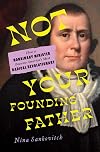
In the fateful year of 1776, a young woman of the Colony of Rhode Island and Providence Plantations fell ill and seemingly died, only to revive the next day and claim a new, nonbinary persona. The former Quaker adopted the name Public Universal Friend (often shortened to just "Friend") and started a preaching ministry focused on repentance, salvation, and righteous living. The equality of all people before God, regardless of race, gender, or social position, was a hallmark of Friend's show more message.
As a gifted orator with an encyclopedic knowledge of the Bible, Friend soon attracted a loyal following, especially among former Quakers searching for a godly way of life outside of the established Society of Friends. Eventually, Friend's followers settled in the wilds of western New York State, but a former member's treachery, compounded by sketchy real estate deals and unsubstantiated rumors about Friend and company’s scandalous activities, proved the group's undoing. The last member of Friend's community of believers died in 1874.
Author Nina Sankovich clearly admires Friend. The preacher comes across as a sincere if single-minded servant-leader whose emphasis on courage and resilience in the face of adversity still resonates today. Sankovich manages to relate Friend's story without using any pronouns to refer to the minister, as Sankovich believes Friend would have preferred. Yet Sankovich resists the temptation to slot the late 18th century figure into anachronistic LGBTQ+ or "cult leader" paradigms.
This book is recommended as a worthy tribute to a singular spiritual leader. show less
As a gifted orator with an encyclopedic knowledge of the Bible, Friend soon attracted a loyal following, especially among former Quakers searching for a godly way of life outside of the established Society of Friends. Eventually, Friend's followers settled in the wilds of western New York State, but a former member's treachery, compounded by sketchy real estate deals and unsubstantiated rumors about Friend and company’s scandalous activities, proved the group's undoing. The last member of Friend's community of believers died in 1874.
Author Nina Sankovich clearly admires Friend. The preacher comes across as a sincere if single-minded servant-leader whose emphasis on courage and resilience in the face of adversity still resonates today. Sankovich manages to relate Friend's story without using any pronouns to refer to the minister, as Sankovich believes Friend would have preferred. Yet Sankovich resists the temptation to slot the late 18th century figure into anachronistic LGBTQ+ or "cult leader" paradigms.
This book is recommended as a worthy tribute to a singular spiritual leader. show less
A long ways from being as enchanted as others apparently were by Sankovitch's "year of magical reading", I abandoned Tolstoy and the Purple Chair halfway through. I found the book bland and the insights the author gained from literature predictable and cliche. I actually regret having stayed with the book for as long as I did. I do feel for the author's untimely loss of her sister, but I am unconvinced that racing through literature to the neglect of almost everything else in one's life show more could, in fact, heal a person of her grief.Is grief ever actually "healed", or does one more or less become resigned to it? Yes, the intensity of it lessens somewhat, but it can still be felt years afterwards. The premise of the book seemed to me, as far as I got anyway, nothing more than a gimmick...in the manner of A.J. Jacobs' The Year of Living Biblically. Emphatically not recommended. My advice: if you must read the book, borrow, don't buy it! show less
After Nina’s sister passes away at age 46, she decides to read a book every single day for a year. It was an effort to process her emotions and find something to focus on during that difficult time. The book is really a meditation is grief and memories of her sister. I wasn’t quite expecting a book on grieving and though it was a raw and intimate look at what she went through, I felt like it wasn’t quite what it proclaimed itself to be. I was expecting a little more about the actual show more books she was reading.
I did love her thoughts on the importance of reading, the way it is both an escape and a way to ground ourselves. For anyone that sees reading as a permanent part of your life and something you love, it’s easy to see it becoming your focus when other aspects feel as though they are spinning out of control.
I wish she’d talk a bit more about the actual challenges of reading a book each day and how that affected her enjoyment of each one. Did she find herself craving certain books or wishing for a day off? Did she wish she could sit and read a huge novel over the course of a week, but feel like she couldn’t because she had to move on to the next one? Regardless, it’s an inspiring endeavor and one that it would be incredible to attempt one day!
“We all need a space to just let things be, a place to remember who we are and what is important to us, an interval of time that allows the happiness and joy of living back into our consciousness.” show less
I did love her thoughts on the importance of reading, the way it is both an escape and a way to ground ourselves. For anyone that sees reading as a permanent part of your life and something you love, it’s easy to see it becoming your focus when other aspects feel as though they are spinning out of control.
I wish she’d talk a bit more about the actual challenges of reading a book each day and how that affected her enjoyment of each one. Did she find herself craving certain books or wishing for a day off? Did she wish she could sit and read a huge novel over the course of a week, but feel like she couldn’t because she had to move on to the next one? Regardless, it’s an inspiring endeavor and one that it would be incredible to attempt one day!
“We all need a space to just let things be, a place to remember who we are and what is important to us, an interval of time that allows the happiness and joy of living back into our consciousness.” show less
Nina Sankovitch lost her sister to cancer and immediately started running. (Metaphorically.) As if she could just keep herself and her family moving fast enough to somehow escape the pain and loss. As it sinks in that this isn't a terrifically effective coping mechanism -- an idea takes hold of her. Books have been so important to her for her entire life,, and important in her relationship with her sister. She will read and review one book every day for one year. 365 books for 365 days.
That show more sounds like heaven. Until I just now suddenly realized that I'm pretty sure she only read fiction. A full year of reading only fiction? Now I'm sickly horrified.
Okay, my own personal proclivities aside, I did really enjoy this book. Meditations on how books shape us, shape our relationships, shape our understanding of the world. How even "trashy" genre fiction can lead to profound insights. How processing the lives of others through fiction can ease our grief, remind us of purpose, and give perspective.
At times the depth of the author's grief made me wonder if I hadn't made a poor choice for a vacation read. But it was redemptive, in the end. In fact, I've already passed this copy on, to a friend and fellow reader I was vacationing with. (A chapter on lending and borrowing books with friends was perhaps my favorite chapter in the book. Thanks for the recommendation, Emma!) show less
That show more sounds like heaven. Until I just now suddenly realized that I'm pretty sure she only read fiction. A full year of reading only fiction? Now I'm sickly horrified.
Okay, my own personal proclivities aside, I did really enjoy this book. Meditations on how books shape us, shape our relationships, shape our understanding of the world. How even "trashy" genre fiction can lead to profound insights. How processing the lives of others through fiction can ease our grief, remind us of purpose, and give perspective.
At times the depth of the author's grief made me wonder if I hadn't made a poor choice for a vacation read. But it was redemptive, in the end. In fact, I've already passed this copy on, to a friend and fellow reader I was vacationing with. (A chapter on lending and borrowing books with friends was perhaps my favorite chapter in the book. Thanks for the recommendation, Emma!) show less
Lists
Awards


You May Also Like


Statistics
- Works
- 8
- Members
- 1,146
- Popularity
- #22,409
- Rating
- 3.5
- Reviews
- 73
- ISBNs
- 27
- Languages
- 4
