
Alan Pell Crawford
Author of Twilight at Monticello: The Final Years of Thomas Jefferson
About the Author
Works by Alan Pell Crawford
Unwise Passions: A True Story of a Remarkable Woman---and the First Great Scandal of Eighteenth-Century America (2000) 235 copies, 7 reviews
This Fierce People: The Untold Story of America's Revolutionary War in the South (2024) 84 copies, 1 review
Tagged
Common Knowledge
- Birthdate
- 1953-01-24
- Gender
- male
- Occupations
- historian
political columnist
press secretary
writer - Nationality
- USA
- Places of residence
- Richmond, Virginia, USA
- Associated Place (for map)
- Virginia, USA
Members
Reviews
This Fierce People: The Untold Story of America's Revolutionary War in the South by Alan Pell Crawford
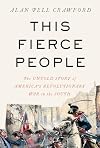
This is an excellent overview of the Southern theatre of the American Revolution; one that includes all the major players, each leading into the next. There's Baron de Kalb, a German veteran who joined the American cause in 1777, fighting mostly in the South. Then at the Siege of Charleston, a brutal 42 days of bombardment, we meet Benjamin Lincoln and Gov. John Rutledge. Preventing support from Lieut. Col. Huger is Lieut. Banastre Tarleton, later known as "Bloody Ban." At the Carolinas show more border is Abraham Buford, whose forces would lose to Tarleton in the "Waxhaws Massacre." Between him, Patrick Ferguson, rank politics and state isolationism, the Americans are hard pressed to retrieve supplies. The Battle of Camden would be particularly devastating, but Francis Marion and his band of 25-30 men would be a scrappy thorn in the Loyalist side in the interim. The Battle of Kings Mountain and the Battle of Cowpens would come as surprising victories, with Nathaniel Greene now in charge of the "Southern Dept." Both proved significant in the lead up to the final Battle of Yorktown.
As Crawford acknowledges, many historians are understandably reluctant to acknowledge Southern revolutionary efforts. Crawford asserts that the Southern rebellion was based not in the preservation of slavery (that came later), but rather in defense of rights due as British subjects. They also called themselves "Whigs," not patriots in honor of those fighting a corrupt Parliament back in England. Still, it's a shameful contradiction of independence vs hundreds of thousands still in bondage. Loyalists also existed in far greater numbers in the South, resulting in an unrefined, plundering, neighbor-against-neighbor campaign that was wholly different from its northern counterpart. Tactics were unpredictable, messy, but effective. However, there are plenty of side skirmishes, dramatic encounters and first hand accounts that add a bit of flair to the narrative. I thought the description of the Battle of King's Mountain was particularly well done! show less
As Crawford acknowledges, many historians are understandably reluctant to acknowledge Southern revolutionary efforts. Crawford asserts that the Southern rebellion was based not in the preservation of slavery (that came later), but rather in defense of rights due as British subjects. They also called themselves "Whigs," not patriots in honor of those fighting a corrupt Parliament back in England. Still, it's a shameful contradiction of independence vs hundreds of thousands still in bondage. Loyalists also existed in far greater numbers in the South, resulting in an unrefined, plundering, neighbor-against-neighbor campaign that was wholly different from its northern counterpart. Tactics were unpredictable, messy, but effective. However, there are plenty of side skirmishes, dramatic encounters and first hand accounts that add a bit of flair to the narrative. I thought the description of the Battle of King's Mountain was particularly well done! show less
Unwise Passions: A True Story of a Remarkable Woman---and the First Great Scandal of Eighteenth-Century America by Alan Pell Crawford
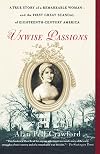
Reading this made me feel like I was reading some current scandal directly from the tabloids, although in reality it happened during the 1790’s. In short, Nancy’s sister Judith married Richard Randolph. Nancy was accused of having an affair with Richard and killing the resulting child (although whether she was pregnant or not was never proven and the body of the child was never found). Patrick Henry and John Marshall defended Nancy in the ensuing court case, where Nancy was acquitted. show more But that didn’t end the gossip and ugly rumors, and after Richard died, and his brother Jack became convinced Nancy had murdered him. In an attempt to seek revenge, he leveled charges that Nancy had become a prostitute and decided Nancy’s husband, Gouverneur Morris, needed to be warned that Nancy might also murder him. Morris didn’t believe any of it, but some of his relatives (who were expecting to inherit a fortune before he married Nancy, who was still of childbearing age) did and tried to make Nancy’s life miserable. The whole scenario started in 1793 but all of it sounds like something that could happen now.
It was interesting to read this after [b:Jefferson's Daughters: Three Sisters, White and Black, in a Young America|34859714|Jefferson's Daughters Three Sisters, White and Black, in a Young America|Catherine Kerrison|https://images.gr-assets.com/books/1492222278s/34859714.jpg|56101496]because Nancy and Jefferson’s daughter Martha were cousins and became friends. Martha ended up marrying Nancy’s brother in 1790, and their marriage was discussed in detail in “Jefferson’s Daughters.”
Thomas Jefferson comes across very poorly based on this quote, “Childbirth, Thomas Jefferson liked to tell his daughters, “was no more than a jog of the elbow,” but women who had to endure it knew better. Many never survived it, and all women feared it.” (Page 64).
The book wasn’t limited to the scandal but also included a broader analysis of the politics of the time, which showed that the ideas behind the Civil War were percolating as early as the Adams administration:
“Relations between President Adams and Vice President Jefferson had broken down completely. Although Nancy’s cousin Jack had won election that spring as a Democratic-Republican [you read that party name right], the Federalists had triumphed in other races, picking up four of nineteen seats in the Congress. John Marshall, whom Washington and Henry had endorsed, was elected to Congress as a Federalist. These setbacks for the “cause of republicanism” surprised Jefferson, who had begun to speak of the day when the southern states might need to “sever ourselves” from the federal union.” (Pages 139-140).
Similarly, during the War of 1812, Jack came to believe that its outcome would ultimately be irrelevant to the fate of Virginia, and that increasing industrialization would ultimately lead to the downfall of the agricultural southern states.
Gouverneur Morris agreed with him, although he approached the issue from the perspective of the industrializing northern states:
“The country had yet to confront the “awful secret” that “commerce and domestic slavery are mortal foes; and, bound together, one must destroy the other.” He did not “blame Southern gentlemen from striving to put down commerce, because commerce, if it survives, will, I think, put them down, supposing always the Union to endure.” But the “only means under God to preserve American freedom,” he concluded, was in a “union of the Northern states,” which would require that they cut themselves free of the slaveholding states, including his wife’s beloved Virginia. This would constitute a bloody rupture that Morris opposed.” (Pages 222-223).
To me, Gouverneur Morris’s take on the situation was especially interesting, because he actually wrote the US Constitution, something I did not know until I read this book.
Very interesting and I learned a lot about the social mores and politics of the time. show less
It was interesting to read this after [b:Jefferson's Daughters: Three Sisters, White and Black, in a Young America|34859714|Jefferson's Daughters Three Sisters, White and Black, in a Young America|Catherine Kerrison|https://images.gr-assets.com/books/1492222278s/34859714.jpg|56101496]because Nancy and Jefferson’s daughter Martha were cousins and became friends. Martha ended up marrying Nancy’s brother in 1790, and their marriage was discussed in detail in “Jefferson’s Daughters.”
Thomas Jefferson comes across very poorly based on this quote, “Childbirth, Thomas Jefferson liked to tell his daughters, “was no more than a jog of the elbow,” but women who had to endure it knew better. Many never survived it, and all women feared it.” (Page 64).
The book wasn’t limited to the scandal but also included a broader analysis of the politics of the time, which showed that the ideas behind the Civil War were percolating as early as the Adams administration:
“Relations between President Adams and Vice President Jefferson had broken down completely. Although Nancy’s cousin Jack had won election that spring as a Democratic-Republican [you read that party name right], the Federalists had triumphed in other races, picking up four of nineteen seats in the Congress. John Marshall, whom Washington and Henry had endorsed, was elected to Congress as a Federalist. These setbacks for the “cause of republicanism” surprised Jefferson, who had begun to speak of the day when the southern states might need to “sever ourselves” from the federal union.” (Pages 139-140).
Similarly, during the War of 1812, Jack came to believe that its outcome would ultimately be irrelevant to the fate of Virginia, and that increasing industrialization would ultimately lead to the downfall of the agricultural southern states.
Gouverneur Morris agreed with him, although he approached the issue from the perspective of the industrializing northern states:
“The country had yet to confront the “awful secret” that “commerce and domestic slavery are mortal foes; and, bound together, one must destroy the other.” He did not “blame Southern gentlemen from striving to put down commerce, because commerce, if it survives, will, I think, put them down, supposing always the Union to endure.” But the “only means under God to preserve American freedom,” he concluded, was in a “union of the Northern states,” which would require that they cut themselves free of the slaveholding states, including his wife’s beloved Virginia. This would constitute a bloody rupture that Morris opposed.” (Pages 222-223).
To me, Gouverneur Morris’s take on the situation was especially interesting, because he actually wrote the US Constitution, something I did not know until I read this book.
Very interesting and I learned a lot about the social mores and politics of the time. show less
Unwise Passions: A True Story of a Remarkable Woman---and the First Great Scandal of Eighteenth-Century America by Alan Pell Crawford
Reading this made me feel like I was reading some current scandal directly from the tabloids, although in reality it happened during the 1790’s. In short, Nancy’s sister Judith married Richard Randolph. Nancy was accused of having an affair with Richard and killing the resulting child (although whether she was pregnant or not was never proven and the body of the child was never found). Patrick Henry and John Marshall defended Nancy in the ensuing court case, where Nancy was acquitted. show more But that didn’t end the gossip and ugly rumors, and after Richard died, and his brother Jack became convinced Nancy had murdered him. In an attempt to seek revenge, he leveled charges that Nancy had become a prostitute and decided Nancy’s husband, Gouverneur Morris, needed to be warned that Nancy might also murder him. Morris didn’t believe any of it, but some of his relatives (who were expecting to inherit a fortune before he married Nancy, who was still of childbearing age) did and tried to make Nancy’s life miserable. The whole scenario started in 1793 but all of it sounds like something that could happen now.
It was interesting to read this after [b:Jefferson's Daughters: Three Sisters, White and Black, in a Young America|34859714|Jefferson's Daughters Three Sisters, White and Black, in a Young America|Catherine Kerrison|https://images.gr-assets.com/books/1492222278s/34859714.jpg|56101496]because Nancy and Jefferson’s daughter Martha were cousins and became friends. Martha ended up marrying Nancy’s brother in 1790, and their marriage was discussed in detail in “Jefferson’s Daughters.”
Thomas Jefferson comes across very poorly based on this quote, “Childbirth, Thomas Jefferson liked to tell his daughters, “was no more than a jog of the elbow,” but women who had to endure it knew better. Many never survived it, and all women feared it.” (Page 64).
The book wasn’t limited to the scandal but also included a broader analysis of the politics of the time, which showed that the ideas behind the Civil War were percolating as early as the Adams administration:
“Relations between President Adams and Vice President Jefferson had broken down completely. Although Nancy’s cousin Jack had won election that spring as a Democratic-Republican [you read that party name right], the Federalists had triumphed in other races, picking up four of nineteen seats in the Congress. John Marshall, whom Washington and Henry had endorsed, was elected to Congress as a Federalist. These setbacks for the “cause of republicanism” surprised Jefferson, who had begun to speak of the day when the southern states might need to “sever ourselves” from the federal union.” (Pages 139-140).
Similarly, during the War of 1812, Jack came to believe that its outcome would ultimately be irrelevant to the fate of Virginia, and that increasing industrialization would ultimately lead to the downfall of the agricultural southern states.
Gouverneur Morris agreed with him, although he approached the issue from the perspective of the industrializing northern states:
“The country had yet to confront the “awful secret” that “commerce and domestic slavery are mortal foes; and, bound together, one must destroy the other.” He did not “blame Southern gentlemen from striving to put down commerce, because commerce, if it survives, will, I think, put them down, supposing always the Union to endure.” But the “only means under God to preserve American freedom,” he concluded, was in a “union of the Northern states,” which would require that they cut themselves free of the slaveholding states, including his wife’s beloved Virginia. This would constitute a bloody rupture that Morris opposed.” (Pages 222-223).
To me, Gouverneur Morris’s take on the situation was especially interesting, because he actually wrote the US Constitution, something I did not know until I read this book.
Very interesting and I learned a lot about the social mores and politics of the time. show less
It was interesting to read this after [b:Jefferson's Daughters: Three Sisters, White and Black, in a Young America|34859714|Jefferson's Daughters Three Sisters, White and Black, in a Young America|Catherine Kerrison|https://images.gr-assets.com/books/1492222278s/34859714.jpg|56101496]because Nancy and Jefferson’s daughter Martha were cousins and became friends. Martha ended up marrying Nancy’s brother in 1790, and their marriage was discussed in detail in “Jefferson’s Daughters.”
Thomas Jefferson comes across very poorly based on this quote, “Childbirth, Thomas Jefferson liked to tell his daughters, “was no more than a jog of the elbow,” but women who had to endure it knew better. Many never survived it, and all women feared it.” (Page 64).
The book wasn’t limited to the scandal but also included a broader analysis of the politics of the time, which showed that the ideas behind the Civil War were percolating as early as the Adams administration:
“Relations between President Adams and Vice President Jefferson had broken down completely. Although Nancy’s cousin Jack had won election that spring as a Democratic-Republican [you read that party name right], the Federalists had triumphed in other races, picking up four of nineteen seats in the Congress. John Marshall, whom Washington and Henry had endorsed, was elected to Congress as a Federalist. These setbacks for the “cause of republicanism” surprised Jefferson, who had begun to speak of the day when the southern states might need to “sever ourselves” from the federal union.” (Pages 139-140).
Similarly, during the War of 1812, Jack came to believe that its outcome would ultimately be irrelevant to the fate of Virginia, and that increasing industrialization would ultimately lead to the downfall of the agricultural southern states.
Gouverneur Morris agreed with him, although he approached the issue from the perspective of the industrializing northern states:
“The country had yet to confront the “awful secret” that “commerce and domestic slavery are mortal foes; and, bound together, one must destroy the other.” He did not “blame Southern gentlemen from striving to put down commerce, because commerce, if it survives, will, I think, put them down, supposing always the Union to endure.” But the “only means under God to preserve American freedom,” he concluded, was in a “union of the Northern states,” which would require that they cut themselves free of the slaveholding states, including his wife’s beloved Virginia. This would constitute a bloody rupture that Morris opposed.” (Pages 222-223).
To me, Gouverneur Morris’s take on the situation was especially interesting, because he actually wrote the US Constitution, something I did not know until I read this book.
Very interesting and I learned a lot about the social mores and politics of the time. show less
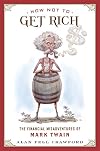
How Not to Get Rich is a financial biography of Twain; his writings are mentioned only in relation to his finances. A great nephew claimed that Twain "tried to be an Edison as well as a Shakespeare, and a few other great men besides" p. X. I was amazed to read how often and far Twain kept getting into debt, sometimes for an invention which did not pan out and sometimes for poor publishing decisions. (He was involved with publishing other people's books.) He went through both his and his show more wife's fortunes. He finally got a robber baron who liked his writing to manage his business affairs.
Much of his income in his later years came from giving lectures.
I enjoyed the first part of the book which discussed his experimenting in different fields prior to discovering himself as a writer. Mr. Crawford included a lot of humor there. Reading about his later financial difficulties and his stubbornness at not giving up when he was losing great sums of money on a particular venture got rather tiring in my opinion. show less
Much of his income in his later years came from giving lectures.
I enjoyed the first part of the book which discussed his experimenting in different fields prior to discovering himself as a writer. Mr. Crawford included a lot of humor there. Reading about his later financial difficulties and his stubbornness at not giving up when he was losing great sums of money on a particular venture got rather tiring in my opinion. show less
Lists
Awards


You May Also Like


Associated Authors
Statistics
- Works
- 4
- Members
- 711
- Popularity
- #35,655
- Rating
- 3.7
- Reviews
- 13
- ISBNs
- 20
- Favorited
- 1