
Judith Miller (3) (1948–)
Author of Germs : Biological Weapons and America's Secret War
For other authors named Judith Miller, see the disambiguation page.
About the Author
Judith Miller is the best-selling author of more than 10 books on period renovation & antiques & is one of the founding co-authors of "Millers Antiques Guides." She appears regularly on the Discovery Channel & BBC2 & contributes to numerous magazines & newspapers. She lives in London. (Publisher show more Provided) Judith Miller started collecting antiques during the sixties while a student at Edinburgh University. In 1979, she co-founded Miller's Antiques Price Guide. Additionally, Judith lectures, writes newspaper & magazine articles & appears on television programs such as the Discovery Channel's "It's Your Bid" & "The Antiques Trail". (Publisher Provided) show less
Works by Judith Miller
Tagged
Common Knowledge
- Birthdate
- 1948-01-02
- Gender
- female
- Education
- Barnard College
Princeton University
Hollywood high school - Occupations
- journalist
- Organizations
- The New York Times
Fox News
Newsmax - Relationships
- Epstein, Jason (husband)
- Nationality
- USA
- Birthplace
- New York, New York, USA
- Places of residence
- Miami, Florida, USA
Los Angeles, California, USA - Associated Place (for map)
- USA
Members
Reviews
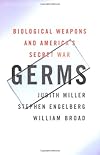
If you are a fan of thinking that the world is, by and large, safe and that we have weathered the storm of the cold war without any major apocalypses happening, then this book will shatter that thinking.
Broad and Miller look at the bioweapons programs of the US, Russia, and Iraq, and how bioweapons featured prominently in geopolitical posturing from the end of WW2 on. Along the way, they scare the bejeezus out of the reader, though with good reason.
We all know the stories about how close the show more world came to nuclear annihilation, and how many times we came that close. Well, we came much much MUCH closer to a biological apocalypse, and came that close many many more times. And since bioweapons don't have the cachet of nuclear weapons, the stories are relatively hidden. Up until this book, that is.
Nuclear weapons require a certain amount of expertise and equipment, and every intelligence agency in the world is on the lookout for suspicious transactions that could lead to nuclear weapons. But bioweapons are so easily concealable as agricultural or medical research that it is much harder to see whether the intentions of people doing that research are good or not. And bioweapons are no less deadly than nuclear weapons--in fact, they may be more so, especially with the advent of recombinant organisms that are resistant to conventional antibiotics or vaccines.
Adding to this problem is the fact that, ever since the fall of the Soviet Union, scientists who have expertise in making bioweapons and distributing them have been unemployed and their facilities have lost state protection. This has led to a black market where rogue states and organizations can essentially buy talent and expertise to make bioweapons, and I fear this will lead to something very bad happening in the future.
But there is hope. The book also details the efforts of both the US and Russia to curb the spread of bioweapons. While there is still research going on, it seems to be better monitored, and I hope this trend continues through the rest of the century.
Overall a very good read about something I didn't know much about before. show less
Broad and Miller look at the bioweapons programs of the US, Russia, and Iraq, and how bioweapons featured prominently in geopolitical posturing from the end of WW2 on. Along the way, they scare the bejeezus out of the reader, though with good reason.
We all know the stories about how close the show more world came to nuclear annihilation, and how many times we came that close. Well, we came much much MUCH closer to a biological apocalypse, and came that close many many more times. And since bioweapons don't have the cachet of nuclear weapons, the stories are relatively hidden. Up until this book, that is.
Nuclear weapons require a certain amount of expertise and equipment, and every intelligence agency in the world is on the lookout for suspicious transactions that could lead to nuclear weapons. But bioweapons are so easily concealable as agricultural or medical research that it is much harder to see whether the intentions of people doing that research are good or not. And bioweapons are no less deadly than nuclear weapons--in fact, they may be more so, especially with the advent of recombinant organisms that are resistant to conventional antibiotics or vaccines.
Adding to this problem is the fact that, ever since the fall of the Soviet Union, scientists who have expertise in making bioweapons and distributing them have been unemployed and their facilities have lost state protection. This has led to a black market where rogue states and organizations can essentially buy talent and expertise to make bioweapons, and I fear this will lead to something very bad happening in the future.
But there is hope. The book also details the efforts of both the US and Russia to curb the spread of bioweapons. While there is still research going on, it seems to be better monitored, and I hope this trend continues through the rest of the century.
Overall a very good read about something I didn't know much about before. show less
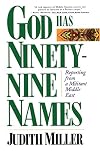
This book has a pretty well defined scope. It's pretty much Algeria to Iran, 1980 to 1995. It will go back deeper in history and does touch a bit beyond geographically, but anyway there is plenty to cover within its self-imposed scope. Of course an awful lot has happened since the book came out. Still, the perspective of the book is not invalidated in the least. I don't think Al Qaeda was mentioned at all. Osama bin Laden appears twice, if I counted right, though only once in the index. A show more careful reader would certainly have noted that name as someone to watch for future nastiness, from the mentions here.
Miller presents an awful lot of information but organizes it well enough and provides a narrative thread - it is almost all a record of her experiences and interviews as a New York Times reporter in the region. - that the reader never gets lost.
The remarkable thing really that one wouldn't predict from the book - the 9/11 attack on the World Trade Center and the Pentagon, that flows quite naturally out of the book. But look at how Europe and the USA have gotten ever deeper into ultra right wing racism etc. We are really following in the footsteps of militant Islam. And probably for pretty much the same reasons - people are desperate and confused. Cultivating hate is an easy way to rally such people and build power on them as a base. The problem of the Middle East is now the problem of the West. Ouch. show less
Miller presents an awful lot of information but organizes it well enough and provides a narrative thread - it is almost all a record of her experiences and interviews as a New York Times reporter in the region. - that the reader never gets lost.
The remarkable thing really that one wouldn't predict from the book - the 9/11 attack on the World Trade Center and the Pentagon, that flows quite naturally out of the book. But look at how Europe and the USA have gotten ever deeper into ultra right wing racism etc. We are really following in the footsteps of militant Islam. And probably for pretty much the same reasons - people are desperate and confused. Cultivating hate is an easy way to rally such people and build power on them as a base. The problem of the Middle East is now the problem of the West. Ouch. show less

Germs. Viruses. Nasty little things made even nastier by scientific manipulation. This book, published in early 2001, explores the United State's efforts in germ and biological warfare from the 1950s onward. Special attention is paid to the little-known food bar poisoning attack by the Rajneeshees in Oregon in the early 1980s, Soviet advances and the subsequent degrading of their program after communism's collapse, Iraq and the first Gulf War, and battles in Washington D.C. over funding and show more ethical problems.
I was reading this book for novel research, and I did place sticky tabs on various points of interest. However, I was more interested in the science itself and the creations and preventative measures more than the battles for funding or the see-saw regarding weapons inspectors in Iraq in the 1990s. There's also the issue of the book's timing of publication in mid-2001. The final chapter on the future had ominous notes about the potential for attacks by figures such as Osama bin Laden. I have a feeling this book would have had a different focus if it had come out six months later, after the 9/11 attacks and the anthrax mailing scare. Still, it made for an interesting (in parts) if slow read--it took me two weeks to finish it. show less
I was reading this book for novel research, and I did place sticky tabs on various points of interest. However, I was more interested in the science itself and the creations and preventative measures more than the battles for funding or the see-saw regarding weapons inspectors in Iraq in the 1990s. There's also the issue of the book's timing of publication in mid-2001. The final chapter on the future had ominous notes about the potential for attacks by figures such as Osama bin Laden. I have a feeling this book would have had a different focus if it had come out six months later, after the 9/11 attacks and the anthrax mailing scare. Still, it made for an interesting (in parts) if slow read--it took me two weeks to finish it. show less
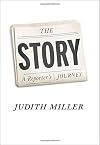
An important piece of documentation about the First Amendment and contemporary journalism and about the justice system. It took me a long time to read it because of its immense detail. Still not sure I could tell you what really happened! But as I am fascinated by journalists' inside stories, I give this one full marks for a thorough recounting of a difficult time in American life.
Lists
Awards

You May Also Like


Associated Authors
Statistics
- Works
- 5
- Members
- 1,349
- Popularity
- #19,067
- Rating
- 3.4
- Reviews
- 13
- ISBNs
- 589
- Languages
- 16
- Favorited
- 1
