
James Tate (2) (1943–2015)
Author of Selected Poems
For other authors named James Tate, see the disambiguation page.
About the Author
James Vincent Tate was born in Kansas City on December 8, 1943 and erupted upon the poetry scene when, in 1967, at the age of 23, he received the Yale Series of Young Poets award for The Lost Pilot. Within two years of his stunning debut, Tate had another dozen collections in print or accepted for show more publication. Tate's work earned him the Pulitzer Prize and the National Book Award. He was a professor of English at the University of Massachusetts Amherst and a member of the American Academy of Arts and Letters. Dudley Fitts selected Tate's first book of poems, The Lost Pilot (1967), for the Yale Series of Younger Poets while Tate was still a student at the Writers' Workshop; Fitts praised Tate's writing for its "natural grace." Tate's first volume of poetry, Cages, was published by Shepherd's Press, Iowa City, 1966. Tate won the 1992 Pulitzer Prize and the Poetry Society of America's William Carlos Williams Award in 1991 for his Selected Poems. In 1994, he won the National Book Award for his poetry collection Worshipful Company of Fletchers. In addition to many books of poetry, he published two books of prose, Dreams of a Robot Dancing Bee (2001) and The Route as Briefed (1999). Tate received his B.A. in 1965, going on to earn his M.F.A. from the University of Iowa's famed Writer's Workshop. He died on July 8, 2015 at the age of 71. (Bowker Author Biography) show less
Image credit: James Tate (links) im Grolier Bookshop in Harvard Square in den 1960er Jahren / By Elsadorfman (Own work) [CC BY-SA 3.0], via Wikimedia Commons
Works by James Tate
Bewitched 3 copies
Associated Works
A Book of Luminous Things: An International Anthology of Poetry (1996) — Contributor — 941 copies, 12 reviews
Buzz Words: Poems About Insects (Everyman's Library Pocket Poets Series) (2021) — Contributor — 56 copies
St. Peter's B-list: Contemporary Poems Inspired by the Saints (2014) — Contributor — 32 copies, 1 review
Firsts: 100 Years of Yale Younger Poets (Yale Series of Younger Poets) (2019) — Contributor — 15 copies
Fire Exit 3 — Contributor — 1 copy
Fire Exit 4 — Contributor — 1 copy
Fire Exit, Volume 1, Number 1 — Contributor — 1 copy
Kayak 12 — Contributor — 1 copy
Tagged
Common Knowledge
- Canonical name
- Tate, James
- Legal name
- Tate, James Vincent
- Other names
- Appleby, James Vincent (birth name)
- Birthdate
- 1943-12-08
- Date of death
- 2015-07-08
- Gender
- male
- Education
- Kansas State College (BA | 1965)
University of Iowa (MFA|1967) - Occupations
- poet
professor - Organizations
- Poetry Society of America
University of Massachusetts, Amherst
Academy of American Poets - Awards and honors
- Pulitzer Prize (1992)
National Book Award (1994)
Wallace Stevens Award (1995)
William Carlos Williams Award (1991)
American Academy of Arts and Letters (2004) - Relationships
- Weir, Dara (wife)
- Nationality
- USA
- Birthplace
- Kansas City, Missouri, USA
- Place of death
- Springfield, Massachusetts, USA
- Associated Place (for map)
- USA
Members
Reviews
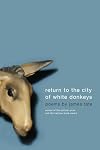
I find myself getting into a groove sometimes when I’m reading the poetry of James Tate. This particular poetry collection was Return to the City of White Donkeys, from 2005, and again he constantly surprised me with the twists and turns that inhabited his work. As I read poem after poem of his, I found myself expecting just about anything to happen. He could be writing something approaching a fable, or a mundane modern story that suddenly takes an enormous leap, or animals could be show more conversing, aliens landing, plagues breaking out, the police rapping at the door, a character could be having an out-of-body experience, a person could be finding or losing his love, or you just might not have a clue to what is actually going on. One should never assume that Tate was happy with entirely changing everything around just once in a poem, more change could easily be found in the very next line.
My Tate groove is that anything and everything could be sitting there, waiting for me. Reading a book of his writings carries over and loosens up how I think, approach things, write, and even dream. He breaks up the standard linear and routine way of seeing things, and his poetry rekindles the unique and the unexpected. Again, Tate reaffirmed that the joy and power of literature and its ability to reach people is a truly amazing thing. show less
My Tate groove is that anything and everything could be sitting there, waiting for me. Reading a book of his writings carries over and loosens up how I think, approach things, write, and even dream. He breaks up the standard linear and routine way of seeing things, and his poetry rekindles the unique and the unexpected. Again, Tate reaffirmed that the joy and power of literature and its ability to reach people is a truly amazing thing. show less
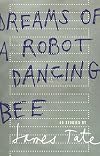
I fell in love with the poetry of James Tate a few years ago, and when I heard of this volume of his short stories, I quickly ordered it. Tate’s poetry is mostly written in a prose style, one that is most always unpredictable, wryly funny, often with a sudden aha twist at the end. I find his humor supremely amusing, endearing, and wise, but I’m know for my bad puns—so consider the source.
His short stories were a lot like his poetry—strange and surprising. He had a spry mind that I show more will always treasure. I’ve read many reviews of his work, and it is not unusual to come across my favorite word, bizarre. Tate brought so much of life into his work, with politics sharing space with romance, absurdity cuddled up with the blackest of humor, with cold alienation suddenly entering the world of marriage, infidelity, and the many flavors of love. I love reading his work, never knowing where his words will take me, not seeing around the next corner, and not even seeing the next corner coming.
In the end, I’m sure to reread some of these stories, but thinking of James Tate will always lead my mind first to his poetry. show less
His short stories were a lot like his poetry—strange and surprising. He had a spry mind that I show more will always treasure. I’ve read many reviews of his work, and it is not unusual to come across my favorite word, bizarre. Tate brought so much of life into his work, with politics sharing space with romance, absurdity cuddled up with the blackest of humor, with cold alienation suddenly entering the world of marriage, infidelity, and the many flavors of love. I love reading his work, never knowing where his words will take me, not seeing around the next corner, and not even seeing the next corner coming.
In the end, I’m sure to reread some of these stories, but thinking of James Tate will always lead my mind first to his poetry. show less
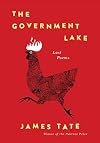
This was the last book that James Tate wrote before his death in 2015. Many people are unfamiliar with Tate’s poetry, but he had won the Pulitzer Prize, the National Book Award, the William Carlos Williams Award, among many other awards and prizes. He was also honored with fellowships from the Guggenheim Foundation and the National Endowment for the Arts.
But it was just a few years ago that I first read and fell in love with his work. His work was accessible, as he didn’t bring in show more esoteric figures from ancient mythology, or try to impress his readers with little-known vocabulary that was shoehorned into his poetry. It was his later prose poetry that was my very favorite. His style always surprised. You would be reading along, lulled into a story, a feeling, and then you’d come to a major shift, and his humor would grab you and run off in some bizarre unexpected direction … and it was the best of odd. Most always, he would spin the wheel and quickly end the poem, and you were left—maybe a little confused at first—but I always found a smile or a smirk on my face.
I can only hope that there’s more Tate prose poetry squirreled away, waiting to be published in the next few years, but this was a fine collection that did all those things that his poetry did for me. show less
But it was just a few years ago that I first read and fell in love with his work. His work was accessible, as he didn’t bring in show more esoteric figures from ancient mythology, or try to impress his readers with little-known vocabulary that was shoehorned into his poetry. It was his later prose poetry that was my very favorite. His style always surprised. You would be reading along, lulled into a story, a feeling, and then you’d come to a major shift, and his humor would grab you and run off in some bizarre unexpected direction … and it was the best of odd. Most always, he would spin the wheel and quickly end the poem, and you were left—maybe a little confused at first—but I always found a smile or a smirk on my face.
I can only hope that there’s more Tate prose poetry squirreled away, waiting to be published in the next few years, but this was a fine collection that did all those things that his poetry did for me. show less

When I stumbled on this book, about to be thrown out by my high school's library to make room for more back issues of Seventeen and Rolling Stone, I lost my head. Along with Stern and Komunyakaa, this broke my brain and I relearned what poetry was capable of: absolute annihilation through precise, painfully, exquisitely dead on encapsulation. Language, lines, sentences, single perfectly placed WORDS and SOUNDS that just make you go "how the fuck did he do that, know to do that?!" The miracle show more and mindfucking mystery of language that seems so random yet hits you dead center in some space inside you don't normally have access to, again and again...it's still my first thought when I imagine a single book of poetry doing everything I ever considered language capable of. Really. Reminds me of early Ashbery in that way. I can't say I feel Tate's fared as well as Ashbery, though, nor the others. That makes me twinge a bit with sadness, but on the other hand it's like My Bloody Valentine or Liz Phair--I don't give a shit if Tate goes off the deep end and never writes another line. This book already changed everything. "Enough crying was not enough/I'm in the birdbath don't come in." Oh tears. show less
Lists
Awards


You May Also Like


Associated Authors
Statistics
- Works
- 37
- Also by
- 35
- Members
- 1,599
- Popularity
- #16,124
- Rating
- 3.9
- Reviews
- 23
- ISBNs
- 148
- Languages
- 4
- Favorited
- 4
