
James Tobin (2)
Author of To Conquer the Air: The Wright Brothers and the Great Race for Flight
For other authors named James Tobin, see the disambiguation page.
About the Author
James Tobin won the National Book Critics Circle Award for his first book, Ernie Pyle's War, and the J. Anthony Lukas Work-in-Progress Award for To Conquer the Air. Twice nominated for the Pulitzer Prize in journalism, he holds a Ph.D. in history from the University of Michigan
Image credit: Simon & Schuster
Works by James Tobin
Great Projects: The Epic Story of the Building of America from the Taming of the Mississippi to the Invention of the Internet (2001) 72 copies, 1 review
Sue McDonald had a book 3 copies
Tagged
Common Knowledge
- Canonical name
- Tobin, James
- Gender
- male
- Education
- University of Michigan (BS|History)
University of Michigan (Ph.D|History) - Occupations
- professor
historian
reporter - Organizations
- Maimi University
Carnegie Mellon University - Nationality
- USA
- Associated Place (for map)
- USA
Members
Reviews
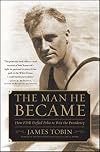
"I suppose of all those [candidates] mentioned he will be the easiest one to beat." — Herbert Hoover, 31st US President
"I do a lot of things I can't do." — Franklin Delano Roosevelt
We live in a world that is vastly different than it was a hundred years ago. The crippling diseases people feared back then aren't even a second thought to most of us now – if we even know what they are or what they do. True, we have new diseases to fear, but how scared are you really of contracting Ebola? show more Contrast that with the threat of polio which could leave its victim handicapped for life. And this was before handicapped parking stalls and the Americans With Disabilities Act. Being "crippled" could ruin your ability to work and provide for yourself or family. It made it difficult to get around and made you dependent on others, and it took away your privacy. It made people look at you differently, as if you were "unclean." That was the reality. And yet, the American people elected a polio victim as its 32nd president.
“Eleanor Roosevelt and others said polio changed Roosevelt, that it made him more compassionate. That may be so. But the first impact of the disease was to call forth elements of his nature that no one had seen before – elements that even he may not have known he possessed. His decision to defy polio was a critical moment in his life – perhaps the critical moment.” pg. 132
Franklin Roosevelt wasn't much like his uncle, Teddy Roosevelt, the "rough-rider" with his bully pulpit and big stick philosophy. In fact, Franklin was a bit of a "dandy;" tall, handsome, charming, full of life, and with a very promising political career ahead. In his excellent book The Man He Became: How FDR Defied Polio to Win the Presidency, James Tobin explains how FDR probably contracted the polio virus at a Boy Scout retreat. He tells what it does to the body and why Roosevelt may have been especially susceptible to its harshest effects. It was uncommon for a 39 year old man to contract the disease, and his went undiagnosed and improperly treated for weeks. But he also tells of his efforts to walk again, and how he overcame the public stigma attached to the disease. And the account of how he eventually ascended to the presidency is quite inspiring, convincing people he could do the job. "After all," his son Jimmy said, "it's a desk job."
And this is the crux of his book. I've often read that FDR tried to *hide* his disability, and even the recent PBS special said photographers were "forbidden" to take pictures that showed his vulnerability. Tobin shows how FDR actually used it to his advantage, promoting the progress he had made and his fight to overcome its effects. He points out the many times he was seen in public – by huge gatherings at the Democratic conventions – and the letters that were written to him. He tells of his efforts to connect with other sufferers and his business venture at Warm Springs, Georgia to develop a sanctuary where polio victims might recuperate and regain some of their abilities without having to worry about how they appear to others. People may have overlooked his handicap, and photographers may have declined to take his picture while being helped or lifted out of a car, but that was out of respect for his privacy and dignity (another thing that has changed dramatically in 100 years).
I don't know a lot about President Roosevelt. He did a poor job of handling the Great Depression, and some credit him with making it last as long as it did. As an economics student myself I've wondered at some of his stranger policies. And yet, I've always been surprised at how *absolutely revered* he was by so many. Tobin does an excellent job of explaining the illness and bringing a humanity to Roosevelt's suffering, despite the lack of a personal record (which Tobin laments more than once). His accounts of how it affected his family and how FDR still managed his presidential aspirations are fascinating. Having seen friends deal with debilitating medical conditions, I think I have a small idea of how discouraging it might have been. Yet, as Tobin points out, FDR refused to be beaten by it and used his bright personality to encourage others. Tobin even makes a strong case the Roosevelt became president *because of* his disability. It's an argument I found convincing, and it gives a lot more depth and meaning to his famous quote that "we have nothing to fear but fear itself." show less
"I do a lot of things I can't do." — Franklin Delano Roosevelt
We live in a world that is vastly different than it was a hundred years ago. The crippling diseases people feared back then aren't even a second thought to most of us now – if we even know what they are or what they do. True, we have new diseases to fear, but how scared are you really of contracting Ebola? show more Contrast that with the threat of polio which could leave its victim handicapped for life. And this was before handicapped parking stalls and the Americans With Disabilities Act. Being "crippled" could ruin your ability to work and provide for yourself or family. It made it difficult to get around and made you dependent on others, and it took away your privacy. It made people look at you differently, as if you were "unclean." That was the reality. And yet, the American people elected a polio victim as its 32nd president.
“Eleanor Roosevelt and others said polio changed Roosevelt, that it made him more compassionate. That may be so. But the first impact of the disease was to call forth elements of his nature that no one had seen before – elements that even he may not have known he possessed. His decision to defy polio was a critical moment in his life – perhaps the critical moment.” pg. 132
Franklin Roosevelt wasn't much like his uncle, Teddy Roosevelt, the "rough-rider" with his bully pulpit and big stick philosophy. In fact, Franklin was a bit of a "dandy;" tall, handsome, charming, full of life, and with a very promising political career ahead. In his excellent book The Man He Became: How FDR Defied Polio to Win the Presidency, James Tobin explains how FDR probably contracted the polio virus at a Boy Scout retreat. He tells what it does to the body and why Roosevelt may have been especially susceptible to its harshest effects. It was uncommon for a 39 year old man to contract the disease, and his went undiagnosed and improperly treated for weeks. But he also tells of his efforts to walk again, and how he overcame the public stigma attached to the disease. And the account of how he eventually ascended to the presidency is quite inspiring, convincing people he could do the job. "After all," his son Jimmy said, "it's a desk job."
And this is the crux of his book. I've often read that FDR tried to *hide* his disability, and even the recent PBS special said photographers were "forbidden" to take pictures that showed his vulnerability. Tobin shows how FDR actually used it to his advantage, promoting the progress he had made and his fight to overcome its effects. He points out the many times he was seen in public – by huge gatherings at the Democratic conventions – and the letters that were written to him. He tells of his efforts to connect with other sufferers and his business venture at Warm Springs, Georgia to develop a sanctuary where polio victims might recuperate and regain some of their abilities without having to worry about how they appear to others. People may have overlooked his handicap, and photographers may have declined to take his picture while being helped or lifted out of a car, but that was out of respect for his privacy and dignity (another thing that has changed dramatically in 100 years).
I don't know a lot about President Roosevelt. He did a poor job of handling the Great Depression, and some credit him with making it last as long as it did. As an economics student myself I've wondered at some of his stranger policies. And yet, I've always been surprised at how *absolutely revered* he was by so many. Tobin does an excellent job of explaining the illness and bringing a humanity to Roosevelt's suffering, despite the lack of a personal record (which Tobin laments more than once). His accounts of how it affected his family and how FDR still managed his presidential aspirations are fascinating. Having seen friends deal with debilitating medical conditions, I think I have a small idea of how discouraging it might have been. Yet, as Tobin points out, FDR refused to be beaten by it and used his bright personality to encourage others. Tobin even makes a strong case the Roosevelt became president *because of* his disability. It's an argument I found convincing, and it gives a lot more depth and meaning to his famous quote that "we have nothing to fear but fear itself." show less
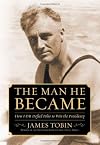
Well-written, thoroughly researched story of FDR's fight with polio and its aftermath. As a polio survivor myself (I was two when I contracted the disease in the last big US epidemic in 1955) I found the descriptions of the illness right on the money, as well as FDR's physical, mental, and emotional struggles to regain some of what he'd lost. But this book should resonate with anyone, not only those who struggle with disability, but who struggle, period. FDR's courage and determination show more served him well in leading this country during the dark days of the Big Depression. I think he continues to encourage those who read about him today. Yes, he's the guy who told us that "the only thing we have to fear is fear itself."
Hearing about FDR inspired me as a child, and I connected with his drive for people to see him as a vibrant, capable person. What disabled person does not? But let's change that sentence: What person does not? Whatever your personal difficulties, whether they are clearly visible to others or not, it helps to have someone wiling to inspire us by getting on with the business of living, of doing whatever it takes to become the person you want to be. FDR had presidential aspirations long before polio struck; the fascination of his story is how he refused to let it change the true direction of his life.
Highly recommended. show less
Hearing about FDR inspired me as a child, and I connected with his drive for people to see him as a vibrant, capable person. What disabled person does not? But let's change that sentence: What person does not? Whatever your personal difficulties, whether they are clearly visible to others or not, it helps to have someone wiling to inspire us by getting on with the business of living, of doing whatever it takes to become the person you want to be. FDR had presidential aspirations long before polio struck; the fascination of his story is how he refused to let it change the true direction of his life.
Highly recommended. show less
An excellent historical presentation of FDR from just before his attack of polio to just as he gets elected president. Without question, my biggest complaint is that the author stops way too soon. The narrative never lags. The author presents facts with an open mind to differing opinions. And he is quite convincing when he offers an opinion of his own. And perhaps more to the point of the book's subtitle, he presents information on acquiring and dealing with polio in a most comprehensive but show more never dry way, from both the patient's and doctor's point of view, as well as that of family and friends. Admittedly, most people who know something about Franklin Roosevelt, know it primarily from his days as President of the United States. Nevertheless, this felt like a captivating setup and play-by-play from a championship sporting event that occurred in the past, and then the book simply halts at half-time with the assumption that everybody already knows how the game ends. Keep writing! I would certainly read more of this very capable historian's work. show less
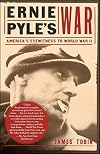
Written in 1997, Tobin takes a long look back into war correspondence and the unique character of Ernie Pyle. The book chronicles Pyle's life and personal struggles as WWII's consummate journalist, but also examines what made Pyle different as the defining voice of the common soldier. It attempts to define what war was and is, politically, morally and practically. Tobin shows that Pyle, though not a philosopher, nevertheless struggles with the age-old questions of how soldiers convert from show more husbands and fathers to “patriotic” killers. Pyle gradually changed his views of what we were fighting for. He wrote in simple, down-home style that endeared his columns to the vast majority of Americans and he never glorified war as anything other than what it was from what he saw. Tobin relies on generous excerpts from Pyle's writings, his columns, personal interviews with friends, and his correspondence to Pyle's editors that revealed his personal doubts and feelings. This is an excellent book that helps keep alive the legacy of WWII with generations after the fact. show less
Lists
Awards


You May Also Like


Associated Authors
Statistics
- Works
- 7
- Members
- 733
- Popularity
- #34,654
- Rating
- 4.2
- Reviews
- 22
- ISBNs
- 91
- Languages
- 4