
Jim Paul (1) (1950–)
Author of Catapult: Harry and I Build a Siege Weapon
For other authors named Jim Paul, see the disambiguation page.
Works by Jim Paul
Associated Works
The Bastard on the Couch: 27 Men Try Really Hard to Explain Their Feelings About Love, Loss, Fatherhood, and Freedom (2004) — Contributor — 186 copies, 7 reviews
Tagged
Common Knowledge
- Birthdate
- 1950
- Gender
- male
- Education
- University of Michigan (PhD, Medieval English Literature)
- Occupations
- writer
poet
translator
teacher - Organizations
- University of Arizona
San Francisco Museum of Modern Art
Mills College
Hunter College - Awards and honors
- Stegner Fellowship (1984)
Guggenheim Fellowship (1994) - Short biography
- [from Tivoli Books website]
Jim Paul's poetry has appeared in The New Yorker, The Paris Review, Poetry and elsewhere. His books include Medieval in LA, Elsewhere in the Land of Parrots, and The Old English Rune Poem, a translation with commentary. He has received Hopwood Awards in poetry and prose from the University of Michigan, a Stegner Fellowship in Creative Writing from Stanford University, and a Guggenheim Fellowship. He earned a doctorate in medieval English literature from the University of Michigan and taught for fifteen years on the English faculty at Hunter College. As a producer and arts administrator in New York, Paul worked with Douglas Dunn & Dancers and SummerStage and headed the House Foundation for the Arts, which represents the work of singer and composer Meredith Monk. He is executive director of the Tank Center for Sonic Arts in Rangely, Colorado. - Nationality
- USA
- Places of residence
- San Francisco, California, USA
Tucson, Arizona, USA
New York, New York, USA
Colorado, USA - Associated Place (for map)
- USA
Members
Reviews

The author decided he wanted to build a catapult, completely on a whim (and also, I guess, because he likes throwing rocks?) and roped his reluctant but more technologically competent friend Harry into doing it with him. He also managed to get funding for it by spinning some line of BS about it being art, but the price of that was that he had to give a public lecture on it afterward, which didn't go well.
So, in theory, the idea of two guys building a Roman-style catapult in their garage has show more a certain quirky appeal, but very little about the book itself turns out to be appealing. The details of building the thing aren't actually all that interesting, or at least not interestingly told. They're also not nearly enough to fill a 250 page book, so they're haphazardly interspersed with all kinds of random stuff. Various bits of military history, some of which involve catapults and some of which don't. Irrelevant, mundane details about the lives of the author and his friend and various people they know. Some vague philosophizing that's probably just more half-hearted attempts at justifying a pointless hobby project as art. My thought, a short way in, was that this was one of those books that would have worked better as a longish article or essay. My thought upon finishing it is that there wasn't even enough actually interesting material for that. I'm left with the distinct impression that the dude mostly just threw it all together and got it published so he could claim what he spent on the catapult as a tax write-off, especially as he damned near says as much at one point. It's hard to imagine why he'd write an entire book on the subject otherwise, given that he seems to have had great difficulty coming up with enough to say about the project to properly fill an hour-long talk. In the end, he had to admit to his audience that there was no point to any of it, it was just fun. I'm sure not seeing any evidence of fun, though. The whole endeavor just comes across as tedious for all involved, except perhaps for the firing of the thing, which the author enjoyed and I found anticlimactic.
Oh, and these guys seem to have approached the building and firing of a dangerous heavy weapon with a ridiculous lack of regard for their own safety and a positively criminal lack of regard for others'. Seriously, they're lucky they did not in fact kill or seriously injure someone with that thing, because they disregarded the safety conditions that were the only reason they were allowed to fire it in the first place and ended up lobbing rocks towards a beach with people on it. And then they laughed about it.
Rating: You know what? I was going to give this a 2/5 -- a decidedly low rating for me -- just because some of the bits of history were mildly interesting, even if they weren't told super well. But I got so angry writing those last couple of sentences that I changed my mind and downgraded it to an almost unheard-of 1.5/5. Because, seriously, screw those guys. Also, did I mention the author comes across as kind of a jerk to his friend? Because he does. So maybe just screw that guy. show less
So, in theory, the idea of two guys building a Roman-style catapult in their garage has show more a certain quirky appeal, but very little about the book itself turns out to be appealing. The details of building the thing aren't actually all that interesting, or at least not interestingly told. They're also not nearly enough to fill a 250 page book, so they're haphazardly interspersed with all kinds of random stuff. Various bits of military history, some of which involve catapults and some of which don't. Irrelevant, mundane details about the lives of the author and his friend and various people they know. Some vague philosophizing that's probably just more half-hearted attempts at justifying a pointless hobby project as art. My thought, a short way in, was that this was one of those books that would have worked better as a longish article or essay. My thought upon finishing it is that there wasn't even enough actually interesting material for that. I'm left with the distinct impression that the dude mostly just threw it all together and got it published so he could claim what he spent on the catapult as a tax write-off, especially as he damned near says as much at one point. It's hard to imagine why he'd write an entire book on the subject otherwise, given that he seems to have had great difficulty coming up with enough to say about the project to properly fill an hour-long talk. In the end, he had to admit to his audience that there was no point to any of it, it was just fun. I'm sure not seeing any evidence of fun, though. The whole endeavor just comes across as tedious for all involved, except perhaps for the firing of the thing, which the author enjoyed and I found anticlimactic.
Oh, and these guys seem to have approached the building and firing of a dangerous heavy weapon with a ridiculous lack of regard for their own safety and a positively criminal lack of regard for others'. Seriously, they're lucky they did not in fact kill or seriously injure someone with that thing, because they disregarded the safety conditions that were the only reason they were allowed to fire it in the first place and ended up lobbing rocks towards a beach with people on it. And then they laughed about it.
Rating: You know what? I was going to give this a 2/5 -- a decidedly low rating for me -- just because some of the bits of history were mildly interesting, even if they weren't told super well. But I got so angry writing those last couple of sentences that I changed my mind and downgraded it to an almost unheard-of 1.5/5. Because, seriously, screw those guys. Also, did I mention the author comes across as kind of a jerk to his friend? Because he does. So maybe just screw that guy. show less
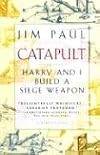
Jim Paul first got the idea to build a siege weapon when he was traveling back from Utah a decade or so before 9/11. He had been in the desert writing a piece about Dinosaur National Monument when he found a sizable piece of quartz. Toting this quartz through security at the airport he said, "It's not a weapon. It's just a rock" but the more he thought about it the more he envisioned the quartz flying through the air like some kind of Monty Python gag. Recruiting his first-name-only friend, show more Harry, Paul goes about finding funding to build a catapult as an art installment. What transpires is a humorous look at history, science, physics and friendship. show less
I really enjoyed the historical and scientific information about catapults and siege weapons, and the memoir bits were often really funny. These kinds of books, microhistories, where the history of the world can be viewed through the lens of one small element, are always enjoyable for me. I always walk away with new information and increased curiosity. In this case, I learned a bit about Frank Oppenheimer, the lesser known Communist younger brother of Robert Oppenheimer. What a fascinating show more guy, and what a perfect view of science and learning. I'd like to read more about him.
In the end, I couldn't give this book four stars because the ending felt so abrupt and kind of unsatisfying. But everything up until the final two chapters was tons of fun for science dilettantes like me. show less
In the end, I couldn't give this book four stars because the ending felt so abrupt and kind of unsatisfying. But everything up until the final two chapters was tons of fun for science dilettantes like me. show less
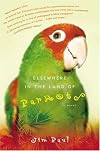
Here's a book I gave a second chance. I've lived in San Francisco and seen those parrots (cherry-headed conures) in the park. A novel featuring them really intrigued me. The book is about two individuals fascinated by the parrots: a graduate student struggling to locate wild parrots in the mangrove swamps of Ecuador for research, who unwittingly gets tangled up with some illegal wildlife trafficking, and a self-isolated eccentric poet in San Francisco who doesn't like the parrot his father show more gave him and ends up releasing it from his apartment window. Eventually feeling guilty at letting the parrot go, he explores the city to find dozens of parrots living on Telegraph Hill, reads up about them in the public library, and finally travels to South America in search of the wild flock they must have originated from. While this book got off to a slow start with me- I was at first put off by the frequent use of the past perfect tense, and felt distanced from the characters- I liked reading the details about the city-living parrots. I knew the two people would end up together- the researcher enthralled with parrots from the beginning and frustrated in her efforts to get close to them, and the reluctant poet gradually drawn out of his isolation by a desire to know more about them. Their two stories wove together in a surprising fashion to the final meeting point. The further I read the more I was drawn into this book, until by the end I had difficulty putting it down.
from the Dogear Diary show less
from the Dogear Diary show less
Lists
Awards

You May Also Like


Associated Authors
Statistics
- Works
- 5
- Also by
- 1
- Members
- 536
- Popularity
- #46,471
- Rating
- 3.4
- Reviews
- 14
- ISBNs
- 24
- Languages
- 3
- Favorited
- 1