
Jean Toomer (1894–1967)
Author of Cane
About the Author
Jean Toomer is known today for the one successful book of his career, the novel Cane, published in 1923. Based in part upon his brief experience in the South as a school teacher, Cane was perhaps the first genuinely experimental novel by an African American writer responding to the liberating form show more of modernist narrative techniques as well as to the deepest and most primal roots of black folk culture in both the South and the North. As such, it reflects in its form the identity conflict that the novel's interwoven stories and poems address. Cane is unique for its blend of poetic language and psychological and moral realism; it established Toomer as one of the leading figures of the Harlem Renaissance. However, Toomer soon was absorbed in his own spiritual education. He eventually became a Quaker and spent most of the last part of his life in seclusion. (Bowker Author Biography) show less
Works by Jean Toomer
Song of the Son [poem] 2 copies
Fern [short story] 2 copies
Blood Burning Moon 1 copy
Harvest Song 1 copy
Karintha 1 copy
Becky 1 copy
Carma 1 copy
Esther 1 copy
Bona and Paul 1 copy
Seventh Street 1 copy
Rhobert 1 copy
Avey 1 copy
Theater 1 copy
Calling Jesus 1 copy
Box Seat 1 copy
Her Lips are Copper Wire 1 copy
Kabnis 1 copy
Prayer 1 copy
Nullo 1 copy
Storm Ending 1 copy
Reapers 1 copy
Cane, Volume 1 1 copy
November Cotton Flower 1 copy
Beehive 1 copy
Cane [poem] 1 copy
Face 1 copy
Cotton Song 1 copy
Georgia Dusk 1 copy
Evening Song 1 copy
Conversion 1 copy
Portrait in Georgia 1 copy
Associated Works
The Making of a Poem: A Norton Anthology of Poetic Forms (2000) — Contributor — 1,473 copies, 9 reviews
Literature: An Introduction to Fiction, Poetry, and Drama (1995) — Contributor, some editions — 1,017 copies, 7 reviews
American Poetry: The Twentieth Century, Volume Two: E. E. Cummings to May Swenson (2000) — Contributor — 444 copies, 1 review
The Norton Anthology of African American Literature {2nd edition} (2003) — Contributor, some editions — 283 copies, 2 reviews
African American Poetry: 250 Years of Struggle and Song (2020) — Contributor — 238 copies, 4 reviews
The Best Short Stories by Black Writers, 1899-1967: The Classic Anthology (1967) — Contributor — 201 copies, 1 review
The Norton Anthology of American Literature, Volume 2: 1865 to Present (1979) — Contributor, some editions — 137 copies
Calling the Wind: Twentieth Century African-American Short Stories (1992) — Contributor — 116 copies
In Search of Color Everywhere: A Collection of African-American Poetry (1994) — Contributor — 108 copies
The Heath Anthology of American Literature, Concise Edition (2003) — Contributor — 74 copies, 1 review
Buzz Words: Poems About Insects (Everyman's Library Pocket Poets Series) (2021) — Contributor — 56 copies
Harlem Renaissance Novels: the Library of America Collection: (Two-volume boxed set) (2011) — Contributor — 55 copies, 1 review
The Serpent and the Fire: Poetries of the Americas from Origins to Present (2024) — Contributor — 18 copies
Georgia Stories: Major Georgia Short Fiction of the Nineteenth and Twentieth Centuries (1992) — Contributor — 12 copies, 1 review
The Best Short Stories of 1923 and the Yearbook of the American Short Story (1924) — Contributor — 11 copies
The Awakening / Cane / The Adventures of Huckleberry Finn / Maggie: A Girl of the Streets (1999) — Contributor — 2 copies
Tagged
Common Knowledge
- Canonical name
- Toomer, Jean
- Legal name
- Toomer, Nathan Eugene Pinchback
- Birthdate
- 1894-12-26
- Date of death
- 1967-03-30
- Gender
- male
- Education
- University of Wisconsin
Massachusetts College of Agriculture
American College of Physical Training in Chicago
University of Chicago
New York University
City College of New York (show all 8)
Gurdjieff Institute
M Street School - Occupations
- poet
novelist
short story writer
essayist
literary critic
playwright - Awards and honors
- Georgia Writers Hall of Fame
- Relationships
- Latimer, Margery (spouse)
- Nationality
- USA
- Birthplace
- Washington, D.C., USA
- Places of residence
- Washington, D.C., USA
New Rochelle, New York, USA
Sparta, Georgia, USA
Doylestown, Pennsylvania, USA - Place of death
- Doylestown, Pennsylvania, USA
- Associated Place (for map)
- USA
Members
Reviews
Cane by Jean Toomer

Well, this was different. The Library of America calls this a novel and maybe under some definition of a modernist novel, it may qualify. I don't read the modernists (or I do very rarely anyway) and I need my novels to have a structure or at least a plot. Although after having read that, I realize that if a structure is enough, then this indeed may be a novel. But that will also be true for linked stories collections. Or maybe I should stop trying to find a box to fit it under and just talk show more about the book.
The book is a mix of poems, stories, vignettes and even a mix of a play and a story at the very end. All the pieces have the same main topic - the life of African Americans in a world designed and ran by the whites. And Toomer takes a circular route into the topic - he starts with the South (Georgia), moves north (Washington) and then sends a northern man south to close the circle back in rural Georgia. And while this cycle ties the different texts together, it also highlighted the difference between the different parts.
The first one, the one set in the South reads like one of those stories that evolve around a fireplace - a mix of poetry and small stories and portraits of people and places, with repetitions inside of the same story and between stories. It sounds like a sing-song, even the parts that are obviously prose. Not all of those stories are nice, most of them are not but they all work as a whole and paints an image of a land steeped in legends and superstitions.
And as lyrical as that first part is, the second one pulls you out and throws you into the emerging jazz era of the big city. The same mix of prose and poetry reads very very differently and it loses the magic of the legends. It was intentional I think - it was supposed to show the new world but for some reason it sounded more crude and disjointed than a real counterpart of the first part.
And then comes the (almost) play, "Kabnis". A Northern black teacher moves to Georgia to teach and finds a community in the middle of a change. The lyrical language of the first part is back but now mixed with something else. The start is rough in the same way the very beginning of the novel is but once you get used to the dialect and the rhythm of the play/story, it slowly turns into the best part of the whole book. It is not just a play, there are parts of it which cannot be set on stage but using the play format allows the author not to look for scene transitions and connections and to set the acts he wants to.
Tradition meets jazz (and the new world), racism meets love and women meеt men -- most of the pieces deal with at least one of these pairs; the ones that do not deal with just one side of a pair. And somewhere under all these diverse stories and poems emerges a portrait of a time, told by a voice of someone who belongs to the Jazz era but lives outside of it.
At the end I liked this more than I expected to. I came into it with very low expectations - modernist fiction rarely works for me. And it took awhile for me to warm up to it. I still do not find the style appealing but I am happy I read this one. show less
The book is a mix of poems, stories, vignettes and even a mix of a play and a story at the very end. All the pieces have the same main topic - the life of African Americans in a world designed and ran by the whites. And Toomer takes a circular route into the topic - he starts with the South (Georgia), moves north (Washington) and then sends a northern man south to close the circle back in rural Georgia. And while this cycle ties the different texts together, it also highlighted the difference between the different parts.
The first one, the one set in the South reads like one of those stories that evolve around a fireplace - a mix of poetry and small stories and portraits of people and places, with repetitions inside of the same story and between stories. It sounds like a sing-song, even the parts that are obviously prose. Not all of those stories are nice, most of them are not but they all work as a whole and paints an image of a land steeped in legends and superstitions.
And as lyrical as that first part is, the second one pulls you out and throws you into the emerging jazz era of the big city. The same mix of prose and poetry reads very very differently and it loses the magic of the legends. It was intentional I think - it was supposed to show the new world but for some reason it sounded more crude and disjointed than a real counterpart of the first part.
And then comes the (almost) play, "Kabnis". A Northern black teacher moves to Georgia to teach and finds a community in the middle of a change. The lyrical language of the first part is back but now mixed with something else. The start is rough in the same way the very beginning of the novel is but once you get used to the dialect and the rhythm of the play/story, it slowly turns into the best part of the whole book. It is not just a play, there are parts of it which cannot be set on stage but using the play format allows the author not to look for scene transitions and connections and to set the acts he wants to.
Tradition meets jazz (and the new world), racism meets love and women meеt men -- most of the pieces deal with at least one of these pairs; the ones that do not deal with just one side of a pair. And somewhere under all these diverse stories and poems emerges a portrait of a time, told by a voice of someone who belongs to the Jazz era but lives outside of it.
At the end I liked this more than I expected to. I came into it with very low expectations - modernist fiction rarely works for me. And it took awhile for me to warm up to it. I still do not find the style appealing but I am happy I read this one. show less
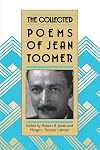
A while ago I read Jean Toomer’s slim work of uncategorizable literature, Cane (1923). As well as being one of the peaks of American Modernism, it single-handedly raised my interest in the Harlem Renaissance. I read it twice, raved about it, used it to help kickstart this blog and was pleased as punch to receive this collection of his poetry (the first ever compiled, edited and introduced by Robert B. Jones for Chapel Hill/University of North Carolina Press in 1988) as a gift last show more year.
Jean Toomer (1894-1967) was an open-minded individual. It would appear to have been his defining characteristic and is reflected in the directions of his poetry. Influences run the gamut over the decades. Pre-Cane, he drew equally on dead white Europe (specifically the French symbolist traditions) and on Oriental structures and thematics. So wandering from those obnoxious sound poems that were all the rage for a while to delicate pseudo-haiku:
"There, on the clothes-line
Still as she pinned them,
Pieces now the wind may wear."
Among the highlights are the playful linguistic riffs he made on the elements, defining the character of 'Air' as "I’ll try anything once" or that of 'Water' as "Saved from monotony by the ripples and currents of its flow."
The first genuinely Toomeresque poems from this era had a tendency to be recycled and put into Cane. Tender love poems such as 'Evening Song' and 'Her Lips Are Copper Wire,' the latter beginning with layers of formal image metaphors before the austere heart is revealed: "then with your tongue remove the tape/and press your lips to mine/till they are incandescent." 'Face' uses the same tactic, building an old woman’s portrait in metaphors beginning in beauty – her gray hair "like streams of stars" - only to reveal the horror of her pain and exhaustion and looming death as it proceeds.
From 1921 to 1923, Toomer’s focus was on the African-American experience, his stance that of a literary anthropologist. Well-educated and of mixed heritage, he felt himself an outsider among both black and white. His poems here based on folk song, or focused upon the conversion from pagan culture to Christian, and the image of the harvester predominates. The poems in this brief era are most likely going to be familiar to any who read this book and so the meat of new discovery comes in what are here labeled the Objective Consciousness period (from 1924 to 1939) and the Christian Existential period (’40 to ’55).
Post-Cane, Toomer lost interest in pursuing a literary career and only published an occasional poem. In his Objective Consciousness phase he found inspiration in the tenets of Gurdjieffian spiritualism. Jones, in his introduction, calls it an arcane and obscure philosophy and Toomer channeled that into several dense works, his themes now of transience and transcendence. The “centerpiece” of this time would technically be 'The Blue Meridian,' a 25-page epic of spiritual America which owes its existence to Whitman and naturally put me in mind of some of the Beat epics. And while it’s not going to be replacing 'Howl' and 'I Am Waiting' on my spiritual American roadmap, in several of the smaller poems he crafted absolute gems.
"There is a natty kind of mind
That slicks its thoughts,
Culls its oughts,
Trims its views,
Prunes its trues,
And never suspects it is a rind."
That’s one called 'Unsuspecting.' Equally enjoyable is 'The Gods Are Here,' wherein he sets forth that one has no need of primordial isolation or a hermetic wilderness to reach the Gods, that in a thoroughly banal landscape he knows "that if I touch them/I will arise/and take majesty into the kitchen."
This sort of thing can tread close to New Age treacle (a common hazard of spiritualism) but Toomer’s talent keeps it within reason. Other highlights include poems of place, emotions triggered by the American landscape from New Mexico to Maine, and poems of transience such as 'The Lost Dancer' with its mournful desire for unity of being:
"….He can find no source
Of magic adequate to bind
The sand upon his feet, his feet
Upon his dance, his dance upon
The diamond body of his being."
Last in chronology are the Quaker religious poems of his final years, better described as prayers. I have a small but growing interest in the Quakers due to the guiding light of Charles W. Eliot’s Five-Foot Shelf. For all their good points, the Quakers don’t encourage eclecticism. Toomer’s last set are all on the solitary topic of faith and the way to God, with the exception of 'To Gurdjieff Dying,' a bizarre insult in code to his former mentor. "Coiled as a serpent round the phallic Tau/and sacramental loaf" is an interesting thing to say but makes scarce sense to the non-specialist. None of these late era poems do much aesthetically, wholly reliant upon their spiritual purpose to make an impact. Though not memorable on their own, they make a heartfelt conclusion in the context of this book. "That as broken instrument/I may be mended, as an agent/to do Thy Will towards man,/And the awakening of kinsmen." That is entirely consistent with the visions of Woolman and Penn. It is their spiritualism wrapped in a poem.
Jean Toomer’s an excellent, underrated writer. If you haven’t read him, start with Cane. If you still want more, this little book is ideal and you should seek it out.
http://pseudointellectualreviews.wordpress.com/2013/09/24/the-collected-poems-je... show less
Jean Toomer (1894-1967) was an open-minded individual. It would appear to have been his defining characteristic and is reflected in the directions of his poetry. Influences run the gamut over the decades. Pre-Cane, he drew equally on dead white Europe (specifically the French symbolist traditions) and on Oriental structures and thematics. So wandering from those obnoxious sound poems that were all the rage for a while to delicate pseudo-haiku:
"There, on the clothes-line
Still as she pinned them,
Pieces now the wind may wear."
Among the highlights are the playful linguistic riffs he made on the elements, defining the character of 'Air' as "I’ll try anything once" or that of 'Water' as "Saved from monotony by the ripples and currents of its flow."
The first genuinely Toomeresque poems from this era had a tendency to be recycled and put into Cane. Tender love poems such as 'Evening Song' and 'Her Lips Are Copper Wire,' the latter beginning with layers of formal image metaphors before the austere heart is revealed: "then with your tongue remove the tape/and press your lips to mine/till they are incandescent." 'Face' uses the same tactic, building an old woman’s portrait in metaphors beginning in beauty – her gray hair "like streams of stars" - only to reveal the horror of her pain and exhaustion and looming death as it proceeds.
From 1921 to 1923, Toomer’s focus was on the African-American experience, his stance that of a literary anthropologist. Well-educated and of mixed heritage, he felt himself an outsider among both black and white. His poems here based on folk song, or focused upon the conversion from pagan culture to Christian, and the image of the harvester predominates. The poems in this brief era are most likely going to be familiar to any who read this book and so the meat of new discovery comes in what are here labeled the Objective Consciousness period (from 1924 to 1939) and the Christian Existential period (’40 to ’55).
Post-Cane, Toomer lost interest in pursuing a literary career and only published an occasional poem. In his Objective Consciousness phase he found inspiration in the tenets of Gurdjieffian spiritualism. Jones, in his introduction, calls it an arcane and obscure philosophy and Toomer channeled that into several dense works, his themes now of transience and transcendence. The “centerpiece” of this time would technically be 'The Blue Meridian,' a 25-page epic of spiritual America which owes its existence to Whitman and naturally put me in mind of some of the Beat epics. And while it’s not going to be replacing 'Howl' and 'I Am Waiting' on my spiritual American roadmap, in several of the smaller poems he crafted absolute gems.
"There is a natty kind of mind
That slicks its thoughts,
Culls its oughts,
Trims its views,
Prunes its trues,
And never suspects it is a rind."
That’s one called 'Unsuspecting.' Equally enjoyable is 'The Gods Are Here,' wherein he sets forth that one has no need of primordial isolation or a hermetic wilderness to reach the Gods, that in a thoroughly banal landscape he knows "that if I touch them/I will arise/and take majesty into the kitchen."
This sort of thing can tread close to New Age treacle (a common hazard of spiritualism) but Toomer’s talent keeps it within reason. Other highlights include poems of place, emotions triggered by the American landscape from New Mexico to Maine, and poems of transience such as 'The Lost Dancer' with its mournful desire for unity of being:
"….He can find no source
Of magic adequate to bind
The sand upon his feet, his feet
Upon his dance, his dance upon
The diamond body of his being."
Last in chronology are the Quaker religious poems of his final years, better described as prayers. I have a small but growing interest in the Quakers due to the guiding light of Charles W. Eliot’s Five-Foot Shelf. For all their good points, the Quakers don’t encourage eclecticism. Toomer’s last set are all on the solitary topic of faith and the way to God, with the exception of 'To Gurdjieff Dying,' a bizarre insult in code to his former mentor. "Coiled as a serpent round the phallic Tau/and sacramental loaf" is an interesting thing to say but makes scarce sense to the non-specialist. None of these late era poems do much aesthetically, wholly reliant upon their spiritual purpose to make an impact. Though not memorable on their own, they make a heartfelt conclusion in the context of this book. "That as broken instrument/I may be mended, as an agent/to do Thy Will towards man,/And the awakening of kinsmen." That is entirely consistent with the visions of Woolman and Penn. It is their spiritualism wrapped in a poem.
Jean Toomer’s an excellent, underrated writer. If you haven’t read him, start with Cane. If you still want more, this little book is ideal and you should seek it out.
http://pseudointellectualreviews.wordpress.com/2013/09/24/the-collected-poems-je... show less
Cane by Jean Toomer
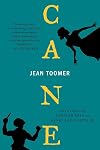
Beautifully written short stories with lyrical poems in-between! I felt transported to that time, and that place, with the sweet taste of cane sugar teasing the tip of my tongue. So many words resonated with me with me, and the quotes below were my favorites!
“Wind is in the cane. Come along.”
“Time and space have no meaning in a canefield.”
“Houses are shy girls whose eyes shine reticently upon the dusk body of the street.”
“…O pines, whisper to Jesus…
“Wind is in the cane. Come along.”
“Time and space have no meaning in a canefield.”
“Houses are shy girls whose eyes shine reticently upon the dusk body of the street.”
“…O pines, whisper to Jesus…
Cane by Jean Toomer
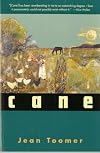
A wonderful, magisterial voice - at its best, up there with Whitman - but young and unfinished. It has that explosive, tightrope feel of some early works by brilliant writers. It's known as the first important Black novel of the Harlem Renaissance, which is funny because it's not a novel and Toomer liked to insist he wasn't Black. It's hard to see which he hated and feared the most - women or himself.
Lists
Awards


You May Also Like


Associated Authors
Statistics
- Works
- 48
- Also by
- 47
- Members
- 2,357
- Popularity
- #10,882
- Rating
- 3.9
- Reviews
- 22
- ISBNs
- 82
- Languages
- 3
- Favorited
- 9
