
Peter Costello (1) (1946–)
Author of James Joyce:The Years of Growth 1882-1915
For other authors named Peter Costello, see the disambiguation page.
About the Author
Peter Costello, a literary historian based in Dublin, is the author of many books
Works by Peter Costello
Conan Doyle, Detective: The True Crimes Investigated by the Creator of Sherlock Holmes (1991) 82 copies, 3 reviews
The Real World of Sherlock Holmes: The True Crimes Investigated by Arthur Conan Doyle (1991) 72 copies
The Magic Zoo : The Natural History of Fabulous Animals, Including Dragons, Mermaids, Unicorns and Centaurs (1979) 42 copies, 1 review
Tagged
Common Knowledge
- Birthdate
- 1946-04-03
- Gender
- male
- Education
- University of Michigan
- Short biography
- Peter Costello is a Dublin-born author, and biographer, an eminent cultural historian and scholar of James Joyce. He attended the University of Michigan. He has written biographies of James Joyce, Flann O'Brien and Jules Verne. He has also written books about Clongowes Wood College, Clerys, and other topics. His first book In Search of Lake Monsters (1974) deals primarily with the Loch Ness Monster, but also similar reports of creatures in lakes and Sea Serpents.
- Nationality
- Ireland
- Birthplace
- Dublin, Ireland
- Places of residence
- Dublin, Ireland
- Associated Place (for map)
- Dublin, Ireland
Members
Reviews

Ulysses, a novel by James Joyce, is a literary peregrination of Dublin that takes place on one day, June 16 1904, during which a host of Dubliners, some invented and many who once existed, come within the cynosure of the Joycean Odysseus, Leopold Bloom. In the course of this day, now celebrated annually as Bloomsday, Leopold attends a funeral, makes an assignation, suffers cuckoldry, masturbates and, at the end of the day, rescues Stephen Daedalus, a younger version of Joyce, from an show more altercation in a brothel and brings him home to his Penelope, the unfaithful Molly Bloom. Peter Costello extends Bloomsday to the three score years and ten of Bloom’s life, from May 6th, 1866 to January 31st, 1937. It is, for the most part, a dutiful compilation and tedious elaboration of the information Joyce included in the vast cornucopia of Ulysses. Molly Bloom dies around the middle of Costello’s symbiont parasite of a novel, when Leopold’s afterlife begins. The tedium is unalleviated. To any external observer, Leopold is an Everyman, Anyman, an average man. Anyman, an accumulation of externalities, is boring. What made Bloom fascinating in Joyce’s Ulysses was the protean exuberance of his inner life. Costello, observing Leopold from the outside, drains the life from him. To be fair, his last few pages, on Bloom in his 70th and final year, do manage to evoke a sympathetic, obituary closure. An insufficient consolation, worth only a few stars as a literary curiosity. show less

The subtitle of this book is misleading. Arthur Conan Doyle was not a real-life Sherlock Holmes. His fame as the creator of brilliant detective Sherlock Holmes led people to write to him about missing persons and other personal tragedies, and others to ask him for his opinion on headline crimes. In most cases, he didn’t investigate in the way that his character, Holmes, would investigate. He offered opinions. Sometimes his opinion was correct and sometimes it wasn’t. In some cases, show more it’s unknown whether he was right or not because the crime is still unsolved. The book seems randomly organized because the crimes are presented as Doyle became interested in them in his lifetime rather than in chronological order. The author does succeed in documenting Doyle’s lifelong interest in vindicating the wrongly accused, and it might be of use to readers or researchers with an interest in this topic. show less

I like a bestiary, and this is a nice one. It covers the more familiar mythical beasts, such as the unicorn, manticore, basilisk and co., but also the somewhat less well known, such as the barometz and catoblepas. Costello looks at each beast as it was originally imagined, then delves into the likely factual bases for each one. Fun and informative.
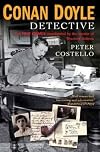
Neither compelling nor dull, this is a well written and exhaustively (the ~12-15% at the end of the book is composed of references) researched account of the actual crimes and mysteries that either interested or involved the creator of Sherlock Holmes. Gives interesting views of criminal justices, in the UK, US and South Africa.
You May Also Like


Statistics
- Works
- 17
- Members
- 524
- Popularity
- #47,449
- Rating
- 3.2
- Reviews
- 8
- ISBNs
- 53
- Languages
- 4