
Jim Smith (1) (1978–)
Author of Who's Next: An Unofficial and Unauthorised Guide to Doctor Who
For other authors named Jim Smith, see the disambiguation page.
Series
Works by Jim Smith
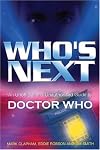
Who's Next: An Unofficial and Unauthorised Guide to Doctor Who (2005) — Author — 47 copies, 1 review
The Lord of the Rings: The Films, the Books, the Radio Series (Virgin Film) (2004) 38 copies, 1 review
Associated Works
In●Vision: Remembrance of the Daleks (2001) — Contributor "Review: Remembrance of things past" — 2 copies
Tagged
Common Knowledge
- Legal name
- Smith, James Edward
- Birthdate
- 1978
- Gender
- male
- Nationality
- UK
- Birthplace
- Solihull, England, UK
- Associated Place (for map)
- England, UK
Members
Reviews
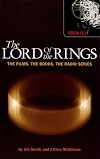
In the words of the authors, this study is "an attempt to examine the process(es) whereby Tolkien's books have been adapted into performed drama". By Tolkien's books they mean principally The Lord of the Rings and The Hobbit; by performed drama they mean films and radio plays, though passing reference is given to Donald Swann's song cycle The Road Goes Ever On, Leonard Nimoy's curiosity The Ballad of Bilbo Baggins and other more or less ephemeral items selected by the authors, even if such a show more selection can never be comprehensive. All discussion centres on those adaptations rather than on a critique of Tolkien's writing, though of course comparisons are made between the original text and subsequent interpretations.
The larger part of Smith and Matthews' study is naturally taken up with Jackson's impressive first trilogy of films (though it predates Jackson's The Hobbit trilogy it does briefly anticipate his involvement in the later project). However, the authors draw attention to lesser known but preceding performances of both books: the reportedly calamitous 1956 BBC twelve-part radio series of The Lord of the Rings, the more successful BBC radio adaptation in 1966 of The Hobbit in eight episodes (still available on CD, and featuring early music instruments) and the TV animation of The Hobbit broadcast on NBC in 1977. These were followed by in close succession by another animation, Bakshi's JRR Tolkien's The Lord of the Rings released in cinemas in 1978, the TV animation JRR Tolkien's The Return of the King: a Tale of Hobbits broadcast on NBC in 1980, and the thirteen-episode BBC radio serial first aired in 1981.
The authors reserve their admiration for the Jackson films, which they argue has more artistic integrity than any of the other films while largely remaining faithful to the spirit of the original text. The compromises and creative decisions made in the films (they maintain, and I agree) respects Tolkien's imaginative creation while making those justifiable changes that either accompany any transference from page to screen or seek to make consistent what Tolkien's rambling epic fails to do, despite the author's later revisions.
This was an enjoyable read, not just for the discussion of the Jackson films but also for the previous Tolkien outings that I've either seen or heard or been vaguely aware of. There are plenty of asides (such as details of various actors involved in the productions), trenchant criticisms (particularly of aspects of the animated films) and a sterling defence of the approach New Line took in re-focusing character motivation and manipulating plotlines. For a study of this length (a little over 200 pages of discussion) the authors cover a huge subject in as comprehensive a way as space allows. My only real niggles concern the occasion typo, in particular the confusion evident when one of the authors writes 'principle' (a truth or belief) when what he means is 'principal' (main or primary); other than that, this is a fine analysis of the right and wrong ways to go about adapting well-loved texts for another medium.
http://calmgrove.wordpress.com/2012/11/09/ringcycles/ show less
The larger part of Smith and Matthews' study is naturally taken up with Jackson's impressive first trilogy of films (though it predates Jackson's The Hobbit trilogy it does briefly anticipate his involvement in the later project). However, the authors draw attention to lesser known but preceding performances of both books: the reportedly calamitous 1956 BBC twelve-part radio series of The Lord of the Rings, the more successful BBC radio adaptation in 1966 of The Hobbit in eight episodes (still available on CD, and featuring early music instruments) and the TV animation of The Hobbit broadcast on NBC in 1977. These were followed by in close succession by another animation, Bakshi's JRR Tolkien's The Lord of the Rings released in cinemas in 1978, the TV animation JRR Tolkien's The Return of the King: a Tale of Hobbits broadcast on NBC in 1980, and the thirteen-episode BBC radio serial first aired in 1981.
The authors reserve their admiration for the Jackson films, which they argue has more artistic integrity than any of the other films while largely remaining faithful to the spirit of the original text. The compromises and creative decisions made in the films (they maintain, and I agree) respects Tolkien's imaginative creation while making those justifiable changes that either accompany any transference from page to screen or seek to make consistent what Tolkien's rambling epic fails to do, despite the author's later revisions.
This was an enjoyable read, not just for the discussion of the Jackson films but also for the previous Tolkien outings that I've either seen or heard or been vaguely aware of. There are plenty of asides (such as details of various actors involved in the productions), trenchant criticisms (particularly of aspects of the animated films) and a sterling defence of the approach New Line took in re-focusing character motivation and manipulating plotlines. For a study of this length (a little over 200 pages of discussion) the authors cover a huge subject in as comprehensive a way as space allows. My only real niggles concern the occasion typo, in particular the confusion evident when one of the authors writes 'principle' (a truth or belief) when what he means is 'principal' (main or primary); other than that, this is a fine analysis of the right and wrong ways to go about adapting well-loved texts for another medium.
http://calmgrove.wordpress.com/2012/11/09/ringcycles/ show less
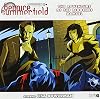
It is a sequel to my favourite New Adventure, All-Consuming Fire, and features two brilliant actors, David Warner playing Mycroft Holmes and Peter "Nyder" Miles as the evil alien, as well as of course Lisa Bowerman herself. It would alas be slightly incomprehensible to those who don't know All-Consuming Fire but was great fun
http://nhw.livejournal.com/965281.html
Published by Virgin in 2005 just before New Who started. Includes very brief summaries and extended critiques of all the classic series, plus the two Pertwee audios, Slipback, the BBC webcasts, and the Children in Need specials. (Why no Pescatons?) Rates Peter Davison much higher than Tom Baker, and fiercely critical of some of the most popular Hinchcliffe/Holmes stories. The authors acknowledge Cornell, Day and Topping's Discontinuity Guide which seems show more eminently fair, as it's much the better book. show less
Published by Virgin in 2005 just before New Who started. Includes very brief summaries and extended critiques of all the classic series, plus the two Pertwee audios, Slipback, the BBC webcasts, and the Children in Need specials. (Why no Pescatons?) Rates Peter Davison much higher than Tom Baker, and fiercely critical of some of the most popular Hinchcliffe/Holmes stories. The authors acknowledge Cornell, Day and Topping's Discontinuity Guide which seems show more eminently fair, as it's much the better book. show less
You May Also Like


Associated Authors
Statistics
- Works
- 11
- Also by
- 7
- Members
- 211
- Popularity
- #105,255
- Rating
- 3.4
- Reviews
- 5
- ISBNs
- 288
- Languages
- 7