
George Turner (1) (1916–1997)
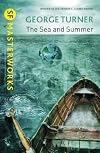
Author of The Sea and Summer
For other authors named George Turner, see the disambiguation page.
Series
Works by George Turner
In a Petri Dish Upstairs 9 copies
Flowering Mandrake {novelette} 6 copies
Not in Front of the Children 3 copies
Shut the Door When You Go Out 3 copies
The Fittest 3 copies
Scobie 3 copies
And Now Doth Time Waste Me 2 copies
Feedback 2 copies
On the Nursery Floor 2 copies
A Pursuit of Miracles [short story] 2 copies
Generation Gap 1 copy
A waste of shame 1 copy
Associated Works
The Best of the Rest 1990: The Best Science Fiction and Fantasy from the Small Press (1992) — Contributor — 2 copies
Tagged
Common Knowledge
- Canonical name
- Turner, George
- Legal name
- Turner, George Reginald
- Birthdate
- 1916-10-16
- Date of death
- 1997-06-08
- Gender
- male
- Awards and honors
- A. Bertram Chandler Memorial Award (1994)
- Nationality
- Australia
- Birthplace
- Melbourne, Victoria, Australia
- Place of death
- Ballarat, Victoria, Australia
- Associated Place (for map)
- Victoria, Australia
Members
Reviews
http://nwhyte.livejournal.com/2718954.html
I confess that I knew nothing of this book or of the writer, and had no expectations whatsoever; and I also confess that I really liked it. It's set in a dystopian Australia of the near future (though the story is told with a framing narrative of researchers from the not-quite-so-near future looking back and trying to work out what was going on, a device I usually love). Society is divided between the well-off Sweet and the proletarian Swill, and the show more central characters are a family who slip from the former to the latter, with a specific plot strand around the exposure of a massive plot by the government against their own people - though really I feel that as much as anything the setting is the story.
Australia is quite a good venue for post-apocalyptic and/or dystopian fiction, come to think of it. I have seen only one of the Mad Max films, but just a moment's reflection brings up Tank Girl, the Australian K9 series (nominally set in London, though I don't think anyone is fooled), The Year of the Angry Rabbit, and more seriously On The Beach.
Anyway, The Sea and Summer is well-executed, at least partly a critique of the present day (in ways that still need the same critique thitty years on). I'm a bit surprised I hadn't heard more about it, and will keep an eye out for Turner's other work. show less
I confess that I knew nothing of this book or of the writer, and had no expectations whatsoever; and I also confess that I really liked it. It's set in a dystopian Australia of the near future (though the story is told with a framing narrative of researchers from the not-quite-so-near future looking back and trying to work out what was going on, a device I usually love). Society is divided between the well-off Sweet and the proletarian Swill, and the show more central characters are a family who slip from the former to the latter, with a specific plot strand around the exposure of a massive plot by the government against their own people - though really I feel that as much as anything the setting is the story.
Australia is quite a good venue for post-apocalyptic and/or dystopian fiction, come to think of it. I have seen only one of the Mad Max films, but just a moment's reflection brings up Tank Girl, the Australian K9 series (nominally set in London, though I don't think anyone is fooled), The Year of the Angry Rabbit, and more seriously On The Beach.
Anyway, The Sea and Summer is well-executed, at least partly a critique of the present day (in ways that still need the same critique thitty years on). I'm a bit surprised I hadn't heard more about it, and will keep an eye out for Turner's other work. show less

There are a couple of non-fiction books that I haven't yet brought myself to read, [b:Losing Earth: A Recent History|41940347|Losing Earth A Recent History|Nathaniel Rich|https://i.gr-assets.com/images/S/compressed.photo.goodreads.com/books/1555104282l/41940347._SY75_.jpg|65424935] and [b:The Discovery of Global Warming|78687|The Discovery of Global Warming|Spencer R. Weart|https://i.gr-assets.com/images/S/compressed.photo.goodreads.com/books/1388356090l/78687._SY75_.jpg|75979], because I show more know they will make me so angry that I won't be able to function. [b:The Sea and Summer|17394804|The Sea and Summer|George Turner|https://i.gr-assets.com/images/S/compressed.photo.goodreads.com/books/1365525855l/17394804._SY75_.jpg|613203] is a reminder of why: by the time I was born in the 1980s, the science of global warming was clear and the need to stop burning fossil fuels was evident. Yet petrochemical companies suppressed evidence and governments were lobbied into doing virtually nothing, so forty years later greenhouse gas emissions have risen inexorably and the climate is changing disastrously. It isn't too late to prevent worse catastrophes, but we could have prevented some of the warming and extreme weather that has already occurred. [b:The Sea and Summer|17394804|The Sea and Summer|George Turner|https://i.gr-assets.com/images/S/compressed.photo.goodreads.com/books/1365525855l/17394804._SY75_.jpg|613203] was published in 1987 and depicts a grim future of rising seas and temperatures. Although the novel is highly involving, it is harsh to read from the start. The framing mechanism for the main narrative set in the 2040s is research into 'Greenhouse Culture' a thousand years later. This is hopeful in the sense that human civilisation survives to look back on the past with scorn:
That paragraph is curiously similar to one that particularly struck me in [b:War with the Newts|816440|War with the Newts|Karel Čapek|https://i.gr-assets.com/images/S/compressed.photo.goodreads.com/books/1328766079l/816440._SY75_.jpg|1469484]. Both emphasise the terrible power of path dependence in global systems and how impossible it seems to turn them from a path of destruction. Turner examines environmental, economic, and social breakdown in the 2040s via an Australian family. As the story begins, they descend from the employed middle class ('Sweet') to unemployed underclass ('Swill') when the father's job is automated. Turner's examination of class is very acute:
His analysis of globalised capitalism has also aged depressingly well:
That final paragraph is very much anchored in the Cold War, yet still has relevance in the era of the War on Terror and militarisation of borders and civilian police forces.
The use of multiple narrative points of view is very effective throughout. It isn't such a mosaic as the work of [a:John Brunner|23113|John Brunner|https://images.gr-assets.com/authors/1336955014p2/23113.jpg], but there are more than six voices telling the story. This only becomes slightly confusing when a single chapter is split between two, otherwise it's an excellent means of digging into the complex socio-economic dynamics of this future world. Turner has evidently devoted significant thought and research to world-building, although the plot and characterisation are also strong.
To my mind, the main weakness of [b:The Sea and Summer|17394804|The Sea and Summer|George Turner|https://i.gr-assets.com/images/S/compressed.photo.goodreads.com/books/1365525855l/17394804._SY75_.jpg|613203] is its perspective on fertility and overpopulation. This is by no means unique to it, but stands out all the more given how well the rest of the world-building has aged. I'm starting to notice a pattern in late-twentieth century sci-fi about overpopulation written by men, e.g [b:Stand on Zanzibar|41069|Stand on Zanzibar|John Brunner|https://i.gr-assets.com/images/S/compressed.photo.goodreads.com/books/1360613921l/41069._SY75_.jpg|2184253], [b:Make Room! Make Room!|473850|Make Room! Make Room!|Harry Harrison|https://i.gr-assets.com/images/S/compressed.photo.goodreads.com/books/1345057490l/473850._SY75_.jpg|639744], and [b:The Futurological Congress|35074093|The Futurological Congress|Stanisław Lem|https://i.gr-assets.com/images/S/compressed.photo.goodreads.com/books/1580829015l/35074093._SY75_.jpg|1271698]. While these novels examine population growth in interesting and original ways, they all centre upon male perspectives. Each predicts extraordinary rises in population that have not actually happened, because when women are given control over their own fertility most do not want to have masses of children. Indeed, some do not want to have any children at all. This is not something that any of these excellent novels acknowledge or consider the consequences of. I don't think I've ever read a sci-fi novel by a woman treating overpopulation as an inevitable global threat - I'd be interested to know if any such exist.
Chapter 2 of [b:The Sea and Summer|17394804|The Sea and Summer|George Turner|https://i.gr-assets.com/images/S/compressed.photo.goodreads.com/books/1365525855l/17394804._SY75_.jpg|613203] begins, 'In 2041 the population of the planet passed the 10 billion mark.' I looked up how plausible this is and found myself fascinated by the UN World Population Prospects 2022 [pdf]. (The key points on page 12 about COVID-19's demographic impact are eye-opening!) From this report I learned that the world population is expected to reach 8 billion in November 2022, 8.5 billion in 2030, and to peak around 10.4 billion in the 2080s. In 2020, the population growth rate fell below 1% per year for the first time since 1950 and in 2021 average fertility stood at 2.3 births per woman over a lifetime, having fallen from about 5 births per woman in 1950. This is projected to decline to 2.1 births per woman by 2050. Certainly the global population continues to grow, but not to the extent predicted in the twentieth century, not at all evenly across the world, and at a declining rate.
In light of this, I found the perspective on reproduction in [b:The Sea and Summer|17394804|The Sea and Summer|George Turner|https://i.gr-assets.com/images/S/compressed.photo.goodreads.com/books/1365525855l/17394804._SY75_.jpg|613203] rather unsettling. After a dismissal of voluntary family planning and restrictions on child-bearing as totally ineffective ('contraception was, after all, freely available'), there is this statement: 'Take away the core of sexual existence, procreation, and emotional energy seeks an outlet. The alternative to creation is destruction. People want children.' While there's a lot to unpack there, I think the assumption that people must want more than two children underpins this overpopulation panic. Historical fertility levels are treated as immutable, rather than as shaped by medical technology, availability of contraception, social expectations, religion, gender inequality, etc. To its credit, twenty-first century climate change fiction is a great deal better at recognising this and focusing on important environmental issues around population: that hundreds of millions will be displaced by climate change and that a tiny minority of the wealthiest consume a disproportionate share of resources.
Notwithstanding this critique, I undoubtedly found it thought-provoking that [b:The Sea and Summer|17394804|The Sea and Summer|George Turner|https://i.gr-assets.com/images/S/compressed.photo.goodreads.com/books/1365525855l/17394804._SY75_.jpg|613203]'s angle on population hasn't aged too well.Along with the quotes above, the male characters' abject horror at the possibility of sterilisation seemed a bit strong. The plot twist that a sterilisation virus was being trialled on the Swill was very interesting. Sci-fi fascinates me for what it tells you about when it was written, as well as how it reflects upon when it is read. In 2022 [b:The Sea and Summer|17394804|The Sea and Summer|George Turner|https://i.gr-assets.com/images/S/compressed.photo.goodreads.com/books/1365525855l/17394804._SY75_.jpg|613203] still has remarkable relevance and insight, conveyed via a compelling plot and range of narrative voices. show less
"As I understand it, if I've followed the historical line correctly, they knew what was coming to them just as we know what is ahead of us. Yet they did nothing about it."
"They fell into destruction because they could do nothing about it; they had started a sequence which had to run its course in unbalancing the climate. Also, they were bound into a web of interlocking systems - finance, democratic government, what they called high-tech, defensive strategies, political bared teeth and maintenance of razor-edged status quo - which plunged them from crisis to crisis as each solved problem spawned a nest of new ones. There was the tale of a boy who jammed his finger in the leak in the dyke - I think it's still in the kindergarten primers. In the twentieth and twenty-first centuries the entire planet stood with its fingers plugging dykes of its own creation until the sea washed over their muddled status quo. Literally." She gestured. "It's all there for you to read."
That paragraph is curiously similar to one that particularly struck me in [b:War with the Newts|816440|War with the Newts|Karel Čapek|https://i.gr-assets.com/images/S/compressed.photo.goodreads.com/books/1328766079l/816440._SY75_.jpg|1469484]. Both emphasise the terrible power of path dependence in global systems and how impossible it seems to turn them from a path of destruction. Turner examines environmental, economic, and social breakdown in the 2040s via an Australian family. As the story begins, they descend from the employed middle class ('Sweet') to unemployed underclass ('Swill') when the father's job is automated. Turner's examination of class is very acute:
I could not then articulate what I was beginning to perceive, that when the gap between the rich and the poor is vast and the middle ground the haunt of an endangered species, snobbery was a defence against terror. The Sweet had to believe in their superiority or admit that they tore their possessions from the fingers of the Swill.
And so we did.
His analysis of globalised capitalism has also aged depressingly well:
The Third World (a concept whose meaning has been lost) had, before I was born, renounced indebtedness to the West (another dubious term) and driven money into a no-win situation wherein the Third World had to be shored up financially by the West because it was the West's profitable junk market. The idea of selling to people who bought with money lent by the seller lest the system collapse was more than idiotic; it was the final self-criticism of a system that could exist only by expansion and when expansion ceased for lack of markets must eat its own body.
This was only a part of what was happening to the world but was the most visibly urgent part. Wealth was in the hands of a few and governments were hunting down the sequestrators of wealth before they could hunt down the governments. The only strategy of power was to place the entire planetary population in the position of poor relations, fed on what could be salvaged from the necessities of armament equality and the maintenance of a crumbling technology in which research and development shrank as they became too costly. Once there had been a 'space program'!
Over this desperation presided a monstrous joke, the ravenous armament factories belching out weapons, which became obsolete on the very design screens and must be replaced in the moment of production... for a war nobody dared start for fear of nukes and an industry nobody dared stop.
That final paragraph is very much anchored in the Cold War, yet still has relevance in the era of the War on Terror and militarisation of borders and civilian police forces.
The use of multiple narrative points of view is very effective throughout. It isn't such a mosaic as the work of [a:John Brunner|23113|John Brunner|https://images.gr-assets.com/authors/1336955014p2/23113.jpg], but there are more than six voices telling the story. This only becomes slightly confusing when a single chapter is split between two, otherwise it's an excellent means of digging into the complex socio-economic dynamics of this future world. Turner has evidently devoted significant thought and research to world-building, although the plot and characterisation are also strong.
To my mind, the main weakness of [b:The Sea and Summer|17394804|The Sea and Summer|George Turner|https://i.gr-assets.com/images/S/compressed.photo.goodreads.com/books/1365525855l/17394804._SY75_.jpg|613203] is its perspective on fertility and overpopulation. This is by no means unique to it, but stands out all the more given how well the rest of the world-building has aged. I'm starting to notice a pattern in late-twentieth century sci-fi about overpopulation written by men, e.g [b:Stand on Zanzibar|41069|Stand on Zanzibar|John Brunner|https://i.gr-assets.com/images/S/compressed.photo.goodreads.com/books/1360613921l/41069._SY75_.jpg|2184253], [b:Make Room! Make Room!|473850|Make Room! Make Room!|Harry Harrison|https://i.gr-assets.com/images/S/compressed.photo.goodreads.com/books/1345057490l/473850._SY75_.jpg|639744], and [b:The Futurological Congress|35074093|The Futurological Congress|Stanisław Lem|https://i.gr-assets.com/images/S/compressed.photo.goodreads.com/books/1580829015l/35074093._SY75_.jpg|1271698]. While these novels examine population growth in interesting and original ways, they all centre upon male perspectives. Each predicts extraordinary rises in population that have not actually happened, because when women are given control over their own fertility most do not want to have masses of children. Indeed, some do not want to have any children at all. This is not something that any of these excellent novels acknowledge or consider the consequences of. I don't think I've ever read a sci-fi novel by a woman treating overpopulation as an inevitable global threat - I'd be interested to know if any such exist.
Chapter 2 of [b:The Sea and Summer|17394804|The Sea and Summer|George Turner|https://i.gr-assets.com/images/S/compressed.photo.goodreads.com/books/1365525855l/17394804._SY75_.jpg|613203] begins, 'In 2041 the population of the planet passed the 10 billion mark.' I looked up how plausible this is and found myself fascinated by the UN World Population Prospects 2022 [pdf]. (The key points on page 12 about COVID-19's demographic impact are eye-opening!) From this report I learned that the world population is expected to reach 8 billion in November 2022, 8.5 billion in 2030, and to peak around 10.4 billion in the 2080s. In 2020, the population growth rate fell below 1% per year for the first time since 1950 and in 2021 average fertility stood at 2.3 births per woman over a lifetime, having fallen from about 5 births per woman in 1950. This is projected to decline to 2.1 births per woman by 2050. Certainly the global population continues to grow, but not to the extent predicted in the twentieth century, not at all evenly across the world, and at a declining rate.
In light of this, I found the perspective on reproduction in [b:The Sea and Summer|17394804|The Sea and Summer|George Turner|https://i.gr-assets.com/images/S/compressed.photo.goodreads.com/books/1365525855l/17394804._SY75_.jpg|613203] rather unsettling. After a dismissal of voluntary family planning and restrictions on child-bearing as totally ineffective ('contraception was, after all, freely available'), there is this statement: 'Take away the core of sexual existence, procreation, and emotional energy seeks an outlet. The alternative to creation is destruction. People want children.' While there's a lot to unpack there, I think the assumption that people must want more than two children underpins this overpopulation panic. Historical fertility levels are treated as immutable, rather than as shaped by medical technology, availability of contraception, social expectations, religion, gender inequality, etc. To its credit, twenty-first century climate change fiction is a great deal better at recognising this and focusing on important environmental issues around population: that hundreds of millions will be displaced by climate change and that a tiny minority of the wealthiest consume a disproportionate share of resources.
Notwithstanding this critique, I undoubtedly found it thought-provoking that [b:The Sea and Summer|17394804|The Sea and Summer|George Turner|https://i.gr-assets.com/images/S/compressed.photo.goodreads.com/books/1365525855l/17394804._SY75_.jpg|613203]'s angle on population hasn't aged too well.

The first of Turner's Ethical Culture trilogy, thoughI read this after the second. While Vaneglory is very much a sequel, there's enough change in characters that only the nature of Gangoil was a mystery in the second book. Both books are interesting and ambitious arguments about the design of culture and governance, free will, power, and such, with solid SFnal trappings. The negatives are a tendency to preach (more so in Vaneglory) and pontificate (both books), and, in this book, an show more unconvincing attempt to make a philosophical debates a motivating force for political and even mob action. The other big weakness in both books is that it's pretty much all white males and testosterone. There are just two women. One, Alice, is mostly a pawn in both books, and the other, the Lady, is a caricature of decadent immortality.
Recommended if you can look past the weaknesses. show less
Recommended if you can look past the weaknesses. show less

My reactions to reading this book in 1992. Spoilers follow.
This book truly deserves the distinction of being called a something of a masterpiece. That distinction is almost solely because of Turner's incredible skill with characterization. Turner's plot in this novel of genetically engineered superintelligence is (according to my reading of the "Superman" entry in The Science Fiction Encyclopedia) typical of the sub-genre of the superman: 1) the superman gracefully opts out of human society show more (the A Group); 2) The superman has a fatal flaw which is the result of the creation process (the B Group's death by sudden Alzheimers); 3) The superman can't stand to live on a planet of ignorant savages (C Group's suicide).
Not only is it the retrospective tale of the narrator maturing, becoming world-wise, and developing true family ties with Jonesey and his family, but all the people -- normal and the Project IQ results -- are well-drawn and show the effect of Project IQ. There is the incomprehensible abilities of the C Group (and Conrad's treating Derek Farnham like a splendid dog) in intellectual achievement and manipulation, minds who find us little better than monkeys: confusing, violent, ultimately unknowable as well as less advanced. There are the "bleak, utilitarian" minds of A Group who seem baffled by human emotive language: they laboriously translate it and clumsily fumble with expressing emotion (especially Arthur Hazard) nor can they conceive objections to plans other than logical ones. There are the manipulative, arrogant B Group.
Turner uses these Groups to make some interesting points about intelligence. First, that it is probably the interaction of many genes, and that there are many kinds of intelligence. The logical, linear reasoning of A Group, the artistic genius of B Group are not beyond normal man; however, C Group is completly beyond human ken. It is with this idea that Turner brings up one of the central themes of the novel: intelligence is of little use without equals to communicate with. It is this lack of equals that drives Conrad's attempt to set up an island of C Group children; the failure of that plan drives C Group to suicide. Lastly, Turner brings up the corollarly to this last idea: that each type of intelligence and level of intelligence must have a niche in society (equals to communicate with on the same intellectual and emotional wavelengths) to survive and thrive.
Turner does a nice job portraying the ruthless politician Sammy Armstrong who is ultimately shown as deluded as to his relationship with Belinda and the extent of his power. And I liked the sentimental Jonesey who takes David Chance under his wing (and eventually David marries into the family). I thought it was a nice change to have Chance's shadower ultimately turn out to be an aide and friend and surrogate dad. It was also nice to see an exciting, competent action plot of intrigue well and logically done with a fine touch of humanity. Sure, the Super and his Department may be corruptible, but they seem realistically reluctant to be utterly ruthless, and the Super seems honestly enraged at two deaths even if they are of Armstrong's thugs. I also liked the idea of Conrad's legacy being a picture of the true mechanisms of human genetics. I did think the sanguine acceptance by Chance and Jonesey that immortality should be rejected to be kind of weak. On the other hand, keeping another C Group out of the world, as Arthur Hazard does when he destorys the triptych, is a good reason to burn the pictures. I liked the Groups common morality of not destroying knowledge (Arthur Hazard mourns indirectly destroying C Group because, though he finds it necessary, he regards them as man's best achievement and most dangerous).
Lastly, I liked Turner's off hand slap of sf when Armstrong complains that sf writers, who he expected to support Project IQ (Armstrong believes, rightly, that entertainment is where opinions are formed), aren't interested in science -- if it intrudes on "real creativity". That seems a genuine criticism of some sf writers and also an ignorance (on Armstrong's part, not Turner's) of what sf is about. Lastly, I liked how the Anthony Burgess and Turner epigraphs that open the novel took on meaning at story's end. show less
This book truly deserves the distinction of being called a something of a masterpiece. That distinction is almost solely because of Turner's incredible skill with characterization. Turner's plot in this novel of genetically engineered superintelligence is (according to my reading of the "Superman" entry in The Science Fiction Encyclopedia) typical of the sub-genre of the superman: 1) the superman gracefully opts out of human society show more (the A Group); 2) The superman has a fatal flaw which is the result of the creation process (the B Group's death by sudden Alzheimers); 3) The superman can't stand to live on a planet of ignorant savages (C Group's suicide).
Not only is it the retrospective tale of the narrator maturing, becoming world-wise, and developing true family ties with Jonesey and his family, but all the people -- normal and the Project IQ results -- are well-drawn and show the effect of Project IQ. There is the incomprehensible abilities of the C Group (and Conrad's treating Derek Farnham like a splendid dog) in intellectual achievement and manipulation, minds who find us little better than monkeys: confusing, violent, ultimately unknowable as well as less advanced. There are the "bleak, utilitarian" minds of A Group who seem baffled by human emotive language: they laboriously translate it and clumsily fumble with expressing emotion (especially Arthur Hazard) nor can they conceive objections to plans other than logical ones. There are the manipulative, arrogant B Group.
Turner uses these Groups to make some interesting points about intelligence. First, that it is probably the interaction of many genes, and that there are many kinds of intelligence. The logical, linear reasoning of A Group, the artistic genius of B Group are not beyond normal man; however, C Group is completly beyond human ken. It is with this idea that Turner brings up one of the central themes of the novel: intelligence is of little use without equals to communicate with. It is this lack of equals that drives Conrad's attempt to set up an island of C Group children; the failure of that plan drives C Group to suicide. Lastly, Turner brings up the corollarly to this last idea: that each type of intelligence and level of intelligence must have a niche in society (equals to communicate with on the same intellectual and emotional wavelengths) to survive and thrive.
Turner does a nice job portraying the ruthless politician Sammy Armstrong who is ultimately shown as deluded as to his relationship with Belinda and the extent of his power. And I liked the sentimental Jonesey who takes David Chance under his wing (and eventually David marries into the family). I thought it was a nice change to have Chance's shadower ultimately turn out to be an aide and friend and surrogate dad. It was also nice to see an exciting, competent action plot of intrigue well and logically done with a fine touch of humanity. Sure, the Super and his Department may be corruptible, but they seem realistically reluctant to be utterly ruthless, and the Super seems honestly enraged at two deaths even if they are of Armstrong's thugs. I also liked the idea of Conrad's legacy being a picture of the true mechanisms of human genetics. I did think the sanguine acceptance by Chance and Jonesey that immortality should be rejected to be kind of weak. On the other hand, keeping another C Group out of the world, as Arthur Hazard does when he destorys the triptych, is a good reason to burn the pictures. I liked the Groups common morality of not destroying knowledge (Arthur Hazard mourns indirectly destroying C Group because, though he finds it necessary, he regards them as man's best achievement and most dangerous).
Lastly, I liked Turner's off hand slap of sf when Armstrong complains that sf writers, who he expected to support Project IQ (Armstrong believes, rightly, that entertainment is where opinions are formed), aren't interested in science -- if it intrudes on "real creativity". That seems a genuine criticism of some sf writers and also an ignorance (on Armstrong's part, not Turner's) of what sf is about. Lastly, I liked how the Anthony Burgess and Turner epigraphs that open the novel took on meaning at story's end. show less
Lists
Awards


You May Also Like


Associated Authors
Statistics
- Works
- 27
- Also by
- 15
- Members
- 1,198
- Popularity
- #21,435
- Rating
- 3.7
- Reviews
- 20
- ISBNs
- 79
- Languages
- 7
- Favorited
- 2