
William Beckford (1) (1760–1844)
Author of Vathek
For other authors named William Beckford, see the disambiguation page.
About the Author
Image credit: Portrait by Sir Joshua Reynolds (1782)
Works by William Beckford
Three Gothic Novels: The Castle of Otranto; Vathek; The Vampyre; and a Fragment of a Novel (1966) — Contributor — 291 copies, 4 reviews
Four Gothic Novels: The Castle of Otranto; Vathek; The Monk; Frankenstein (1764) 134 copies, 1 review
A dialogue in the shades, between William Caxton, Fodius, a bibliomaniac, and William Wynken, clerk, a descendant of Wyn (1985) 3 copies
Travel-diaries Of William Beckford Of Fonthill,( 2 Vols. ) (BCL1-PR English Literature) (2013) 3 copies, 1 review
The Vision and Liber Veritatis 2 copies
Anglický gotický román 1 copy
Vathek Livro 1 1 copy
Racconti orientali 1 copy
The Best of Gothic Fiction 1 copy
Beckford William 1 copy
Associated Works
Three Gothic Novels: The Castle of Otranto / Vathek / Frankenstein (1968) — Contributor — 665 copies, 5 reviews
Great British Tales of Terror: Gothic Stories of Horror and Romance 1765-1840 (1972) — Contributor — 86 copies
The Dedalus Book of English Decadence: Vile Emperors and Elegant Degenerates (2004) — Contributor — 60 copies
Three eighteenth century romances: The castle of Otranto; Vathek; The romance of the forest (1971) — Contributor — 46 copies, 2 reviews
Three Oriental Tales: Complete Texts with Introduction, Historical Contexts, Critical Essays (2002) — Contributor — 32 copies, 1 review
The Craft Of Terror - The Best From The Rare And Infamous Gothic Horror Novels (1966) — Author — 8 copies
Tagged
Common Knowledge
- Canonical name
- Beckford, William
- Legal name
- Beckford, William Thomas
- Birthdate
- 1760-10-01
- Date of death
- 1844-05-02
- Gender
- male
- Education
- private tutors
- Occupations
- writer
art collector
politician
critic
travel writer
Member of Parliament for Wells (show all 7)
Member of Parliament for Hindon - Relationships
- Gordon, Margaret (spouse)
Hervey, Elizabeth (half-sister) - Nationality
- Great Britain
- Birthplace
- London, England, UK
- Places of residence
- London, England, UK
Fonthill, Wiltshire, England, UK
Bath, Somerset, England, UK - Place of death
- Bath, Somerset, England, UK
- Burial location
- Bath Abbey Cemetery, Bath, Somerset, England, UK
- Map Location
- England, UK
Members
Discussions
Vathek. in Gothic Literature (December 2024)
Folio Archives 333: Vathek by William Beckford 1958 in Folio Society Devotees (July 2023)
THE DEEP ONES: "The Third Episode of Vathek" by Clark Ashton Smith in The Weird Tradition (August 2016)
Reviews
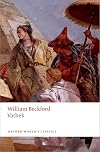
Completely preposterous and not in a good way. I can see why this orgy of Oriental tropes would have been exciting to an 18th century European reader high on the Arabian Nights and hungry for more genies, giaours, dives, and dwarfs. It's a nauseating banquet of sherbets and cordials, served by massed ranks of eunuchs, mystics, and sacrificial first-borns, a horrible literary carbuncle melting down into a bilious slurry where plot decoheres and characters implode under the weight of their own show more absurdity.
Here's Vathek's mom preparing a magic potion:
By secret stairs, known only to herself and her son, she first repaired to the mysterious recesses in which were deposited the mummies that had been brought from the catacombs of the ancient Pharaohs. Of these she ordered several to be taken. From thence she resorted to a gallery, where, under the guard of fifty female negroes, mute, and blind of the right eye, were preserved the oil of the most venomous serpents, rhinoceros’ horns, and woods of a subtle and penetrating odour, procured from the interior of the Indies, together with a thousand other horrible rarieties. This collection had been formed for a purpose like the present, by Carathis herself, from a presentiment that she might one day enjoy some intercourse with the infernal powers, to whom she had ever been passionately attached, and to whose taste she was no stranger. show less
Here's Vathek's mom preparing a magic potion:
By secret stairs, known only to herself and her son, she first repaired to the mysterious recesses in which were deposited the mummies that had been brought from the catacombs of the ancient Pharaohs. Of these she ordered several to be taken. From thence she resorted to a gallery, where, under the guard of fifty female negroes, mute, and blind of the right eye, were preserved the oil of the most venomous serpents, rhinoceros’ horns, and woods of a subtle and penetrating odour, procured from the interior of the Indies, together with a thousand other horrible rarieties. This collection had been formed for a purpose like the present, by Carathis herself, from a presentiment that she might one day enjoy some intercourse with the infernal powers, to whom she had ever been passionately attached, and to whose taste she was no stranger. show less
Castle of Otranto: WITH Nightmare Abbey AND Vathek (Tales of Mystery & the Supernatural) by Horace Walpole

I can't rate the book until I finish the next two stories, but without doubt The Castle of Otranto is an incredible piece of fiction. Whilst it's true much of literature dates its cues from Shakespeare, the Homer epics and other world mythologies, The Castle of Otranto (1764) whilst clearly inspired by the earlier Tudor plays, is the template that not only inspired a whole genre of romantic gothics, but set the structure, characters and themes for novels of dynastic fiction and grimdark we show more see today.
Chapter one alone packs in so much - from giant helmets crushing an heir, to a peasant arrested for helping and then imprisoned under the helmet; accusations of necromancy; a Prince trying to marry his daughter in law; a ghost in a painting and a chase through the lower catacombs.
Supplemented by a small amount comedy to introduce some levity; tragedy, deceit, treachery, secrets, revelations and passionate discourse adorn every paragraph and whilst some archaic sentence work is naturally employed given the time it was written, like a lot of late 18thC fiction of its ilk it lays down the need to be fast and readable. I should note that the theatrical excesses often repeat and alongside the cultural norms of its time and place, might be prove to be a poor takeaway for modern readers unused to classic stylisms.
For me though, this marks another fantastic gothic story in my run through of this genre.
(full rating to apply when the rest of the books in the volume are read) show less
Chapter one alone packs in so much - from giant helmets crushing an heir, to a peasant arrested for helping and then imprisoned under the helmet; accusations of necromancy; a Prince trying to marry his daughter in law; a ghost in a painting and a chase through the lower catacombs.
Supplemented by a small amount comedy to introduce some levity; tragedy, deceit, treachery, secrets, revelations and passionate discourse adorn every paragraph and whilst some archaic sentence work is naturally employed given the time it was written, like a lot of late 18thC fiction of its ilk it lays down the need to be fast and readable. I should note that the theatrical excesses often repeat and alongside the cultural norms of its time and place, might be prove to be a poor takeaway for modern readers unused to classic stylisms.
For me though, this marks another fantastic gothic story in my run through of this genre.
(full rating to apply when the rest of the books in the volume are read) show less

What the hell did I just read.
This novel feels like it was written by a cocaine addict having a manic episode after skimming a badly-translated pirated copy of the Arabian Nights. Needless to say nothing in here has anything to do with Arabia or the middle east in the slightest, either.
I feel like HP Lovecraft, Clark Ashton Smith, Edgar Allan Poe, Lin Carter, and everyone else who sung gushing praise of this thing, were all collectively trolling me from the grave.
This novel feels like it was written by a cocaine addict having a manic episode after skimming a badly-translated pirated copy of the Arabian Nights. Needless to say nothing in here has anything to do with Arabia or the middle east in the slightest, either.
I feel like HP Lovecraft, Clark Ashton Smith, Edgar Allan Poe, Lin Carter, and everyone else who sung gushing praise of this thing, were all collectively trolling me from the grave.

Surely few stranger works of fiction exist in the annals of Romantic literature than William Beckford’s dreamy, opulent, and hypnotically weird Vathek, where an undeniable and outrageous breed of almost slapstick comedy mingles like wine in water with scenes of utter blasphemy and perversion as the eponymous Caliph Vathek, tempted by the sprawling subterranean riches of Iblis (the Islamic demon par excellence), wanders a one-way path to absolute damnation in one of the more meandering and show more scandalous journeys of self-destruction ever penned. Supreme destination: a climax of hearts exploding into smokeless fire.
Along the way, a parade of droll, chimerical tableaux pepper the narrative with delightful diversions: pious dwarves bearing baskets of fruit and chirping incessantly, to the great annoyance of our Caliph, Qur’anic verses; saucy women tricking eunuchs into flinging about on swings in a perfumed harem; great feasts, examined in exacting detail, of everything from roasted wolves and boiled thistles to pistachio-stuffed lamb and drugged sherbets; an entire city kicking about a goblin who has curled into a ball and taken to rolling about through the streets of Samarra and eventually over a cliff; a woman burning bits and pieces of mummies, rhinoceros horns, and human beings atop a dizzyingly high tower to placate the forces of evil; divining fish; one-eyed deaf mutes getting lusty with ghouls who have risen drowsily from the grave to feast on fresh corpses. This is certainly not Aladdin.
Vathek is charming and potently hallucinatory stuff meant to be taken in one giant dose, like a short story. Take a couple of hours and give it your undivided attention; Vathek rewards with that glorious sensation of ‘I need to read this out loud to somebody.’ This is certainly not high literature, but it’s not just trash (not even just ‘good trash’) either. Vathek is a sort of world unto its own: equal parts Arabian Nights and Castle of Otranto, and also something unclassifiable and gorgeous and grotesque. The prose, while unashamedly purple, suits its narrative and has an irony about it that never fails to endear. There’s something almost Gogolian in its bizarre sense of humor, and the terror here is both Gothic and admirably understated. A jumble of contradictions, Vathek is as fickle as its author—and just as fascinating: William Beckford, ostracized from high society for his homosexual affair with young ‘Kitty’ Courtenay, was one of the wealthiest and most eccentric men of his generation, and Vathek is, in many ways, the ultimate expression of his own self-indulgent fantasies, here taken to their most far-flung extremes of escapism and ‘oriental’ magnificence. And like so many other curiosities in literature, from A Season in Hell to Melmoth the Wanderer, Vathek is all the more entrancing when this unique and sometimes uncomfortably personal relationship with its author is taken into account.
Vathek's influence on the Gothic movement as a whole is evident from the first paragraph, where we are introduced to our naughty Caliph’s ability to strike men dead with a single ‘terrible’ gaze; and this absurd, and yet ultimately captivating, sense of wonder pervades the entire novel like the cloying, and yet rapturous, odor of heady rosewater. A treat for reflective minds and those interested in literary theatrics both, I count myself an ardent admirer. show less
Along the way, a parade of droll, chimerical tableaux pepper the narrative with delightful diversions: pious dwarves bearing baskets of fruit and chirping incessantly, to the great annoyance of our Caliph, Qur’anic verses; saucy women tricking eunuchs into flinging about on swings in a perfumed harem; great feasts, examined in exacting detail, of everything from roasted wolves and boiled thistles to pistachio-stuffed lamb and drugged sherbets; an entire city kicking about a goblin who has curled into a ball and taken to rolling about through the streets of Samarra and eventually over a cliff; a woman burning bits and pieces of mummies, rhinoceros horns, and human beings atop a dizzyingly high tower to placate the forces of evil; divining fish; one-eyed deaf mutes getting lusty with ghouls who have risen drowsily from the grave to feast on fresh corpses. This is certainly not Aladdin.
Vathek is charming and potently hallucinatory stuff meant to be taken in one giant dose, like a short story. Take a couple of hours and give it your undivided attention; Vathek rewards with that glorious sensation of ‘I need to read this out loud to somebody.’ This is certainly not high literature, but it’s not just trash (not even just ‘good trash’) either. Vathek is a sort of world unto its own: equal parts Arabian Nights and Castle of Otranto, and also something unclassifiable and gorgeous and grotesque. The prose, while unashamedly purple, suits its narrative and has an irony about it that never fails to endear. There’s something almost Gogolian in its bizarre sense of humor, and the terror here is both Gothic and admirably understated. A jumble of contradictions, Vathek is as fickle as its author—and just as fascinating: William Beckford, ostracized from high society for his homosexual affair with young ‘Kitty’ Courtenay, was one of the wealthiest and most eccentric men of his generation, and Vathek is, in many ways, the ultimate expression of his own self-indulgent fantasies, here taken to their most far-flung extremes of escapism and ‘oriental’ magnificence. And like so many other curiosities in literature, from A Season in Hell to Melmoth the Wanderer, Vathek is all the more entrancing when this unique and sometimes uncomfortably personal relationship with its author is taken into account.
Vathek's influence on the Gothic movement as a whole is evident from the first paragraph, where we are introduced to our naughty Caliph’s ability to strike men dead with a single ‘terrible’ gaze; and this absurd, and yet ultimately captivating, sense of wonder pervades the entire novel like the cloying, and yet rapturous, odor of heady rosewater. A treat for reflective minds and those interested in literary theatrics both, I count myself an ardent admirer. show less
Lists
Evan's Wish List (1)
el (1)
Awards


You May Also Like


Associated Authors
Statistics
- Works
- 52
- Also by
- 12
- Members
- 2,486
- Popularity
- #10,315
- Rating
- 3.4
- Reviews
- 68
- ISBNs
- 213
- Languages
- 13
- Favorited
- 10
